

Between the Tibetan plateau towns of Litang and Daocheng in western Sichuan, China, the road climbs onto a barren, otherworldly tableland where the earth looks as though it has been turned inside out. This is Haizi Mountain, a 3,200-square-kilometer nature reserve whose name—”haizi” is the Sichuan, China dialect word for alpine lake—only hints at what waits up there. We have sent photographers and trekkers to this high pass for years, and the reaction is always the same: silence, then “I had no idea this existed.” If you are mapping a trip into the Yading region, start with our China travel guide for first-timers so the altitude and logistics of western Sichuan, China are clear before you go.
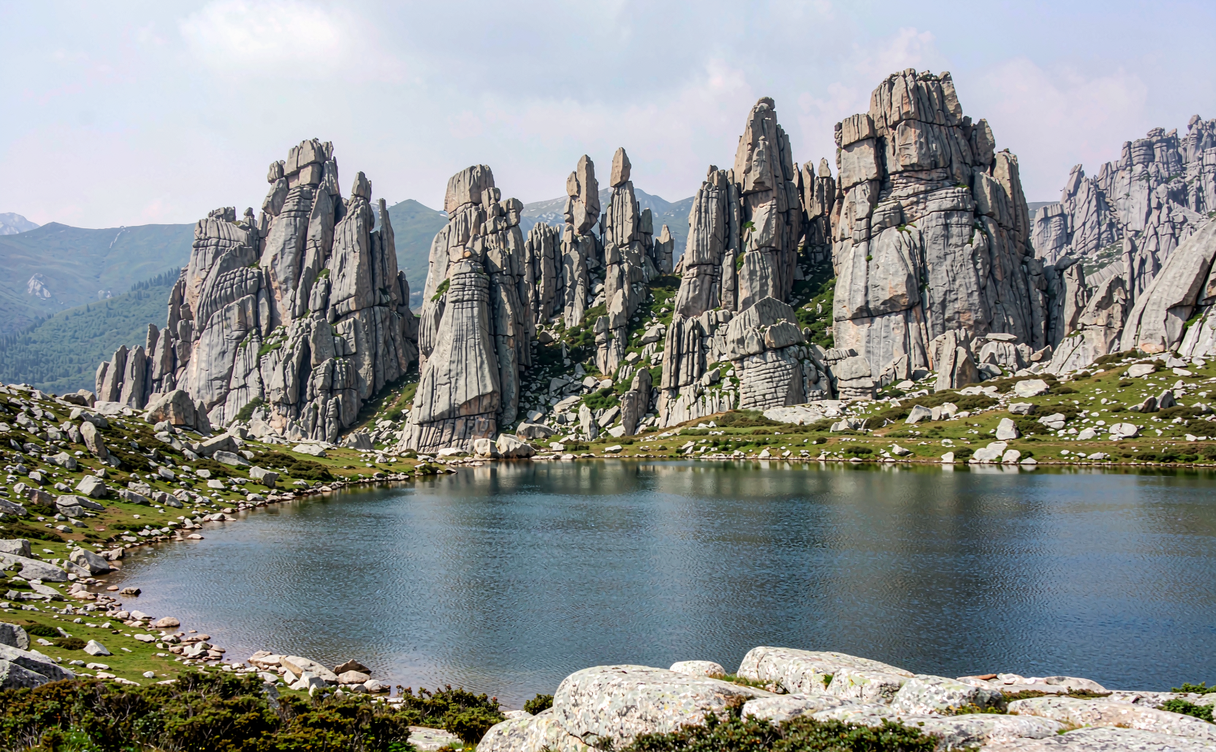
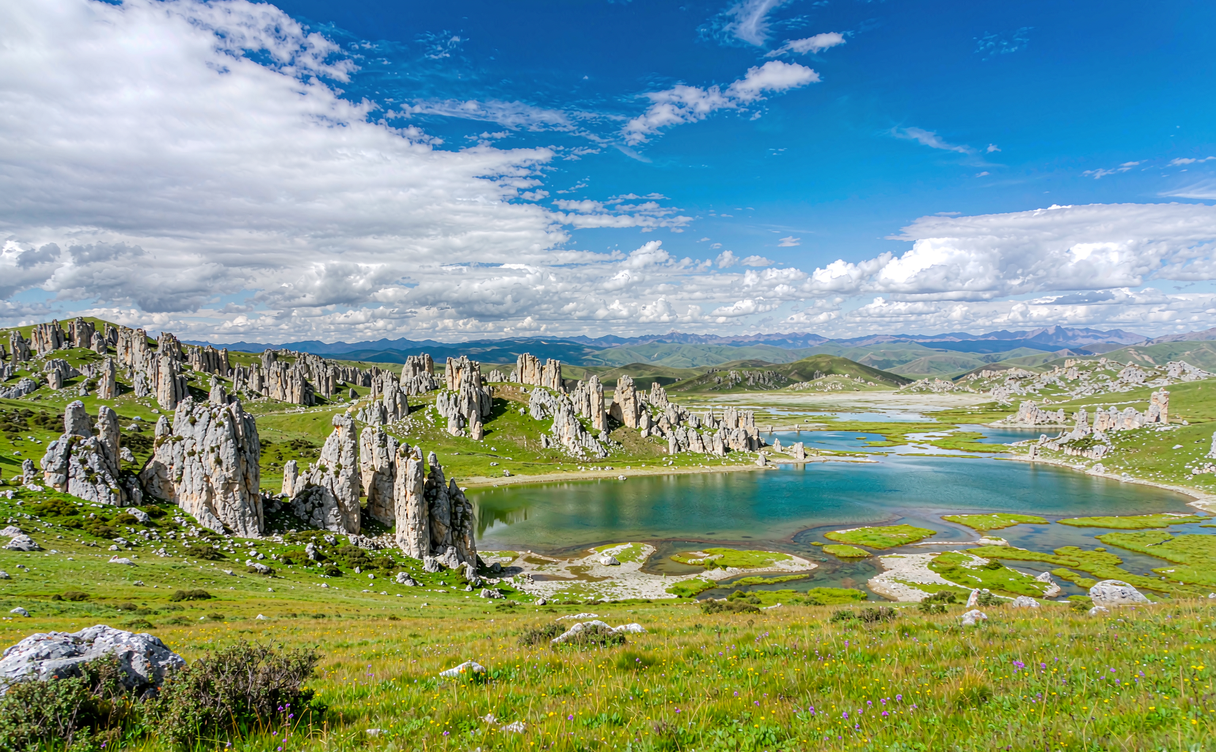
Haizi Mountain is not a single peak but a vast, treeless expanse above 4,000 meters studded with more than a thousand glacial lakes and a forest of wind-eroded rock towers. It is the gateway you cross to reach Daocheng Yading, yet it deserves to be a destination in its own right rather than a blur from the window, because the light up there does things to a landscape that no downstream valley can match.
How to Get to Haizi Mountain
The simplest route is to fly. Daocheng Yading Airport, at roughly 4,400 meters the highest civilian airport on Earth, receives daily flights from Chengdu in about one hour, with fares usually between 1,000 and 1,600 RMB. From the airport it is a two-hour drive north to Daocheng town, and Haizi Mountain sits along the S217 highway between Daocheng and Litang, roughly an hour beyond Daocheng. A taxi or arranged transfer from the airport runs about 300 to 500 RMB; most travelers bundle this with a rental car for the Yading leg. For flights, hotels, and a night to acclimatize before you fly up, lean on our Chengdu, China travel guide as your natural starting point.
The overland alternative is the long haul from Chengdu along the G318 and then north—two long driving days through Kangding and Litang, with nights in between. It is spectacular but demands a confident driver and tolerance for mountain passes that top 4,000 meters more than once. Either way, the final approach to Haizi Mountain is the road itself, with pull-offs where you can stop and walk among the rocks, and the drive is half the experience.
Best Time to Visit
Haizi Mountain’s weather is the boss. The safe season runs from late April to early November, but the character changes month to month. May and June bring fresh green around the lake edges and the few blooming cushions of alpine flowers, while July and August are the wettest and cloudiest, with afternoon storms that roll in fast and can drop visibility to nothing. Our favorite window is mid-October, when the larches around the lower rim turn gold and the air turns crystal clear after the first frosts—the photography is unreal, and you may have the whole plateau to yourself.
Winter closes the high sections and makes the drive dangerous, so we do not recommend it for first-timers. Remember the altitude: even in summer, nights drop below freezing and the ultraviolet light is fierce enough to burn in an hour. Cross-check dates against the seasonal planner in our resources, but for Haizi Mountain, Sichuan, China, aim for the dry shoulder seasons rather than peak summer, when clouds steal the views.
Things to Do at Haizi Mountain
The classic activity is simply to stop and walk. There is no fence, no ticket gate, and no crowd—just a gravel verge and a horizon of stone. The most photographed spot is the cluster of small lakes near the 4,500-meter marker, where still water doubles the silhouettes of the rock towers. Bring a wide lens; the scale is impossible to convey any other way, and the absence of any built structure makes the composition pure. A short climb onto one of the lower ridges rewards you with a panorama of hundreds of lakes glittering in the basin, a sight that justifies the breathless walk at altitude.
Wildlife is a quiet bonus. Yaks graze the wet meadows, blue sheep pick across the scree, and if you are very lucky you might spot a Tibetan fox near the road. Birders note the lammergeiers that ride the thermals above the stone forest. Because the reserve sits on the route to Yading, many travelers pair the two; our best things to do in China list ranks Yading among the country’s essential high-mountain experiences, and Haizi Mountain is the dramatic overture to it, setting up the sacred peaks that follow.
Food, Stay, and Money
There is no food or lodging on the mountain itself, so plan to sleep low. Daocheng town, about an hour away, has guesthouses and hotels from 200 to 500 RMB a night and noodle shops where a bowl costs 15 to 30 RMB. The airport corridor has a couple of basic cafeterias serving noodles and dumplings. Pack water, snacks, and a thermos, because the thin air dehydrates you faster than you expect and there are no shops up top, only wind and stone.
Cash helps in this corner of Sichuan, China, though Alipay is spreading; withdraw in Chengdu or Kangding before you climb. Drivers usually wait happily at a viewpoint if you tip 20 RMB and offer a snack, which buys you unhurried time with the rock forest and the small lakes. The reserve is free to enter, but the neighboring Yading reserve charges about 150 RMB plus a 120 RMB shuttle bus, so budget accordingly if you continue onward, and buy the combined ticket in Daocheng to save a step.
The broader landscape that Haizi Mountain introduces is documented in depth on Wikipedia’s Daocheng Yading page, a solid primer on the sacred peaks and lakes just beyond the pass. Read it the night before so you understand what the road is leading you toward, and you will arrive at the stone forest already fluent in the geography of the region.
A Sample Haizi Mountain Itinerary
A tight Haizi Mountain, Sichuan, China plan runs three days. Day one: fly Chengdu to Daocheng, rest and hydrate at altitude. Day two: drive the S217 north, stop repeatedly at Haizi Mountain’s lake clusters and rock forest, picnic by a lake, and return to Daocheng for the night. Day three: continue to Yading for the sacred peaks, or double back south toward Litang if you are driving the long way. For travelers who want the high passes handled without guesswork, the regional guesthouses make a relaxed base.
Practical Notes
Acclimatize before you climb—spend a night in Daocheng (about 3,700 meters) and never rush the pass, because altitude sickness here is real and unforgiving. The sun at 4,500 meters burns through cloud, so sunscreen, glasses, and a hat are mandatory even when it feels cool. Mobile signal fades on the plateau, so download offline maps in Chengdu and share your route with your driver. And tread lightly: the lakes are fragile and the rocks are ancient, so stay on existing tracks, carry out everything you carry in, and leave the silence exactly as you found it. Give yourself at least an hour of slow walking at the first pull-off rather than rushing the whole pass in one stop; the altitude makes even a flat stroll taxing, and the light changes by the minute.