

If mainland China has a final frontier, it is Ngari. This vast prefecture in western Tibet, China—known to many as Ali—covers an area larger than several European countries yet holds only a few tens of thousands of residents. It is the roof of the roof of the world: a high, cold, wind-scoured plateau where the great rivers of Asia are born and where the snow peak of Mount Kailash draws pilgrims from across the Himalayas. We have sent seasoned travelers here, and every one has returned calling it the most spiritually charged landscape they have ever stood in. Because access is controlled, your first read should be our China travel guide for first-timers, which explains the permit system you will need before setting foot in Tibet, China.
Ngari is not a city you stumble into. Its administrative center, Shiquanhe, is a small, functional town built to service the plateau, not to entertain. The magic is outside it: the sacred mountain, the holy lake, and the crumbling cliff palaces of a kingdom that vanished centuries ago. Come for the silence and the scale, and you will not be disappointed, because few places on Earth make a person feel so small so quickly.
How to Get to Ngari
Almost every foreign visitor reaches Ngari by air. Ngari Gunsa Airport sits at about 4,300 meters and receives flights from Lhasa several times a week, with a flight time near two hours and fares typically between 1,500 and 2,500 RMB depending on season. A smaller number of seasonal services link it to the north, which appeals to travelers already exploring Xinjiang, China and willing to cross the spine of the Kunlun on the G219 highway that connects the two western regions. The overland option—driving the highway west from Lhasa—is roughly 1,500 kilometers of rough, check-pointed road that takes the better part of a week with a guide.
Crucially, independent travel is not permitted in Tibet, China. You must be on a pre-arranged tour with a licensed Tibetan travel agency that secures your Tibet, China travel permit and, for the Ali borderlands, the additional military-area permits that Ngari requires. Budget around 200 to 400 RMB in permit and processing fees on top of the tour cost, and allow at least two to three weeks of lead time. Our high-speed train guide for foreigners is useful for the Lhasa leg, but the final approach to Ngari is firmly aircraft or 4×4 territory, and no train will take you the last hundred kilometers.
Best Time to Visit
Ngari’s window is short and brutal-edged. The reliable travel season runs from late May to early October, with July and August the warmest and most accessible—daytime highs around 15 Celsius, though nights still drop near freezing. Outside this band, passes close, guesthouses shutter, and the risk of being stranded by snow is real. We steer clients toward June or September: you miss the July crowds around Lake Manasarovar and still get passable roads and clearer photographs.
Altitude, not weather, is the real constraint. Ngari sits above 4,200 meters almost everywhere, and many of its sites are higher still. Spend at least two nights in Lhasa or Shigatse to acclimatize before flying in, and travel with a guide who carries oxygen and knows the symptoms of acute mountain sickness. Time your trip against the seasonal windows in our planning resources, but treat Ngari’s narrow season as the hard limit, because there is no comfortable off-season here.
Things to Do in Ngari
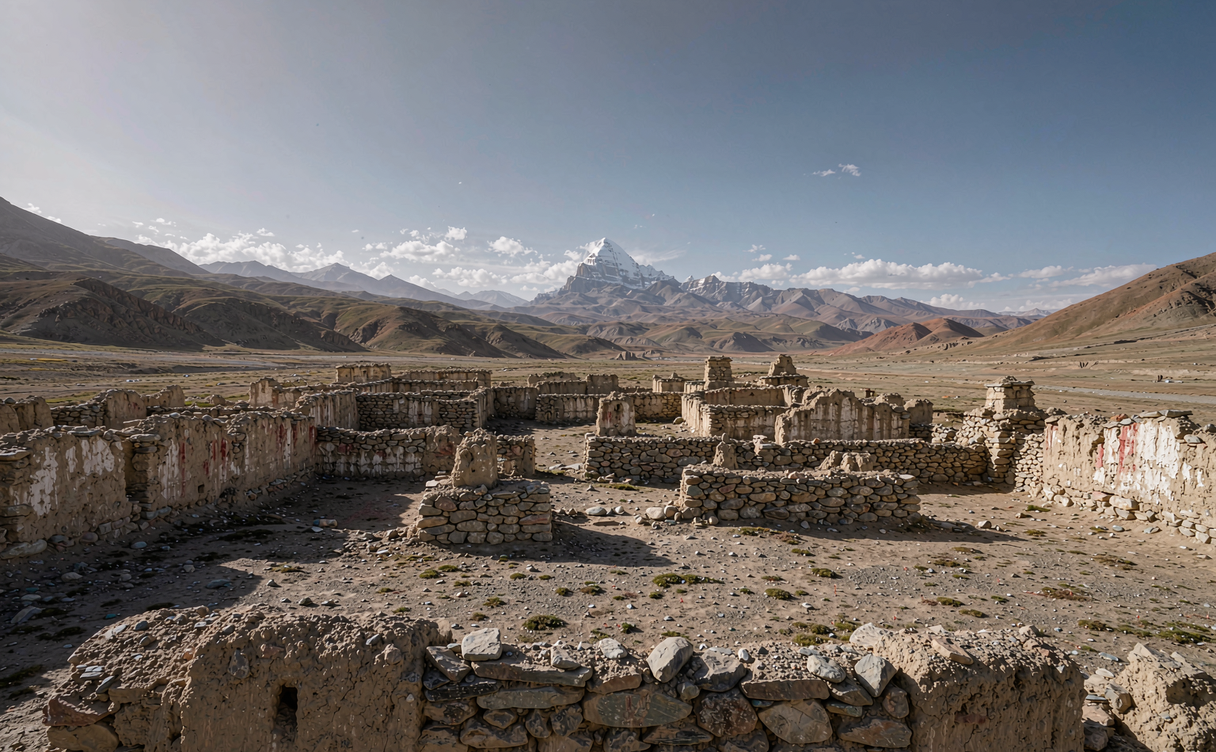
The headline is Mount Kailash, or Gang Rinpoche, the 6,638-meter peak that four faiths revere as the center of the world. You cannot climb it, and you should not want to; the experience is the kora, the 52-kilometer pilgrimage circuit around its base, walked clockwise over two to three days at altitude. It is hard, humbling, and unforgettable, and along the way you pass the fatal Tarboche flagpole, the twisting canyon of the Dharma circle, and the high pass of Dolma La at 5,630 meters, where pilgrims leave a stone for every prayer. Some travelers meet locals completing the circuit by full-body prostration, a feat that takes weeks.
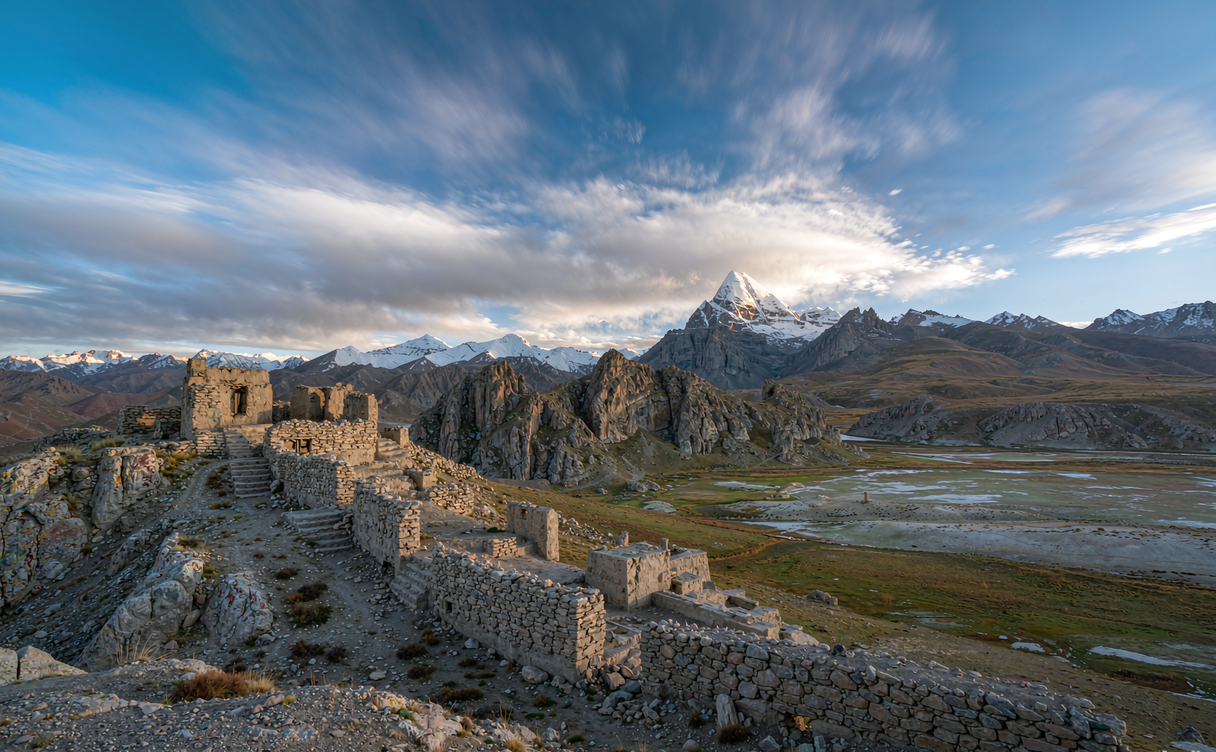
A few hours south lies Lake Manasarovar, the turquoise freshwater lake at the foot of the mountain, where travelers camp and, if brave, take a freezing ritual dip. History buffs should not miss the Guge Kingdom ruins near Zanda, a thousand-year-old citadel carved into a vertical clay canyon, and the nearby Tholing Monastery with its restored murals. These are covered in depth in our best things to do in China roundup for the far west. Between sites, the drive itself is the attraction: endless horizons, wild Tibetan antelope and kiang, and the sense that you have the planet to yourself. On clear nights the lack of light pollution turns the plateau into one of the finest stargazing sites in Asia, and we routinely tell travelers to set an alarm for 2 a.m. just to step outside the guesthouse and look up at a sky thick with the Milky Way.
Food, Stay, and Money
Ngari is thin on amenities. In Shiquanhe you will find simple hotels from 200 to 400 RMB a night and noodle shops where a bowl costs 15 to 30 RMB; beyond the town, accommodation is basic guesthouses with shared toilets and no heating beyond a thick quilt. Bring snacks, a refillable bottle, and altitude medication from Lhasa, because selection thins out fast and the nearest supermarket with variety is many hours away. Cash is essential—ATMs are rare and foreign cards unreliable—so withdraw plenty in Lhasa before you fly, and keep small bills for roadside tea stalls.
The region’s deep cultural weight is reflected in how the world regards its landmarks; Mount Kailash is documented in detail on Wikipedia’s Mount Kailash page, a useful primer on the mountain’s religious geography before you arrive. Read it on the plane, because guides on the ground may explain the pilgrimage in terms you will want to have met halfway, and a little homework makes the silence at the base of the mountain far more meaningful.
A Sample Ngari Itinerary
A realistic Ngari, Tibet, China itinerary is ten to fourteen days including acclimatization. Fly Lhasa to Gunsa, overnight in Shiquanhe, then three days for the Kailash kora with a support vehicle. Loop south to Lake Manasarovar for a night of lakeside camping, then push west to Zanda for the Guge ruins and Tholing over two days. Roll back east slowly, adding a night in Shiquanhe to rest. For atmospheric rest stops on the way in, the region’s historic courtyard settlements make lower-altitude nights before Lhasa a welcome reset after the altitude.
Practical Notes
Pack for extremes: a down jacket, high-SPF sunscreen, lip balm, and a headlamp are non-negotiable even in August, when the wind can still bite at midnight. Mobile coverage is patchy once you leave Shiquanhe, so download offline maps in Lhasa and tell someone your route each morning. A small pair of binoculars rewards you on the drive, where distant wildlife is easy to miss with the naked eye, and a power bank is essential because cold drains phone batteries fast at altitude. Respect the pilgrimage—dress modestly, walk the kora clockwise, and never photograph monks or rites without asking. Ngari rewards preparation with a sense of scale you will carry for the rest of your life, and the people who live at its edge are among the most hospitable you will meet anywhere in Tibet, China.