

This Shangri-La travel guide is for travelers who want the thin air and timber towns of Yunnan’s northwest without leaving the comfortable rail-and-flight network of mainland China. Shangri-La sits in Diqing, Yunnan, China, at about 3,200 meters above sea level, and it is the highest town most of our clients visit on a Yunnan loop. On our last trip we flew in from Lijiang, watched the plateau open up below the wing, and spent three days walking prayer-flag bridges and lakeside boardwalks — all bookable, all practical. Below is what to do, how to get there, what it costs, and when to go, plus the altitude notes we give everyone before they climb.
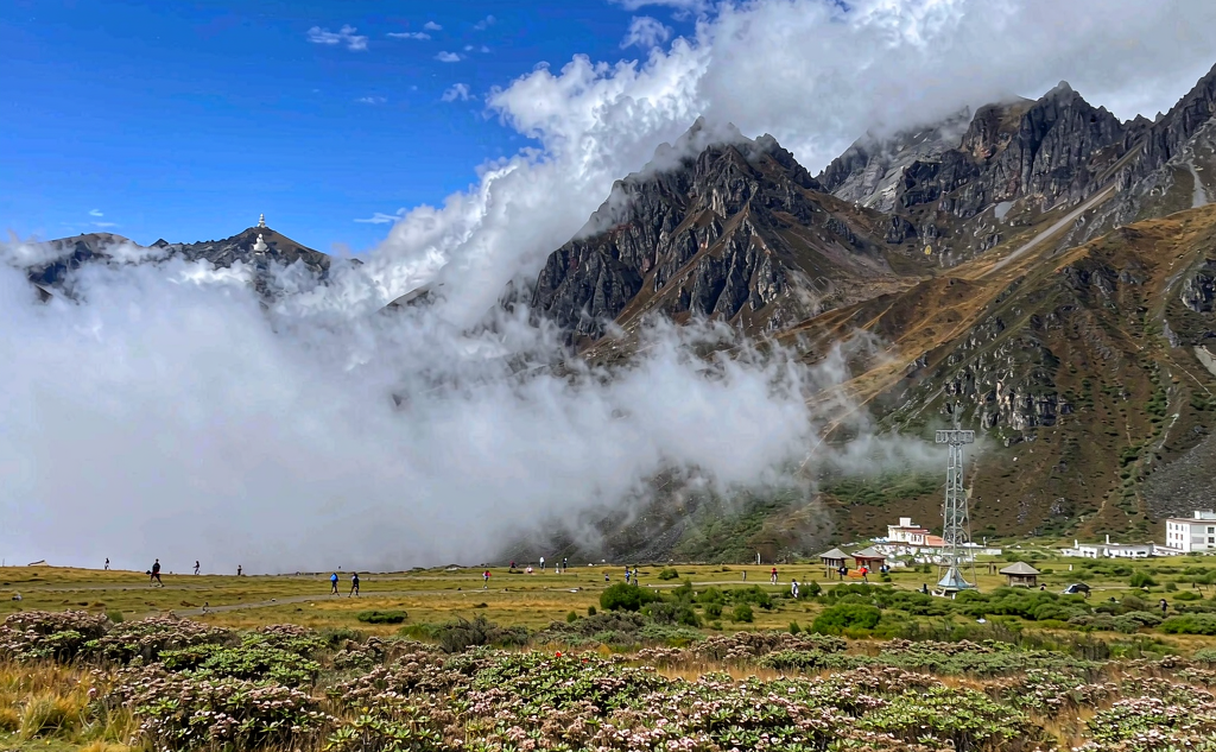
Getting to Shangri-La, Yunnan, China
The fastest way in is Diqing Shangri-La Airport (DIG). Direct flights run from Kunming (about 1 hour, 400–800 RMB if booked two weeks out), from Lijiang (40 minutes, 300–600 RMB), and from Chengdu (about 1.5 hours, 500–900 RMB). We tell clients to arrive from Lijiang, because Lijiang sits at 2,400 meters and gives your body a night to adjust before the 3,200-meter jump — flying straight from a lowland city is how people end up breathless on day one. The overland route is the scenic one: a bus or private car from Lijiang to Shangri-La takes about 4 hours and passes Tiger Leaping Gorge, where you can stop for a short hike and a guesthouse lunch (40 RMB). For first-timers building a Yunnan route, our China travel guide for first timers explains the flight and train basics.
Day 1: Dukezong Old Town and the Monastery
Start in Dukezong, the old town, which is free to enter and rebuilt after a 2014 fire — its stone lanes now hold bakeries, yak-butter-tea houses (15 RMB a bowl), and guesthouses from about 200 RMB a night. Climb to the hilltop prayer wheel (the world’s largest, at 21 meters) for the town panorama; the climb is short but at altitude take it slowly. In the afternoon take a taxi 5 km out to Songzanlin Monastery, the region’s largest monastery complex built in the local highland style, with an entry ticket of 60–90 RMB including the shuttle from town. Walk the lower courtyards, photograph the tiered golden roofs, and give yourself an hour — but skip the hard uphill if you feel the altitude. The town’s local ethnic culture is part of Yunnan’s mix; we keep visits respectful and photographic rather than strenuous on day one.

Day 2: Pudacuo National Park and Napa Hai
Pudacuo National Park, 22 km east of town, is the headline natural sight and costs 138 RMB (including the shuttle bus that loops the two lakes). The boardwalk around Bitahai and Shudu lakes is flat and takes about 3 hours; at this altitude even flat walking leaves you breathless, so we send clients with water and a layer, and we rent the park’s oxygen spray (20 RMB) only if needed. In late autumn the park’s larches turn gold and the photos are worth the cold. On the way back, stop at Napa Hai (Napahai) wetland — a seasonal lake where, in winter, black-necked cranes gather and local herders offer horse rides (about 80–150 RMB for a short loop). Bring sunglasses; the plateau sun at 3,200 meters burns fast, and the UV is no joke even on a cool day.
Day 3: Tiger Leaping Gorge or a Meili Extension
If you came overland, spend day three on the upper Tiger Leaping Gorge trail (free to walk, 2–3 hours, with guesthouses like Halfway offering lunch for 40 RMB and a famous sunrise viewpoint). The gorge is one of the deepest in the world and the roar of the Yangtze is loud enough to feel in your chest. If you flew and want a deeper trip, an extra day takes you toward Deqin and the Meili Snow Mountain range — Kawagarbo peak is the draw, and our Shangri-La Yunnan guide covers the sunrise viewpoint at Feilai Temple (stay from 200 RMB, wake at 6 AM). That makes a natural Shangri-La itinerary of three to four days before you drop back down to Lijiang.
Things to Do and What It Costs
The practical list of things to do in Shangri-La: Dukezong Old Town (free), Songzanlin Monastery (60–90 RMB), Pudacuo (138 RMB), Napa Hai horse ride (80–150 RMB), Tiger Leaping Gorge hike (free), and a Meili sunrise add-on (transport 150–300 RMB round trip by shared car). Meals are cheap and hearty — a bowl of Yunnan rice noodles is 15–25 RMB, yak meat hotpot runs 80–120 RMB per head, and the town’s bakeries do a highland barley bread for 10 RMB. Guesthouses in season (April–May, September–October) run 200–400 RMB; in deep winter you can find heated rooms under 180 RMB. Taxis start at 8 RMB and most sights are a short, cheap ride from the old town.
Best Time to Visit Shangri-La
The best time to visit Shangri-La is late April to May, when the meadows green up and rhododendrons bloom, and September to October, when the skies are clear and the larches turn. Summer (June–August) is the rainy season — green but muddy on the trails, and the mountains hide in cloud. Winter is brutally cold (down to -10°C at night) but clear and crowd-free, and the crane season at Napa Hai is a real draw for birders. Our best time to visit China has the full national breakdown, and we always advise a night in Lijiang first to cut altitude sickness risk — drink three liters of water a day up here, and skip the first-night hotpot if your head is pounding.
Where to Base and How to Move On
Stay in or near Dukezong Old Town — everything is walkable and taxis start at 8 RMB. From Shangri-La you can fly back to Kunming or Lijiang, or continue your Yunnan loop by road. If you’re building a wider province trip, our Nuodeng Yunnan guide covers a quieter Bai-village stop, the Ailao Mountain Yunnan guide covers the southern forests, and the Yunnan three pagodas Dali guide covers Dali’s landmark just east of here.
That covers the core how to get to Shangri-La question and the sights worth your time. It is a highland town in Yunnan, China that rewards travelers who slow down for the altitude — exactly the kind of stop we add to a longer southwest loop rather than a one-night dash, and every entry, flight, and guesthouse listed here is bookable today.
Practical Tips for the Plateau
Carry your passport for every hotel check-in and keep 200 RMB cash for the occasional market stall, though Alipay now links to foreign cards and handles most payments. The single biggest mistake visitors make is ascending too fast; we insist on a night in Lijiang at 2,400 meters first, then a slow first day in Shangri-La with no hard climbs. Drink three liters of water a day up here, skip alcohol on night one, and pack a warm layer even in summer — the temperature drops 15°C after sunset. Taxis start at 8 RMB and the old town is walkable, so you rarely need more than one Ride-hailing trip a day. If your head pounds, the pharmacies sell oxygen cans (30 RMB) and the guesthouses keep heaters ready.
What a Stay Costs
Budget about 800–1,200 RMB per person for a comfortable three-day Shangri-La stay excluding the flight in: guesthouse (200–400 RMB/night) about 600 RMB, entries and park shuttle about 250 RMB, meals (80–150 RMB/day) about 350 RMB, and a half-day taxi or shared car about 150 RMB. Add 300–600 RMB for the one-way flight from Lijiang. We’ve done it for under 700 RMB a day by walking the old town and eating in the local lanes.
Before you go
Carry your passport for hotel check-in and bring altitude medication if you’re prone to sickness. For background on the region’s protected landscapes, see the UNESCO Three Parallel Rivers of Yunnan World Heritage page.