

This Chengmai travel guide comes from trips we’ve arranged for travelers who want Hainan’s calm, healthy interior instead of its resort strip. Chengmai County (see Chengmai County for background) lies just 50 km northwest of Haikou, and it has quietly earned a reputation as one of China’s “longevity homelands” — a place where an unusual number of residents pass 100. Pair that with geothermal hot springs, Fushan coffee plantations, and easy access from the capital, and you have a gentle, restorative stop. If that sounds like your kind of trip, this Chengmai travel guide lays out when to visit, how to get there, and what to actually do.
Why Chengmai, and what makes it tick
The county’s claim to fame is longevity. Local officials cite dozens of centenarians among a population of under 600,000, and the county has been branded a “longevity township” by Chinese and some international longevity associations. We’re skeptical of miracle claims, but on our last visit the pattern was visible: older villagers still work the fields, eat home-grown vegetables, drink well water, and soak in the warm mineral springs. The lifestyle, not any single secret, is the draw.
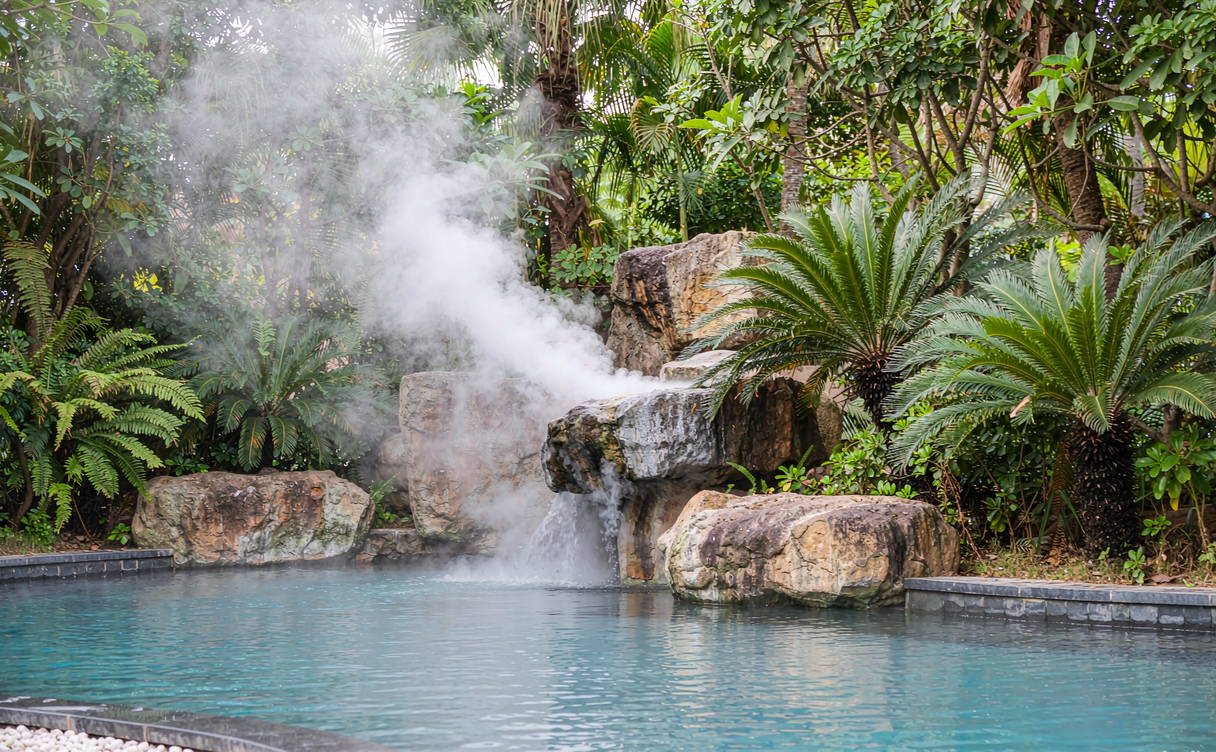
What sells Chengmai to foreign travelers is how easy it is. It is close enough to Haikou for a day trip, but we recommend an overnight so you can do a proper Chengmai hot springs soak in the evening and a village walk the next morning. It slots neatly into a broader hainan-7-day-itinerary as a relaxing inland break.
Best time to visit Chengmai
The best time to visit Chengmai mirrors the rest of northern Hainan: November to April, when it is dry and 22–28°C. The hot springs are most pleasant in the cooler months, and the village paths are mud-free. May through October is hot and humid, with afternoon storms; the springs are still open but the outdoors is less comfortable. Avoid the first week of May (Labour Day) and the first week of October (National Day), when domestic crowds flood the resorts and room rates climb 40–60%.
Things to do in Chengmai
Start with the longevity villages themselves. The best-known clusters are around Nanchang and Zhongxing townships, where you can walk between family courtyards, peek at the century-old residents’ diets (bitter herbal teas, sweet potato leaves, fermented tofu), and photograph the banyan-shaded lanes. A local guide from the village committee costs about 80–120 RMB for two hours and adds enormous context — on our last visit ours translated a 102-year-old farmer’s advice on longevity, which turned out to be “walk every day and don’t worry.”
The Chengmai hot springs are the other anchor. The county sits over a geothermal field, and several resorts pipe the mineral-rich water (reportedly high in radon and silica) into pools. Day-entry to a public spring pool runs 50–100 RMB; full resorts with in-room tubs charge 400–800 RMB per night including breakfast. We’ve sent travelers to the Ruiyan and Jingjiang spring hotels and had consistent good feedback on the water quality and the quiet. Go on a weekday evening and you may have a pool to yourself.
Fushan coffee is the sleeper hit. The town of Fushan, inside Chengmai, has grown coffee since the 1930s and now has a small coffee-culture strip with roasteries, tasting flights, and a yearly coffee festival in December. A cup of locally grown arabica at a village roastery is 15–30 RMB, and a bag of beans leaves you 60–120 RMB lighter. We rate the Fushan morning market, with its coffee stands and tropical fruit, as the single best wake-up in the county.
For something greener, the Jinjiang (Red River) estuary and the surrounding reservoir offer flat cycling and birdwatching; bike rental through guesthouses is about 30 RMB for a half day. The small County History Museum (free, closed Mondays) covers the longevity census and the coffee story if the weather turns.
How to get to Chengmai
The how to get to Chengmai answer is simple because Haikou is so close. Long-distance buses run from Haikou West Station to Chengmai roughly every 30–40 minutes from 06:30 to 19:00; the trip is 50–70 minutes and costs 18–28 RMB. A Didi or hired car from Haikou city runs 120–180 RMB one way and takes about an hour. There is no passenger train station in Chengmai town itself, though the Haikou–Sanya high-speed line passes nearby; most travelers just bus or drive from Haikou.
Inside the county, village minibuses connect the townships but run infrequently. For the longevity villages and springs, we arrange a county driver for about 300–400 RMB for a half-day loop, which saves the hassle of chasing timetables. Self-drive is possible — a basic car rents in Haikou for 200–280 RMB/day — but the village lanes are unsigned, so a guide-driver pays for itself.
A Chengmai itinerary
A relaxed Chengmai itinerary is two days, one night:
- Day 1 — Bus or drive from Haikou (under 90 minutes), check into a spring resort, late-afternoon soak, dinner of herbal chicken hotpot (60–100 RMB per head).
- Day 2 — Morning longevity-village walk with a guide, Fushan coffee tasting and market, lunch of Hainan noodles (15–25 RMB), then back to Haikou.
Budget travelers manage this for 400–700 RMB per person; those who want a resort room and a private driver should plan 900–1,400 RMB.
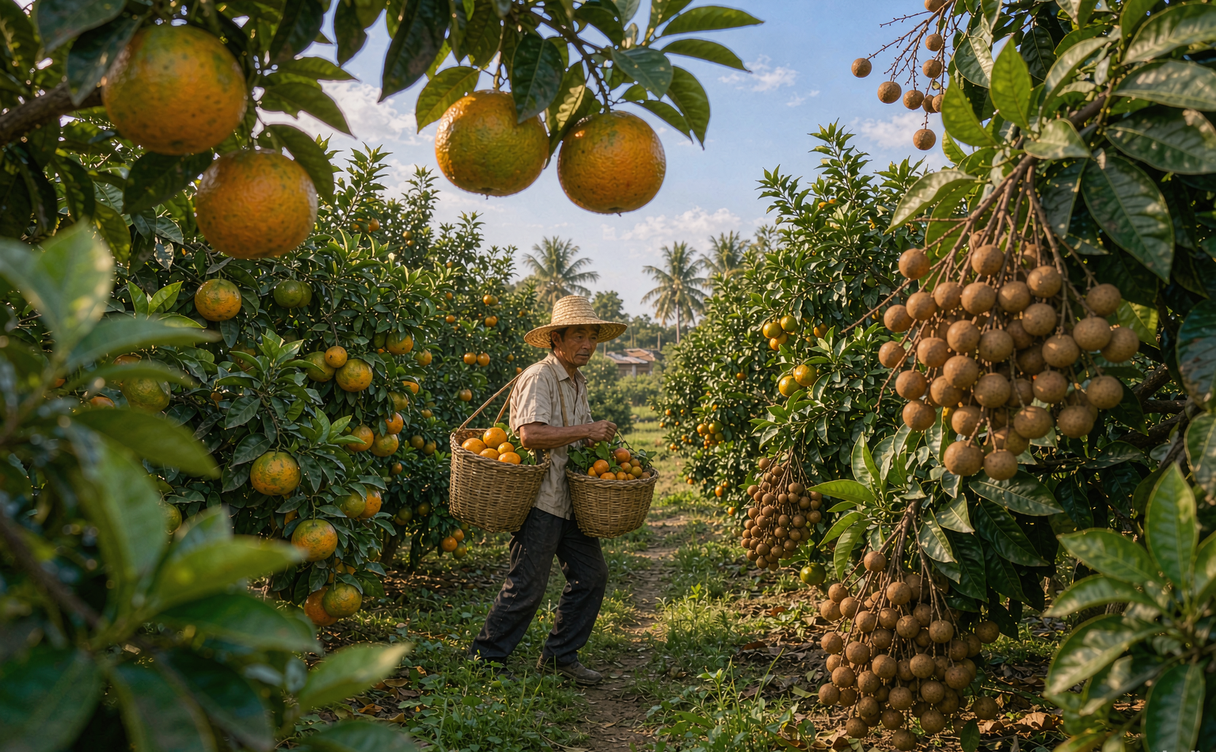
Food is a highlight. Beyond the hainan-cuisine-guide staples — Wenchang chicken, rice noodles, coconut — Chengmai adds longevity-themed dishes: mulberry-leaf tofu, wild yam soup, and the local green orange (chenggan) in winter. The county is also a china-tropical-fruits-guide stop in its own right; December to February is peak for mandarins and green oranges at roadside stalls for 4–8 RMB per jin (about 500 g).
Where to stay
The hot-spring resorts are the obvious choice and range from 350 RMB guesthouse-springs to 800+ RMB proper hotels. If you’d rather be in town, clean business hotels near the bus station start at 160 RMB. Book the spring resorts ahead on weekends. For families, the china-family-travel-guide notes that Chengmai’s flat villages and warm pools are especially easy with kids and older relatives alike — a rare place that suits three generations at once.
Hot springs wider context
If you want to compare Chengmai’s springs with the rest of the country, our china-hot-springs-resorts-guide ranks Hainan against Yunnan, Tibet, and the northeast. Chengmai is the most accessible of the island’s spring areas and the least crowded outside holidays.
For the bigger timing picture, the best-time-to-visit-china overview confirms why the November–April window works coast to coast.
Ready to plan your trip? Tell us your Hainan dates and we’ll add a Chengmai hot-spring night with a longevity-village guide and Fushan coffee stop.
A note on the longevity claim
We mention the centenarians because travelers ask, but we’d gently steer you away from treating Chengmai as a wellness cure. The honest takeaway from our visits is simpler and more useful: the villages show a low-stress, plant-heavy, walk-everywhere life that’s worth borrowing a little of. Soak, walk, eat the greens, drink the coffee, and don’t over-romanticize it.
The hot springs do the rest. After a few Hainan beach days, an evening in warm mineral water with frogs calling in the bushes resets the whole trip.
Want Chengmai folded into a longer Hainan loop? We’ll connect the springs, the coffee town, and the villages with a driver and current 2026 prices.
Practical tips before you go
Carry some cash for village markets and small coffee stands; card and Alipay work in the resorts but not always in the lanes. Pack a swimsuit and a thin towel for the springs — the resorts lend robes but not always properly. Mornings are the best time for village walks before the heat builds.
Chengmai won’t thrill adrenaline seekers, and that’s exactly the point. It is a slow, warm, healthy corner of Hainan an hour from the airport, and for many of our travelers it became the most relaxing night of the trip.
Reach out and we’ll reserve your Chengmai spring resort and village guide, and drop the whole thing into a finished Hainan day-by-day plan.