

Xiaolangdi (小浪底) is the engineering showpiece of the middle Yellow River, a 154-meter concrete dam that holds back one of the largest sediment-trapping reservoirs in the world — and for a few weeks every summer it puts on a spectacle you cannot see anywhere else on the river. This Xiaolangdi reservoir guide explains when the spillway runs, what it costs to visit, how to reach the dam from Luoyang or Zhengzhou, and which bookings matter, so you can time your trip to the water instead of the dry season.
The dam sits near Xiaolangdi village in Jiyuan, about 130 km west of Zhengzhou and 40 km north of Luoyang, where the river squeezes through the last gorge before the North China Plain. Completed in 2001, it was built first to control floods and flush sediment, and only second for hydropower. The reservoir behind it stretches more than 130 km upstream, submerging old river towns and creating a long, strangely calm lake in a province better known for dust than water. For most travelers the draw is the spillway event, when operators open the bottom outlets and millions of cubic meters of yellow-brown water erupt in plumes that can be seen for kilometers.
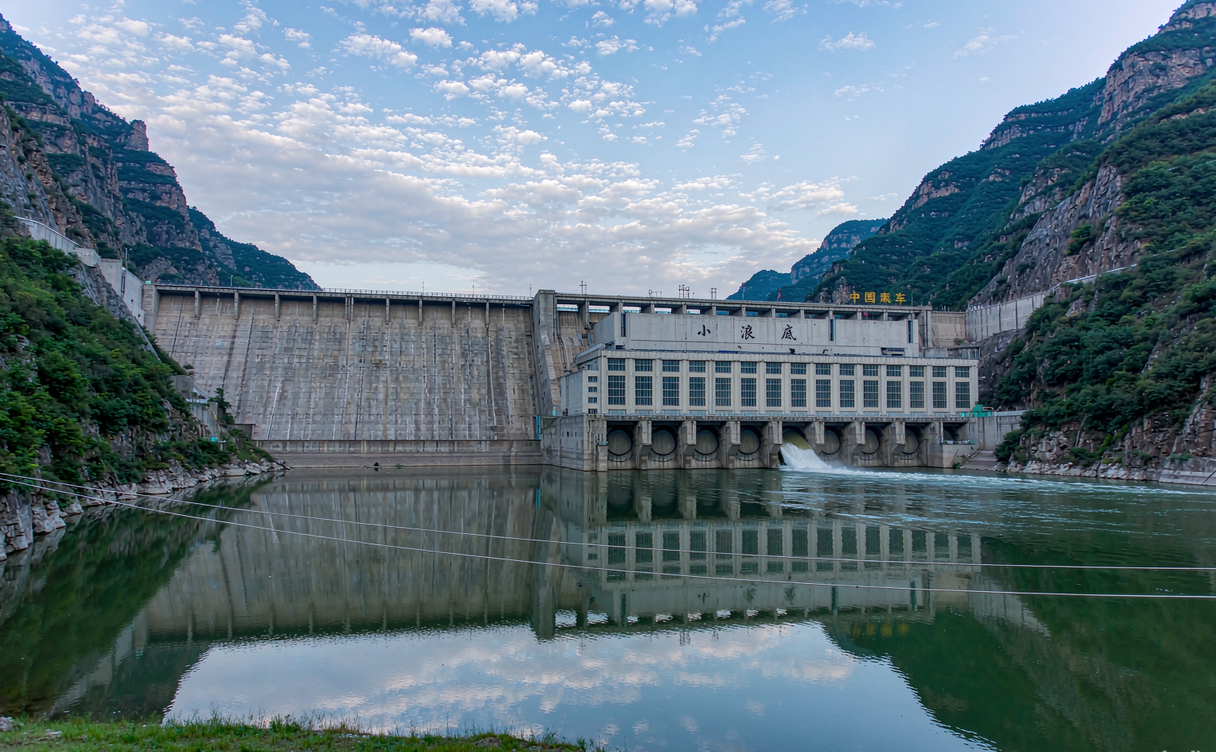
Things to do at Xiaolangdi center on the dam itself and the overlook platforms that face it. The north-bank visitor area has a broad plaza and railing viewpoints where, during the release, you stand maybe 300 meters from the outlets and feel the spray on your face. A causeway runs along the rim of the reservoir for a quieter walk when the water is still. There is a small exhibition hall explaining the sediment-flushing mechanism with diagrams and a scale model — worth ten minutes even if your Chinese is limited, because the visuals carry the story. Boat trips on the reservoir operate in the calm season (roughly April to June and September to October) and let you see the drowned gorges from the water; these leave from the south-bank jetty and cost about 60–80 yuan for a 40-minute loop. The Luoyang travel guide pairs naturally with a Xiaolangdi day, since the Longmen Grottoes and the dam can be done back to back.
Best time to visit Xiaolangdi depends entirely on what you want to see. If the spillway is your goal, the annual sediment release traditionally runs for 15–20 days in early to mid-July, with a smaller, less crowded release sometimes staged in late June. Dates are set by the Yellow River Conservancy Commission and announced a few weeks ahead, so watch the official notices and build flexibility into your hotel. Outside the release, late April to June and September to October give calm water, green reservoir shores, and comfortable 20–28°C days. Avoid winter (December–February), when the wind off the plain is bitter and most boat services stop. Our best time to visit China guide maps this window against the rest of Henan if you are stringing together multiple provinces.
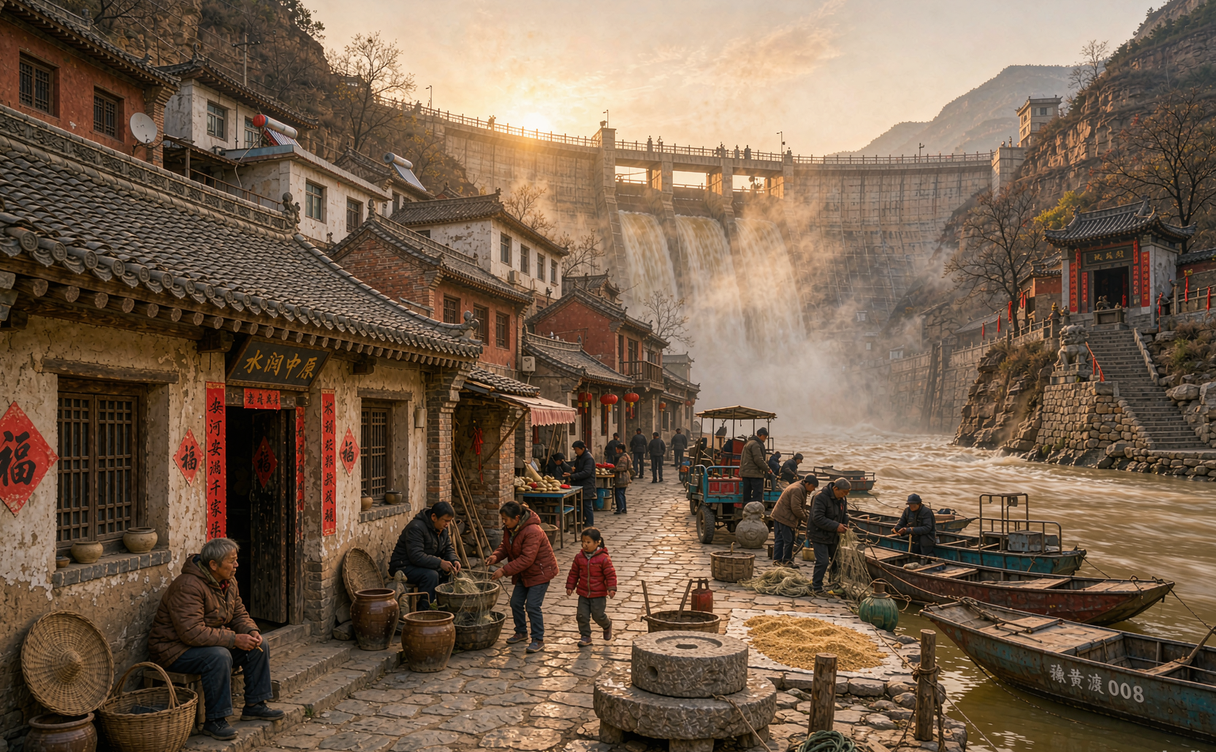
How to get to Xiaolangdi is easiest from Luoyang. A Didi from central Luoyang runs 90–130 yuan and takes about an hour; from Zhengzhou a car is 200–280 yuan and 90–120 minutes. Public buses labeled for Jiyuan pass the dam turnoff, but the final 8 km from the highway to the overlook has no reliable shuttle, so a private car or a pre-arranged driver is the realistic option. If you are on the rail network, both Luoyang Longmen and Zhengzhou East are high-speed hubs; our high-speed train guide for foreigners walks through booking those segments on 12306 with a passport. From either city, base yourself in town and make Xiaolangdi a half-day excursion rather than an overnight.
Tickets and what to book: the north-bank viewing area charges about 50 yuan entry in the off-season and 60–90 yuan during the release window, when demand peaks. Boats and the causeway walk are extra. You do not need to pre-book the gate, but during the July release the parking lot fills by 10:00 and the railing positions go early, so arrive before 9:00 if you want a front spot. The dam’s engineering background is covered on Wikipedia’s Xiaolangdi Dam entry, a useful primer on why the sediment flush exists at all.
Food and stay are best handled in Luoyang or Zhengzhou, not at the dam. The on-site snack stands sell corn, sausage, and bottled water at tourist prices (10–20 yuan), but there is no proper restaurant. Henan’s carb-forward cooking is the reward after a dam visit — our Henan Yu cuisine guide points you to the braised noodles and hu la tang soup worth the trip back to the city for. First-timers should also read our China travel guide for first-timers so the payment and transport basics are sorted before you are standing at a rural ticket window with no signal.
What to photograph and pack: the north-bank railing faces south, so the morning sun is behind you and the plumes read clean; for the dramatic backlit shots, the late-afternoon release light is warmer but the spray is heavier, so a lens cloth is essential. A polarizer helps cut the glare off the brown water, and a phone in a waterproof pouch will survive the front-row drenching that the release guarantees. Footwear is simple — the plaza is paved — but bring a rain shell even in dry season, because the atomized spray drifts 200 meters and soaks the front row regardless of the sky. If you are traveling with children, keep them behind the secondary rail: the outlets are loud enough to startle, and the wind pulls small hats straight into the river. Cash is worth carrying because the snack stands are cash-only and the gate terminal is unreliable on busy release days. The exhibition hall has a working scale model of the sediment-flushing sequence that runs on a loop; watch it once before you go to the rail and the geometry of the whole release will make sense. Give yourself the full half day rather than a rushed hour, because the plume builds through the morning and the best volume is usually between 10:00 and noon.
Chasing the July release? Build your base in Luoyang and pair the dam with the Longmen Grottoes using our Luoyang travel guide for a two-day Henan hit.
The practical rhythm of a Xiaolangdi day is weather- and schedule-driven. On a release day, be at the north-bank railing by 9:00, watch the outlets through the late-morning peak, then retreat to Luoyang for lunch before the afternoon crowds. In the calm season, take the 10:00 boat, walk the causeway after, and you will have the place nearly to yourself by 14:00. Bring a rain jacket even in dry season — the spray during a release soaks the front row, and that is half the fun.
Not sure when the river runs? Check our best time to visit China guide to line Xiaolangdi up with the release window and nearby Henan sites.
One more thing to plan around: the release schedule shifts year to year with rainfall and reservoir levels, so never book non-refundable hotels on the exact announcement date. Build a buffer day in Zhengzhou, which is also where the Henan Museum and the provincial food scene sit, and you can absorb a delayed opening without losing the trip. Xiaolangdi is a single-trick destination, but done on the right week it is one of the most photogenic engineering sights in the country.
Ready to commit to the release window? Start from our Zhengzhou travel guide and anchor Xiaolangdi as your headline Henan excursion.