

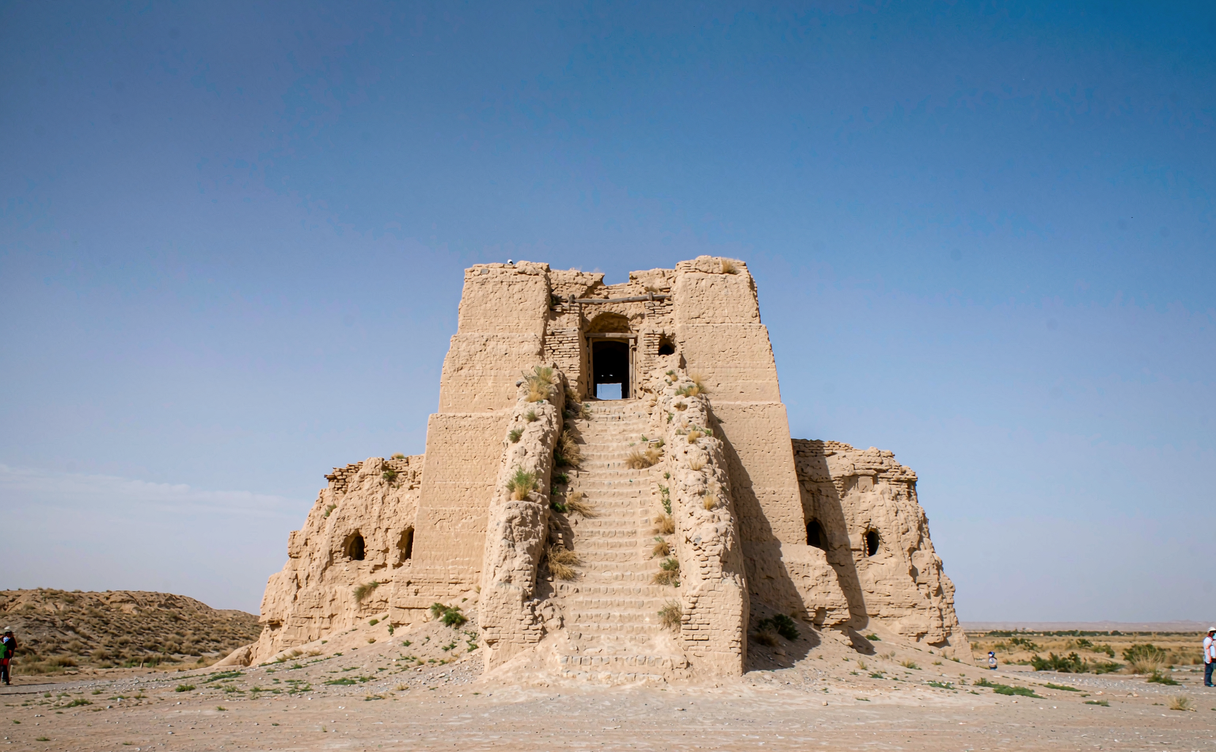
On my first trip out to the Gobi, I didn’t expect a single rectangle of packed-earth wall to stop me in my tracks. But when our driver pulled off the Dunhuang–Hami road and the Yumen Pass came into view — a wind-scoured earthen square standing alone on a rust-colored plain — I finally understood why poets and generals spent a thousand years writing about it. This Yumen Pass Dunhuang landmark was the western gate of the Han Empire, the point where the Silk Road left China proper and the jade caravans, Buddhist monks, and imperial armies passed through. If you’re building a Yumen Pass guide for your own trip, the short version is: go early, bring wind protection, and give it at least half a day so you can also see the Han Great Wall and the grain-city ruins beside it.
Why Yumen Pass matters on the Silk Road
The Yumen Pass Silk Road history is older than the wall you see today. The pass was established by Emperor Wu of the Han Dynasty around 111 BC, after Zhang Qian’s journeys opened the routes west. “Yumen” means “Jade Gate” — most of the Khotan jade entering China came through here, along with silk heading the other way. Standing inside the ruin, you can still see the layered tamped-earth construction: each wall was built by pounding wet earth in wooden frames, a technique that has survived roughly two thousand years of sandstorms. The Tang poet Wang Zhihuan wrote “春风不度玉门关” — “the spring wind never crosses the Jade Gate Pass” — and on a January morning with the wind at forty knots, you feel exactly what he meant.
What surprises most visitors is how small it is. The main structure, nicknamed the “Square City” (方盘城), is about 24 meters by 26 meters, with walls that once rose roughly 10 meters. It is not a grand fortress like Jiayuguan further east; it is a lonely outpost, and that loneliness is the point. On my last trip, a Spanish couple told me they’d expected a citadel and instead found “a poem made of mud.” That’s the right way to see it.
Things to see at Yumen Pass
When people ask me about the things to see at Yumen Pass, I always list four stops, because the ticket covers a small cluster rather than one building:
1. The Square City (Yumen Pass proper) — the earthen gate itself, with a small museum exhibit nearby showing Han dynasty coins, arrows, and wooden written slips found in the dunes. The slips are the real treasure: they are administrative records, supply lists, and personal letters from frontier soldiers, carbon-dated to the first centuries BC.
2. Hecang City (河仓城) — the “river granary,” about 13 km northeast. These are the ruins of a Han supply depot where grain and hay were stored for the frontier troops. The rectangular wall foundations spread across a wide flat, and you can walk the perimeter and imagine the scale of keeping an army fed 2,000 years ago.
3. Han Great Wall remnants — a stretch of original Han Dynasty wall made from reeds, sand, and gravel, running toward the horizon. It looks fragile but is genuinely 2,000 years old, and it is the only place I know near Dunhuang where you can touch the actual frontier wall rather than a Ming-era reconstruction.
4. The viewing platform and the “Last Beacon” — a short walk brings you to a restored watchtower with views over the empty plain toward the Yadan Ghost City beyond.
Give yourself about 90 minutes across these stops. The light is best in the morning and again around 5 pm, when the walls turn the color of dried blood and the shadows lengthen across the gravel.
Best time to visit Yumen Pass
The best time to visit Yumen Pass is late April through June and again September through mid-October. I’ve been in both windows and the difference from summer is dramatic. In July and August the Gobi here regularly hits 38–42°C, and there is almost no shade; in December through February it drops below freezing with a wind that goes straight through every layer you own. Spring (April–May) can bring sandstorms, so check the forecast — a dusty day at Yumen Pass means you’ll see the wall but not the horizon, and the dust gets into every camera seam.
If your schedule is fixed, aim for a morning visit in May or September. You’ll share the site with fewer tour buses, and the temperature sits around a manageable 15–25°C. This is also the season I recommend in our broader best time to visit China guide, which covers regional weather across the northwest and tells you exactly which months to avoid the Gobi’s extremes.
How to get to Yumen Pass from Dunhuang
Figuring out how to get to Yumen Pass is the part that trips up first-time visitors, because it is 90 km northwest of Dunhuang city and there is no public bus that drops you at the door. Here is what actually works:
- Chartered car / private driver: The most common route is to hire a driver for the “west line” (西线) day — Yumen Pass, Yangguan, and sometimes the Yadan Ghost City. Expect to pay ¥400–¥600 for a 4–6 seat car for the full day, negotiable at the Dunhuang taxi stand or through your hotel. I usually tip the driver ¥50 to wait at each stop rather than rush me.
- Joining a group tour: Budget hotels and the Dunhuang tourist center run minibus tours at roughly ¥150–¥250 per person, leaving around 8 am and returning mid-afternoon. These are cheaper but lock you to their clock, and at Yumen Pass you may only get 40 minutes.
- Self-drive: The roads are good and signed; allow 1.5–2 hours each way from the city. There is a parking lot at the gate and a small visitor center.
The standalone Yumen Pass ticket is about ¥40, and the combined west-line passes run ¥120–¥160 depending on season. Buy at the entrance gate; foreign passports are accepted and there is usually an English-info board, though it is thin and the staff speak little English, so download an offline map beforehand.
Planning the logistics can feel fiddly, so if you want a driver and a Silk Road route stitched together for you, our China Silk Road itinerary page breaks down day-by-day options from Xi’an to Dunhuang. It is the easiest way to avoid spending your morning haggling over a car and missing the good light.
Pairing Yumen Pass with the rest of Dunhuang
A Yumen Pass guide would be incomplete without saying where it sits in a Dunhuang trip. Most travelers split the city into two halves: the “east line” (Mogao Caves and Crescent Lake) and the “west line” (Yumen Pass, Yangguan, Yadan). I tell clients to do the east line first to acclimate, then dedicate a full day to the west, leaving town by 8 am so the afternoon heat doesn’t flatten the photos.
The Mogao Caves guide is essential reading before you go, because Mogao requires timed tickets booked days ahead, while Yumen Pass is walk-up and forgiving. And if you want a softer, family-friendly contrast to the harsh Gobi, the Crescent Lake and Mingsha Dunes guide covers the camel rides and the café-lined oasis an hour from town. For a bigger-picture route that links Dunhuang to the fort at Jiayuguan, see our Jiayuguan Fort guide — it is the “other” gate of the wall and pairs naturally with this one, letting you bookend the Ming Great Wall between its desert ends.
How long to spend and what to bring
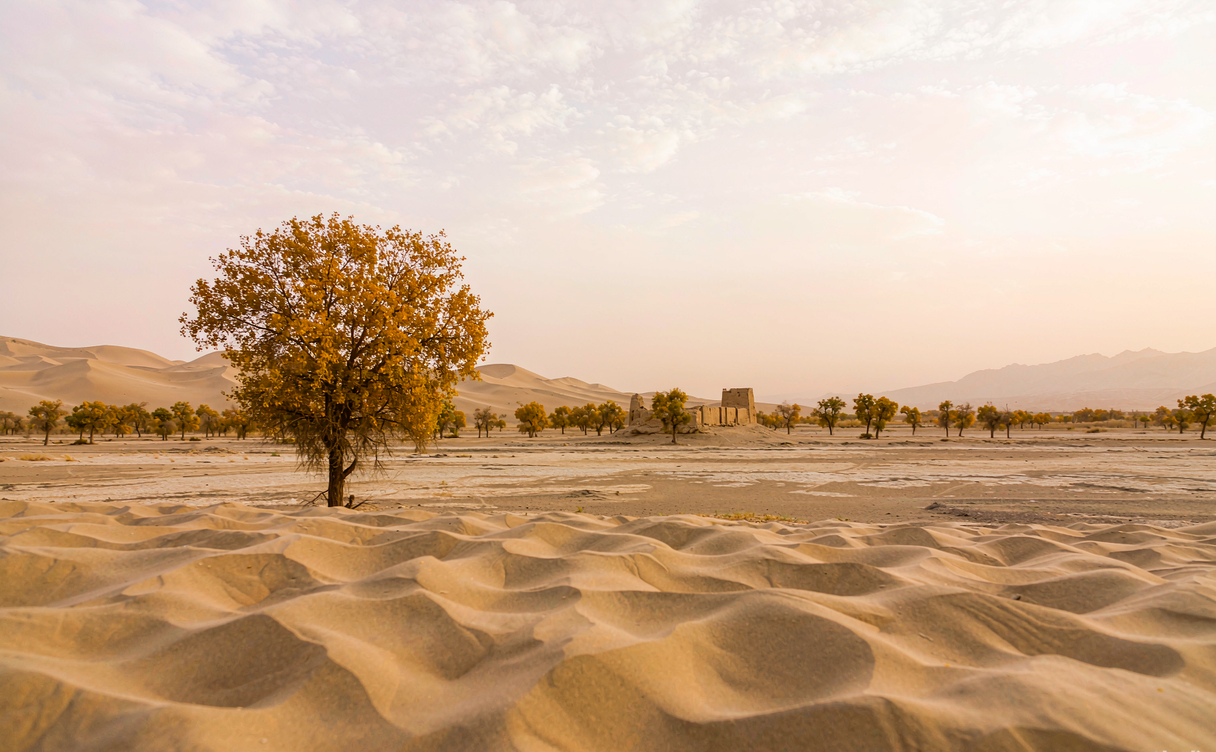
I recommend budgeting 4–5 hours total for the west-line portion that includes Yumen Pass, or a focused 2 hours if you only stop at the pass itself. Bring more water than you think (the dryness fools you — I go through 1.5 liters on a cool day), a windbreaker even in summer, sunglasses, and a scarf for dust. There is a small café at the entrance but no real restaurant, so eat in Dunhuang before you leave; the northwestern noodles at a corner shop near the museum are worth it.
Photographers: the light flattens at noon, so if you can, arrive by 9 am or stay until 5:30 pm. Drones are restricted near the military-adjacent areas, so ask at the gate before flying — on my last trip a ranger waved me down within two minutes of takeoff, and the rule is taken seriously out here.
If you’re combining this with a longer northwest drive, our Qinghai–Gansu loop itinerary shows how to link Dunhuang, Zhangye, and Qinghai Lake into one trip without backtracking. It is the route I send to most first-timers who have a week or more and want the desert, the lakes, and the rainbow mountains in a single loop.
A note on history and the landscape
For the deeper context, the Wikipedia entry on Yumen Pass has a solid summary of the pass’s role in Han and Tang frontier policy, and I’d read it on the drive out. But no page prepares you for the silence. On my last trip, our driver switched off the engine at the Square City and we just stood there for five minutes listening to the wind move across the gravel. That, more than any museum, is what Yumen Pass gives you: a physical sense of the edge of an empire, and of how far “home” was for the soldiers stationed here.
If you only take one thing from this Yumen Pass guide, make it the timing: a calm May or September morning beats a dramatic August noon every time. Build the pass into a west-line day, carry more water than feels reasonable, and leave the drone in the bag unless a ranger waves you through.
Closing
Yumen Pass will not wow you with scale — it is a square of old mud on a flat plain, and if you arrive at noon in August you may wonder why you drove 90 km for it. But if you’ve come to China to touch the Silk Road rather than just photograph it, this is one of the few places where the history is not reconstructed for you. Walk the Han wall, read the poem on the plaque, and let the wind do the rest. Pair it with Mogao and Crescent Lake and you’ll leave Dunhuang with the full arc of the desert frontier in your head — the faith, the trade, and the loneliness, all in one short stretch of Gobi.