

Our Crescent Lake Dunhuang guide opens on one of the most surreal sights in northwest China: a perfect crescent of water cradled by towering golden dunes, an oasis that has survived in the Gobi for more than two thousand years. This Crescent Lake Dunhuang guide covers how to get there, what to do on the Mingsha sand dunes, when to go for the best light, and how to combine the site with the Silk Road highlights around Dunhuang. Whether you want a Dunhuang camel ride at dawn, a slide down the sand on a board, or a quiet Dunhuang desert sunset, the Echoing Sand Mountain (Mingsha Shan) delivers a desert experience that feels both thrilling and serene. The lake, the dunes, and the old trading town together make Dunhuang one of the most rewarding stops on any northwest China journey.
Where Is Crescent Lake and Why It Matters
Crescent Lake, known in Chinese as Yueyaquan, sits about six kilometers south of Dunhuang city in Gansu province, where the Gobi desert oasis China travelers dream about meets the dry winds of the Taklamakan. The lake is tiny — roughly 100 meters long and 25 meters wide — yet it has never been buried by the surrounding dunes, a hydrological puzzle that has amazed travelers since the Han dynasty. Dunhuang was a vital Silk Road stop, and the spring was a lifeline for caravans crossing the desert on either side. Today the site is protected within the wider Dunhuang scenic area, and the contrast of clear water and high sand mountains makes it one of the most photographed spots in the northwest. Its survival depends on underground springs, the shape of the basin, and modern conservation that limits city groundwater pumping. The site is described in detail on Wikipedia’s overview of Crescent Lake, which notes its status as a protected natural and cultural landmark.
The Mingsha Sand Dunes (Echoing Sand Mountain)
The dunes that guard the lake are the Mingsha sand dunes, also called the Singing or Echoing Sand Mountain (Mingsha Shan). The name comes from the sound the sand makes: as you climb or slide, the grains resonate with a low hum, like a distant drum or the buzz of an approaching plane. Scientists attribute the effect to the uniform size and dryness of the quartz grains and the way they shear against each other on steep slip faces. The Echoing Sand Mountain rises more than 200 meters above the plain, and from the ridge you can see the lake below and, on clear days, the thin string of poplar trees that mark the old oasis line. The dunes run for miles, their crests shifting with every wind, so the view never looks quite the same twice.
Why “Echoing”?
The local legend says the sound is the trapped music of a buried army, but the real cause is the dunes’ steep faces and the friction of millions of uniform grains sliding together underfoot. Visitors report the noise is strongest in dry, windy conditions, and standing at the top during a gust is genuinely uncanny. Bring a small bag to protect your phone and camera from the fine, pervasive sand, and consider a cheap pair of cloth booties sold at the gate so you can walk the dunes barefoot without burning your soles at midday.
Things to Do at Mingsha Shan
There is far more to the site than gazing at the water from the boardwalk. The dunes are a genuine playground, and most travelers spend two to four hours here, longer if they stay for sunset.
Dunhuang Camel Ride
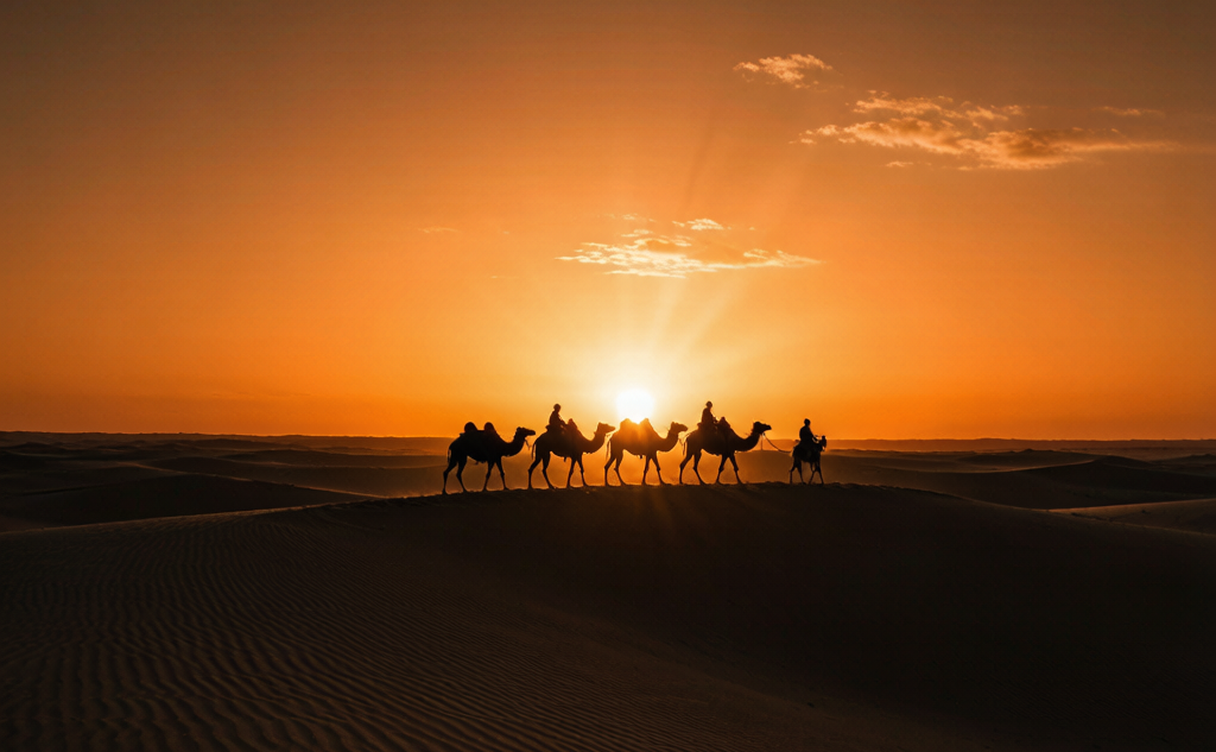
The classic experience is a Dunhuang camel ride across the lower dunes to the lake. Long caravans of Bactrian (two-humped) camels set out from the east gate, and a loop of 20 to 40 minutes costs around 100 to 150 yuan. It is the closest you can get to retracing the Silk Road caravan feeling, complete with jingling tack and the slow, rocking gait of the animals, and the camels are well cared for by local herders who know each beast by name. Go early to avoid both the heat and the queues, and wear a light scarf because the sand kicks up with every footstep. Children are usually welcome on a camel with a parent, and the handlers will happily take a photo for you at the top of the first rise.
Sand Sledding Dunghuang
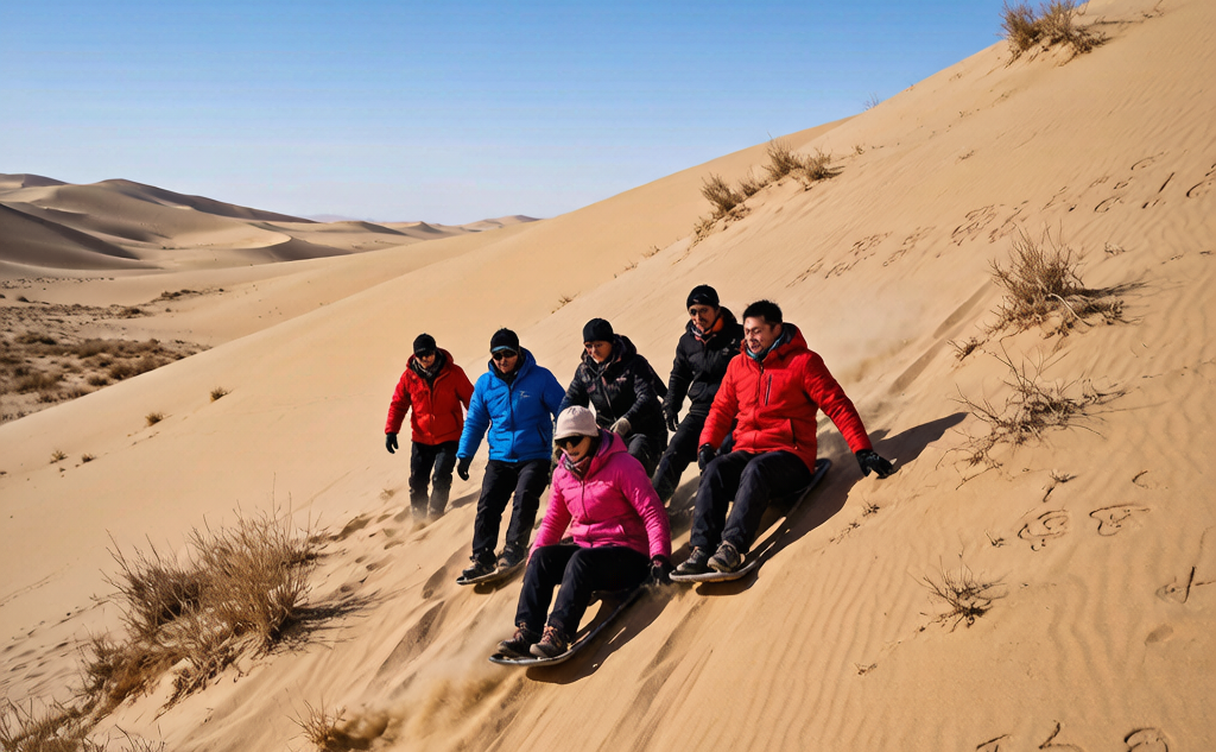
For adrenaline, try sand sledding Dunhuang style: rent a flat board at the base and ride it down the steeper faces. It is safe, beginner-friendly, and surprisingly fast; attendants at the bottom help you carry the board back up for another run. Sandboards can also be rented for surfing the dunes on foot, and the wide, empty slopes mean there is room for everyone. This is a hit with kids and a fun counterpoint to the calm lake, and many visitors say it is the most unexpectedly joyful thing they did all day.
Dunhuang Desert Sunset
The reward for climbing the highest ridge is the Dunhuang desert sunset, when the dunes glow orange and the lake below turns to liquid copper. Many visitors time their entry for late afternoon, watch the light change across the sand, then descend as the first stars appear. The park stays open into the evening in summer, and the cooler air makes the climb far easier than at noon. Bring a small flashlight or keep your phone charged for the walk down, because once the sun dips the basin goes pitch dark very quickly.
Best Time to Visit Dunhuang
The best time to visit Dunhuang is spring (April to May) and autumn (September to October), when daytime temperatures sit in a comfortable 15 to 25 degrees Celsius and the light is soft and golden. Summer (June to August) is brutally hot, often above 35 degrees, though it suits sunset visits and the occasional evening festival, and the long daylight gives you more hours on the dunes. Winter is freezing but beautifully empty, with the lake partly iced and the dunes swept clean of footprints, perfect for photographers who want the place to themselves. For a wider seasonal picture across the country, see our best time to visit China guide, and note that Gansu’s shoulder seasons are ideal for pairing this stop with other northwest sights without the crowds.
Tickets, Hours, and Getting There
- Tickets: Entry to the Crescent Lake and Mingsha Shan scenic area is around 110 yuan in peak season and less off-season, and the pass is usually valid for three days so you can return for sunrise or sunset on the same ticket.
- Hours: Roughly 06:00 to 19:30 in summer and shorter in winter; times shift with the season, so confirm locally before you go.
- Getting there: A taxi or local bus (route 3) runs from Dunhuang city center to the east gate in about 15 to 20 minutes. Dunhuang is reachable by air (Dunhuang Airport) and by train on the Lanzhou to Xinjiang railway line, with connections from Lanzhou, Xian, and Turpan.
Combine With Nearby Silk Road Highlights
No Crescent Lake Dunhuang guide would be complete without the neighboring wonders that make the region so compelling. The Mogao Caves guide covers the UNESCO-listed grottoes just 25 kilometers away, home to a millennium of Buddhist art and the famous Library Cave manuscripts. For a broader route, our China Silk Road itinerary links Dunhuang with Turpan, Kashgar, and Lanzhou into one epic overland journey. Northwest of the city, the Zhangye Danxia rainbow mountains offer a second jaw-dropping landscape of striped cliffs in reds and yellows, while the Jiayuguan Fort in Gansu marks the western end of the Great Wall where the wall meets the desert. Together these form one of the richest cultural corridors in all of Asia, and Crescent Lake is the perfect gentle introduction to it.
What to Pack for the Dunes
Desert conditions are deceptively harsh, so a little preparation goes a long way. Sunglasses and a brimmed hat shield you from glare that bounces off the sand, and high-SPF sunscreen is essential even on cooler days. A reusable water bottle keeps you hydrated in air that steals moisture from your skin, and a light scarf doubles as sun protection and a sand shield. Closed shoes are fine, but most people prefer to slip them off and use the cloth booties sold at the entrance.
Practical Tips for Visitors
- Footwear: The sand is scorching by midday; shoes you can dump sand from are ideal, or buy booties at the gate.
- Hydration: Carry water; the desert is dry and deceptive, and you will sweat more than you notice.
- Photography: Morning and late afternoon give the best dune shadows; a polarizing filter cuts glare on the lake.
- Etiquette: Stay on marked paths around the lake to protect the fragile spring, and never climb the fenced conservation banks.
- Crowds: Arrive at opening or after 16:00 to dodge the big tour buses and catch the best light.
FAQ
How long should I spend at Crescent Lake?
Two to four hours covers the lake, a camel ride, and a dune climb; add time for sunset if you return in the evening on your multi-day pass.
Can you swim in Crescent Lake?
No. The lake is a protected cultural site, and swimming is prohibited to preserve its ecology and water quality.
Is the climb difficult?
The ridge is a steep walk on loose sand and takes 20 to 40 minutes; a boardwalk and rope sections help, and a shuttle saves your legs for a small fee.
Is it worth visiting in summer?
Yes, if you arrive early or late; midday heat is intense, so plan your climb around sunrise or sunset instead.
Final Thoughts
This Crescent Lake Dunhuang guide shows why the site endures as a symbol of the Silk Road: a slim arc of water that defeats the desert, ringed by singing dunes and lit by some of the cleanest sun in China. Time your visit for the best time to visit Dunhuang in spring or autumn, ride a camel across the Mingsha sand dunes, and stay for the Dunhuang desert sunset that turns the whole basin to gold. Pair it with the Mogao Caves and the wider northwest for a journey through the heart of the ancient trade routes, and you will understand why travelers have stopped here in wonder for two thousand years.