

We’ve taken travelers to Shizhong Mountain (石钟山) more times than we can count, and yet the moment the boat rounds the spit of land where the Yangtze River crashes into Poyang Lake, the same hush falls over the group every single time. This is a small mountain — you can walk its entire circumference in under an hour — but it punches far above its size. If you are building a Shizhong Mountain Jiangxi guide into your Jiangxi itinerary, know this up front: Shizhong is not a hike, it is a literary pilgrimage.
The name means “Stone Bell Mountain,” and the story behind it is the reason the hill sits on any traveler’s map at all. In 1084 the Song-dynasty poet and statesman Su Shi (苏东坡) sailed here, tapped the cliff rocks with a stone, and heard a sound like a ringing bell. He wrote it up in his famous essay “Record of the Stone Bell Mountain” (《石钟山记》), gently mocking earlier scholars who had guessed at the name from their desks without ever visiting. That essay is still required reading in Chinese high schools, which is why nearly every domestic traveler you meet on the path will know the place by heart.
Where Shizhong Mountain sits and why it matters
Shizhong Mountain stands in Hukou County (湖口县), on the northern edge of Jiujiang City, right at the choke point where Poyang Lake — the largest freshwater lake in China — drains into the Yangtze. The Shizhong Mountain Poyang Lake pairing is not just geographic; it is the whole point. Stand on the north cliff and you see two completely different bodies of water meeting: the lake water runs clearer and greener, the Yangtze churns brown and silt-heavy, and the seam between them is a moving line you can photograph for an hour.
We always tell first-timers that this is a half-day stop, not a destination in itself. It slots in perfectly as you pass through Jiujiang, paired with a morning on the Poyang Lake guide or a few days up on the Lushan Mountain guide. For travelers coming from the south, the Nanchang travel guide is the usual launch point for the whole province.
Getting there: the Shizhong to Jiujiang trip
Most visitors reach Shizhong as a Shizhong to Jiujiang trip add-on. Jiujiang is the transport hub:
- By train: High-speed trains (G/D) link Jiujiang with Nanchang (about 1 hour, ¥60–80 second class), Wuhan (about 2 hours), and Hangzhou (about 3.5 hours). From Jiujiang Railway Station a taxi to Shizhong Mountain in Hukou takes roughly 40 minutes and costs ¥90–120.
- By bus: Jiujiang’s long-distance bus station runs local buses to Hukou County (¥20–25, about 1 hour). From the Hukou bus station it is a 10-minute taxi (¥15) to the scenic gate.
- By car: The mountain sits right off the G70 Fuzhou–Yinchuan Expressway. Driving from Nanchang takes about 1.5 hours.
Entry to the scenic area is ¥60 per person (2025 season; always confirm at the gate). There is a combined ticket with the small Stone Bell museum that runs ¥80. Students with a valid ID get half price; children under 1.2 m enter free. The site opens at 08:00 and last entry is 17:00, though we recommend being through the gate by 15:30 to keep light for the cliff photos.
Things to do at Shizhong
The list of things to do at Shizhong is short, and that is the charm:
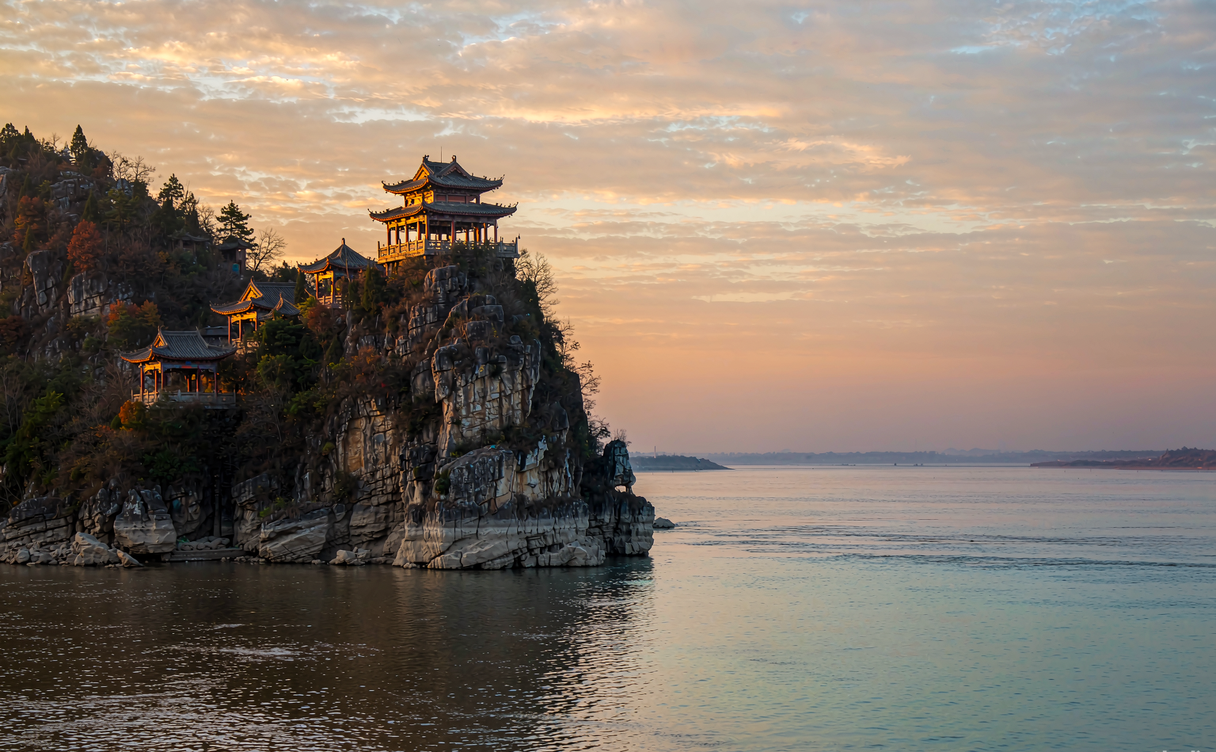
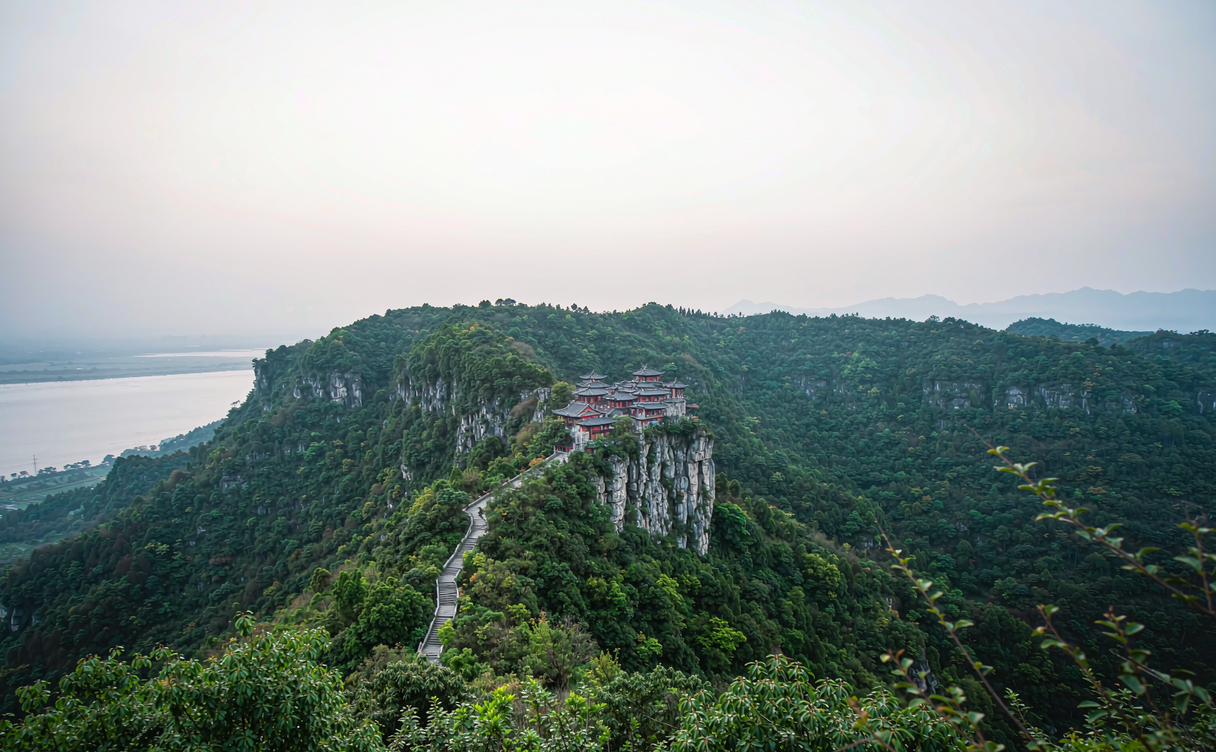
1. The cliff-top temple complex. A working Hall of the Heavenly King and a small Guanyin shrine sit on the rocky summit, with a viewing terrace that juts out over the water. The original structures burned and were rebuilt in the Qing dynasty; the current pavilions date from the 1980s restoration.
2. The Bell Tower and the “real” stone bell. A large cast bell hangs in a pavilion, and guides tap replica stones to demonstrate the resonance Su Shi described. It is touristy, but kids love it.
3. The riverside plank path. A wooden walkway runs along the base of the cliff where the water has hollowed the limestone into bell-shaped cavities. At low lake levels you can see the honeycomb rock up close.
4. Su Shi’s inscription wall. A carved stone near the south gate reproduces lines from his essay. We read a few lines aloud with groups — it lands differently when you are standing on the actual rock.
Best time to visit Shizhong
For best time to visit Shizhong, timing is about water, not weather. Poyang Lake is a seasonal lake: it swells to a vast inland sea in summer and shrinks to channels and wetland in winter.
- June to August: The lake is at full flood and the Yangtze–lake meeting line is dramatic. Hot (30–35°C), so go early.
- September to November: Our favorite window. The water is high enough for the contrast shot, temperatures sit at a comfortable 18–25°C, and the light is clean.
- December to February: The lake drops and the wetlands behind Hukou become a wintering ground for Siberian cranes and tens of thousands of migratory birds. Bring a scope; the mountain itself is quiet.
Avoid the week-long National Day holiday in early October if you can — domestic tour groups pack the narrow paths.
Shizhong Mountain history you will actually remember
The Shizhong Mountain history that matters to a traveler is literary, not military, though the hill did guard the lake’s mouth for centuries. The takeaway we leave groups with: this mountain is famous because one curious man refused to trust secondhand accounts. Su Shi’s essay is essentially the world’s oldest piece of travel fact-checking. When you tap the rock and hear the hollow note, you are repeating an experiment nearly a thousand years old.
If your route continues east, the Wuyuan travel guide covers the Hui-style villages two hours south, and the Jingdezhen travel guide pairs well if you want porcelain after your lake. For deeper context on the craft, see our Jingdezhen porcelain guide.
Food and practical tips near the gate
Hukou is known for river fish, and the restaurants just outside the scenic gate serve “石钟鱼” (Shizhong fish) — small fried lake fish with chili, ¥38–58 a plate — and a clean river-shrimp soup for ¥45. Nothing fancy, all fresh. There are no hotels on the mountain; stay in Jiujiang (15–40 minutes away) where you will find everything from ¥180 hostels to ¥700 lake-view business hotels.
For solid background on the lake itself, the encyclopedia entry at Poyang Lake on Wikipedia has useful hydrology and bird data that we have found genuinely helpful when planning winter trips.
Insider tips from our guides
We have learned a few things the brochures do not say. The best photos of the two-colored water come from the north viewing terrace between 09:00 and 10:30, when the sun is behind you. The site has little English signage, so download a translation app or hire the ¥80 English-guided tour at the gate — worth it for the Su Shi stories alone. The rare days right after a heavy summer storm are when the Yangtze runs clearest and the color split is sharpest, so if you are a photographer, watch the forecast. And one more: combine your visit with a short boat ride from Hukou pier (¥40 per person, 30 minutes) to see the cliff from the water, where the bell-shaped rock hollows are most obvious.
Shizhong will not fill a day, but it will give your Jiangxi trip a story that started a thousand years ago on a borrowed boat.
Book your Jiujiang–Hukou taxi through the hotel to lock in the ¥90–120 metered fare.
Arrive before 10:30 for the cleanest two-water-color shot from the north terrace.
Pair Shizhong with a Poyang Lake boat trip to catch the winter cranes.