

We first ran a Dajue Mountain Jiangxi trip for a group of nervous glass-walkway skeptics, and by the end every one of them was leaning out over the gorge grinning. Dajue (大觉山) sits in Zixi County (资溪县), in the mountains east of Fuzhou City, and it is one of those Jiangxi spots that most foreign visitors have never heard of — which is exactly why we love sending people there. It pairs a serious Buddhist zen mountain with a legitimately adrenaline-pumping glass bridge, and it does both without the crowds you’ll find on the famous peaks.
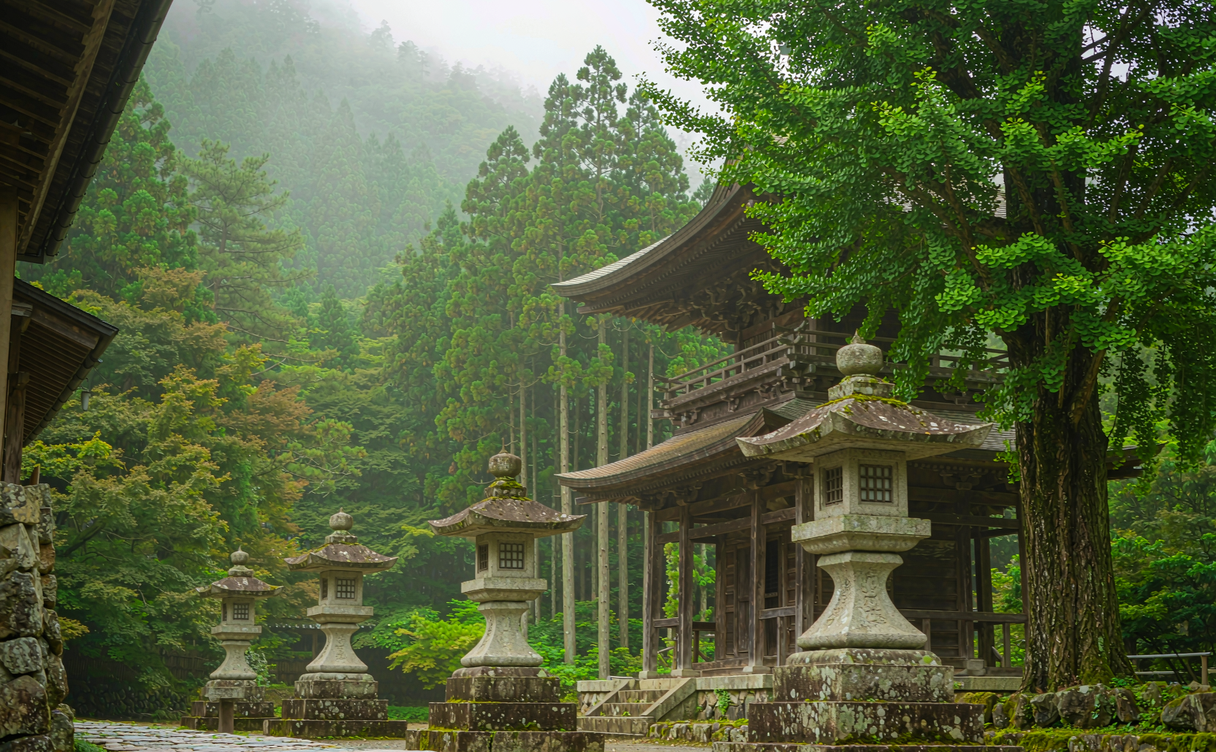
The name means “Great Awakening Mountain,” and the place wears its Buddhist identity openly. At the foot of the cliffs stands a colossal open-air Buddha statue, and the mountain’s temple complex, Dajue Temple (大觉寺), has been a meditation site for centuries. The modern development layered a cable car, a glass walkway, and a mountain stream rafting run on top of that old spiritual core, so you can spend the morning praying and the afternoon screaming into the wind. That mix is unusual and, frankly, a lot of fun.
Getting there: the Dajue to Nanchang trip
Most travelers approach as a Dajue to Nanchang trip, since Nanchang is the provincial capital and the easiest flight and train hub:
- Train + bus: Take a high-speed train from Nanchang West to Fuzhou (in Jiangxi, not Fujian) — about 1.5 hours, ¥75–95 second class. From Fuzhou station a bus or taxi runs the final 50 km to Zixi and the Dajue Mountain gate (about 1 hour, ¥80–120 by taxi).
- Direct bus: Nanchang’s main long-distance station has coaches to Zixi (about 2.5–3 hours, ¥60). The scenic area shuttle meets arriving buses.
- By car: From Nanchang it is roughly 180 km, about 2.5 hours via the G60 Shanghai–Kunming Expressway then the G316.
Entry to the core scenic area is ¥80 per person. The cable car (up and down) is ¥70, and the glass walkway/bridge access is bundled into a ¥150 “experience combo” that most visitors buy — it covers the cable car, the bridge, and the shuttle. Students get roughly half off with a valid ID; children under 1.2 m ride free with a paying adult. Gates open at 07:30 and the last cable car down leaves at 17:00, so plan to be at the base by 15:00 at the latest.
Things to do at Dajue
The things to do at Dajue split cleanly into two tracks:
The zen and culture track
1. Dajue Temple and the Great Buddha. The bronze seated Buddha at the mountain’s foot is about 30 m tall and the centerpiece of the lower grounds. The temple above hosts monks and is open to respectful visitors; morning chanting around 06:30 is open if you stay nearby.
2. The cliff pagodas and old meditation caves. Higher up, a cluster of small stone niches and a rebuilt pagoda mark where hermits once sat. Quiet and uncrowded even on busy days.
The adrenaline track
3. The glass walkway. A transparent span fixed to the cliff face, roughly 100 m long, with a section of glass-floor balcony that drops straight to the valley. Not for the faint of heart, and yes, it flexes slightly when a group runs across.
4. The cable car and sea of clouds. The 8-minute ride lifts you above a rolling bamboo-and-pine slope; after rain in spring and autumn the cars glide through actual cloud.
5. Mountain stream rafting. In summer the Dajue Mountain rafting run (separate ¥120 ticket, roughly May to September) drops you through a cool forested gorge — a great way to shed the heat.
Dajue Mountain hiking
For Dajue Mountain hiking, the maintained path from the upper cable car station to the summit ridge is about 2 km of stone steps, mostly shaded, taking 40–60 minutes at a relaxed pace. It is not technical and families manage it, but it is a steady climb. The real reward is the ridge viewpoint where you can see the Buddha below and the green wall of the Wuyi foothills beyond. We usually tell fit travelers to skip the upper cable car and walk down instead of up — knees forgive descents more than ascents.
Best time to visit Dajue
Best time to visit Dajue breaks down like this:
- March to May: Our top pick. Warm (18–26°C), everything green, and the cloud sea after spring rains is the best of the year.
- June to August: Hot and humid (up to 34°C) but the forest and rafting keep it bearable; this is peak domestic season, so arrive at opening.
- September to November: Clear, cool, and photogenic; the glass walkway views are crispest.
- December to February: Cold and quiet, occasional frost on the ridge; some facilities close, but you may have the mountain nearly to yourself.
Avoid the National Day week in early October — the glass bridge queues can run 90 minutes.
Food, stay, and the bigger Jiangxi picture
Inside the gate, snack stalls sell Zixi rice noodles (资溪米粉, ¥15 a bowl) and grilled mountain trout (¥45). For a real meal, head down to Zixi town where a full bamboo-shoot-and-farm-chicken hot pot runs ¥80–120 for two. Lodging ranges from ¥200 guesthouses at the base to the ¥600–900 zen-themed resort hotel just outside the gate, which we book for groups who want the 06:30 chanting.
Dajue sits neatly between two heavier hitters. The Fuzhou Jiangxi travel guide covers the city you’ll transit through, the Lushan Mountain guide is the famous peak two hours north, and the Jinggang Mountain guide gives the revolutionary highlands to the southwest. For a gentler, greener contrast, the Wuyuan travel guide is two hours east, and the Nanchang travel guide is your rail hub home.
For regional context, the overview at Mount Lushan on Wikipedia explains the wider Jiangxi mountain belt that Dajue belongs to, which helps first-time visitors understand the province’s terrain.
Zixi town and the road in
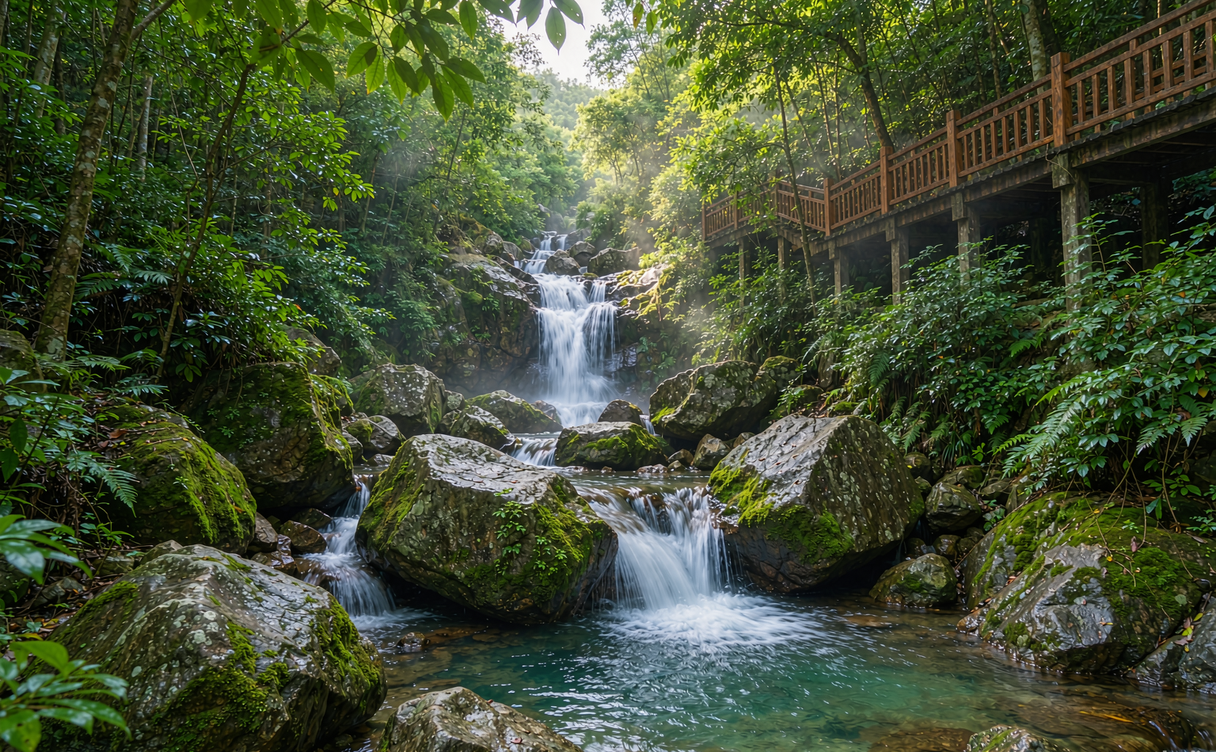
Most travelers breeze through Zixi County on the way to the gate, but we usually build in an hour for it. Zixi is a small, genuinely local county town with a tidy pedestrian street where you can try “资溪面包” (Zixi bread) — the county is oddly famous across Jiangxi as the birthplace of a bakery chain, and the local egg-custard buns (¥3 each) are a real thing, not a gimmick. The road from the county to the mountain follows a clean mountain stream the whole way, and there are pull-off spots where locals swim in summer; we sometimes stop for ten minutes so first-timers see the water they will later be rafting.
One practical note: there is almost no English spoken in Zixi or at the gate, and the combo-ticket app is Chinese-only. If you are not comfortable with translation apps, this is a good stop to have a driver or guide who can handle the booking for you. The payoff is a mountain that feels discovered rather than packaged — a rare thing in a province with Jiangxi’s heavyweight sights, and a reminder that the best Dajue Mountain hiking days are the unhurried ones.
Insider tips from our guides
We have a few hard-won pointers. Buy the ¥150 combo online through the official WeChat mini-program the night before — on-site windows sell out of combo slots on weekends. Wear shoes with grip; the glass is safe but the approach steps get slick after rain. If you want the bridge to yourself, be at the upper station by 08:00 — tour buses roll in around 10:00. And one we always share: the lower temple’s vegetarian lunch (¥30, 11:00–12:30) is simple, filling, and a genuine slice of monastic life you won’t get at the summit snack bars.
Dajue is the Jiangxi mountain we recommend to travelers who want a famous peak’s drama without a famous peak’s lines.
Book the ¥150 combo online the night before to avoid weekend sellouts.
Reach the upper cable car by 08:00 to beat the tour-bus crowds.
Wear grippy shoes since the approach steps get slick after rain.