

On our first tulou trip we arrived in the Hakka hills of Nanjing County after dark, and the only light came from the narrow doorway of a four-story earthen tower. Inside, a single courtyard opened to the stars and a wood fire crackled under a stairwell. That night, sleeping in Fujian tulou stopped being a travel bullet point and became the most memorable bed of the whole southern China loop. This Fujian tulou stays guide is built from that trip and the dozen bookings we have arranged since.
The tulou are massive circular or square earthen fortresses built by the Hakka and Minnan people from the 12th century onward, packed earth walls up to 1.8 meters thick wrapped around a communal courtyard. In 2008 UNESCO listed forty-six of them as World Heritage, and a growing number now take overnight guests. If you want to understand the layout before you book, our Fujian tulou villages overview maps the main clusters.
What makes the stay unusual is the wall itself. Packed earth, stone, and bamboo are rammed in layers inside a wooden frame until the structure reaches a meter and a half thick, then timber floors and a tiled roof are added. That mass is why a tower stays cool in July and warm in January with no machine, and why the rooms are so quiet. You are not renting a room so much as lodging inside a hand-built hill that has sheltered the same family line for generations.
Which towers actually take guests
Not every tulou is a hotel, and the best stays are in working villages rather than the polished ones by the parking lot. Around Hongkeng and the Zhencheng Lou area in Yongding you will find the most established guesthouses, many inside genuine old towers. Near Tianluokeng in Nanjing County, the “four dishes and one soup” cluster of five towers is the postcard view, and a few of those circles now rent rooms. We send most first-timers to the Hekeng or Chuxi clusters, where the towers are quieter and the families cook for you. The shapes tell the story: circular towers, the ones everyone photographs, were built later and prized for symmetry and defense, while square and rectangular towers came first and dominate around Yongding. The largest, Chengqi Lou near Hongkeng, packs four rings around a central shrine and once housed several hundred people. We steer first-timers toward a mid-sized circle of thirty to fifty rooms, where the scale feels intimate rather than stadium-sized.
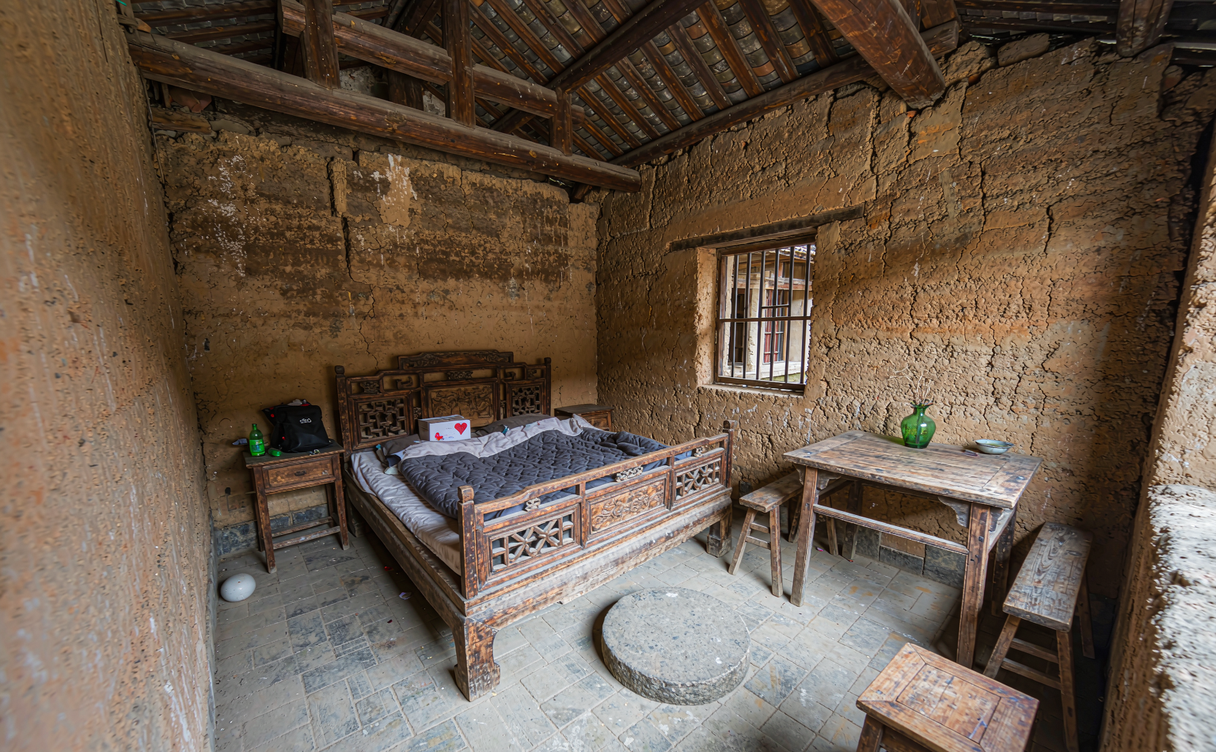
A real tulou homestay means a room off the upper ring, shared bathrooms on the landing, and breakfast cooked by the host family. The walls are thick enough that even a full courtyard of relatives stays silent by ten. Expect wooden floors that creak, paper lanterns, and a view straight down into the central shrine. It is atmospheric, not luxurious. The rhythm of the evening is its own reward. After dinner the family gathers in the courtyard, the fire dies down, and the only sound is the wind in the bamboo beyond the wall. Our clients who worried about the missing TV were the first to say they slept best there. Bring a book, but expect not to finish it.
What a night actually feels like
Check-in is informal. The host meets you at the village gate because cars cannot reach the tower, carries your bag up a worn stone ramp, and shows you to a room with a low bed, a thermos of hot water, and a single window onto the courtyard. Dinner is communal: stir-fried greens from the terrace, a clay-pot of local chicken, and the chewy Hakka tofu skins we now crave for weeks after. A full guesthouse dinner runs RMB 50–90 per person, and breakfast of congee, eggs, and rice noodles is usually RMB 15–25.
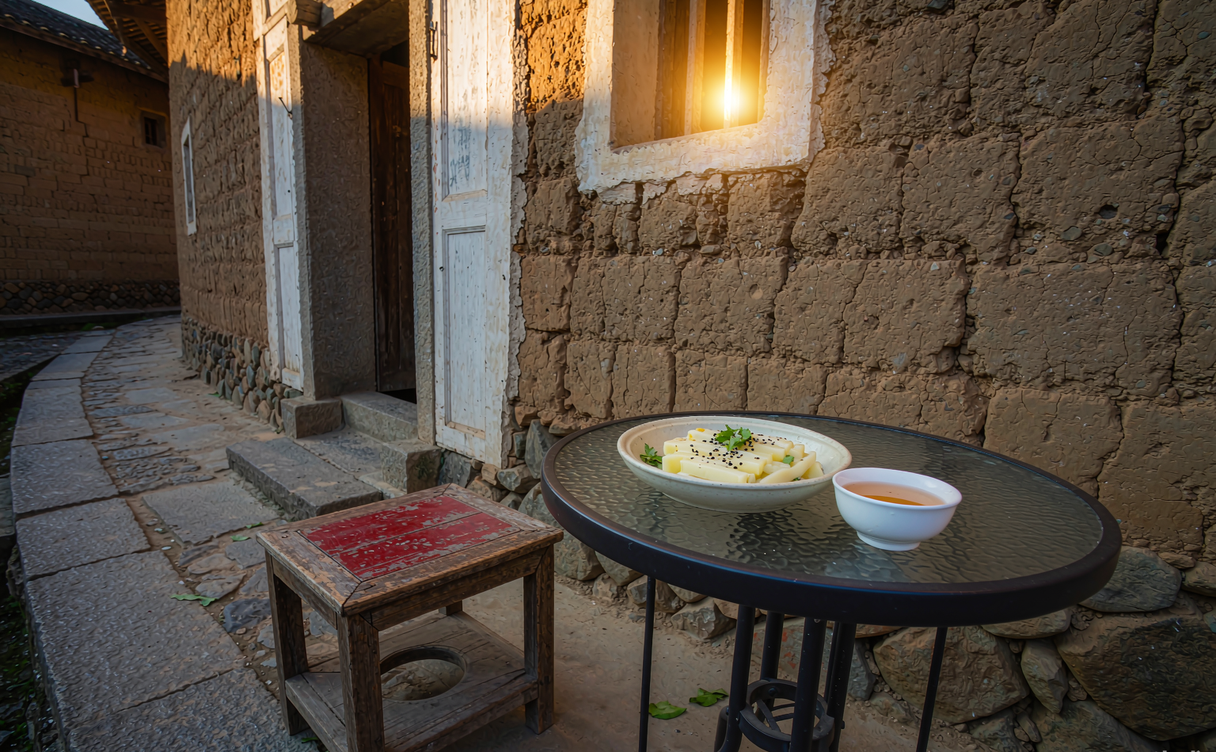
The Hakka earthen tower stay experience is as much about the people as the building. On our last visit the grandmother of the house brewed osmanthus tea and walked our clients through the ancestor tablets in the central hall. That human layer is why we rate these above a standard heritage-hotel pick for travelers who want story over thread count.
Book the family-run towers directly through your agent rather than the big restored ones — the smaller villages are where the cooking and the welcome are real.
Food, seasons, and how to get there
The Fujian food tour angle is strong here: salt-baked chicken, ban tiao noodles, and the sweet peanut soup of the region all show up at the breakfast table. Spring (March to May) and autumn (September to November) are the best windows — mild, green, and free of the summer downpours that turn the lanes to mud. Avoid the week of the October National Day holiday, when the main towers are shoulder to shoulder.
Transport is the part first-timers underestimate. Most fly into Xiamen and either rent a car (about three hours to Nanjing County) or take a high-speed train to Nanjing or Longyan, then a county bus or driver for the final hour. Our Xiamen travel guide covers the airport and train links in detail. A private car for the day, useful for hopping between scattered clusters, runs roughly RMB 400–600. Two local drinks are worth trying. The Hakka brew a clear rice liquor, served in tiny cups at dinner and deceptively strong, and the region’s oolong and narcissus teas are surprisingly good, often poured by the host after the meal. Buy a bag of the local leaf at the village shop for RMB 30–60 and it will taste better at home than anything at the airport.
Prices and what to expect for your money
Rates for a simple tulou accommodation room run RMB 200–400 a night in a family tower, rising to RMB 500–900 in the better-restored ones with private bathrooms and heating. Winter drops those by a third but many unheated towers close from January to February. For the money you get a location no hotel can copy and a host who will likely walk you to the best morning-light photo spot before breakfast.
Bring cash — several villages have no working ATM and the guesthouses often take only cash or WeChat. Earplugs help if your room sits above the courtyard shrine during a festival. And tell your host if you need a heater; the thick walls hold cold as well as they hold quiet.
Etiquette is simple but pays off. Step over the threshold rather than on it, ask before photographing the ancestor hall, and offer to help with the dishes — hosts beam when guests join the kitchen. The tower is a working home, not a museum, and the faster you slip into that rhythm the better the evening gets. Mornings belong on the rooftop: climb to the top ring at first light and you will have the whole village to yourself.
Pair a tulou night with a few days in an old town nearby — our China ancient town stays guide lists the best pairings in the region.
A tulou hotel worth the detour
The honest takeaway from every client we have sent: a tulou hotel inside a living tower beats a replica every time. You trade a soft mattress and a lift for the sound of the courtyard at night and tea with the family who has lived there for generations. For background on why these structures matter, the listing at Fujian Tulou on the UNESCO World Heritage site explains the construction and history clearly.
Sleep in Fujian tulou once and the rest of your trip feels flat by comparison. It is the rare stay where the building, the host, and the landscape line up — and the one we most often get asked to repeat.