

I caught my first breath of Xining at 2,275 metres and immediately understood the food: at this altitude, you eat for warmth and fuel. Qinghai sits on the Tibetan plateau’s northeastern edge, where Han, Tibetan, Hui and Salar kitchens collide. The result is hearty, dairy-rich, and halal by default in most city eateries. This Qinghai cuisine guide is from two summers spent around Xining and the shores of Qinghai Lake, eating lamb, yoghurt and noodles until the thin air felt forgiving.
Yak yoghurt and milk tea: the plateau breakfast
Start every Qinghai morning with Qinghai yak yoghurt. It’s nothing like the sweet supermarket tubs — thick, tart, almost cheese-like, sold in small clay bowls topped with a spoon of white sugar. A bowl costs ¥5–8 at any corner shop near Xining’s Mojia Street. The first spoonful is a shock; by the third you’re hooked.
Pair it with milk tea (nai cha) — not the bubble-tea kind, but brick-tea boiled with milk and a pinch of salt, the Tibetan-style fuel that keeps herders going. A bowl is ¥4–6. Around the lake and in Tibetan tents you’ll also meet tsampa: roasted barley flour kneaded with butter tea into a dense, savory dough-ball. It looks plain; it tastes like toasted grain and mountain. Our China yogurt and dairy guide surveys this plateau dairy tradition alongside others across the west.
Hand-pulled lamb: the centerpiece
The dish that defines a Qinghai table is hand-pulled lamb (shou zhua yang rou). Whole rib racks of highland lamb are boiled plainly in water with scallion and salt — no heavy spice to hide the meat. You eat it with your hands (hence “hand-pulled”), dipping each juicy chunk in a coarse salt-and-pepper blend. The lamb here is pasture-raised on cold grasslands, so it’s sweet, lean, and nearly gamy-free.
In Xining, Yuan Sheng De (源升德) and the stalls of Mojia Street (莫家街) serve a half-rack for ¥68–98 feeding two. Around Qinghai Lake, herder yurts grill lamb skewers (kao yang rou) at ¥3–5 a stick. A hand-pulled lamb Xining tip: ask for the “front leg” (qian tui) — it’s the tenderest cut and locals fight over it. Our Xining travel guide lays out the city’s eating districts and how to reach the lake.
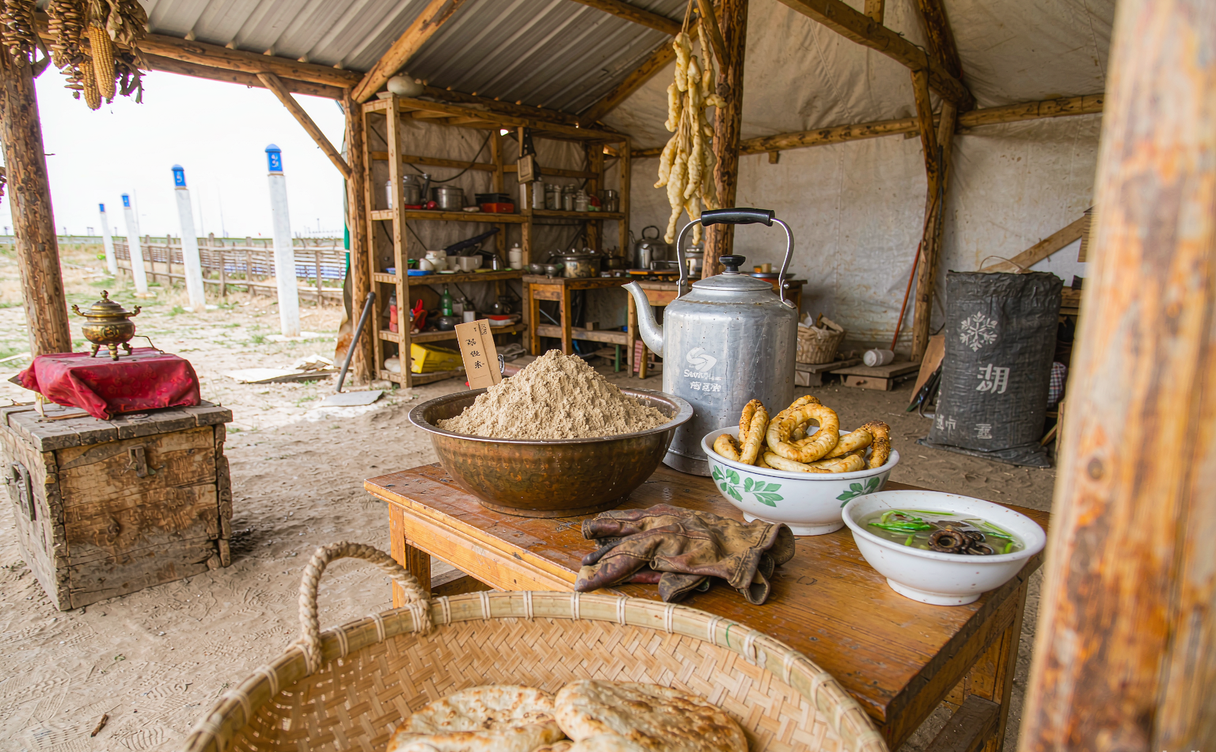
Tsampa and Tibetan food: eat like the herders
A tsampa and Tibetan food Qinghai meal is best had inside a tent kitchen near the lake or up in the Ganjia grasslands. Beyond tsampa you’ll get drokpa dried cheese, butter, and skyu — a hand-rolled barley pasta in mutton broth. It’s rustic and filling, and the hospitality is total: refuse a second bowl at your peril.
Where to try it: the Tibetan homestays around Heima He (黑马河) on Qinghai Lake’s south shore offer set meals at ¥50–80 per person, often with the family’s own yak yoghurt to finish. Our Qinghai Lake travel guide covers where to stay for these meals with a lake view.
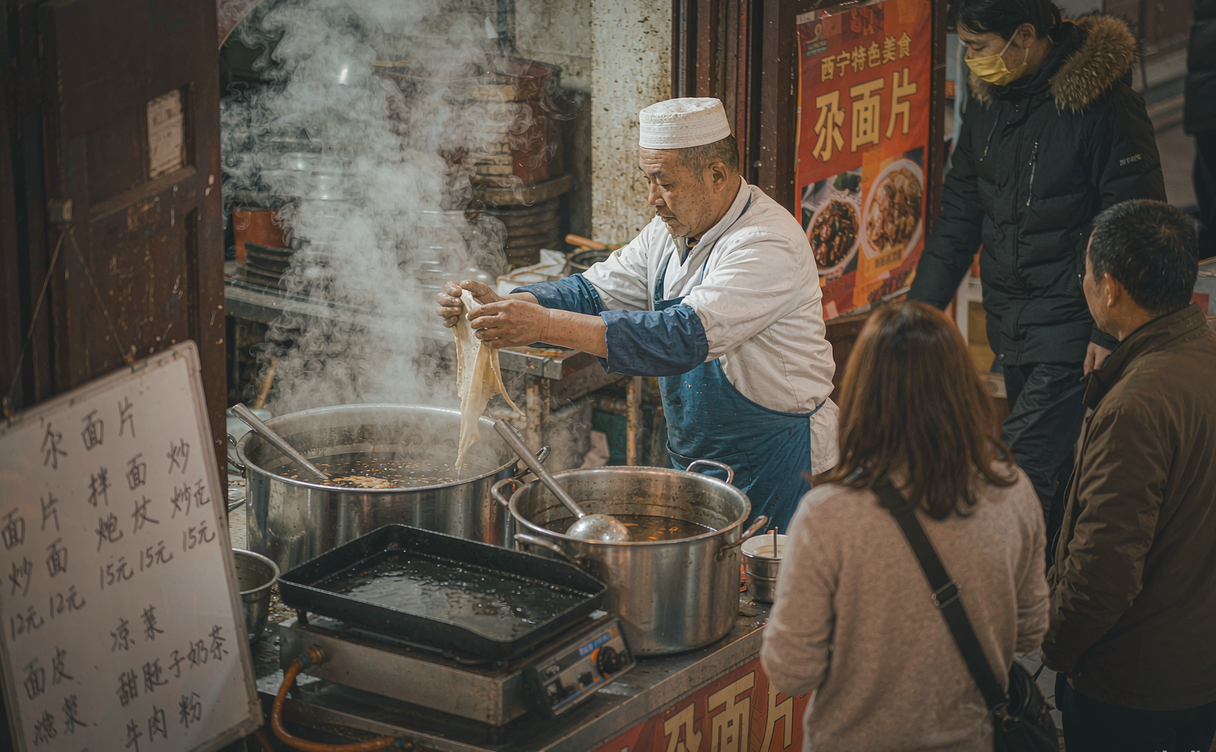
Plateau noodles: halal, hand-pulled, cheap
Qinghai’s noodle game is halal and excellent. The local Qinghai plateau noodle dishes lean on lamian (hand-pulled) and mian pian (ribbon “slices” of dough in broth). A bowl of beef lamian in Xining runs just ¥12–18, topped with chilli oil, radish and coriander. The city’s Baima (白马) and Yongqing halal lanes near the Dongguan Mosque are packed with shouting chefs stretching dough at 11 a.m.
Don’t overlook mian pian, the comfort bowl of the plateau: irregular hand-torn dough flakes boiled in a mutton-and-tomato broth with spinach and a gloss of chilli oil, ¥14. It’s softer and homier than lamian, the kind of meal herders eat after a cold morning. Xining also does a credible niurou geng — a thick beef gruel with pepper that doubles as breakfast and hangover cure, ¥8 a bowl from carts near the train station before 8 a.m.
For a cross-province comparison, our Lanzhou beef noodle guide shows how the neighbouring Gansu style differs — Qinghai’s is a touch oilier and heavier on the mutton.
Halal etiquette and altitude notes
Most Qinghai city restaurants are Muslim-run, so pork is off the menu and alcohol is scarce outside Han areas. Respect the no-pork rule and you’ll be welcomed warmly. Our halal food in China guide explains the etiquette for travellers.
Altitude matters for eating: at 2,000+ metres, heavy meals and cold beer can trigger headaches. Our China altitude sickness guide has the practical do’s and don’ts — eat light early, hydrate, and let the yoghurt and broth do the work.
Qinghai drinks, sweets and a plateau eating plan
Qinghai’s sweetness comes from dairy, not sugar. Ru zha (乳渣) — fried yak-milk curds dusted with sugar — are the local snack at ¥10 a bag, sold from baskets near temples. Suyou cha (酥油茶), salty buttered tea, is an acquired, lip-coating comfort best taken in small bowls. For a non-dairy option, the Hui halal bakeries sell you xiang (油香), fried sweetened bread, ¥3 each.
For a short food trip, base in Xining for the halal lanes and hand-pulled lamb, then take the morning bus or train to Qinghai Lake for a tent-kitchen Tibetan lunch and lakeside yoghurt. The loop is half a day each way and gives you both the city and herder sides of the plateau table. If you want the fuller western-China picture, our halal food in China guide explains the etiquette that makes these meals welcoming rather than awkward.
One more plateau essential: qing ke (青稞), highland barley, turns up as both tsampa and as a mild, earthy beer brewed locally — a lighter alternative to the heavier lagers of the east. A bottle of Qinghai Qingke beer costs ¥6–8 and pairs surprisingly well with hand-pulled lamb, though at altitude I’d cap it at one. The barley also appears as zhan ba (糌粑) crackers in the markets, a portable snack for the long drive out to the lake.
Seasons and tips
July–August is magic: warm days, wildflower meadows, and the year’s freshest lamb and yoghurt. Winter is brutally cold but the food is at its most comforting. A where to eat in Xining note: Mojia Street is touristy but reliable; walk one block to Hongguang Xiang for cheaper, more local halal joints.
Honest tips:
- Yak yoghurt is an acquired, sour taste — add the sugar they give you.
- Hand-pulled lamb is eaten warm, not hot; don’t wait.
- Cash helps at tent kitchens; card readers fail on the plateau.
- Go easy on the chilli oil at first — some Xining versions are fierce.
- Order yoghurt last; the cold-then-sour hit is the perfect full-stop to a lamb-heavy meal.
Qinghai food is blunt, warming and honest — yoghurt that puckers, lamb you pull apart with your hands, noodles that cost less than a metro ride. For the cultural backdrop of this plateau cooking, the Wikipedia page on Qinghai gives useful geographic and ethnic context. Eat slow, breathe deep, and let the altitude sharpen your appetite.