

I went to Wuhai (乌海) the first time for grapes, which sounds absurd for a coal-and-chemicals city in the far west of Inner Mongolia. But the sums make sense once you stand on the terraces: 3,000-plus hours of sunshine a year, cold nights, almost no rain during ripening, and irrigation water straight from the Yellow River. The result is a wine region nobody outside China has heard of, sitting between a reservoir the size of a small sea, a desert, and a limestone mountain covered in Bronze Age rock carvings. This Wuhai travel guide comes from two trips — a September harvest visit and a cold, clear April run — and it is written for travellers who like their destinations strange rather than pretty.
What Wuhai actually is
Wuhai was assembled in 1976 from two mining settlements, Wuda and Haibowan, and the name is a compression of both. It is a young, planned, industrial city of roughly half a million people, laid out in three separated districts along the river: Haibowan in the north, Hainan District in the south, Wuda across the water in the west. There is no old town and no imperial heritage to speak of.
What there is instead: the Yellow River running north through the city, dammed to create Wuhai Lake; the Ulan Buh Desert crowding the west bank; the Zhuozishan massif east of town; vineyards on the river terraces; and an unexpected civic obsession with calligraphy — Wuhai brands itself China’s calligraphy city and has a large art museum devoted to it, free to enter. That combination does not exist anywhere else, which is the honest case for coming.
Wuhai to Baotou train and other routes in
The Wuhai to Baotou train is the standard eastward link. D-train services from Wuhai station take roughly 1 hour 50 minutes to 2 hours 15 minutes and cost about ¥140–175 CNY in second class; older K and T trains do the same run in around four hours for ¥50–55 CNY in a hard seat, which is worth knowing if you are on a tight budget and not in a hurry. Continuing east, Hohhot is about three hours on the fast services.
Westward, D-trains reach Yinchuan in roughly 50 to 70 minutes for ¥50–90 CNY, which makes Wuhai an easy add-on to a Ningxia trip — many travellers do not realise the two are this close. Note that the city has more than one station: Wuhai, Wuhai West and Wuhai South all appear on booking apps and they are not interchangeable, so check which one your ticket names before you get in a taxi. Wuhai also has a small airport with domestic connections. Our China high-speed train guide for foreign travellers covers the ticket-collection and passport-scan steps, which is exactly the sort of thing that goes wrong at a three-station city.
City buses cost ¥1–2 CNY and taxis start around ¥7–8 CNY, but the districts are far apart — a cross-city taxi runs ¥40–70 CNY. For the rock art and the desert you want a hired car, roughly ¥400–600 CNY a day with a driver.
Building a route across Inner Mongolia? Read our Baotou travel guide and treat Wuhai as the western bookend, two hours down the line.
The Wuhai Yellow River bend and Wuhai Lake
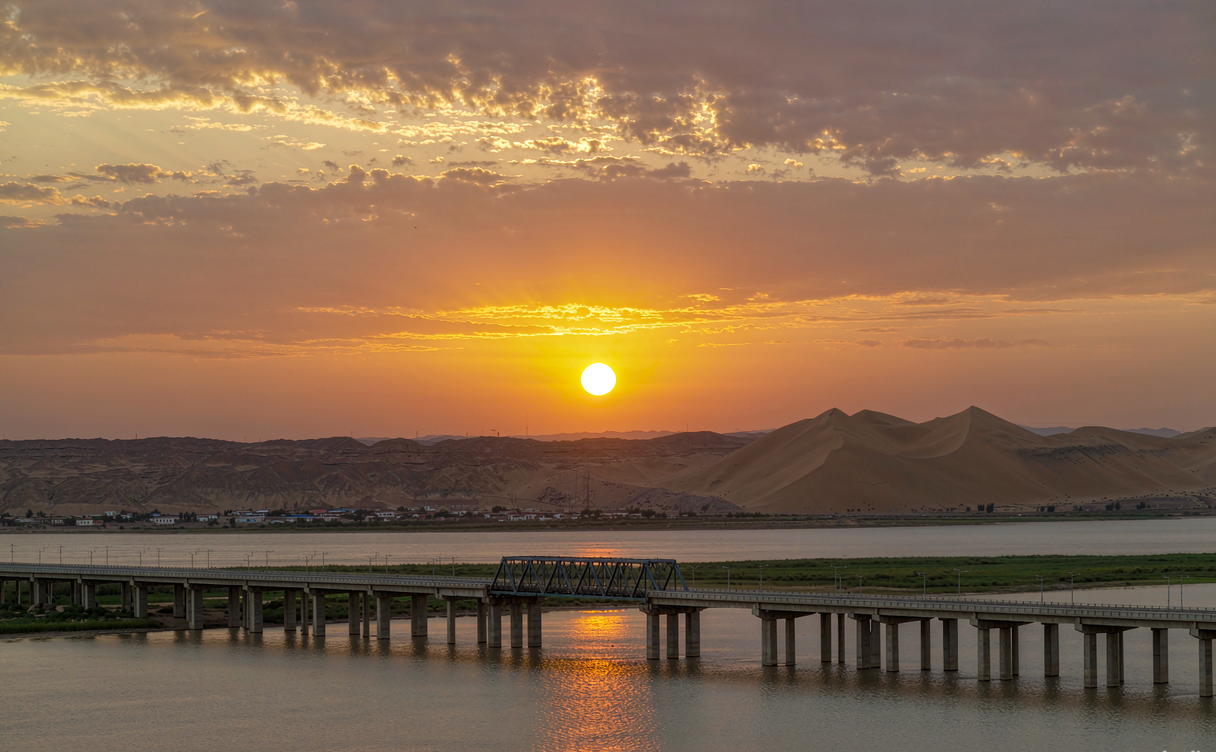
The Wuhai Yellow River bend is the city’s defining feature. A water-control project at Haibowan turned a wide stretch of the river into Wuhai Lake (乌海湖), an enormous body of water with desert dunes running right down to its western shore. Free to enter, open all hours, and genuinely startling the first time you see sand meeting a horizon of water in the middle of a dry continent.
I take clients to the eastern promenade at sunset, when the light comes across the water and hits the Zhuozishan cliffs behind you. There are boat trips and jet-ski rentals in summer at ¥80–200 CNY, and a long walking-cycling path. Above the city, Gandeer Mountain gives you the whole bend from height — a paved road runs up, there is a very large hilltop statue that locals use as a landmark, and the climb takes 40 minutes on foot from the upper car park. Go on a clear day; in a spring haze you will see nothing.
Jinshawan, on the desert side, is the packaged version: dune buggies, camel rides, sand boarding, small entry fee in the ¥30–60 CNY range with activities priced separately at ¥60–200 CNY. Fine for a family afternoon, skippable if you have done Shapotou or Badain Jaran.
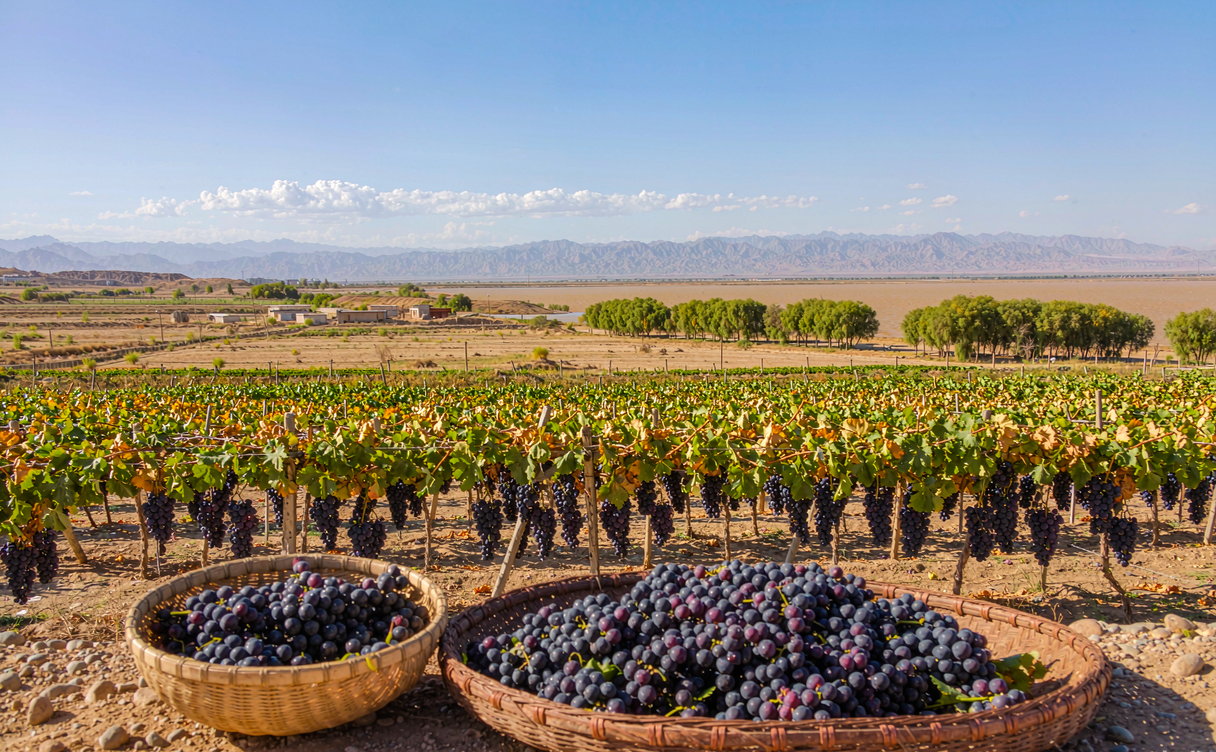
Wuhai wine vineyards
Wuhai wine vineyards are the reason I keep going back. The grape is a protected geographical-indication product here, the harvest runs late August into September, and the city throws a grape festival around it with tastings, market stalls and a lot of very sweet table fruit. The best-known local producer, Hansen, is headquartered in Wuhai and runs chateau-style facilities where you can taste; several smaller estates on the terraces will pour for walk-ins if you call ahead through your hotel.
Practical reality: this is not the Napa experience. Tasting rooms keep irregular hours, English is essentially absent, and you will need a driver or a Chinese-speaking companion to make it work. A tasting flight ran ¥50–120 CNY, bottles ¥80–300 CNY, and the reds — mostly Cabernet and Merlot in the local style — are decent rather than transcendent. What is memorable is walking the rows: vines buried under soil ridges to survive −20°C winters, gravel terraces, and the desert ridge behind. Table grapes sold roadside at ¥6–12 CNY a jin during harvest were the best I have eaten in China.
Coming for the harvest? Fix your dates before booking — read our China travel guide for first-time visitors for visa and payment prep, then ask your hotel to phone a vineyard two days ahead.
Zhuozishan rock art, the real surprise
If you only do one cultural site, make it the Zhuozishan petroglyphs (桌子山岩画). The range runs about 75 kilometres north to south, its main peak reaches roughly 2,150 metres, and six separate carving sites are scattered through its gorges. The most accessible and most famous is Zhaoshaogou, where images are ground into a gentle limestone slope: human face-masks, sun-disc figures, animals, riders, scenes read as hunting, migration and ritual. Scholars place the main group in the Bronze Age, the work of northern pastoral peoples.
Entry was modest — under ¥40 CNY where charged, and some sites are effectively unmanaged — and hours were roughly 08:00–16:00. Two warnings from experience. First, several groups sit in cliff gorges that need a guide and a high-clearance vehicle; do not attempt them alone. Second, protection is uneven and the carvings are fragile, so do not touch, chalk or rub anything. I have watched a domestic tour group pour water on a panel “for contrast”, which is precisely how these disappear.
Southwest of the city, Manba Lhasang and Lasheng are working Mongolian Buddhist monasteries, free, quiet, and a good half-hour stop on the way back.
Eating and sleeping in Wuhai
Food here is Mongolian-influenced western Inner Mongolian cooking, and it is heavy, meaty and cheap. Roast lamb ribs or a shared lamb platter cost ¥60–120 CNY per person; braised noodles with pork and beans (焖面) run ¥18–30 CNY; skewers off a night-market grill come in at ¥2–5 CNY each and add up faster than you expect. Two local things worth ordering: sand onion (沙葱), a desert allium served pickled or scrambled with egg for ¥20–35 CNY, and Yellow River carp, ¥90–160 CNY for a whole fish. Milk tea is salty here, not sweet — order it anyway.
Hotels are good value. Clean domestic doubles in Haibowan ran ¥140–260 CNY, and the better business hotels near the lake ¥300–450 CNY. Stay in Haibowan District: it has the restaurants, the calligraphy museum, the lake promenade and the best taxi supply. Hainan District is closer to some vineyards but nearly empty at night.
Comparing the grasslands with the desert west? Our Hohhot travel guide covers the classic Inner Mongolia entry point, and pairing it with Wuhai gives you two completely different halves of the region.
Best time to visit Wuhai
The best time to visit Wuhai is late August to mid-October, and September is the clear winner: 15–27°C, dry air, sharp light, grapes coming in, and the river at its most photogenic. May and June also work, warm and clear, with long evenings on the lake.
Avoid late March through April. This is dust and sandstorm season, wind comes off the Ulan Buh in earnest, and I have had a day where the far bank of a two-kilometre-wide lake was simply invisible. July and August hit 33–37°C with brutal sun and no shade in the vineyards or on the dunes — plan for dawn and dusk only. Winter is severe, −15°C to −25°C with wind, and while the frozen river has a stark beauty, most outdoor sites shut down or become genuinely unpleasant. Check our best time to visit China guide if you are sequencing this with other provinces, and the Wuhai entry at Wikipedia has the administrative and industrial background.
Things to do in Wuhai: a two-night plan
The things to do in Wuhai fit two nights comfortably. Day one: arrive, calligraphy museum, lake promenade at sunset, lamb and skewers. Day two: hired car to Zhaoshaogou rock art in the morning, a monastery on the way back, vineyard tasting in the afternoon. Day three: Gandeer Mountain viewpoint early, or the desert side at Jinshawan, then the afternoon train to Yinchuan or Baotou. Excluding intercity rail, I spent roughly ¥800–1,200 CNY per person over two nights including a shared car day — cheap for how unusual the scenery is. For broader inspiration across the country, see our roundup of the best things to do in China.