

The first time I brought a client to Cicheng, she looked at the wide, straight main street and said, “This isn’t a water town at all.” She was right, and that is exactly the point. Most old settlements in the Yangtze Delta grew along canals in tangled, organic knots. Cicheng, half an hour northwest of downtown Ningbo, was built as an administrative city — a walled county seat laid out on a chessboard grid, with the government office on one axis and the Confucian temple on another. It served as the seat of Cixi County from the Tang dynasty until 1954, when the county government moved away and, in a stroke of accidental luck, left the old town largely undeveloped.
I’ve been coming here since 2016, usually as a half-day add-on for travellers who have already ticked off the canal towns and want something less rehearsed. This Cicheng ancient town guide covers what I actually tell people before they go: how to get there, what to pay, what to skip, and why the rice cakes matter more than you’d expect.
What Makes Cicheng Different From a Water Town
If you have already seen Wuzhen or Xitang, prepare for a change of rhythm. Cicheng has canals, but they are not the main event. The main event is urban structure: you can still read the logic of an imperial county capital in the street plan. The north–south spine, the drum tower gateway, the walled compounds of scholar families, the granaries, the examination hall where county candidates sat their tests — these are civic buildings, not merchant shopfronts.
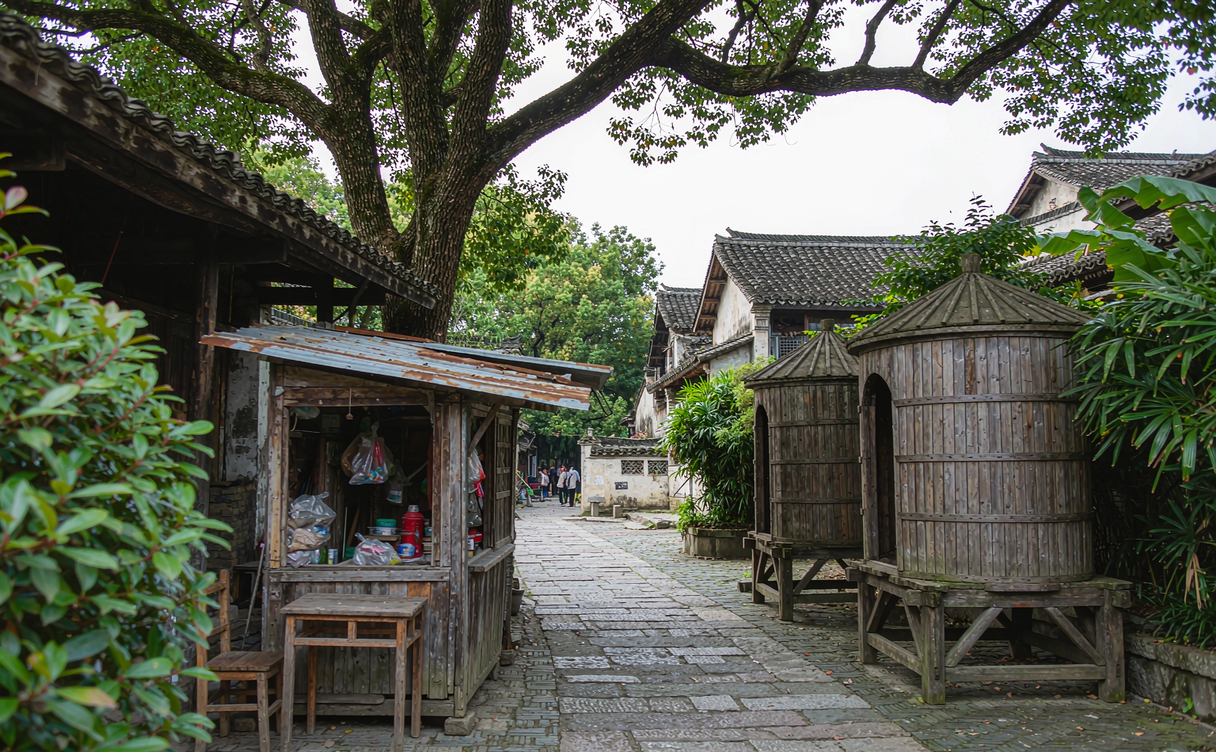
That also means Cicheng is quiet in a way commercial towns are not. On a Tuesday morning in March I walked twenty minutes without hearing a loudspeaker. Residents still live in most of the lanes; there are hardware shops, a barber, an old man selling sugarcane. If you want lantern-lit boat rides and souvenir stalls, go elsewhere. If you want to photograph grey-tile rooflines with nobody’s selfie stick in the frame, this is your town.
Planning your first trip through the Yangtze Delta? Read our practical primer on visas, payments and etiquette before you book anything.
How to Get to Cicheng From Ningbo
The easiest answer to how to get to Cicheng from Ningbo is the metro. Ningbo Metro Line 4 runs to a northern terminus named Cicheng, and the ride from the city centre takes roughly 40–50 minutes with one transfer, for ¥2–6 on your transport QR code. From the station exit, the old town is about 1.5 km — a 20-minute walk along a signposted road, or a ¥8–12 ride-hailing hop. I usually walk it outbound and take a car back when legs are tired.
Coming from further afield, treat Ningbo as your base. Hangzhou East to Ningbo is about an hour on a high-speed train; Shanghai Hongqiao to Ningbo runs roughly 2 to 2.5 hours. If you have never bought a ticket in China, our step-by-step guide to riding China’s high-speed trains explains passport collection and gate procedures. Taxis direct from Ningbo Railway Station to Cicheng run ¥70–100 and take about 35 minutes with light traffic — worth it if you’re three or four people.
One warning I repeat often: do not confuse Cicheng with Cixi city. They share a name lineage but sit 30 km apart, and drivers occasionally get it wrong. Show the Chinese characters 慈城古县城 on your phone.
The Cicheng Old Town Confucian Temple and County Office
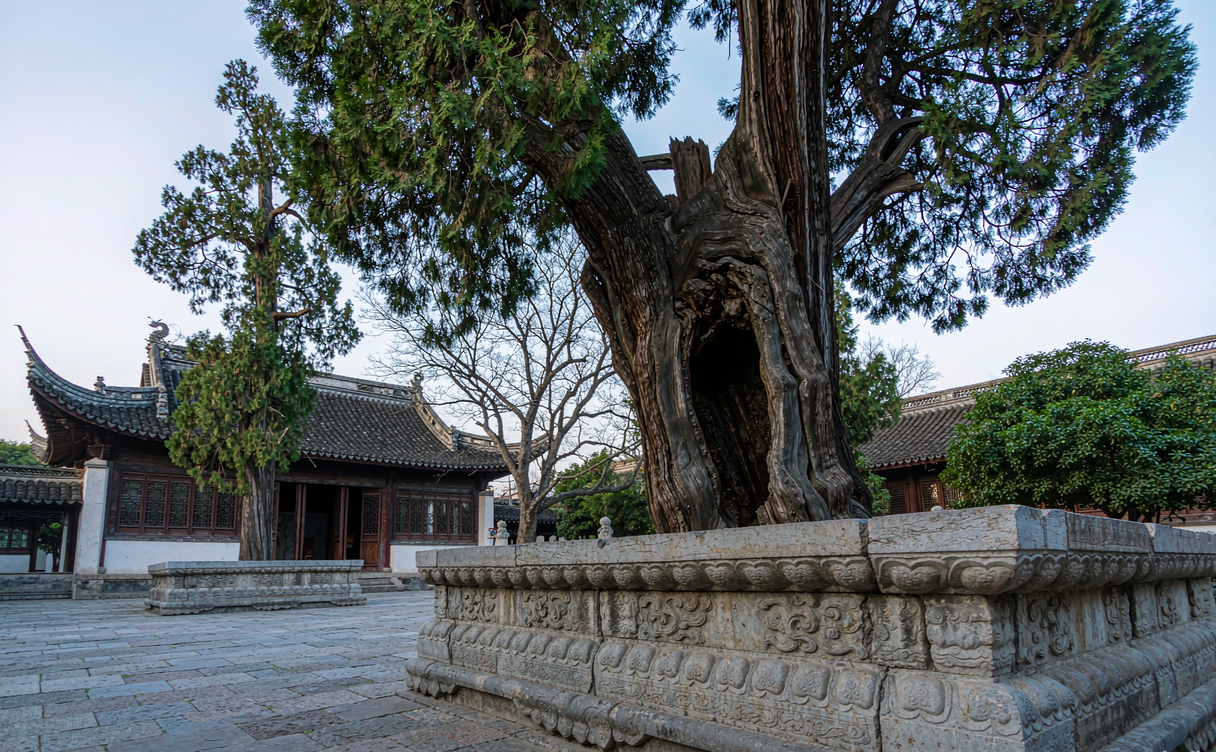
The single most rewarding building here is the Cicheng old town Confucian temple. Founded in the eleventh century and rebuilt repeatedly — most of what stands is Qing-era — it survives with its full ritual sequence intact: the screen wall, the arched bridge over the crescent pool, the paved courtyard, the great hall with its Confucius tablet, and the side galleries for lesser sages. Ancient cypresses shade the flagstones. Go early; between 8:30 and 10:00 the light rakes across the courtyard and you’ll often have it to yourself.
Directly related is the reconstructed county magistrate’s office, or yamen, a large compound of halls, side offices and a jail wing. Purists grumble that much of it is a rebuild on the original footprint, and that’s fair — but it explains how a county was actually governed, with clear English-and-Chinese panels. Nearby, the small examination hall covers the imperial civil service tests, and Ming-dynasty gentry gateways such as the painted Feng family gate show what private wealth looked like.
A Half-Day Cicheng Ancient Town Walking Route
Here is the Cicheng ancient town walking route I hand out, roughly 3.5 km and comfortable in four hours:
1. Start at the south gateway and drum tower, then walk north up the main street to get your bearings.
2. Turn into the Confucian temple first, while it’s empty (45 minutes).
3. Cross to the county office and jail wing (45 minutes).
4. Walk the examination hall and the gentry mansions clustered a few lanes east (40 minutes).
5. Detour west into the residential lanes — no tickets, no signs, best photography.
6. Finish at Ci Lake on the northern edge, a willow-fringed reservoir with a lakeside path and, in July, lotus in flower.
7. Optional climb: the Taoist temple on the hillside above the lake, 20 minutes up, for a roof-line panorama.
Sites generally open 8:30–17:00, with last entry around 16:30. Buy the combined ticket at the main gate — it has ranged ¥50–80 in recent seasons depending on how many halls are bundled, while single sites are ¥10–25. Walking the streets themselves costs nothing.
Cicheng Ancient Town Food: Rice Cakes First
Ask any Ningbo local about Cicheng ancient town food and they will say one word: niangao, water-milled rice cake. Cicheng’s version is genuinely regarded as the region’s best, traditionally pounded in the cold months when the rice starch behaves. Order it stir-fried with pickled potherb mustard and slivered pork (¥18–30), or in a soupy version with shepherd’s purse. I’ve watched a workshop off the main street steam and press batches by hand; if the door is open, they rarely mind you looking.
Beyond rice cakes, this is Ningbo cooking: steamed river fish, yellow croaker in a light broth, salt-cured pork, and sweet fermented rice-wine dumplings. Two people eat well for ¥80–140 in a family restaurant. There is no polished food street, which means quality varies — I pick whichever place has locals eating at noon rather than photographs of dishes outside. Bring a little cash; a few of the smallest stalls still fumble with foreign-linked payment apps.
Short on time in Zhejiang? Pair Cicheng with our curated list of standout experiences across China to build a trip that isn’t all old towns.
Best Time to Visit Cicheng
The best time to visit Cicheng is late March to early May, or mid-October to late November. Spring brings blossom in the temple courtyards and comfortable 15–24°C days; autumn gives you dry air, sharp light and the start of rice-cake season. I’ve sent clients in October more than any other month and never had a complaint.
Avoid the plum rains of mid-June to early July, when it drizzles for days and the flagstones turn slick. July and August are hot and humid at 30–36°C, though Ci Lake at dawn is lovely. Winter is cold and damp rather than freezing, 3–10°C — but December and January are when niangao is fresh, so I consider it a fair trade. Skip the first three days of the National Day holiday in October, and the Lunar New Year week, when Ningbo families descend. For a broader seasonal picture, see our overview of when to travel in different parts of China.
Costs, Pitfalls and Where Cicheng Fits
Budget realistically: ¥50–80 tickets, ¥10–20 metro return, ¥100–150 for two people’s lunch and tea. Cicheng has a couple of small guesthouses (¥250–450 a night), but almost everyone should sleep in Ningbo, where mid-range hotels run ¥300–600 and you get restaurants and late trains.
Three mistakes I see repeatedly. First, arriving after 14:00 — the light is flat and halls start closing while you’re still queuing. Second, expecting boats; the canals here are modest, and travellers who want waterborne romance should build in a canal-town day instead. Third, treating Cicheng as a full day. It is a superb half day, best combined with a Ningbo afternoon at the Tianyi Ge library complex or the old harbour district.
Cicheng also slots neatly into a wider Zhejiang loop. Many of my itineraries run Shanghai to Hangzhou’s lakes and tea hills, then a night in the canals of a classic Zhejiang water town, then Ningbo with Cicheng as the morning. That sequence gives you three completely different faces of the delta rather than three versions of the same postcard. Ningbo itself repays a day — the city’s history as a treaty port and trading harbour explains a lot about why the surrounding countryside was rich enough to build temples like this one.
Ready to slot Cicheng into a real itinerary? Tell us your dates and travel pace, and we’ll help you shape a delta route that skips the crowds.