

I first stopped in Duyun (都匀) by accident. A client’s flight into Guiyang landed too late to push on to the Libo karst parks, and I needed a town with decent hotels and a short morning train. We stayed two nights, walked the river after dark, and I have been routing people back through ever since. Duyun is the seat of Qiannan Buyei and Miao Autonomous Prefecture in southern Guizhou, a river town squeezed into steep green hills, and it does two things almost no other Chinese city its size manages: it stacks bridges on top of one another, and it keeps a 1,961-metre primeval forest twenty-two kilometres from the main square. This Duyun travel guide comes out of three visits between 2023 and spring 2026, with prices I actually paid and the mistakes I made the first time.
Why Duyun deserves two nights
Most foreign itineraries through the province run Guiyang to Kaili to Zhaoxing, or Guiyang out to the big waterfall at Anshun. Duyun sits just off that line, which is the appeal. There is no ticket queue, no loudspeaker guide, and the hotel rate stays flat in October when Kaili doubles. What you get instead is an ordinary, confident small Chinese city with unusually dramatic geography: the Jianjiang River (剑江) cuts through the middle, the hills come right down to the streets, and the road network solves the problem with bridge after bridge.
Duyun is also a tea town. Duyun Maojian (都匀毛尖) is a green tea that Chinese drinkers rank among the country’s best, and the hills west of the city are terraced with it. I have had more genuinely interesting conversations over a ¥20–60 CNY pot of local Maojian in Duyun than at most staged tea ceremonies elsewhere. If you are still assembling a first route through the country, our complete China travel guide for first-time visitors explains where a stop like this fits and what it costs you in days.
How to get to Duyun
Almost everyone arrives at Duyun East Station (都匀东站) on the Guiyang–Guangzhou high-speed line. The Duyun to Guiyang train is the easy part: G and C services run most of the day and take 35 to 70 minutes depending on which Guiyang station you want, at roughly ¥45–80 CNY in second class. Guiyang North and Guiyang East are both served; Guiyang North connects straight to the metro, which is why I book it. Southbound, the same line reaches Guilin in about two hours and Guangzhou in four and a half.
Duyun East is not in the centre. Budget 20 to 30 minutes and ¥25–40 CNY for a DiDi into town, or take the station bus line if you have light bags. There is also a slower intercity coach to Kaili (roughly two hours) if you are heading into the Miao villages next. Booking mechanics, ID checks and seat classes are all covered in our China high-speed train guide for foreign travellers, and I still open it when a client asks why their passport will not scan at the gate.
Planning a Guizhou loop? Compare Duyun against the bigger provincial hubs first — our Guiyang travel guide sets out the flight and rail connections you will build the rest of the trip around.
The Duyun bridge city skyline
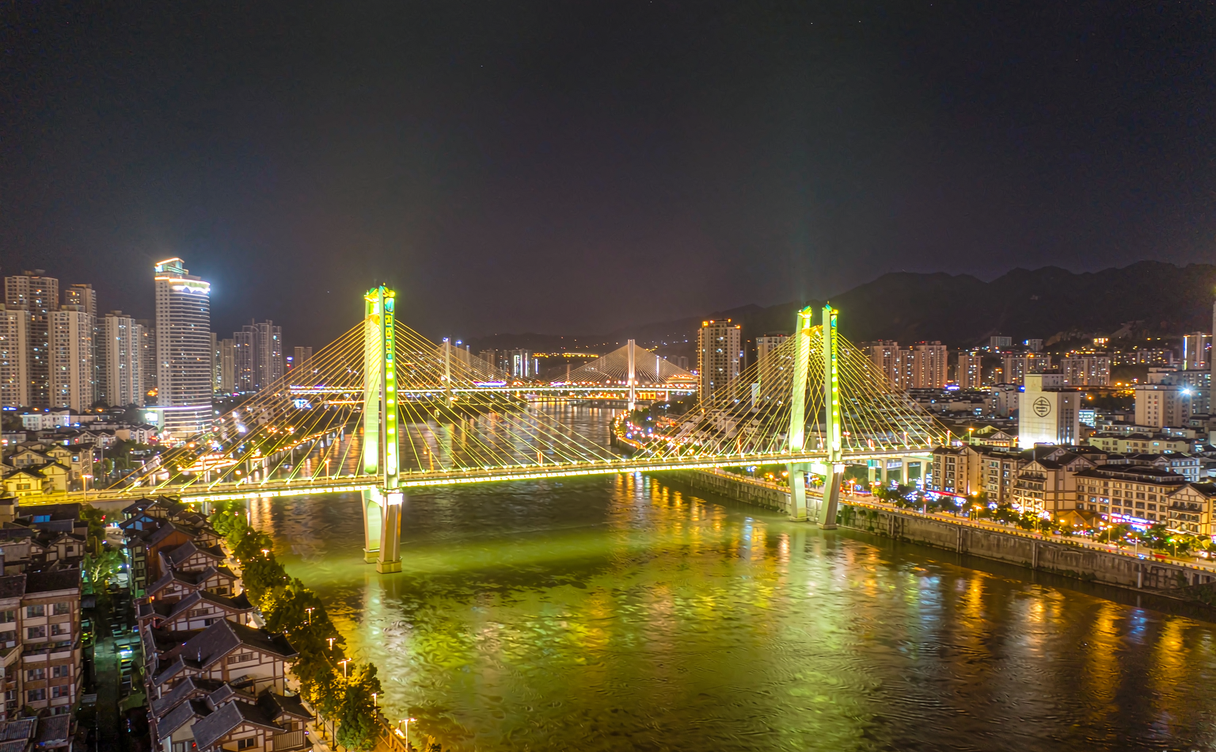
Locals call Duyun the Bridge City (桥城), and the count runs well past a hundred if you include the small road crossings in the outer districts. That sounds like a tourism-office slogan until you stand on the riverside promenade at dusk and see three or four spans layered in front of you, lit in sequence, with the hills black behind them. The Duyun bridge city skyline is the single best free thing to do here.
My routine now: start at Baizi Bridge (百子桥), the old stone arch bridge from the Qing period near the centre, walk the north bank downstream for about 40 minutes, then cross back on one of the modern cable-stayed spans. Lights usually come on between 19:00 and 19:30 and stay lit until roughly 22:00–23:00, though the schedule tightens outside holidays. Bring a jacket even in summer; the river channel funnels wind. Qingyun Lake Park (青云湖) at the western edge is the other easy walk, about ¥20–30 CNY by taxi from the centre and free to enter.
Duyun Doupeng Mountain
The main excursion is Duyun Doupeng Mountain (斗篷山), 22 km northwest of the city and marketed, plausibly, as the primeval forest closest to any Chinese city centre. The reserve covers around 62 square kilometres, the main peak reaches 1,961 metres, and forest cover on the upper plateau is close to 90 percent. What stuck with me was not the summit but the root systems: trees growing straight out of limestone cracks, roots wrapped around boulders, the local “tree hugging stone” formations you see signposted along the trail.
Entry was ¥40 CNY on my last visit, with a discount for prefecture residents, and gates ran roughly 08:30–17:00. There is no cable car. Getting up to the ridge and back to the Rainbow Waterfall took me about four hours at a moderate pace, and the path is wet, mossy and genuinely slippery — I have watched two people go down hard in trail runners with worn soles. Go in proper shoes, carry water, and do not start after 13:00.
The catch: there is no reliable public bus. Charter a car from the city for ¥180–280 CNY round trip with waiting time, agree the pickup hour in writing on WeChat, and take the driver’s number. Taxis do not cruise the trailhead. This is the single most common way visitors get stranded here.
Buyei and Shui villages around Duyun
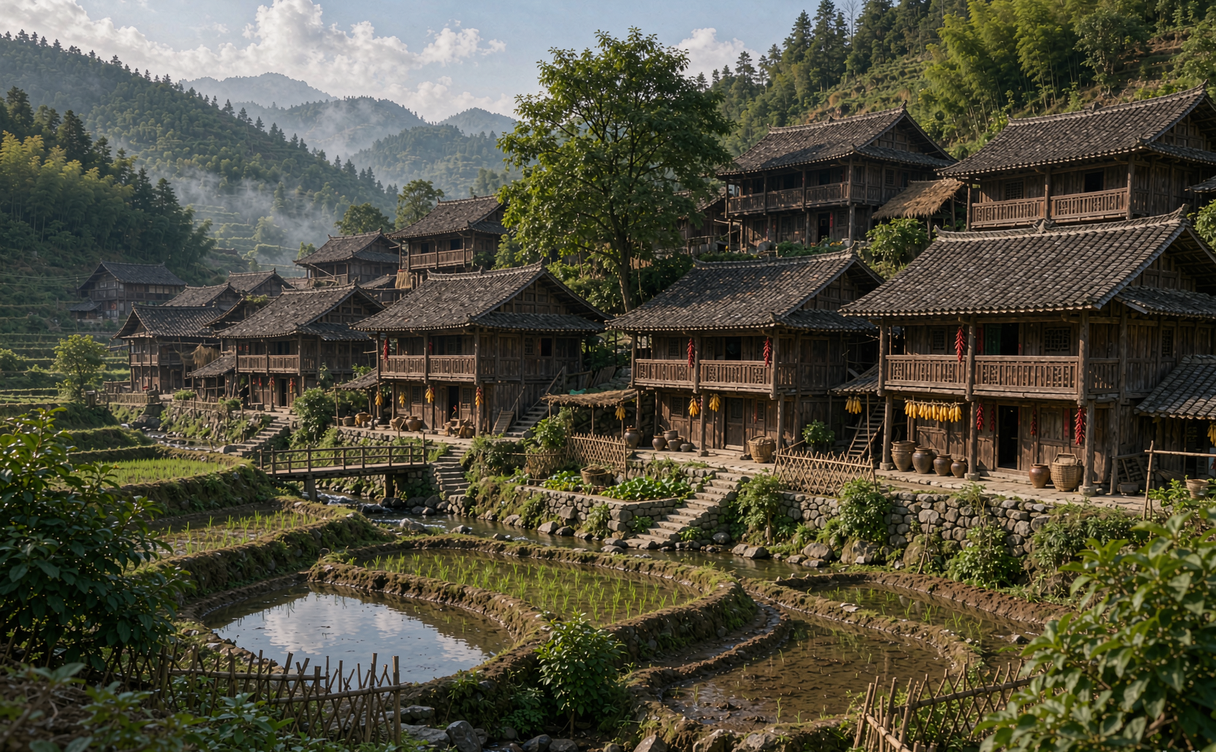
Qiannan is a Buyei (Bouyei) and Miao autonomous prefecture, and the villages in the valleys around Duyun are working farm settlements rather than ticketed folk parks — stilt-frame houses, terraced paddy, ducks in the irrigation channels. I usually take clients out to a cluster southwest of the city in the late afternoon, when people are back from the fields. Nobody charges admission; the etiquette is to buy something, ask before photographing faces, and not wander into courtyards uninvited.
Sandu, about an hour south, is the centre of the Shui ethnic group and their distinctive script. If you want a fully developed village experience with performances and homestays, Kaili and Zhaoxing do it better. Duyun’s version is quieter and less curated, which some travellers love and others find underwhelming — be honest with yourself about which you are.
Deciding how much of Guizhou to attempt? Read our Huangguoshu Waterfall guide before you lock dates, then decide whether Duyun replaces a night in Anshun or adds one.
Where to eat and stay
Guizhou cooking is sour and chilli-driven rather than numbing, and Duyun is a good cheap place to learn it. Sour soup fish (酸汤鱼) for two ran ¥80–140 CNY at a family place near the river; a bowl of Duyun rice noodles with pickled greens was ¥12–18 CNY; grilled skewers and fried potato cubes off the night market cost me under ¥40 CNY for a full plate. Order the local Maojian rather than the bottled tea.
For beds, stay in Yuncheng-side streets within walking distance of the Jianjiang promenade. Clean domestic three-star doubles ran ¥140–260 CNY, and the two international-brand options nearer the new district were ¥320–480 CNY. Sleeping out by Duyun East Station saves nothing and costs you the evening. Rates jump 40 to 60 percent during the early-May and early-October holidays, when Guizhou fills up.
Best time to visit Duyun
The best time to visit Duyun is April to early June, or late September through October. Spring gives you the tea harvest and green hills at 18–26°C; autumn is drier and clearer, which matters for the bridge views. June to August is the wet season — expect afternoon downpours, humidity in the high 20s, and a real chance of the Doupeng trail being closed after heavy rain. Winter rarely freezes hard but sits grey and damp around 4–10°C, and Guizhou’s mountain roads occasionally ice over.
Two practical notes. First, check the forecast the night before you commit to the mountain; the reserve suspends entry in storms and the ticket office will not warn you in advance. Second, national holiday weeks are the one time Duyun feels crowded. Our best time to visit China breakdown lines this up against the rest of the country if you are stacking provinces.
Things to do in Duyun: a two-night plan
Day one: arrive by lunchtime, drop bags, walk the old bridges and the promenade, eat sour soup fish, come back for the lights. Day two: car to Doupeng Mountain at 08:00, hike until early afternoon, tea house in the late afternoon, night market. Day three: a village run southwest of the city or Qingyun Lake, then the afternoon train onward. That covers the things to do in Duyun that are actually worth your time; the city museum and the newer plazas are skippable.
My all-in spend across two nights, excluding intercity rail, was about ¥620–780 CNY per person including the chartered car. Background history and administrative detail are on the Duyun entry at Wikipedia if you want context before you go.
Still shaping the itinerary? Browse our roundup of the best things to do across China and slot Duyun in as the calm two-night breather between the big-name stops.