

Winter turns large parts of China into a postcard — and into a real driving challenge. If you’re thinking about a China winter driving trip, the first thing to know is that the rules and the roads are different from home. Foreign tourists generally cannot simply show up at a rental counter and drive away; China does not recognize the International Driving Permit, so you either need a Chinese license or you hire a car with a driver. This guide covers both routes, plus the cold-weather skills that keep you on the road and out of the ditch.
Can you legally drive yourself?
Honestly, for most visitors the answer is no without preparation. China issues driving licenses only after a local test, and rental companies will not hand keys to a tourist holding only a foreign or international permit. The practical path is a car-with-driver, which is affordable here: a decent sedan with an English-speaking driver runs roughly ¥400–800 per day including fuel in most regions, more in remote areas. If you happen to hold a valid Chinese license (some long-term expats do), you can rent normally. The legal framework and road conventions are outlined in the Driving in China overview. Our China car rental and driving guide walks through the license question and the driver-hire option in detail.
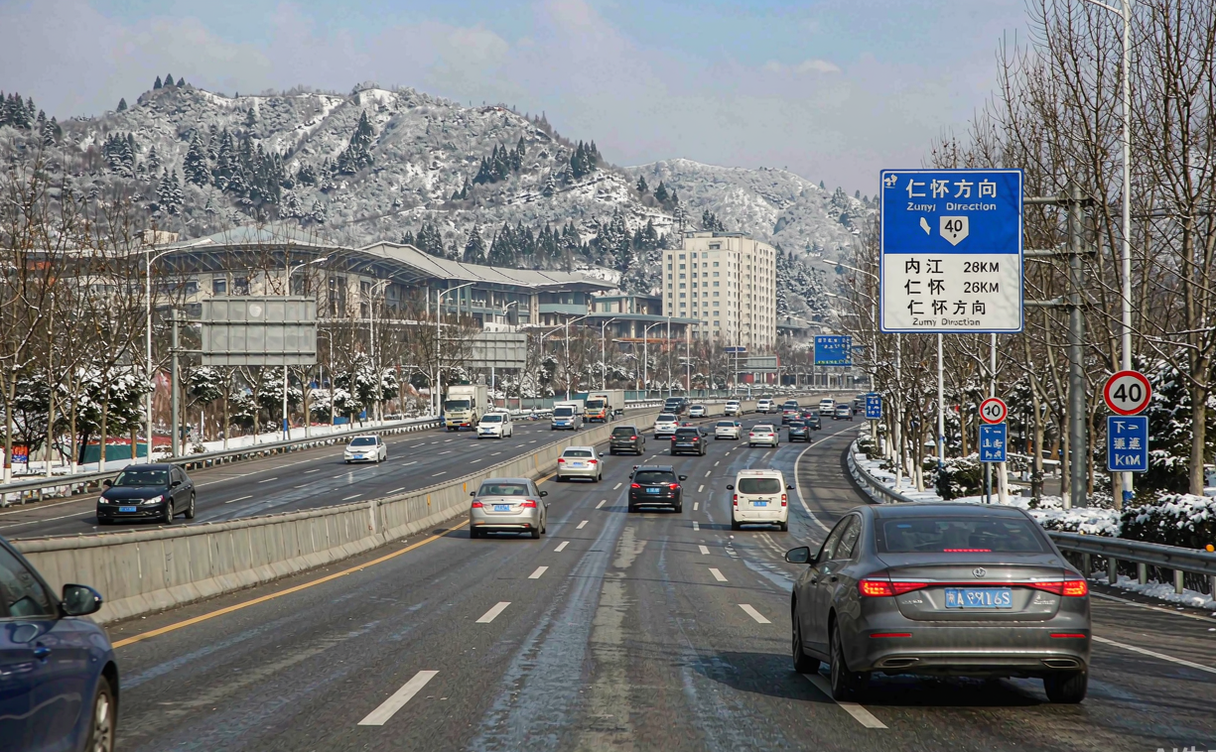
Snow tires and chains
If you do drive, winter tires are not optional north of the Yangtze from December to February — many provinces legally require them, and police do check at mountain passes. In heavier snow you’ll need chains for the driven wheels, and you should practice fitting them once in a dry car park before you need them at –15°C with frozen fingers. Rental drivers usually manage this, but if you’re in your own vehicle, carry two pairs and a pair of gloves you don’t mind ruining. Ask the rental company whether the car uses a spare or a repair kit; some winter roads are far from any shop.
Ice, black ice, and speed
The single biggest hazard is ice you can’t see. Black ice forms on bridges, in tunnel mouths, and in the shade of hills, and it looks like wet asphalt. The rules we drill into clients: double your following distance, brake in a straight line before a corner never in it, and if you start to slide, steer gently into it and lift off the gas. Turn on dipped headlights in snow even by day — visibility drops fast. Keep speed down; a frozen mountain road at 30 km/h is survivable, at 70 it isn’t. Our China road trip guide has route-by-route notes on which highways get gritted and which don’t.
Cold-weather car care
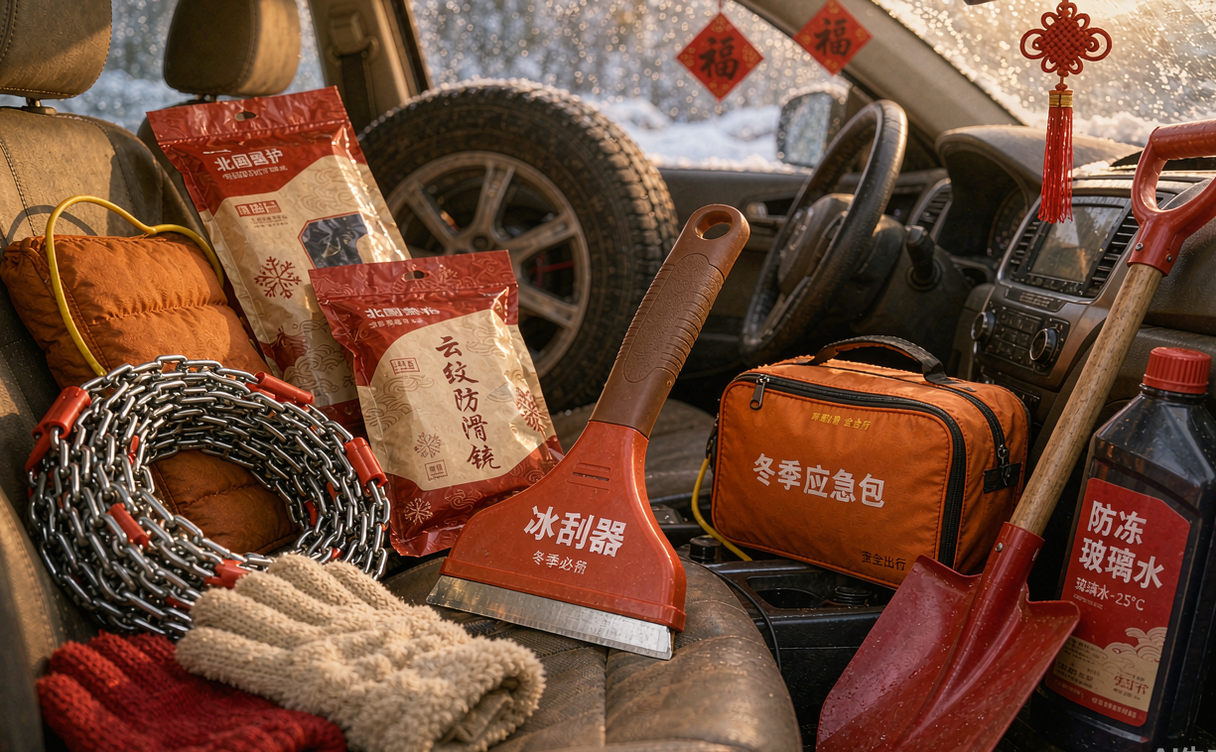
Extreme cold is hard on vehicles. Confirm the coolant is rated for local lows (–35°C antifreeze in the far north), the battery is healthy, and you carry a scraper and a small shovel. Diesel vehicles in places like Xinjiang, China can gel in deep cold, so if you’re heading there in January spec a petrol car or one with a fuel heater. Keep the fuel tank above half to avoid condensation and to have reserve if stranded. A frozen door lock yields to a dab of hand sanitizer on the key; don’t force it.
High altitude and thin air
Winter driving onto the plateau — think routes toward Tibet, China — adds altitude sickness to the risk list, and the passes can be closed for days after snow. Acclimatize before you drive high, carry oxygen and warm layers even in the car, and never push on if you feel dizzy. Our China altitude sickness guide explains the symptoms and the altitude steps that keep a road trip safe. Combine thin air with ice and you have the most demanding driving in the country, best left to experienced local drivers.
Where winter driving shines
The rewards are worth it. Harbin and the northeast give fairy-tale ice festivals and empty snowy forests. Xinjiang, China in winter is staggeringly beautiful and nearly tourist-free, with frozen lakes and quiet Silk Road towns — but plan fuel and rest stops carefully, as services are sparse. For softer weather, Yunnan and the south stay mild and driveable. If snow sports are the draw, our China winter sports guide points to the resorts with the best access roads, and our best winter destinations in China ranks where the scenery justifies the cold.
An emergency kit that earns its place
Pack a blanket or sleeping bag rated well below the local low, a torch, a power bank, water, snacks, a first-aid kit, and a paper map as backup when signal dies. Tell someone your route and check-in times. If you slide off or get stuck, stay with the car — it’s shelter and easier to find than you are on foot. Run the engine ten minutes each hour for heat, but crack a window to avoid fumes if snow blocks the exhaust. These habits are the core of China travel safety tips for any remote drive.
The honest verdict
China winter travel safety on the road comes down to humility: respect the cold, respect the ice, and respect the license rules. For most visitors the smart move is a hired driver who knows the season, leaving you free to watch the karst peaks and frozen waterfalls instead of white-knuckling a frozen pass. If you do drive yourself with the right license, prepare the car like it’s an expedition, because in deep winter, out there, it effectively is.
Route planning and weather windows
Winter road conditions change by the hour. Check the provincial traffic broadcasts and the weather app each morning, and build in slack — a pass that’s clear at 8 a.m. can close by noon. We plan winter drives with a “turn-back altitude”: a point beyond which, if weather turns, you reverse rather than push on. In places like Xinjiang, China, services are hundreds of kilometres apart, so never start a remote leg below half a tank or without telling someone your ETA. Mountain tunnels often have icy mouths even when the road is dry, so slow before you enter. Snow chains are mandatory on certain plateau passes after a snowfall, and the fine for skipping them is the least of your worries if you lose traction.
What to do if you get stuck
If you slide off or the road closes, the priority is warmth and visibility. Stay with the vehicle, run the engine intermittently for heat with a cracked window, and place a bright marker — a warning triangle or your torch — behind the car. Signal help via phone if you have it; otherwise wait for the next vehicle, which on a main road won’t be long. Panic and walking into a whiteout is the real danger, not the cold itself if you’re prepared. Keep the go-bag from earlier within reach, not in the trunk.
Driving etiquette on icy roads
Chinese highways are busy even in winter, and local drivers know the conditions. Match their caution rather than their speed, use indicators early, and don’t overtake on blind rises. Trucks kick up spray that freezes on your windscreen, so keep washer fluid rated for –30°C topped up. Honk once when creeping around a blind snowy corner — it’s normal and expected here. A patient, predictable driver is a safe one, and on ice that’s the whole game.