

A China winter sports guide is overdue, because the country’s cold months are far better traveled than most visitors assume. After hosting the 2022 Winter Olympics, China poured money into mountain resorts and city festivals that now rival anything in Europe or Japan for spectacle, at prices that remain gentle by global standards. Whether you ski or just want to stand under a forty-meter ice tower lit electric blue, winter here rewards the visitor who plans for cold and books ahead. This guide covers the ski resorts, the ice festivals, and the strange, beautiful place known simply as Snow Town.
The first thing to know is that China’s winter is huge and varied. The north — Heilongjiang, Jilin, and the mountains of Hebei — gets real, dependable snow and bitter cold. The south stays mild. So a winter trip means choosing a cold destination on purpose, and dressing for it seriously. Our best time to visit China guide notes that December through February is the window for snow and ice, with January the deepest cold and the peak of the festival season.
Ski resorts worth the flight
The headline ski region is Chongli, in Zhangjiakou, Hebei, where the Olympic alpine events were held. Resorts like Wanlong, Thaiwoo, and Genting offer groomed slopes, real equipment rental, and English-signposted lifts, and the high-speed train from Beijing now puts the slopes within a couple of hours of the capital. For serious riders, the scale and the new infrastructure are genuinely good; for beginners, the ski schools are patient and inexpensive by Western rates.
Farther northeast, Yabuli in Heilongjiang is China’s oldest and largest ski area, with longer runs and a more remote feel, though the infrastructure is rougher than Chongli’s. Beginners will find both regions welcoming; experts will find Chongli’s Olympic venues more polished. Either way, book equipment and lessons in advance during holiday weeks, when the slopes fill with domestic crowds.
The Harbin Ice Festival
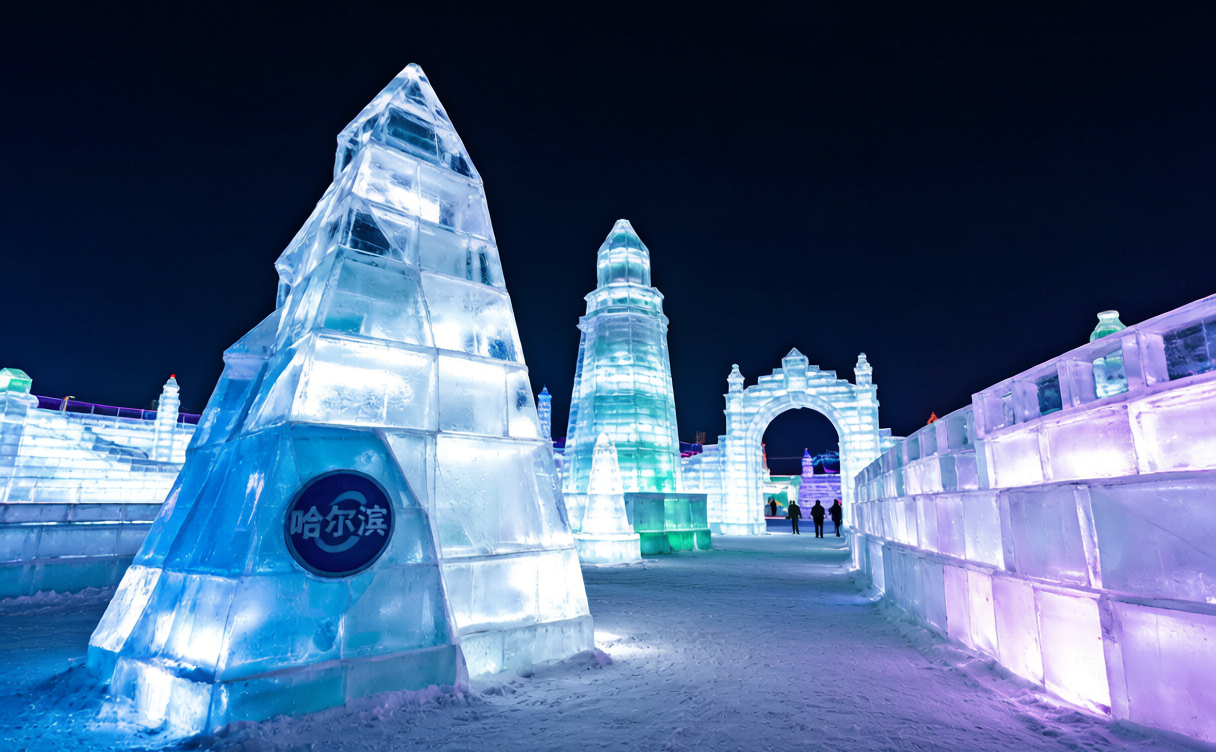
No winter guide skips Harbin. The Harbin International Ice and Snow Festival builds entire cities of ice — blocks cut from the Songhua River, sculpted into cathedrals and castles, then lit from within. Walking the Ice and Snow World at night, when the structures glow, is the single most surreal thing most visitors do in China. The guide covers the timing, the tickets, and how to survive the cold while you wander.
The cold is the catch: Harbin in January averages around minus twenty, and you will be outside for hours. Layer aggressively, cover every extremity, and take the warm houses seriously. The payoff is a festival that simply does not exist anywhere else at this scale.
Snow Town and the deep north
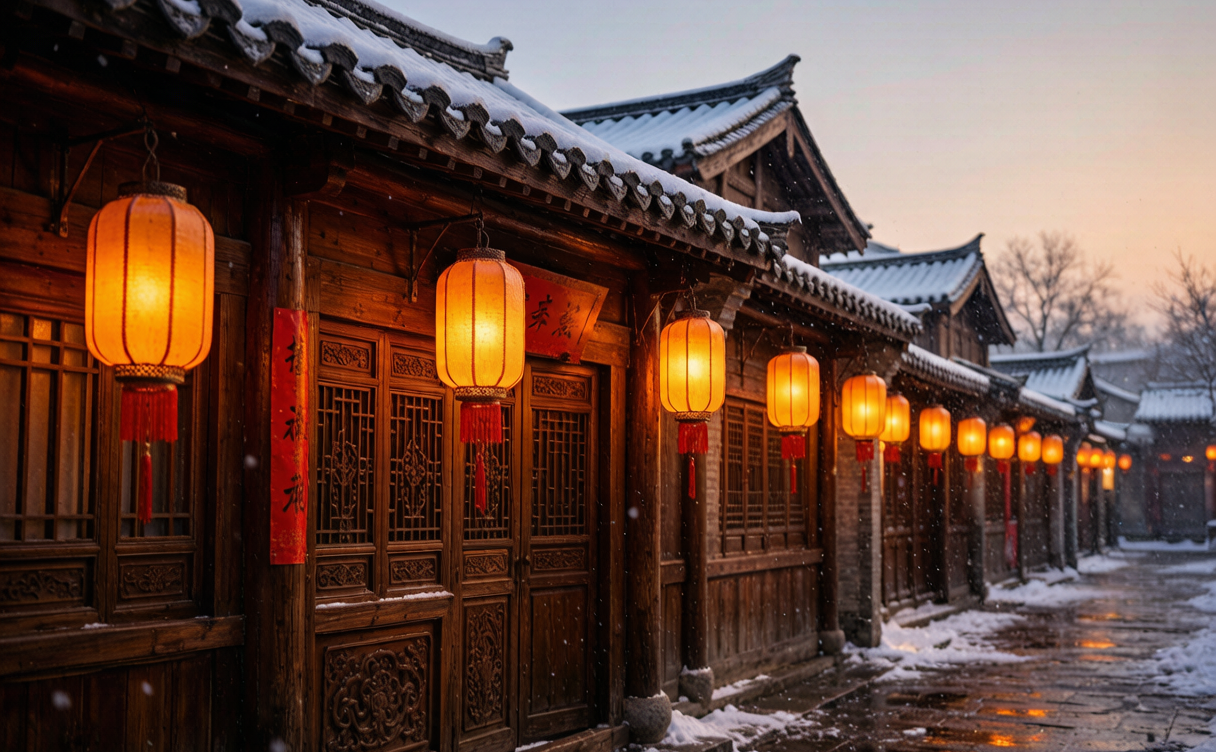
For something stranger, Snow Town — Xuexiang — in Heilongjiang is a village where the snow piles so deep and so evenly that the timber houses look iced over like a film set. It is touristy and remote, but the snow sculptures and the quiet are unlike anywhere else, and it pairs naturally with Harbin on a northern loop. Our best winter destinations in China guide maps out how to string Harbin, Snow Town, and the ski regions into one cold-weather route.
Changchun, the Jilin provincial capital, is the quieter gateway to this region, with its own ice festival and easy rail links; our Changchun travel guide covers the city as a base. The Jilin rime ice — trees sheathed in frost along the river — is a softer, stiller spectacle than Harbin’s towers, and worth a dawn visit.
Planning the practical side
Winter travel in China is straightforward if you prepare. Trains run on time even in snow; hotels heat well; and the cold keeps the crowds thin except during the Spring Festival week, when everything books solid. Dress in real down, insulated boots, and hand warmers. Cameras and phones die fast in the cold, so keep them inside your coat between shots.
One pleasant surprise is cost. Lift tickets, rentals, and even slope-side hotels run a fraction of European Alps prices, and the festival entries, while not cheap, are still modest against the spectacle. After the cold, the move is a hot pot dinner or a public bath to thaw — both are easy to find near every winter destination, and both are part of the experience rather than a comfort afterthought.
For the wider logistics — visas, payments, and moving between these cold cities — our China travel guide for first-timers lays the groundwork. And for official background on the country’s winter tourism infrastructure and festival calendar, the Ministry of Culture and Tourism site at https://www.mct.gov.cn/ is a useful reference point.
What to pack for the cold
Winter travel here lives or dies on packing. Real down insulation, not a fashion jacket; insulated, waterproof boots with grip for ice; a hat that covers the ears; and thin liner gloves under a warm outer pair so you can use your phone without freezing. Hand and foot warmers — the air-activated packs sold everywhere — are cheap and genuinely useful on a long night at an ice festival. Lip balm and moisturizer matter more than people expect; the northern air is dry as well as cold. If you ski, you can rent everything on the mountain, but bring your own base layers and a neck gaiter if you have them.
Warming up: food and baths
The cold makes the food better. A Sichuan or Mongolian hot pot after a day on the slopes or a night at the ice festival is not just comfort, it is the local rhythm — groups gathered around a bubbling pot, the cold forgotten. Most winter destinations also have public bathhouses or hotel spa areas where you soak and thaw; taking one seriously is the fastest way to recover from a minus-twenty day. Build these into the plan rather than treating them as optional; they are part of why northerners tolerate the season so well.
Beyond skiing: other snow activities
If you do not ski, you are not short of things to do. Harbin’s festival includes ice slides, skating lanes cut into the frozen river, and winter-swimming spectators if you are brave enough to watch. Snow Town offers sledding and snow sculpture you can walk through. Many resorts run gentle snow-tubing and beginner slopes that need no skill at all. The point is that winter in China is a season of play, not just a sport, and non-skiers often enjoy it as much as the people on the lifts.
The Olympic legacy
The 2022 Winter Olympics left a real legacy in the mountains north of Beijing: upgraded resorts, a high-speed rail line that put the slopes within easy reach of the capital, and a level of lift and lodge quality that did not exist a decade ago. For visitors this means the infrastructure is newer and more foreigner-friendly than China’s winter offerings used to be, and the window to use it well — before the novelty fully fades — is now.
Getting between winter destinations
The cities of the northeast — Harbin, Changchun, Jilin — are linked by frequent, punctual high-speed rail, and the rides themselves are part of the experience: vast frozen plains sliding past the window, stations that are warm and efficient, and none of the airport hassle. Chongli connects to Beijing by its own fast line, making a ski weekend from the capital entirely practical. Book trains a few days ahead in peak season, and pad your schedule for the cold slowing everything down slightly. Domestic flights within the region exist but rarely beat the train on city-center-to-city-center time once winter weather delays are factored in.
Who winter China suits
This is not a trip for anyone who hates the cold, but it rewards exactly the travelers who do. Skiers get world-class new infrastructure at low cost. Photographers get ice and snow scenes that simply do not exist in most countries. Families get festivals and snow play that children remember for years. And anyone tired of summer crowds gets a China that is quieter, cheaper, and in many ways more authentic in the off-season. Plan for the temperature, and the season gives back more than it takes.
The short version
Ski Chongli or Yabuli, see Harbin’s ice at night, and add Snow Town if you want the deep-north weirdness. Go in January for the full season, dress for minus twenty, and book holiday weeks early. Winter in China is colder and far better than its reputation — and the value, against Alpine or Japanese prices, is hard to argue with.