

When people think of Guangxi, they picture Guilin’s peaks or Yangshuo’s rivers, and I love those places too. But on a trip in May 2025 I kept going east to Hezhou, a border city near Guangdong that most foreign travelers never reach. Hezhou, Guangxi, China, is built around karst hills, hot springs, and one of the best-preserved ancient towns in the south. It is calmer and cheaper than the famous spots, and the food surprised me at every meal. This Hezhou travel guide comes from three days on the ground: how to get to Hezhou, the things to do in Hezhou, what to eat, and a Hezhou itinerary you can follow.
Why Hezhou
Hezhou’s draw is variety in a small area. You can wander a Ming and Qing ancient town one morning, soak in a hot spring that afternoon, and hike a forested mountain the next day. The pace is slow, prices are low, and the karst scenery is every bit as good as the postcards from Guilin. I used Hezhou as a soft landing after the crowds of Yangshuo, and it was the right call. For the classic route nearby, the Guilin Yangshuo travel guide on our site covers the better-known peaks and rivers in depth.
How to Get to Hezhou
Hezhou sits on the Guiyang to Guangzhou high-speed line, which makes it an easy stop between Guilin and Guangzhou. From Guilin North, trains take about 50 to 75 minutes and cost RMB 60 to 90 in second class. From Guangzhou South, allow 1.5 to 2 hours for RMB 110 to 160. From Shenzhen, budget 2 to 2.5 hours and RMB 150 to 210. The station is a short taxi ride of RMB 20 to 35 from the city center. There is no international airport, so fly into Guilin or Guangzhou and transfer by train. For booking steps, see our China high-speed train guide for foreigners.
Things to Do in Hezhou
Huangyao Ancient Town
This is the reason most people come, and it earned the reputation. Huangyao preserves hundreds of Ming and Qing buildings among banyan trees and karst cliffs, with stone lanes, old bridges, and quiet canals. Entry is RMB 88, and I arrived at opening time to have the alleys to myself before the day-trippers from Guangdong arrived. Plan at least half a day; a full day lets you linger over the tofu and the riverside teahouses. The town gets busy after 10 a.m., so an early start is the single best tip I can give.
Gupo Mountain
North of the city, Gupo Mountain National Forest Park is a cool, green escape with waterfalls, bamboo groves, and misty ridge trails. Entry is about RMB 82, and a shuttle bus runs the main loops. I spent a morning on the waterfall path and barely saw another tourist. It is also known as a filming location for classic Cantonese TV dramas, which locals love to mention as you sip tea at the gate.
Hezhou Hot Spring
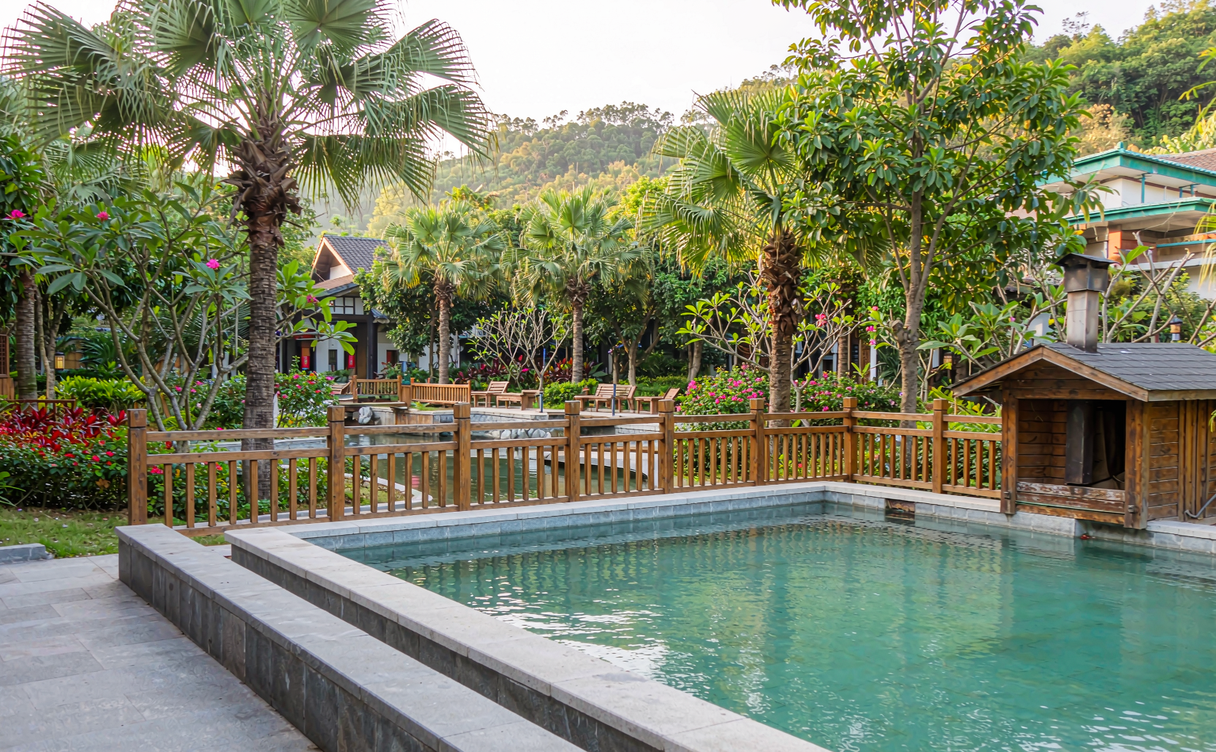
After hiking, the hot spring complexes east of the city are the standard reward. A day pass runs RMB 100 to 150 and includes several outdoor pools of varying temperature. I went on a cool evening and it was the most relaxed I felt all trip, watching steam rise against the dark hills.
Ziyun Cave and the Jade Stone Forest
If you like odd geology, Ziyun Cave has lit stalactite chambers for about RMB 50, and the nearby Jade Stone Forest is a maze of pale karst pillars on the same ticket. Both are an easy half-day by taxi or tour bus, and the light inside the cave makes for surprisingly good photos.
Hezhou Food
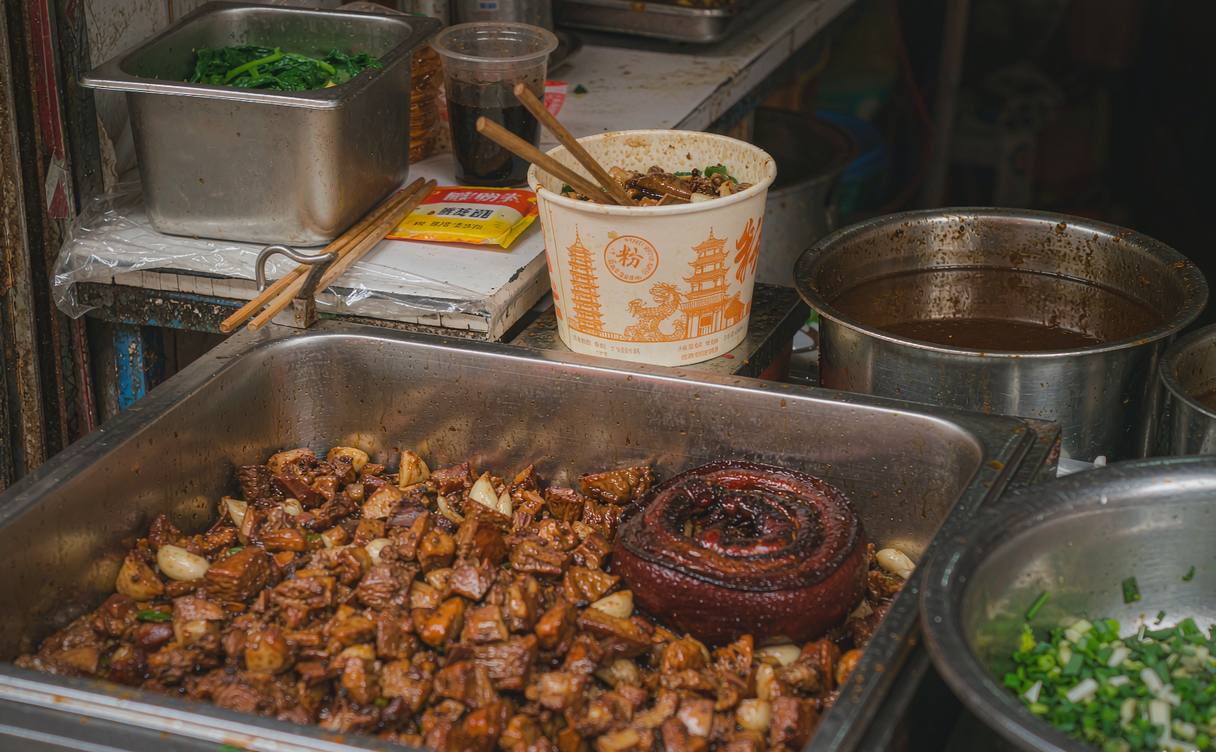
Hezhou cooking leans into stuffed dishes called niang, tofu, eggplant, bitter melon, and even lotus root stuffed with pork and herbs. A plate runs RMB 22 to 40. Huangyao’s fermented soybeans add depth to local braises, and the rice noodles are worth a daily bowl at RMB 10 to 18. For noodle specifics in the region, our Guilin rice noodle guide explains the styles you will meet across Guangxi, from snail broth to dry tossed versions.
A Practical Hezhou Itinerary
With two days, do Huangyao on day one and Gupo Mountain plus the hot spring on day two. With three days, add Ziyun Cave and a slow evening in the city’s night market. I tracked costs with our China budget travel guide and stayed around RMB 240 to 340 a day including a simple hotel and meals, which felt like a bargain for scenery this good.
Where to Stay and When to Go
Budget hotels near the station start at RMB 120 to 190; a comfortable room in the center runs RMB 230 to 380. I paid RMB 280 for a quiet place a short walk from the food streets. The best time to visit China fits Hezhou well: spring and autumn are mild, while summer is hot and the springs are best in cooler months. If you want a coastal add-on later, the China beaches guide on our site lists good options down in the south.
Getting Around
Hezhou’s center is small and walkable. For Huangyao and Gupo Mountain, buses and shared vans leave from the station area for RMB 15 to 30, or you can hire a driver for the day for RMB 200 to 350. I used a mix of both and never felt rushed, though I did book the Huangyao bus the night before during a holiday weekend.
Final Thoughts
Hezhou gave me the karst beauty of Guangxi without the tour-bus density, plus hot springs and a town I still think about. For background, the Wikipedia page on Hezhou has useful facts on its location and history, and it helped me plan the train hops from Guilin.
Practical Notes for Visitors
A few things I learned the hard way. Card payments worked in hotels and the bigger restaurants, but the Huangyao teahouses, the night-market stalls, and the Gupo Mountain ticket desk preferred cash or a Chinese app, so I kept RMB 100 to 200 in small notes. Foreign-card ATMs sat near the train station, and I used one without trouble. Mobile data was good in the city and on the Guilin line, but it faded inside Huangyao’s stone lanes and on the Gupo upper trails, so offline maps helped.
Language was the main gap. Outside the front desk, almost nobody spoke English, and my Mandarin covered buying noodles and asking bus times but little more. A translation app did the rest, and drivers waited while I showed hotel names in characters. If you visit Huangyao on a weekend, go at opening; by ten the tour groups arrive and the lanes get tight.
Side Trips and the Guangdong Edge
Hezhou sits close to Guangdong, and the rail line runs straight to Guangzhou in under two hours. That makes it an easy add-on if you are already in the Pearl River delta, or a gentle first taste of Guangxi before the bigger karst names to the northwest. I treated Hezhou as a three-night base and took the hot spring and the cave as half-day outs, which kept every morning slow. The border feel shows in the food, where Cantonese influence meets Guangxi staples.
A Slow Evening in the Night Market
One experience I would repeat: the city night market, a few blocks from my hotel, where vendors spun the stuffed niang dishes fresh and grilled river fish over charcoal. A plate of tofu niang cost RMB 22, and a bowl of noodles RMB 12. I ate there two nights running, sitting on a plastic stool and watching families do the same. It was not polished, but it was the real Hezhou, and the price was a fraction of any tourist restaurant.
What I’d Tell a Friend
Wear shoes with grip, because Huangyao’s stones are slick after rain and Gupo’s paths are root-bound. Book the Guilin train ahead in holidays. And give yourself one unplanned afternoon, because the best moments in Hezhou were the ones I did not schedule, the hot spring at dusk and the empty lane at dawn.