

I first rolled into Shaoyang (邵阳) on a muggy afternoon, expecting a forgettable industrial stopover on my way west toward Guangxi. What I found instead was a city wedged between the Xuefeng Mountains and the Guangxi border, where Miao and Dong minorities still run their own hill markets and where one of China’s most dramatic red-rock landscapes sits two hours south in Xinning County. Most foreign travelers blow past Shaoyang on the way to Zhangjiajie or Fenghuang, and that is exactly why I keep coming back. This Shaoyang travel guide walks through how I got there, what I actually did, what I ate, and what it cost me in real money during 2025, so you can decide whether the detour is worth your train ticket.
How to get to Shaoyang
The easy gateway is Changsha. From Changsha South Railway Station I took a G-class high-speed train to Shaoyang Station (邵阳站) in the city center, or alternatively to Shaoyang North (邵阳北) a little further out. The ride runs about 1 hour 40 minutes to 2 hours, and a second-class seat cost me RMB 95 to 130 depending on the departure. Trains leave roughly every 30 to 60 minutes through the day, so you do not need to book far ahead except during the Spring Festival rush in late January and early February, when you should buy a week out. If you are building a longer Hunan route first, our Changsha travel guide explains where to base yourself in the capital, and our China high-speed train guide for foreigners covers the ticket apps, ID rules, and seat classes in plain language before you buy.
Shaoyang has no international airport of its own, so flying in means landing at Changsha Huanghua International Airport and taking the metro or maglev to Changsha South, then the train. Inside the city, ride-hailing apps like DiDi work fine, but for the mountain counties you will want a pre-arranged driver or the long-distance bus from Shaoyang West Bus Station. A private car from the city to Langshan ran me about RMB 350 to 450 one way in 2025, and I split it with two other travelers I met at the hostel, which brought my share down to RMB 130.
Best time to visit Shaoyang
I went in late April, and the combination of mild temperatures (around 18 to 24°C) and green terraces was near perfect. The region has a humid subtropical climate: summers (June to August) get hot and sticky, often above 33°C, with sudden afternoon storms, while winters are short and damp, rarely below 2°C but grey for weeks. For comfortable hiking and the best light on the red cliffs, target March to May or September to early November. Our best time to visit China breakdown maps the national seasons if you are stringing several provinces together, and it is worth checking before you lock in dates, because the mountain roads get slippery in heavy spring rain.
Langshan and the Danxia red cliffs
The headline sight is Langshan (崀山), in Xinning County about 1.5 to 2 hours south of the city center. It is part of the China Danxia UNESCO World Heritage cluster inscribed in 2010, and the rock is the same iron-red sandstone you see at Danxia Mountain in Guangdong, just with far fewer tour buses. I spent a full day on the Bajiao Zhai (八角寨) ridge, where the trail tops out at a viewpoint looking down on a sea of rounded crimson peaks, and I also walked the Fuyou Bridge (夫夷江) section, a calmer riverside path good for photos without the climb.
Tickets in peak season ran RMB 120 to 180 for the combined scenic area pass, and the cable car up Bajiao Zhai was an extra RMB 60 one way. Off-season, entry dropped to around RMB 80. The trails are well paved but involve real climbs, so I wore trail shoes rather than the sneakers I had on in the city. A local guide at the visitor center charged RMB 200 for a half-day walk, and although the signage is in Chinese and English, the guide earned his fee by explaining the Miao folklore behind each formation, which the plaques only sketch.
Nanshan grassland and Miao trails
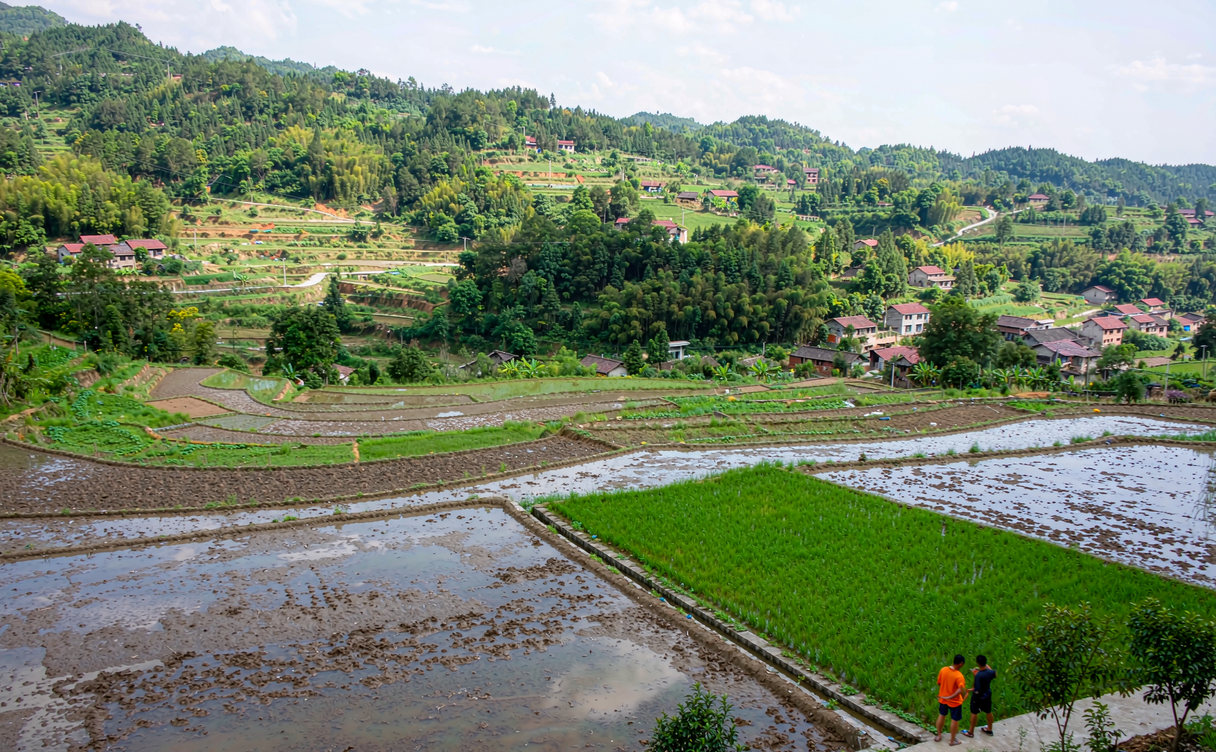
My second big outing was Chengbu Miao Autonomous County, home to Nanshan (南山牧场), a high meadow at roughly 1,700 meters that locals call the “80-Li Southern Mountain.” It took about three hours by bus from Shaoyang, and the entrance was a modest RMB 50 in 2025. Up top, Miao herders still graze cattle and sell wind-dried beef and block tea by the roadside. I joined a morning market in the county town where women in embroidered aprons traded sticky rice and wild mushrooms; nobody spoke English, but the gesture-and-smile method got me a full breakfast for RMB 12.
If you want minority culture without the commercial polish of Fenghuang, this is the honest version. Stay overnight in a guesthouse near the meadow (RMB 120 to 200 a night) and you get a sunrise that three busloads of day-trippers will miss. Bring a warm layer even in spring, because the altitude makes the nights crisp, and pack snacks, since the only food up top is the herders’ roadside stalls.
What to eat in Shaoyang
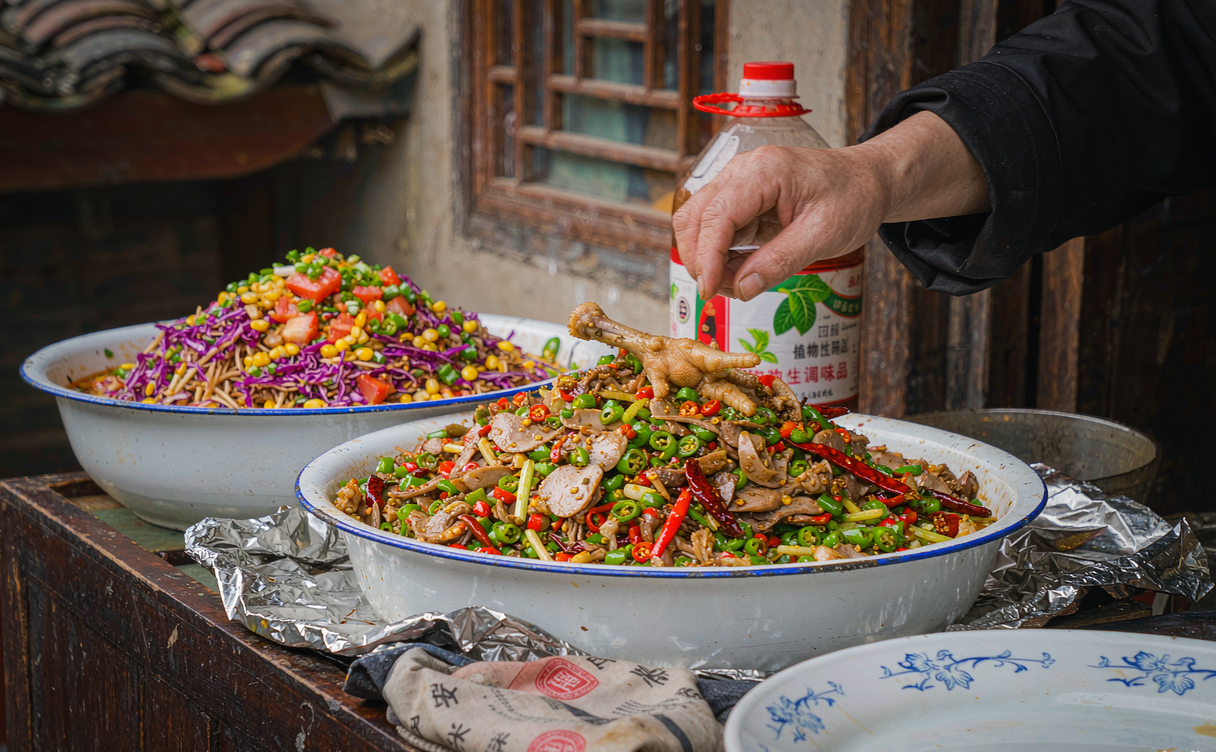
Shaoyang food leans rustic and salty, closer to Guangxi border cooking than the chili-bomb Hunan fare of Changsha. The staple is Shaoyang rice noodles (邵阳米粉): thin, springy rice threads in a clear pork bone broth, topped with braised mince, for RMB 8 to 15 a bowl at any hole-in-the-wall near the station. I became hooked on Wugang braised snacks (武冈卤菜), especially the dark, soy-glazed duck and the smoked tofu, sold by weight at RMB 30 to 50 for a takeaway pack. For a deeper look at the regional table, our Hunan cuisine guide separates the western mountain styles from the central capital style, and our China food tour guide has tips on ordering when the menu is all-Chinese, which it will be in the smaller counties.
A winter specialty is zhuxue yuanzi (猪血丸子), smoked pork-blood tofu balls that travel terribly but taste great fried with chili. I also liked the local sweet potatoes and the pressed tofu strips sold at the night market along the Zijiang embankment, where a full graze cost me under RMB 40.
A practical Shaoyang itinerary
Here is the two-night plan that worked for me. Day one: arrive by midday train, drop bags at a city hotel (RMB 160 to 260 for a clean double), walk the Zijiang riverside, and eat noodles for dinner. Day two: private car to Langshan, full day on the ridges, back late. Day three: early bus to Chengbu, half day on Nanshan meadow, return to Shaoyang and train out the same evening or the next morning. If you have a fourth day, add the Fuyou River boat at Langshan for RMB 60 and a slow morning in the city museums.
All in, my three days ran about RMB 900 to 1,200 excluding the train from Changsha, which fits a modest backpacker budget. Our China budget travel guide lists the hostels, sleeper trains, and local eateries that kept me under RMB 350 a day on the road, and it is the piece I wish I had read before my first trip, because Shaoyang rewards slow travel more than speed.
Where to stay and book
I booked everything through Chinese platforms (Ctrip and Meituan) and paid with Alipay; international cards worked on Ctrip but not always on the small guesthouse WeChat pages, so carry some RMB cash for the countryside. The city center near Shaoyang Station has the most reliable mid-range hotels and the best noodle streets within walking distance. For Langshan, stay in the town of Langshanzhen right at the scenic gate (RMB 150 to 240) so you can reach the trailhead before the bus crowds.
Shaoyang will not make the front page of anyone’s China highlights reel, and that is the point. It is a real working city with red mountains, Miao meadows, and broth-soaked noodles at prices that feel like a decade ago. If you have already done the big three of Beijing, Xi’an, and Shanghai, this is the kind of place that reminds you why the backroads of Hunan are worth the extra train ticket, and why the best trips are sometimes the ones you almost skipped.