

The best way to sleep in Lijiang is not in a chain tower on the new-city ring road but inside the old town, in a Lijiang boutique inn built from a restored Naxi courtyard house. These are private residences of timber, carved lattice windows, and a planted central patio that have been quietly converted into small hotels of eight to twenty rooms, each one different from the next. We’ve placed travelers in courtyards where the only sound at night was the canal and the only light was the paper lanterns, and that experience beats any five-star lobby in the new district by a mile.
What a Lijiang boutique inn really is
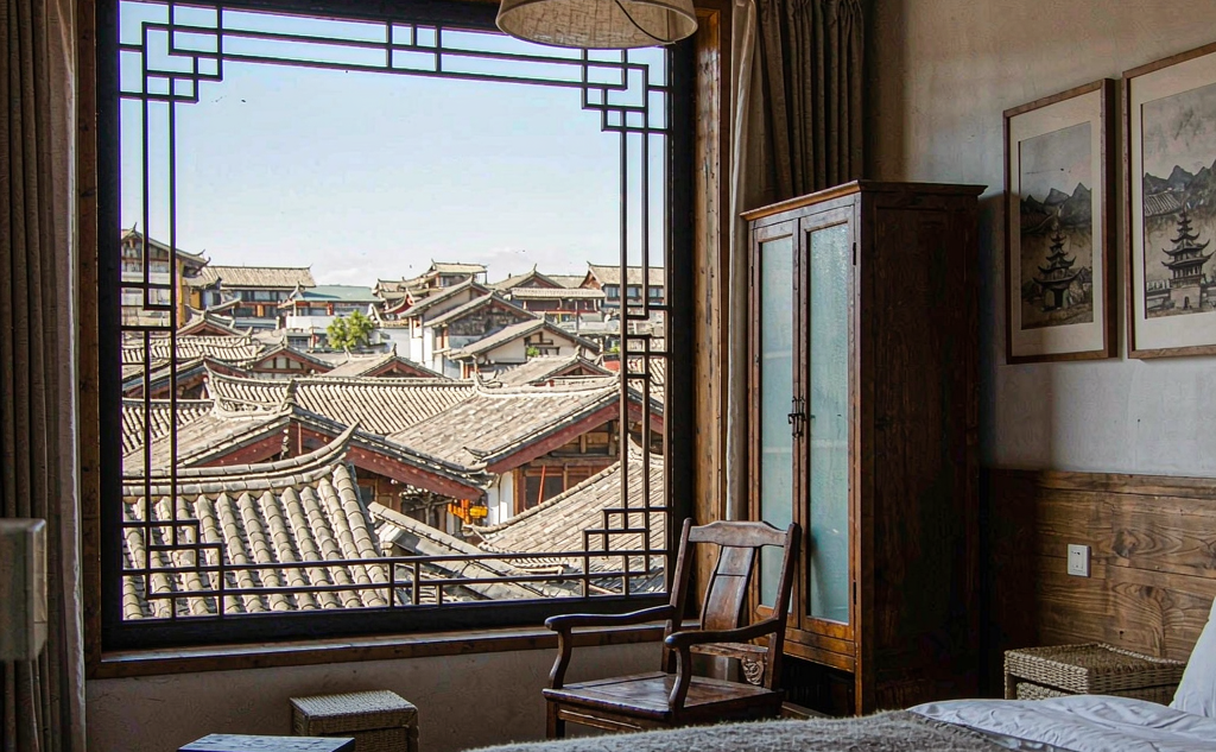
Lijiang sits in Yunnan, China, and its old town is a UNESCO World Heritage site, protected precisely because the traditional Naxi and Nakhi building style survived. A proper boutique inn keeps that shell: a square or rectangular courtyard (siheyuan style) wrapped by two-story timber rooms, a tiled roof with upturned eaves, and a stone channel of running water drawn from the surrounding streams. Inside, the good ones install modern bathrooms and proper heating without ripping out the carved doors or the courtyard tree.
What separates a real inn from a dressed-up hostel is restraint. The best owners leave the 100-year-old beam exposed, add a single piece of Naxi embroidery to the wall, and stop. The weak ones paper the place in “ethnic” kitsch and call it themed. We tell visitors to look at the photos for original wood and a living courtyard plant, that is the signal the building is genuine, not a concrete box with a costume.
Where to stay in Lijiang: the three old-town zones
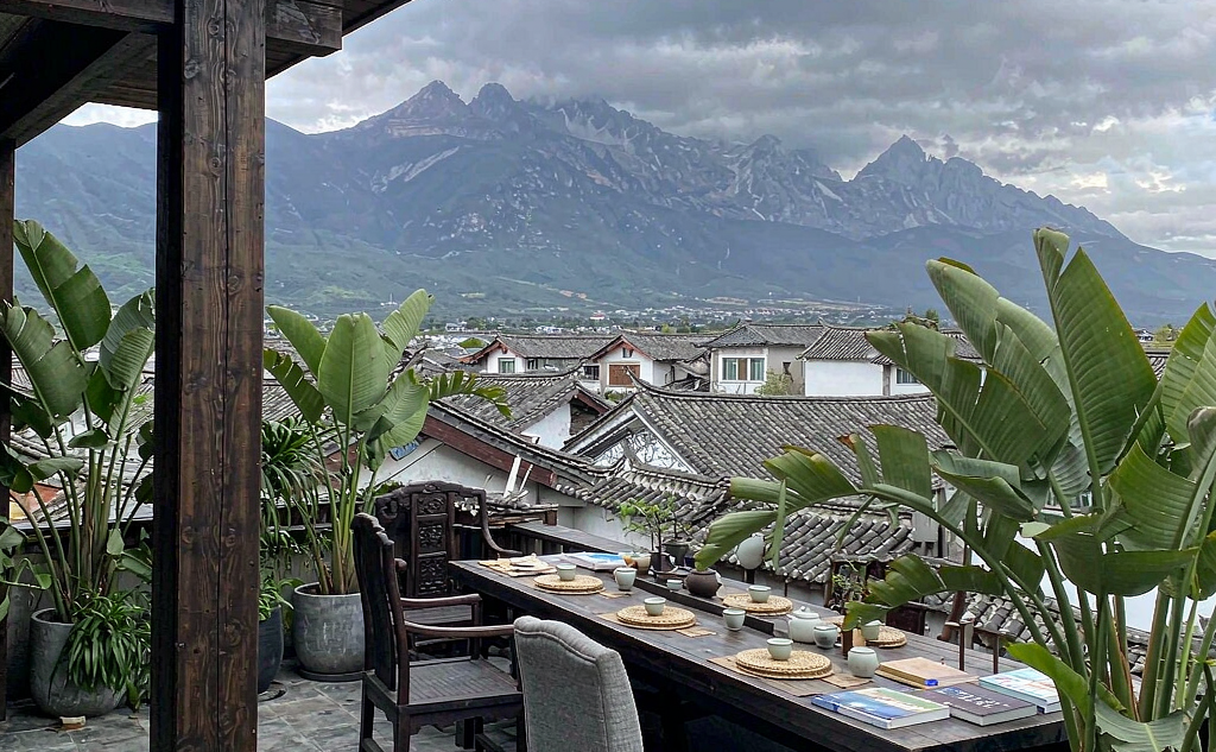
There are really three places to book, and they feel nothing alike. Dayan, the main old town, is the postcard: canals, bridges, and bars. It is beautiful and loud; book here only if you want nightlife at your door and do not mind the 11 p.m. singing from the bar streets. Shuhe, two miles north, is the same architecture with a fraction of the crowd, our default recommendation for a first courtyard stay, calm enough to hear the water. Baisha, furthest north toward the mountain, is a working village with a handful of design inns and almost no tourism noise; best for travelers who want to wake to Jade Dragon Snow Mountain with no one around.
The Lijiang old town travel guide maps these three zones and the walking paths between them, which matters because the inns do not have street addresses in the western sense, you navigate by gate and lane name, and a driver will drop you at the edge of the pedestrian old town to walk the last few minutes.
Lijiang courtyard hotels: what you actually pay
Prices swing hard by season. In the calm months of April to May and September to October, a genuine boutique courtyard room runs 450 to 900 RMB per night, and you can often negotiate a better rate for a three-night stay booked direct. June to August is peak domestic travel; doubles climb to 900 to 1,500 RMB, and the best inns sell out weeks ahead. Chinese New Year and the October National Day week are the worst, double those numbers and expect minimum stays. The best hotels in Lijiang list tracks current standouts across the three zones with live price bands, which is the fastest way to separate a real courtyard from a fake.
At the top end, a handful of design inns with snow-mountain views and a private butler run 1,800 to 3,500 RMB. These are worth it for a splurge night but not necessary to feel the town, a 600 RMB room in Shuhe delivers 80 percent of the magic.
Lijiang old town stay: booking and quiet rooms
Book through a major OTA (Ctrip, Trip.com, or Booking) for the free-cancellation safety, then email the inn directly to confirm and sometimes match a lower rate. Two requests matter more than anything: “quiet room away from the bar street” in Dayan, and “upper floor with mountain view” everywhere else. The old town’s wooden walls carry sound, so a room over the lobby bar is a mistake we have watched travelers make twice.
Ask also about heating. Nights drop to near freezing from December to February, and not every restored timber room has adequate heating despite the pretty fireplace in the lobby photo. Confirm “di nuan” (floor heating) or a real AC unit before you pay for a winter stay. The China heritage hotels guide covers this exact issue across restored properties nationwide, old buildings and modern comfort do not always meet, and the questions to ask are the same from Lijiang to a tulou in Fujian.
Getting there and the altitude
Lijiang has a domestic airport with flights from Kunming, Chengdu, and Shanghai, and a high-speed rail line now links it to Kunming and Dali in a few hours. The old town is a 40-minute drive from the airport; set the drop point to the north or south gate of your zone, not a street number. Altitude is the quiet factor, Lijiang old town sits around 2,400 meters, high enough that some visitors feel light-headed on day one. We advise arriving, checking into the inn, and doing nothing strenuous until morning; the courtyard is the right place to rest.
Drink water, skip the first-night strong liquor, and let the inn keeper brew you a pot of local Pu’er if they offer. Most boutique inns include a simple breakfast of rice porridge, eggs, and pickles; confirm what is included so you are not surprised by a 40 RMB add-on.
Practical tips from the ground
A few things save every first-time inn guest grief. The old town’s stone lanes flood slightly in heavy rain, so pack shoes that grip and a small umbrella; the inn usually lends one but not always. Luggage with wheels is a pain on the uneven lanes, so a backpack or a soft bag is kinder to you and the pathway. Tipping is not expected at inns, but a thank-you note in the book and a review mentioning the keeper by name goes further than cash.
Season shapes the stay more than the room. Spring brings pear blossoms along the canals; autumn is crisp and the mountain is clearest; summer is green and wet with afternoon storms; winter is cold, cheap, and empty, our favorite time for a quiet courtyard if you accept the heating question. Avoid the two Golden Weeks if you can; the old town becomes a moving crowd and the calm that sold you the inn disappears.
A note on the wider region: Lijiang pairs naturally with Dali to the south and Shangri-La, Yunnan, China to the north, and many travelers do all three in a week by train or car. The pace works because each town has its own courtyard tradition, and the inns become the through-line of the trip. A full Lijiang travel guide will also map the Jade Dragon cable car and the Baisha murals for day trips out of your courtyard.
Bringing it together
A Lijiang boutique inn is the rare hotel that is also the activity: you are not just sleeping, you are living inside a protected old town for the price of a mid-range room elsewhere. Pick the zone by the noise you can stand, confirm the heating, and book early for autumn. The Lijiang old town travel guide walks the lanes you will be navigating, and if this is your first trip to China overall, the China travel guide for first-timers covers trains, payments, and the logistics that make a courtyard booking smooth.
The one move we hope you make: spend at least one night in Shuhe rather than Dayan. The same courtyard, a tenth of the noise, and a canal you can actually hear, that is the Lijiang most visitors miss.
For a ranked shortlist across zones and seasons, the best hotels in Lijiang list tracks current standouts with live price bands.
For first-time visitors to the country, the China travel guide for first-timers covers the trains and payments that make any courtyard booking easy.
One last note: the courtyard that looks perfect online is only as good as its keeper, so read the three most recent reviews for the word “quiet” before you confirm, in Lijiang that single word predicts your night more than any star rating.