

If you want to understand Chongqing before you understand anything else about it, start with a bowl of Chongqing xiaomian. This is the city’s true breakfast, the thing that gets the mountain metropolis moving at 6 a.m. before the cable cars and the fog. A proper bowl is a few yuan of wheat noodles drowned in a red, aromatic broth built from chili oil, fried pixian bean paste, Sichuan peppercorn, and a handful of pickled mustard greens. We’ve sent travelers to Chongqing who came for the hotpot and left talking about the xiaomian, and that’s the usual order of events.
What Chongqing xiaomian actually is
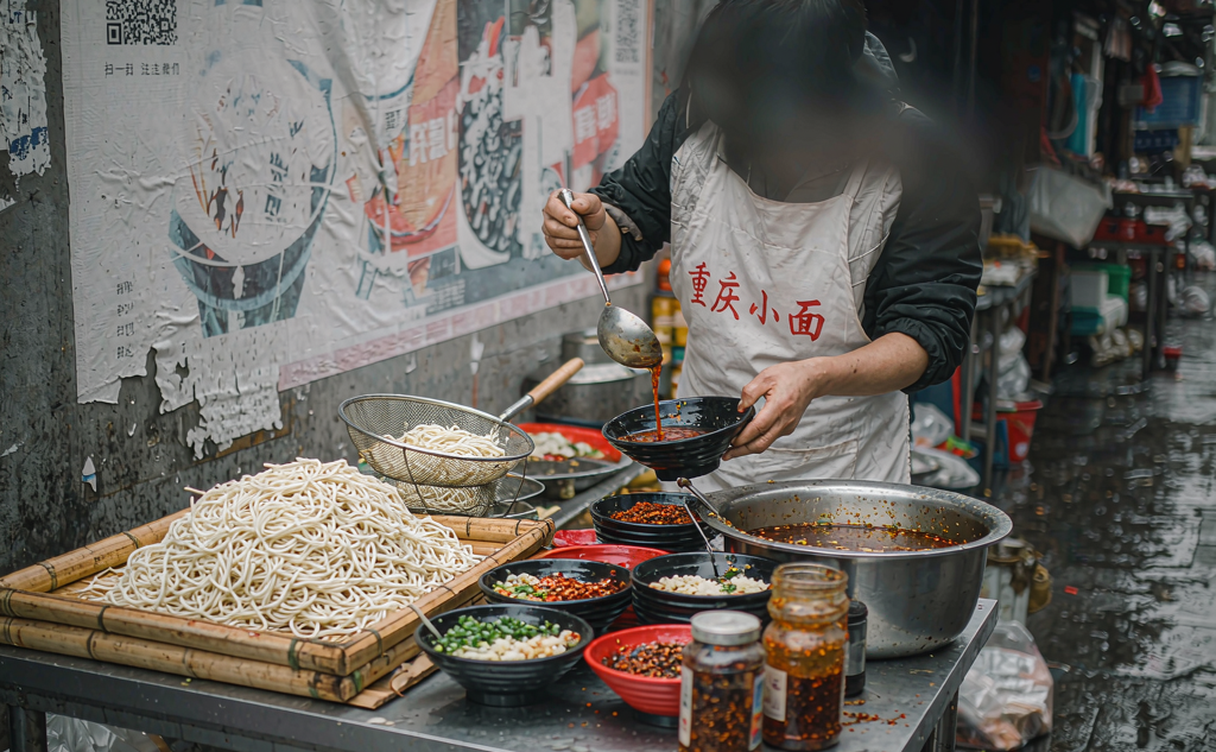
Xiaomian literally means “small noodles,” but there is nothing small about the flavor. The base is a thin alkaline wheat noodle, usually the width of spaghetti or a little thinner, boiled for about 90 seconds so it keeps a firm bite. What defines the bowl is the “shaokao”, the seasoning layer dropped into the bottom of the bowl before the noodles arrive. That layer is a cook’s signature: red chili oil pressed from local Erjingtiao chilies, a spoon of zhacai (pickled mustard stem) for crunch, minced scallion, a few drops of black vinegar, toasted sesame, and sometimes a fried soy-paste called tianmianjiang for roundness. On top goes the numbing Sichuan peppercorn, ground fresh so it tingles rather than bites.
The dish is native to Chongqing, a city whose food culture the Wikipedia overview of Chongqing describes as part of the broader Sichuan culinary world but with its own louder, oilier personality. Xiaomian is the everyday face of that personality, cheap, fast, and eaten standing up at a plastic stool on the sidewalk.
A Chongqing noodles guide to the key styles
You will see two main camps on every menu. The first is sucai xiaomian (vegetable small noodles), which is technically vegetarian, no meat topping, just the seasoned broth and greens. The second is laorou xiaomian (minced pork noodles), where the cook fries ground pork with the bean paste and piles it on. There are also offshoots: niurou (beef), jitui (chicken thigh), and the glorious za酱 variation that borrows the pork-bitterness of Beijing zhajiangmian but keeps the Chongqing chili snap.
Spice level is the real decision. Locals order by “la du”, mild (wei la), medium (zhong la), or Chongqing-standard tongue-numbing (zhong la jia ma). For a first bowl, we tell foreign visitors to ask for “wei la, bu yao tai ma” (mild, not too numbing) and adjust upward on day two. You can always eat the peppercorn heat, but you cannot un-eat it.
Best xiaomian in Chongqing: where we send people
The honest truth of a good Chongqing noodles guide is that the best bowl is almost never in a famous restaurant. It is the cart your hotel guard walks to at 7 a.m. That said, a few spots are reliable and tourist-friendly.
Hao Chi Jie (好吃的街) stalls near Jiefangbei, a cluster of tiny shops where a bowl runs 8 to 12 RMB. Order at the counter, watch the cook flash-boil the noodles, and eat at the narrow bar.
Er Jie Guanchang Xiaomian (二姐擀面) in Nan’an, a family shop on a side street off Nanping. Their sucai bowl is 9 RMB and the chili oil is noticeably brighter and fruitier than the Jiefangbei norm. We’ve sent travelers here who ranked it above hotpot.
Hua Er Noodles (花儿面) near Ciqikou, louder, busier, and right by the old town, so it fits a sightseeing morning. Expect 10 to 15 RMB and longer queues on weekends. The minced pork version here is generous.
Most shops open around 6:30 a.m. and sell out by early afternoon. This is a breakfast-and-lunch food; don’t expect a 9 p.m. bowl.
Things to eat in Chongqing beyond the noodles
Xiaomian is the opener. Once you have the chili rhythm, the rest of the city follows. Within a block of any good noodle stall you will usually find douhua (silken tofu with sweet or savory syrup), guoba rice crackers, and the late-night chuanchuanxiang skewers. For the bigger picture, our Chongqing food guide walks through the full eating day, and if you want the fiery centerpiece the city is famous for, the Chongqing hotpot guide explains how to order a table without melting your palate on the first dip.
How to order without stress
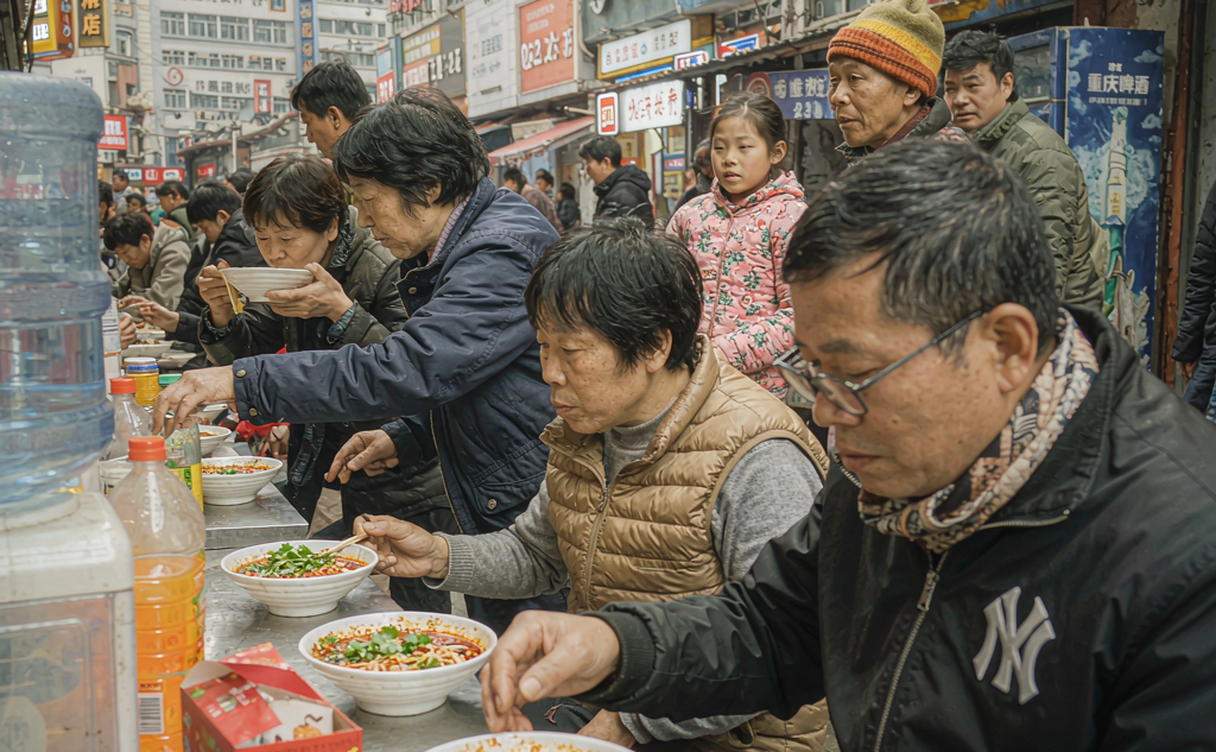
The script is simple and works in almost any shop. Point at the menu, say the style, then the spice. “Sucai, zhong la” gets you vegetable noodles, medium spice. Hand over cash or scan Alipay/WeChat, most noodle stalls still take cash, which is rarer at big restaurants. Bowls arrive in 90 seconds; slurp immediately while the noodles are hot and the oil is glossy. There is no ritual, no sharing, no waiting for the table to fill. You eat, you pay, you leave, and the next person takes your stool.
One practical note for visitors: xiaomian broth is oily by design. If a heavy stomach worries you, order “shao la” (less oil) alongside “wei la,” and pair the bowl with a bottle of soy milk (doujiang) sold at the same counter for 3 to 5 RMB. We’ve found that simple combo keeps first-timers comfortable through a full Chongqing morning.
A Chongqing food guide to pairing and timing
Eat xiaomian early, then let the city pace you. A typical local morning is noodles at 7:30, a walk along the Yangtze riverfront or up to Eling Park, then hotpot reserved for the evening when the spice feels earned. If you are building a longer eating itinerary, an eight-cuisine overview of Chinese regional cooking places Sichuan-Chongqing food in context with the other styles, and a snack-focused day in the Sichuan hinterland pairs naturally with a xiaomian stop.
Practical tips from the ground
We’ve walked hundreds of visitors through their first Chongqing bowl, and a few things come up every time. Tissues are not automatic, carry a pack, because the chili oil will get on your hands. Stools are low and the tables are tall; that is normal, not a mistake. Don’t try to translate the menu perfectly; point and smile, and the cook will guide you. Prices are posted on the wall in Chinese numerals, and a bowl rarely exceeds 15 RMB even in tourist zones, so if someone quotes you 40 RMB for “special” noodles, you are at a trap aimed at travelers, walk two doors down.
Season matters less for xiaomian than for scenery, but there is a case for winter. From December to February the cold river fog makes a 9 RMB spicy bowl feel like medicine, and the streets are calmer. Summer is louder and sweatier, which locals love and newcomers find intense. Either way, the noodles taste the same at 6 a.m. in August as in January.
Bringing it together
A bowl of Chongqing xiaomian is the cheapest, fastest, most honest introduction to the city you can buy, and it sets you up to enjoy everything else, the hotpot, the skewed geography, the vertical streets, with the right expectations. Treat it as your daily reset button. Our full Chongqing travel guide maps the neighborhoods where the best stalls hide, and if this is your first trip to the country overall, the China travel guide for first-timers covers payments, SIM cards, and the small logistics that make a noodle run smooth.
The thing we tell every traveler before they land: skip the hotel breakfast buffet at least once and find the nearest stool-and-bowl shop. That single decision will teach you more about Chongqing in ten minutes than any viewpoint.
If you want the fiery centerpiece after your noodles, our hotpot write-up shows you how to order a table built for first-timers.
For a wider eating plan across the region, the Sichuan snacks guide lists the street bites that pair with a xiaomian stop.
One last note: xiaomian shops reward the early riser. The 6:30 a.m. bowl is fresher, quieter, and more authentically local than anything you will find after the tour buses roll in, so set an alarm and let the city wake you up the Chongqing way.