

The Banpo Museum Xi’an is the place to stand on a wooden walkway above a six-thousand-year-old village and look down at the round and square pit houses where one of China’s earliest farming societies lived, cooked, and buried its dead. Most foreign visitors rush from the city to the Terracotta Warriors and never learn that Xi’an’s human story starts several millennia before the first emperor. We send travelers to Banpo when they want to understand the ordinary people behind the famous armies, and the site never fails to land. This guide explains the tickets, the transport, and what you will actually see inside.
What Banpo is and why it surprises people
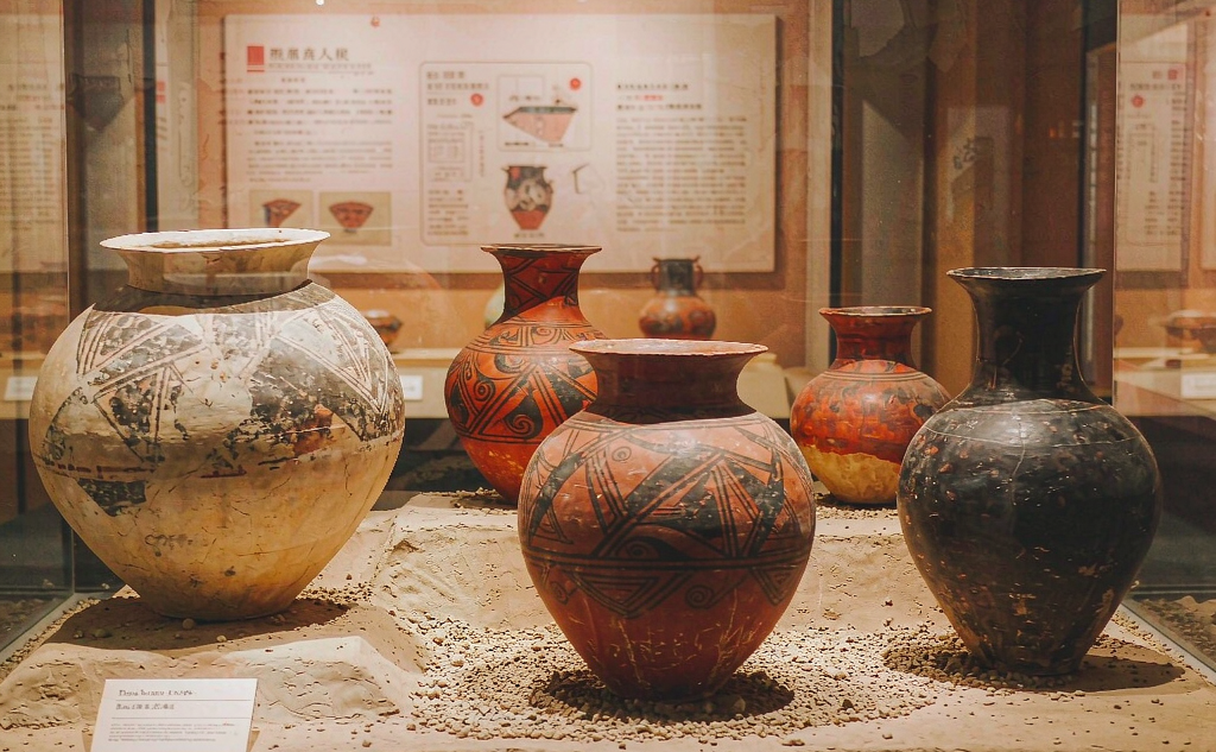
Banpo is a museum built over a Yangshao culture settlement, a Neolithic community that thrived along the Banpo River from roughly 4500 to 3750 BCE. The site was discovered in 1953 during the construction of a nearby factory, and archaeologists then spent years excavating the remains of about forty-five houses, six pottery kilns, and two hundred storage pits. What you walk above is not a replica but the original village floor, protected under a vast exhibition hall. The people here farmed millet, fished the river, and made the painted pottery that became the signature of Yangshao art, including the famous bowls decorated with a human face and fish motif.
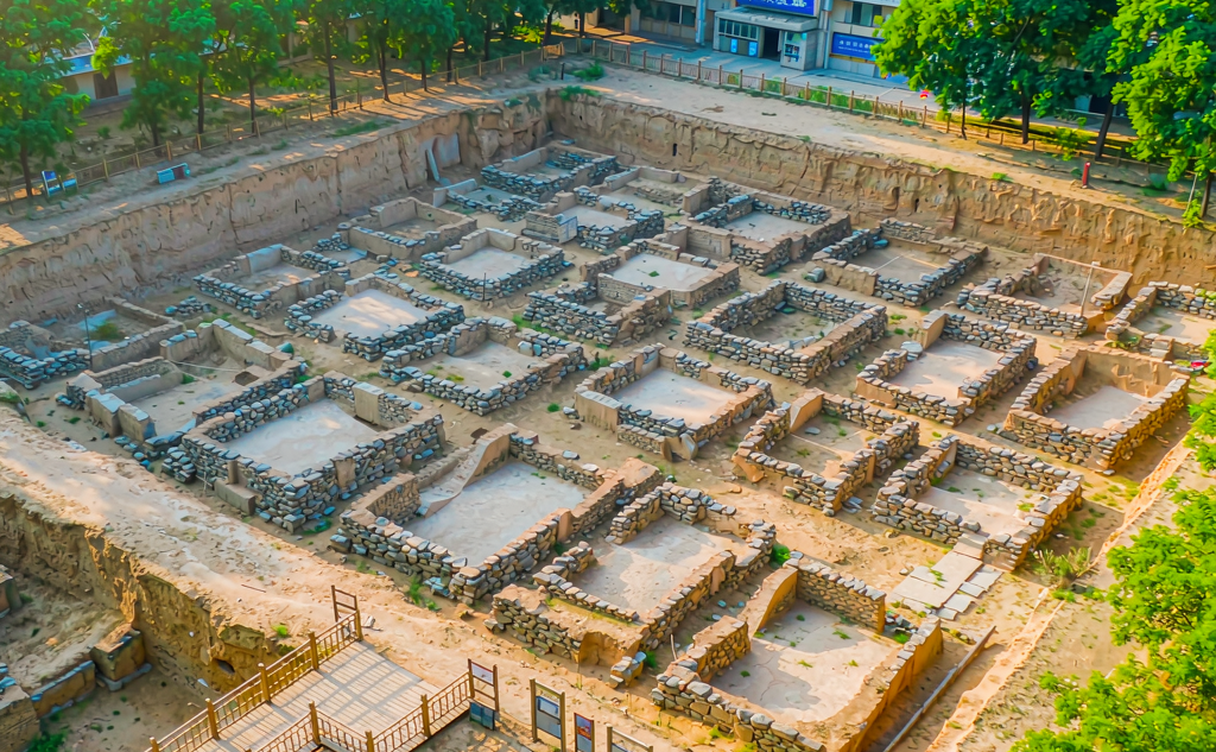
The settlement was surrounded by a defensive ditch, and the layout tells a social story: a central area for ceremonies, a residential zone, and a separate cemetery outside the ditch where the dead were buried with pottery and tools. Our guides point out that this is one of the clearest windows anywhere in China into how settled village life actually worked before written records.
Tickets, hours, and what you pay
As of our spring 2025 check, adult admission is 65 CNY, with students holding a valid ID admitted for half price at 32 CNY. Children under 1.2 meters enter free. Tickets are sold at the gate on Banpo Road and can also be booked through major Chinese travel apps, though the booth itself takes cash, Alipay, and WeChat Pay. Opening hours run from 8:00 to 17:30, with last entry at 17:00. The museum is closed on some Mondays for maintenance, so if you plan a Monday visit, confirm the date before you travel. The whole experience takes about two hours at a relaxed pace, and there is a small on-site shop selling reproduction painted pottery and books about Neolithic China.
How to get to Banpo Museum Xi’an
The museum sits in Baqiao District, about twelve kilometers east of the city center, on the way toward the Terracotta Warriors. The simplest public route is Metro Line 1 to Banpo Station; take Exit A and follow the signs for a ten-minute walk north to the entrance on Banpo Road. A taxi from the Bell Tower area costs roughly 35 to 50 CNY and takes thirty to fifty minutes depending on traffic. If you are combining Banpo with the warriors in one day, hire a car or join a guided loop, because the two sites sit in opposite directions from the center and public transport between them is slow.
Inside the halls: what to see
The visit has two parts. The first is the covered excavation hall, where the raised walkway lets you look directly at the house foundations, hearths, and storage pits without disturbing them. Stand at the edge of the central plaza and you can trace the post holes that once held the timber frames of round huts. The second part is the exhibition hall, which displays the actual finds: painted pottery, stone tools, bone needles, and the burial jars that held children. The human-face fish bowl is the star object, and our guides always pause here to explain how a simple pattern can reveal a whole cosmology.
A short film in the visitor center outlines the 1953 discovery and the Yangshao way of life, and it is worth ten minutes before you enter the halls. We have found that travelers who watch it first understand the layout far better.
Best time to visit and how to avoid the crowds
Xi’an has four clear seasons. Spring, from March to May, and autumn, from September to November, are the most comfortable, with cool dry days ideal for the best time to visit Xi’an across every outdoor sight. Summer is hot, often above 35 degrees, and the museum’s large hall can feel stuffy by midday, so aim for the 8:00 opening. Winter is cold but nearly empty, which suits travelers who want the walkways to themselves. Banpo receives far fewer tour groups than the warriors, so even at peak times it stays calm, but mornings are still quietest.
Combine it with the bigger Xi’an sights
Because Banpo lies east of the center, it pairs well with the city’s headline attractions. Our Xi’an Terracotta Warriors visit guide explains how to reach the warrior pits in Lintong, and you can logically do Banpo in the morning and the warriors after lunch if you have a driver. Back in the city, the Xi’an City Wall and the Muslim Quarter are evening activities that balance the ancient with the living, and both are easy metro rides from where you started.
Practical tips from our guides
A few things we have learned: wear comfortable shoes because you will be on raised walkways and standing for long stretches; bring water in summer, as the hall warms up; and consider a guide, because the objects mean far more once someone explains the burial customs. The site signs are in Chinese and English, but the deeper context comes alive with a person talking you through it. If you are arriving in Xi’an from another province, the high-speed trains pull into Xi’an North Station, and from there Metro Line 2 connects you toward the center before you transfer to Line 1 for Banpo.
The wider context of Yangshao culture and the Banpo excavation is summarized on Wikipedia, a helpful background read before you go.
Reading the layout like an archaeologist
The details on the walkway reward a slower eye. The defensive ditch that ringed the village was roughly five to six meters wide and about five meters deep, a serious earthwork for a community of a few hundred people. Inside it, the houses split into two shapes: round huts with a central hearth for families, and larger square buildings thought to be communal or for the village elders. The largest foundations cover near forty square meters, while the smallest are barely ten. The storage pits, dozens of them, held millet and possibly nuts, and a few still show the charred grain that let archaeologists date the site. Our guides like to point out the children’s burial jars set just outside the houses, a practice that tells us how this society treated its youngest dead. None of this is signed in great depth, so a human explanation turns a quiet floor into a vivid story. The on-site shop sells small reproduction painted bowls from 25 CNY, a lighter souvenir than the heavy museum copies found elsewhere in the city.
Why Banpo belongs on your Xi’an list
Banpo is not as famous as the warriors, and that is exactly its strength. You get the deep past without the crowds, you understand the farmers behind the soldiers, and you leave with a clearer picture of how Chinese civilization took root. For travelers building a real Xi’an itinerary, this stop turns a list of emperors into a story of ordinary people.
The Muslim Quarter is the natural place to eat after the museum, with noodles and bread fresh off the street grills.
The warriors deserve a full separate day, so pace yourself and keep the two sites apart.