

The Mu Residence Lijiang is the former palace of the Mu clan, the Naxi chieftains who ruled this corner of Yunnan for twenty-two generations across roughly 470 years, and it is the one spot in the old town where you can stand in a formal royal courtyard and look up at a wooden skyline that once answered only to the emperor. We have walked travelers through its gates hundreds of times, and the reaction is always the same: people expect a small temple and find a miniature forbidden city instead. This guide covers the ticket price, the route in, and what makes the residence worth a morning.
What the Mu Residence actually is
The Mu were hereditary tusi, indigenous rulers recognized by the Yuan, Ming, and Qing courts, and they chose to build their seat in the flat heart of what is now Lijiang Old Town rather than on a defensible hill. The original compound went up in the early Ming dynasty and grew into a walled complex of more than a hundred rooms arranged along a strict north-south axis. Much of it was destroyed in the mid-19th century during regional wars, and the version you visit today was rebuilt in the 1990s from historical drawings and local records. A favorite detail our guides share: the clan name is written Mu, and legend holds that they deliberately avoided enclosing it in a frame, because the character for frame plus wood would read kun, meaning trapped.
Tickets, hours, and what you pay
Admission is 50 CNY for adults as of our 2025 check, with children under 1.2 meters free and student discounts available with valid ID. Tickets are sold at the entrance on the old town’s east side and through major Chinese apps; the booth takes cash, Alipay, and WeChat Pay. Opening hours run from 8:30 to 17:30 in peak season and close a little earlier in winter, with last entry about an hour before closing. Plan ninety minutes to two hours, because the site is larger than it looks from the street and the hilltop pavilion at the back rewards the climb with a full view over the tiled roofs of the town.
How to get to Mu Residence Lijiang
The residence sits inside Lijiang Old Town, a few minutes’ walk from the main entrance squares at the northern end of town. If you are staying in the old town, simply follow the central waterway south and look for the large white-walled gate marked with the Mu name. Arriving from Lijiang Railway Station, take a bus or taxi for the twenty-minute ride to the old town drop-off, then walk in on foot, since vehicles are restricted inside the core. From the airport, a taxi runs about 40 to 60 CNY and takes thirty to forty minutes depending on traffic. Wear shoes with grip, because the old town’s stone lanes are uneven and can be slick after rain.
Inside the residence: what to see
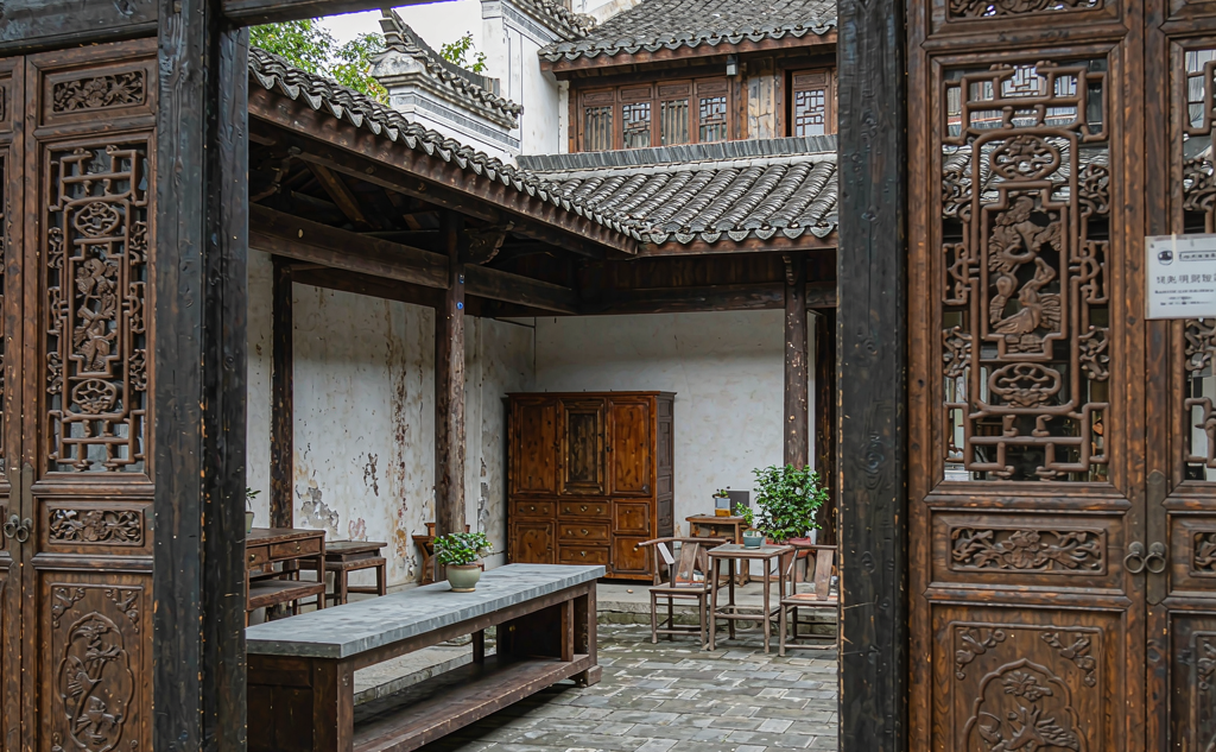
The route follows the axis from the outer gate to the inner sanctum. The first courtyard holds a stele and the clan genealogy, followed by the main hall where the chieftains received officials and held ceremonies. Deeper in, the Wenchang Hall once served as a library and school, a reminder that the Mu valued literate administration as much as military power. The rear of the complex climbs a low hill to a pavilion that looks straight down the town’s roof line, and this is where we tell travelers to pause, because the photograph from up there explains Lijiang’s layout better than any map.
Throughout, the woodwork is the story: carved lattice doors, painted beams, and the Naxi habit of mixing Tibetan, Bai, and Han motifs into one frame. The Lijiang Old Town travel guide we publish explains the surrounding lanes, but the residence itself is the aristocratic counterpoint to the merchant streets outside.
Best time to visit and how to avoid the crowds
Lijiang sits at about 2,400 meters, so the air is cooler and thinner than most visitors expect. Spring, from March to May, and autumn, from September to November, are the most comfortable, with clear skies and daytime highs around 15 to 22 degrees. This is also the best time to visit Lijiang for the surrounding Yunnan sights, when the nearby mountains are clear and the old town is neither frozen nor swamped. Summer brings warm days and afternoon rain, while winter is cold, dry, and very quiet. The residence is busiest between 10:00 and 14:00; arriving at the 8:30 opening or after 15:00 keeps the courtyards calm.

Extend your Yunnan trip
The residence is a natural anchor for a wider Yunnan loop. Our Dali Yunnan travel guide covers the lake-and-mountain town three hours south, a good next stop if you want a slower pace after Lijiang’s lanes. North of here, the highlands climb toward Tibetan-influenced landscapes, and the old town itself rewards at least two nights so you can see it empty in the early morning.
Practical tips from our guides
A few notes from the courtyard: buy the ticket online if you can, because the booth queue builds mid-morning; bring a light layer even in summer, since the hilltop wind is cooler than the streets; and hire a local guide at the gate, because the clan’s history is the difference between a pretty courtyard and a real story. If you are arriving by train from Kunming or further afield, the high-speed services now reach Lijiang Railway Station, and from there it is a short ride to the old town edge.
The Old Town of Lijiang, including the Mu Residence, is inscribed on the UNESCO World Heritage List, which is the clearest statement of its global value.
The halls worth slowing down for
Beyond the central axis, a few spaces deserve extra time. The theater stage near the west courtyard once hosted Naxi opera during clan festivals, and the carved railings still show scenes from local legend. The clan school, the Wenchang Hall, held the only formal library most locals ever saw, and the Mu used it to train the administrators who ran the surrounding valleys. Look up at the beam paintings: unlike the imperial yellow reserved for the emperor, the Mu worked in deep reds and greens with gold trim, a visual reminder that they ruled by appointment rather than by claiming the throne. We also send travelers to the back hill just before closing, when the light goes long and the tour groups have left, because that is when the residence feels like a home rather than a museum. If you want the courtyards empty, the 8:30 opening is your friend, and the ticket lets you step back in after lunch if the light changes.
Why the residence earns its place
The Mu Residence turns Lijiang from a pretty old town into a place with a ruling story, a written history, and a view worth the climb. For travelers who want more than photos of souvenir lanes, this is the stop that explains why Lijiang mattered for half a millennium.
Kunming is the usual gateway into Yunnan, a good place to begin the province before the highlands.
Give the old town at least two mornings so the residence and the lanes both get their quiet hour.