

Our guide to China winter festivals is built for travelers who want the cold months rather than fear them. From December through February the country puts on a different show than the summer crowds ever see: ice towers lit like cathedrals, rivers turned into sculpture parks, and streets strung with lanterns that pull whole neighborhoods outside after dark. We have taken guests through this season for years, and the China winter festival calendar rewards people who plan around the weather instead of fighting it. Below we walk the timeline month by month, name where each event actually happens, and share the booking and arrival details that keep a winter trip smooth. The best winter events China puts on are spread across thousands of miles, so picking a region first saves you from a frantic, frozen itinerary.
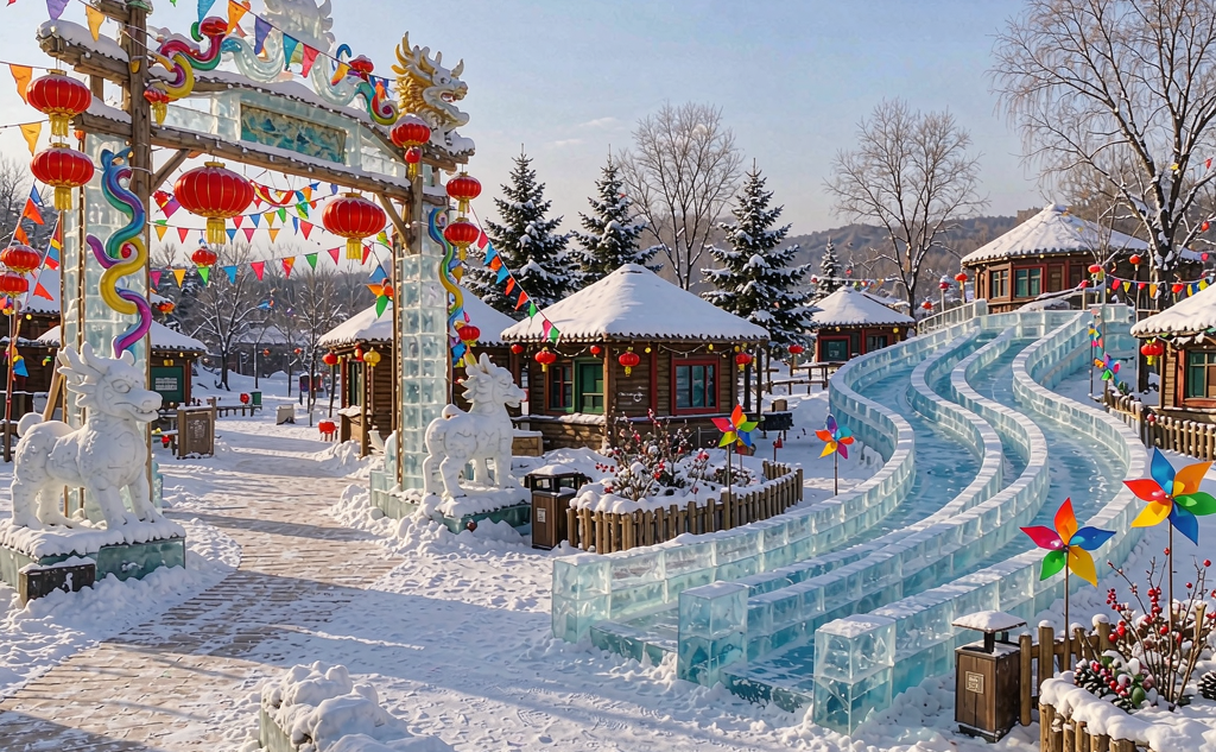
We start in Harbin, the city most visitors picture first. The Ice and Snow World opens roughly in late December or early January and usually runs into February, depending on how long the cold holds. Across the Songhua River, Sun Island hosts the snow sculpture expo, where teams carve multi story figures from packed snow. Tickets for both are sold online through official platforms, and we recommend buying a dated entry rather than a walk up, because the busiest nights sell out and the queue in minus twenty is no joke. Getting there is straightforward: fly into Harbin Taiping International Airport, then use the metro or a booked car to the sites. If you want the deep north beyond the city, our Mohe travel guide explains the northernmost town where the aurora sometimes shows on clear nights, and it pairs well with a Harbin leg for travelers chasing the full China snow festival experience.
A few hours southeast, Jilin province gives you two very different winter draws. Along the Songhua River in Jilin City, the rime frost coats trees in white crystal on cold, still mornings, usually from late December through February, and the best viewing is at dawn before the sun burns it off. Farther south, Xuexiang, or Snow Town, sits in the mountains of Mudanjiang and is famous for the thick snow that piles on the timber roofs; the season runs roughly December to March. Both need advance lodging, because Snow Town in particular swells on weekends and the guesthouses near the core fill first. Arrive by train to Jilin City or Mudanjiang, then a booked shuttle, and check the weather window before you commit, because a warm spell thins the snow fast and the displays lose their edge.
Skiers should look at two regions. The Northeast, especially the hills around Changbai and Yabuli, opens slopes from late November into March, with Yabuli the longtime training base and a good pick for confidence building runs. The bigger story for many is Chongli, in Hebei province near Zhangjiakou, which hosted slopes for the 2022 Winter Games and now runs them for the public through the same season. Booking lessons and rentals ahead saves a cold morning in line, and the easiest arrival is the high speed rail from Beijing to Zhangjiakou, then a short transfer. For gear, prices, and which mountain suits your level, our China winter sports guide lays out the resorts we send beginners to, including the ones with English speaking instructors.
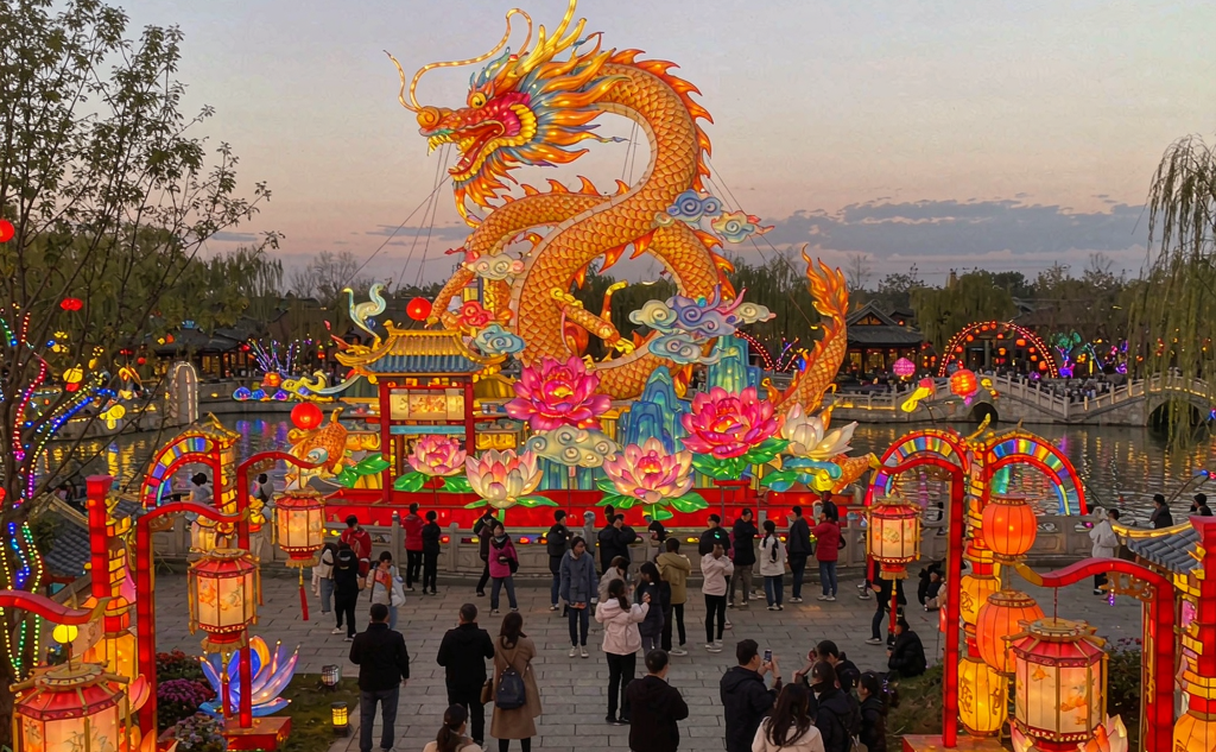
The lantern season peaks with the Lantern Festival, the fifteenth day of the first lunar month, which typically lands in February. The Lantern Festival on Wikipedia explains the holiday’s roots, but on the ground the experience is simple: cities build enormous themed light parks, and Zigong in Sichuan is the workshop behind many of the most elaborate displays that then tour the country. Timing varies by city, so confirm the exact opening dates, because some parks soft open before the festival night and keep running for weeks. Tickets are usually cheap and sold locally, but the headline nights draw crowds, so arrive early. Our guide to the China lantern festival covers the cities where the displays are worth the detour, from Nanjing’s riverside show to the smaller town fairs that locals love.
Spring Festival itself brings temple fairs, the busiest and most local of the winter events. In Beijing, Ditan and Longtan parks host fairs with snacks, folk performances, and games for a stretch around the holiday; similar fairs run in temples and old towns across the country. One thing we always flag is fireworks, because the rules are not national but local. Beijing and Shanghai enforce near total bans in the core, while many smaller cities and counties still allow controlled setting off, and the line changes by district. Read the local notice for your dates and never assume yesterday’s rule holds, since the China winter festival calendar shifts with municipal orders more than with the moon, and a fine or a confiscated purchase ruins an evening fast.
The south and the ethnic regions offer a gentler cold. Yunnan and Guangxi stay mild, and towns like Lijiang mix Naxi customs with the national holiday in ways worth a slow visit. The Tibetan New Year, Losar, falls in winter too and is observed across Tibet, China, usually in February, with family gatherings and monastery events rather than public spectacles; foreign visitors should check permit and access rules before planning. In Guizhou, Dong and Miao communities hold winter song and dress gatherings that travelers can join respectfully. None of these need the extreme gear the north does, but confirm dates, because rural schedules follow local custom and we advise checking official announcements before you book transport, since a missed village festival means a long drive for nothing.
Dressing for the north is a system, not a coat. We tell guests to layer: a wicking base, an insulating mid layer like fleece or down, and a windproof shell, plus real insulated boots, a hat that covers the ears, and liner gloves worn under a thicker pair so you can use your phone without freezing. Hand warmers go in pockets and boots. The cold is dry, so skin cracks and lips split; carry balm and drink water even when you are not thirsty. If you are doing winter travel China style across both the frozen north and the mild south, pack the heavy kit for the north and a light jacket covers the south, then layer down as you move between trains.
Cameras suffer in this weather more than people expect. Batteries drain fast in the cold, so keep spares in an inner pocket against your body and swap them when the viewfinder starts to lag. The real trap is condensation: bring the camera from minus twenty into a warm hotel and the lens fogs and can frost inside. We seal gear in a zip bag before going indoors and let it warm slowly, then wipe any moisture. Snow on the lens reads as blank white in shots, so brush it off and watch your exposures, because bright ice fools the meter and your keepsake photos come back washed out.
Ice underfoot is the quiet hazard. Northern pavements turn to sheets after a light snow, and we recommend grips that slip over boots for any day you are walking between sites. Step short, keep your hands out of pockets, and treat stair rails as mandatory. Roads get slick too, so book drivers who know local conditions rather than self driving on unfamiliar frozen highways, and build extra time into every transfer because a minor slide closes a lane for hours and there is no warm waiting room at the roadside.
The hardest part of the season is the Spring Festival crunch. For about a week around the holiday, hundreds of millions move at once, trains sell out weeks ahead, and flight prices jump; book any long distance travel early or avoid those dates. Shops and small restaurants in many cities close for several days, especially away from the big tourist strips, so stock snacks, medicine, and cash, and do not count on your favorite noodle shop being open on day two. We build buffer days into every winter plan so a closed counter or a sold out train does not derail the trip, and we tell guests to keep one backup hotel booked cancel free in case the route tightens.
The China winter festivals season asks more from you than a summer trip, but it gives back a country most visitors never see. Plan the cold, respect the local rules, and let the lanterns and the ice do the rest, because the payoff is a set of photos and memories no other season delivers.
Traveling alone through this season rewards caution and a flexible schedule. We tell solo guests to share their daily route with the hotel desk each morning, keep a charged power bank for the maps and the help screen, and avoid the worst Spring Festival travel days entirely. The cold is manageable, the crowds are real, and the right plan turns a risky sounding season into the most memorable one we run, with strangers at a temple fair or a lantern park often becoming the friendliest faces of the trip.