

Stretching roughly 400 kilometers along the northern bend of the Yellow River, the Kubuqi Desert is the seventh largest desert in China and the closest true sand sea to Beijing. Unlike the lifeless dunes many travelers imagine, Kubuqi has become a quiet success story of desert control, with green belts now holding back the sand and a string of well-run desert resorts making Kubuqi Desert travel both comfortable and surprising. Most visitors base themselves in Ordos or Baotou and join a day trip or overnight stay to ride camels, slide the dunes, and watch the sunset turn the sand the color of polished copper.
Getting to Kubuqi from Hohhot, Baotou, and Ordos
The desert sits inside Ordos prefecture in Inner Mongolia, but the three gateway cities each offer a different rhythm. Hohhot, the regional capital, has the best flight connections and a growing high-speed rail network. Baotou, an industrial city two hours north, is the most practical launch point for the eastern dunes near Xiangshawan, also called Resonant Sand Bay. Ordos itself, built around the coal and energy boom, has a shiny new airport and sits closest to the western sections of the desert. If you plan a broader Inner Mongolia desert trip, it makes sense to fly into Hohhot, then loop west through Baotou and Ordos before heading back. Our Hohhot travel guide covers trains and airport transfers in detail, while the Baotou travel guide explains the bus routes that run toward the dune resorts each morning.
Driving is the most flexible option. The desert resorts sit 60 to 150 kilometers from the nearest city, and local buses are infrequent, so many travelers rent a car or hire a driver. If you enjoy long drives through changing scenery, our China road trip guide has practical notes on renting a vehicle as a foreign visitor, including which apps accept international licenses and where to buy toll tags. The highway from Ordos to the Xiangshawan resort is smooth and well signed, and the final approach crosses a stretch of reclaimed grassland that shows just how much the local ecology has shifted in the past two decades.
Things to do in Kubuqi Desert
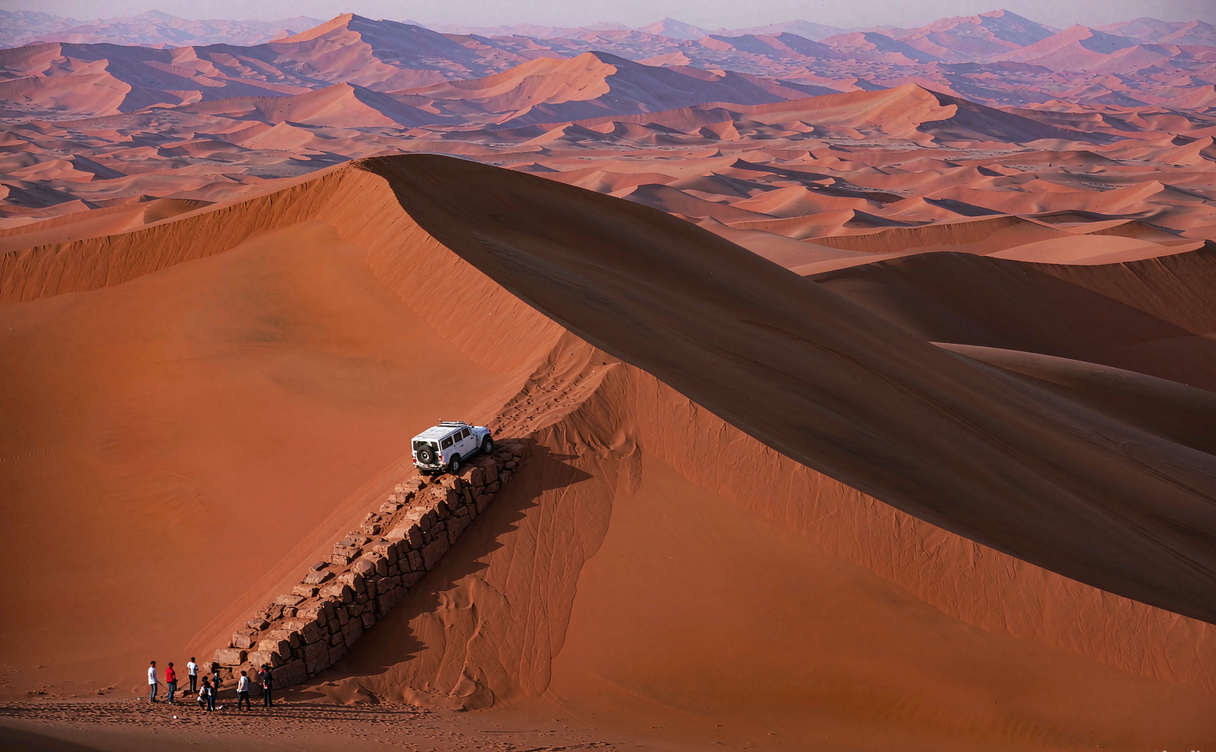
The headline experience is Xiangshawan, a resort complex built right into the dunes. Here you can ride a camel train across the ridge, try sandboarding down a 100-meter slope, or take a dune buggy for a white-knuckle run between the crests. For a slower pace, a Kubuqi camel trek at dawn or dusk is the classic memory: the camels move in a patient line, the guide sings a long Mongol-style tune, and the only sound is the wind moving the sand. Families with children will find the resort’s rope courses, mini-train, and表演 (equestrian shows) enough to fill a full day, while independent hikers can walk the marked ridge trails where the sand sings underfoot when the weather is dry.
Beyond Xiangshawan, the western reaches near the town of Hangjin Banner offer quieter, less commercialized dunes and small guesthouses run by local herders. This is where a Kubuqi Desert Ordos itinerary really pays off, because you can combine a morning on the sand with an afternoon visiting a Mongolian household, learning to milk a goat, or helping shape a batch of milk tea. The contrast between the barren-looking desert and the warmth of steppe hospitality is part of what makes the region stick in your memory.
Best time to visit and what to pack
The best time to visit Kubuqi is late May through early October. Spring brings sandstorms and cold nights, while deep winter drops well below freezing. July and August are warm, with daytime highs around 30°C, but they also draw the biggest crowds. September is the sweet spot: cool mornings, clear skies, and empty boardwalks. Pack a windproof jacket, a scarf for the dust, high-SPF sunscreen, and closed shoes you do not mind filling with sand. Nights at the desert resorts get chilly even in summer, so a light fleece is wise if you stay over.
Evening calm and stargazing
When the day-trippers leave by late afternoon, the resorts quiet down and the desert shows its softer side. The dry inland air keeps clouds away on most nights, and with little light pollution beyond the resort lamps, the sky fills with stars that city visitors rarely see. A few camps run telescope nights in summer, while others simply leave you to lie back on the cool sand and watch for meteors. A short walk to a dune crest gives a full 360-degree horizon and a sunset that lingers longer than expected.
Photographers should bring a tripod and a warm layer, because the finest dune images come at the blue hour just after the sun drops, when the sand keeps a last rose-colored band and the first stars appear. If your wider loop also includes the grasslands to the north, the shift from a silent desert night to a misty meadow dawn becomes one of the trip’s quiet highlights.
Souvenirs and local crafts
Souvenir stalls near the resort gates sell embroidered boots, felt ornaments, and small bottles of desert sand layered with colored minerals. Prices are negotiable and quality varies, so buy from the herder cooperatives if you want authentic work. Dried milk curd and vacuum-packed roasted lamb make easy gifts to carry home, though check your airline’s rules on bringing food across borders before you stock up.
Where to eat and stay
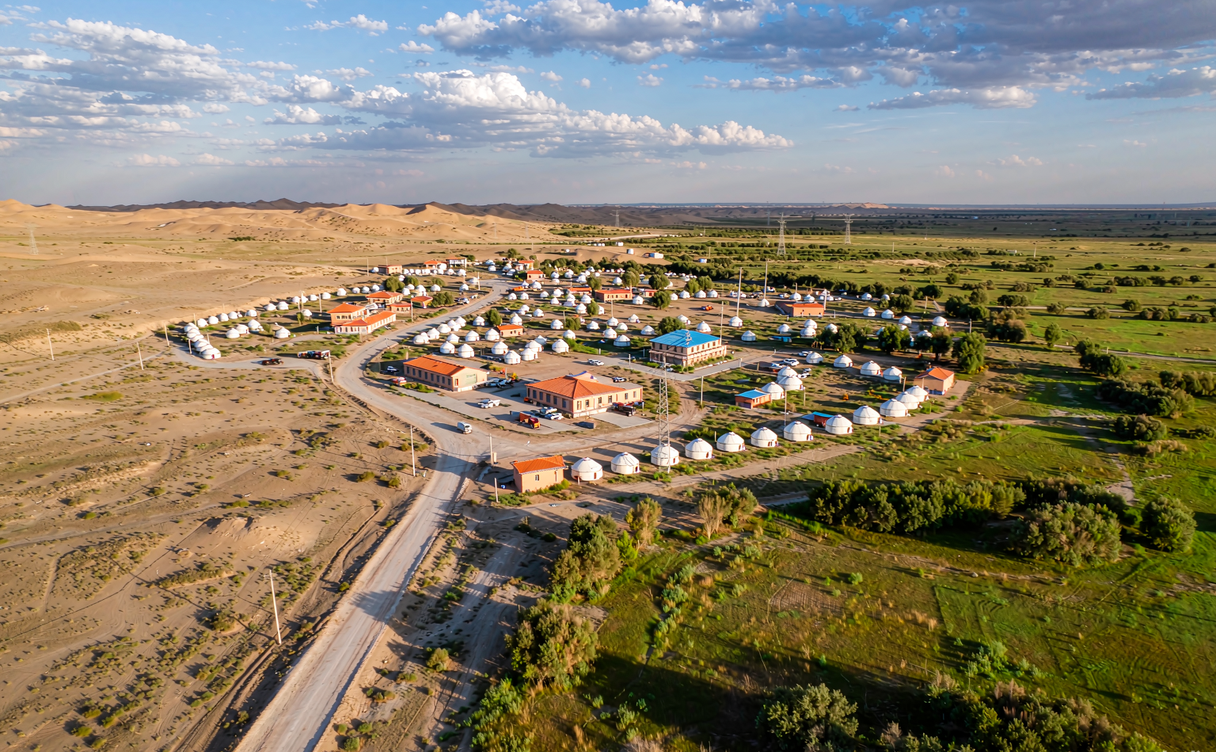
Desert cuisine is hearty and meat-forward. The regional specialty is roasted lamb served with flatbread and pickled vegetables, and our Inner Mongolia lamb guide lists the dishes and restaurants worth seeking out in Ordos and Baotou. At the resorts you will find buffets heavy on mutton, noodles, and dairy, while the nearby cities offer better value and cleaner settings. For lodging, Xiangshawan has several themed hotels, including a Mongolian-yurt-style property and a modern tower with dune-facing windows. Budget travelers can sleep in a traditional ger (yurt) outside the resort grounds for a fraction of the price and a far more authentic night under the stars.
If you want to balance the sand with something green before or after your visit, the Inner Mongolia Hulunbuir grassland guide describes the opposite extreme of the region, where endless grass replaces endless sand and the same warm hospitality shows up in a different landscape. Many travelers pair the two in a single two-week loop.
Practical tips for foreign visitors
Most resort staff speak limited English, so download a translation app and save your hotel name in Chinese characters before you arrive. Carry cash for smaller herder guesthouses, though Alipay and WeChat Pay now work at the big resorts. Entry to Xiangshawan is by combined ticket that includes the cable car across the dune, and the price drops on weekdays. Always confirm whether your ticket includes the camel ride, as some packages list it separately.
For background on the desert’s ecological turnaround, the Travel China Guide overview of Inner Mongolia gives a clear summary of how local communities stabilized the moving sand, a story that adds depth to the scenery once you are standing on it.
Sample two-day plan
Day one: arrive in Ordos, transfer to Xiangshawan, check into a resort, and spend the afternoon on camel rides and sandboarding. Day two: wake for a sunrise dune walk, visit a nearby Mongolian household for lunch, then drive back to Baotou or Hohhot for your outbound flight. This pace leaves room for delays and gives the desert a chance to show its quiet side after the day-trippers leave.
Kubuqi rewards travelers who slow down. The dunes are not the tallest in China, but the mix of controlled desert, comfortable resorts, and genuine steppe culture makes Kubuqi Desert travel an easy and memorable introduction to Inner Mongolia’s wild edge.