

Tengger Desert travel opens a different side of China: a vast sand sea where golden dunes roll to the horizon and unexpected freshwater lakes glitter between them. The name means “sky” in Mongolian, and standing on a high dune at sunset, with the sand glowing and a still lake below, you understand why. Part of the desert reaches close to Ningxia’s capital, which makes it one of the most accessible true deserts in the country for foreign visitors.
Unlike the cold high plateau, the Tengger is warm, open, and built for play. You can ride a camel between dunes, slide down sand on a board, camp under enormous stars, and still be back in a comfortable hotel by the Yellow River within a day. For travelers who want contrast on a China trip, few places deliver desert and oasis so easily, and the short transfer from a modern city makes it ideal for a first taste of the sand.
Best time to visit Tengger
The best time to visit Tengger is spring, from April to May, and autumn, from September to October, when daytime temperatures are mild and the wind is lighter. Summer, June to August, is hot at midday but popular because the nights are warm and the lakes are at their fullest; it also ranks among China’s noted warm-weather escapes, drawing families from the eastern cities. Winter is cold, with freezing nights, but the dunes dusted with frost are strikingly beautiful for photography and the camps often lower their prices. Avoid the sandstorm weeks of late winter and early spring if you can, and always carry water and a scarf for the wind, which can rise quickly across the open sand.
Getting there from Yinchuan
Most visitors base in Yinchuan, the capital of Ningxia, and drive southeast into the desert fringe in about one and a half to two hours. The Yinchuan travel guide covers the city’s mosques, Western Xia tombs, and the gateway transport you need before heading into the sand. From Yinchuan you can join a desert tour, rent a car with a driver, or take a bus toward Zhongwei, the town that borders the southern Tengger and the Yellow River.
The most famous entry point is Shapotou, on the river’s edge where the desert meets the water. The Shapotou desert guide details the cable car, sand sliding, and the Yellow River rafting that make this the busiest and best-equipped desert playground in the region. From Shapotou you can arrange deeper camel treks and overnight camps farther into the dunes, and the combination of river and sand in one view is the signature image of the area.
Things to do in Tengger Desert
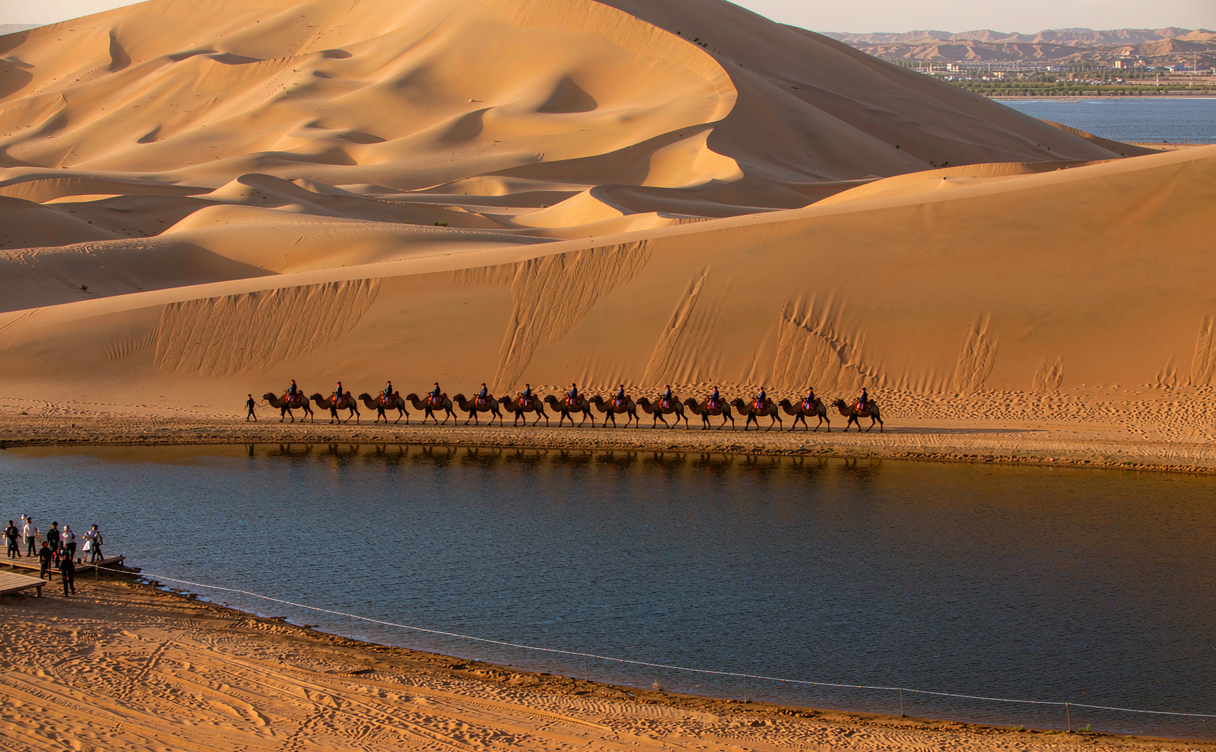
Things to do in Tengger Desert start with the dunes themselves. A Tengger Desert camel trek is the classic experience: a line of camels carries you from one dune crest to the next, with the trainer leading the string and stopping at viewpoints. Most treks run from one to three hours, and multi-day versions camp at a desert lake. Sand sliding and dune surfing are available at the developed sites, and a 4×4 or dune-buggy ride adds speed for those who want it, kicking up rooster-tails of sand across the open slopes.
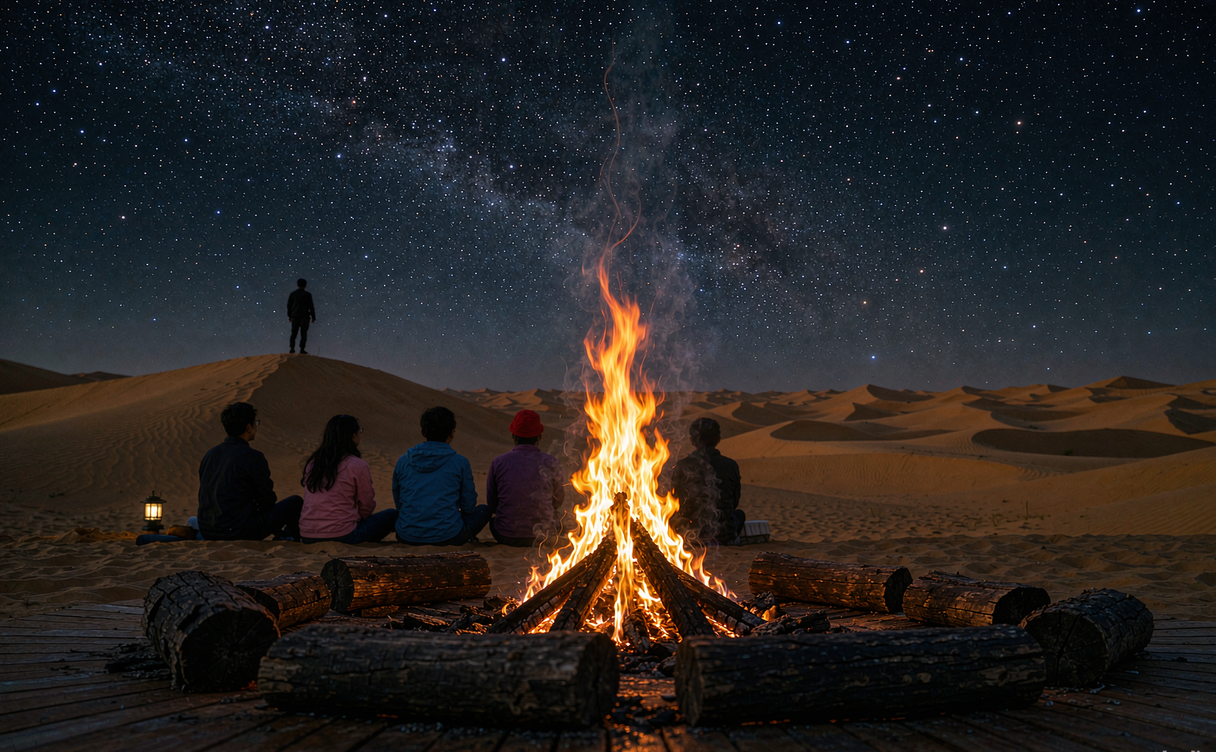
The hidden gems are the desert lakes, small oasis pools fed by groundwater, where reeds grow and birds gather. Walking out to a lake at dawn, when the water mirrors the dunes, is the image most travelers remember. Tengger Desert camping is best arranged through a tour operator who supplies tents, food, and a bonfire; the night sky here, far from city light, is spectacular, with the Milky Way clearly visible in clear season and the silence broken only by wind.
After the sand, the Ningxia wine region guide is a natural pairing, because the Helan Mountain foothills just west of Yinchuan produce surprisingly good red wines. A day of dune walking followed by a vineyard tasting is a combination unique to this corner of China. Food in the desert towns is hearty: lamb skewers, hand-pulled noodles, and sweet muskmelon in season, best eaten at a roadside stall with a cold drink after the heat of the afternoon.
Where to stay and how long
Plan at least one full day, and prefer an overnight either in a desert camp or in Zhongwei or Yinchuan. Developed sites have hotels and guesthouses; the camps range from basic to comfortably furnished tents with proper beds. Book ahead in July and August and during national holidays, when domestic families fill the desert resorts. Bring sunglasses, a hat, high SPF, and a layer for cold nights even in summer, because the temperature swing between afternoon and midnight is large.
According to Wikipedia, the Tengger Desert is one of the major deserts of China, and its moving dunes have long threatened farmland, which is why large-scale planting and lake protection now fence the sand at its edges. That management is why visitors today find both wild dunes and green oasis within a short drive, and why the desert feels safe and organized rather than hostile.
Practical notes for the sand
A desert day needs a little preparation. Sun and wind are the two things every visitor underestimates, so bring a brimmed hat, sunglasses, a buff for the face, and more water than you think you need; the dry air hides how much you sweat. Closed shoes protect your feet from hot sand in summer, when the surface can burn, and from cold in winter mornings. Tours can be booked in Yinchuan or Zhongwei, and a reputable operator supplies the camel, the camp, and a driver back, which removes the main logistical worry. Agree the full price, including the camp and the return transfer, before you leave the city, and avoid unofficial touts at the roadside. If you camp, expect a cold, bright night and a spectacular dawn, and keep electronics warm, because battery life drops fast in the dry cold.
The Tengger is also a cultural crossing point. Mongolian herders once moved across these dunes, and place names and a few yurts still recall that past, while the southern edge meets the Han Chinese farming towns of the Yellow River. That blend shows up in the food, the music at the bigger camps, and the easy friendliness of the desert towns. Travelers who take a multi-day camel trek meet both the empty sand and the oasis villages where people farm against the odds, a contrast that makes the Tengger more than a photo stop. Build in time to simply sit on a dune and watch the light move, because the silence and the scale are the real attraction.
Pairing the desert with a wider route
A Tengger Desert trip works well as part of a northwest China road journey. The desert sits between the Yellow River, the wine hills, and the older Silk Road towns, so you can mix sand, history, and good food in a single loop. Self-driving is rewarding here, with good highways and dramatic scenery between stops, and the short distances mean you never spend a whole day in the car.
For drivers, the region is forgiving and scenic. A few hours of highway connect the capital, the river, and the sand, making it easy to build your own route at your own pace and stop wherever a dune catches the light.
Whether you come for camels, camping, or the quiet of a desert lake, Tengger Desert travel delivers open space and big skies. Build in a night under the stars and let the sand set the rhythm of your Ningxia trip, a calm close to a busy tour of the cities.