

Mingyong Glacier travel brings you to one of the most striking sights in northwest Yunnan: a river of ice that spills down from the sacred peak of Meili Snow Mountain and reaches almost into the pine forest. Few glaciers on Earth sit at such low latitude and descend so close to the temperate tree line, and the walk up to the icefall passes prayer flags, wooden shrines, and sudden views of blue seracs against green slopes.
The glacier lies in Deqin County, the far northwest of Yunnan, on the eastern edge of the Himalaya. Local Tibetan communities regard Meili’s main peak, Kawagarbo, as sacred, and the glacier is part of that living pilgrimage landscape. For travelers, it is a rare chance to stand near a real glacier without the altitude and cold of the high Tibetan plateau, and the mix of ice, forest, and faith makes the walk quietly moving.
Best time to visit Mingyong
The best time to visit Mingyong is autumn, from October to November, when the monsoon has cleared and the sky is most often blue. Winter, from December to February, is cold but crisp and clear, with the ice at its most dramatic against snow-dusted forest. Spring brings unstable weather and occasional closures from meltwater, so it is the riskiest season for a clear view. Avoid the summer monsoon, June to August, when cloud hides the peak, rain makes the trail slippery, and the glacier is often out of view. Mornings are best for photography, because afternoon cloud tends to build over the massif and the light flattens.
Getting there from Shangri-La
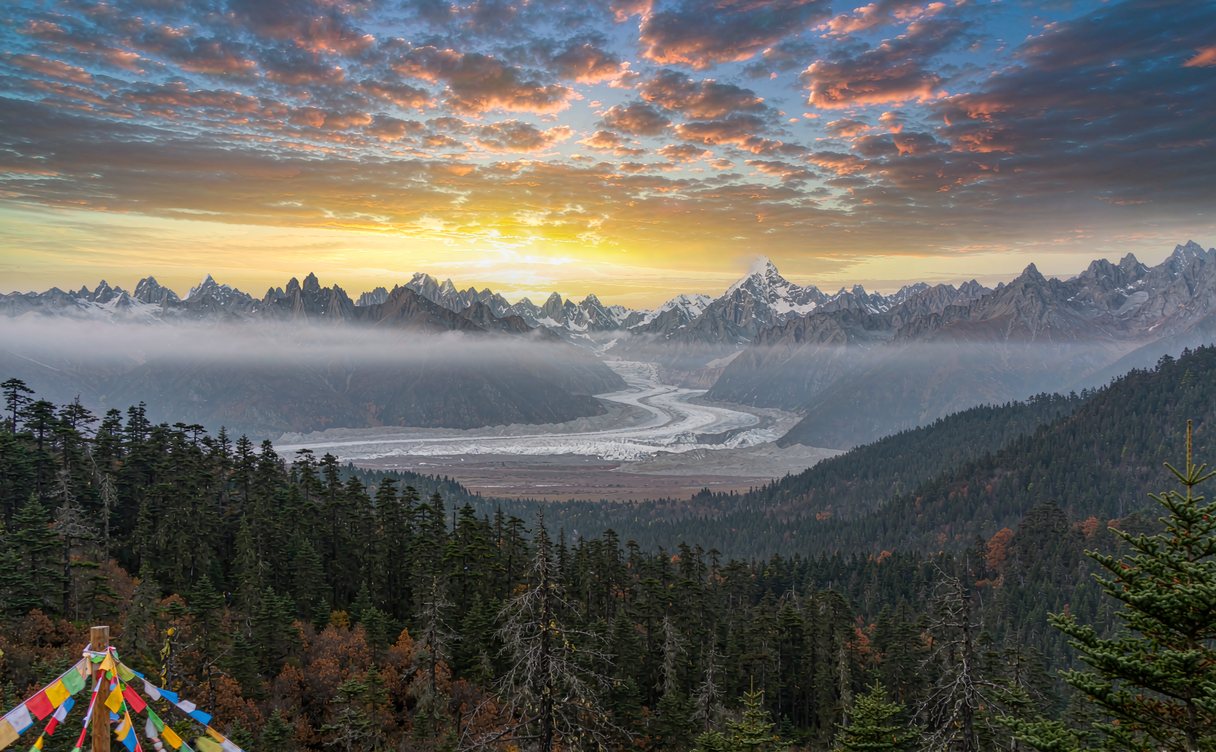
Most travelers approach from Shangri-La, a scenic drive of about four to five hours southwest along the Lancang (Mekong) valley to Deqin and then up to the village of Mingyong. The Shangri-La Yunnan travel guide is the usual base, with buses and private cars heading north toward the Meili range. Most visitors first reach the region from the Kunming travel guide by air or rail, then continue northwest through Lijiang and Shangri-La. From the Yunnan Meili Snow Mountain area you can also combine the glacier with the famous sunrise viewpoint at Feilaisi, where Kawagarbo catches the first gold light. The road passes Tibetan villages, monasteries, and high passes, so the transfer is part of the experience rather than a chore.
Things to do at Mingyong Glacier
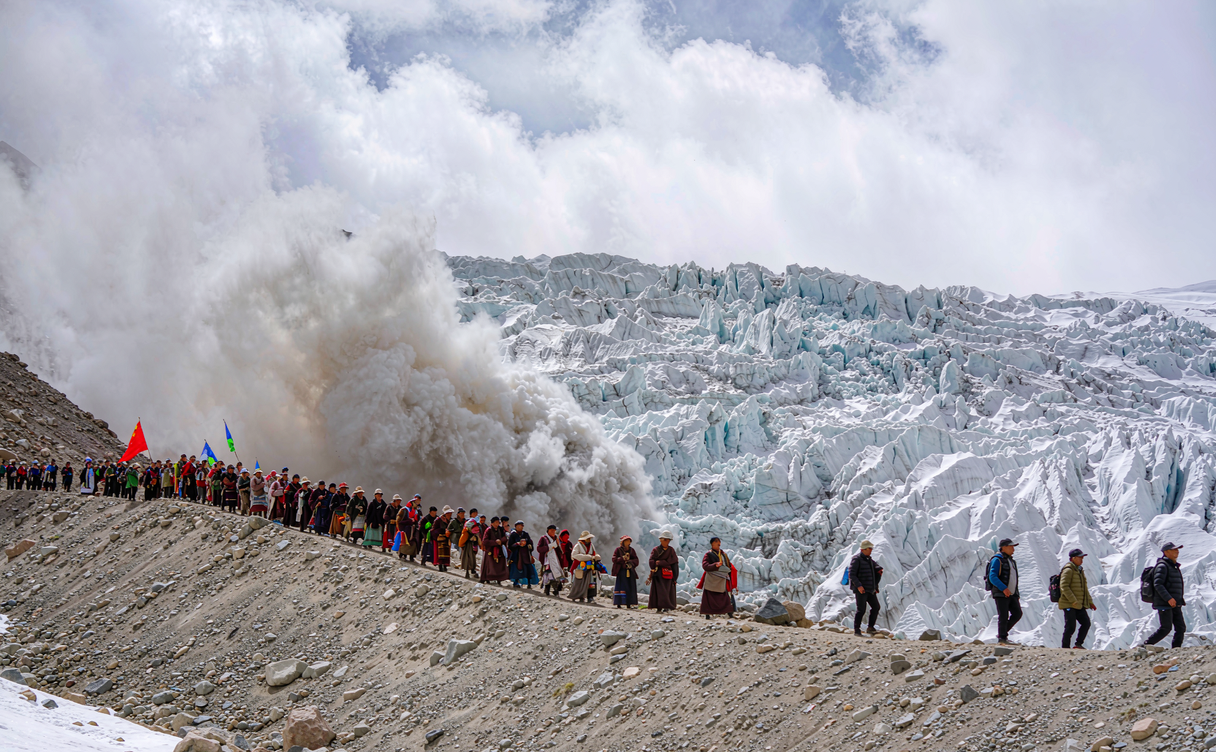
Things to do at Mingyong Glacier begin at the trailhead village, where a paved and stone path climbs through forest and past mani walls to a series of viewing terraces. The Mingyong Glacier trek is not technical; it is a steady uphill walk of roughly two to three hours one way to the higher temple platforms, with horses available for part of the route if you prefer. The path weaves through rhododendron and spruce, opening at intervals to reveal the icefall tumbling from the heights of Kawagarbo, and the sound of running meltwater accompanies you most of the way.
At the top, the Taizi Temple and the Lotus Temple (Lianhuasi) sit on a moraine shelf with the glacier looming directly above. This is the turnaround for most visitors; going further onto the ice is unsafe and restricted. The Meili Snow Mountain glacier is retreating, like glaciers worldwide, so the lower tongue is smaller than older photos show, but the scale of the icefall and the setting among forest and prayer flags remain unforgettable. Take your time on the descent, because the stone steps are uneven and the shade keeps them damp.
Bring layers even in warm months, because the shade and altitude make the upper trail cool. Sturdy shoes help on the stone steps, and a walking stick is useful on the descent. The village has small guesthouses and noodle shops, and you can hire a local guide to explain the pilgrimage sites along the way, which adds a great deal to the walk if you are curious about the faith that surrounds the mountain.
Where to stay and how long
Plan at least one night in the Mingyong area or nearby Feilaisi, and two if you want both the glacier walk and a clear sunrise over Kawagarbo. Accommodation ranges from simple village homestays to comfortable lodges at Feilaisi with picture windows facing the peaks. Book ahead in October and during public holidays, when domestic travelers fill the lodges and rooms with a view sell out first. Carry some cash, because the small villages have few card machines, and pack a headlamp if you plan an early start to catch the sunrise.
According to Wikipedia, Meili Snow Mountain, also called Kawagarbo, is a sacred peak in Yunnan and part of the Hengduan range, and the Mingyong glacier is its most accessible icefall, drawing both pilgrims and trekkers to the same slopes. The mountain remains unclimbed after a climbing ban was placed to respect local belief, which is why the summit stays wild and the trails stay focused on walking rather than summiting.
Practical notes for the walk
A few details make the Mingyong walk smoother. Start early, because the light on the icefall is best before ten and the lower trail is busiest after mid-morning. Horses can carry you partway for a fee set at the village; agree the price and the turning point before you mount, since the upper section is walk-only. The altitude here is moderate but real, so walk slowly, especially if you have just arrived from the plains, and sip water often. The temples along the path are active places of worship, so keep voices low, walk clockwise around shrines, and ask before photographing monks or ceremonies. Weather changes fast, and a clear dawn can turn to drizzle by noon, so pack a rain shell even when the sky looks perfect at the trailhead.
The pilgrimage dimension is what sets Mingyong apart from an ordinary glacier hike. Kawagarbo is not a climbable trophy but a respected deity, and the flags, mani stones, and prostrating pilgrims you meet are part of a living faith rather than a performance. Learning a little about this before you go changes how you see the mountain, and local guides are glad to explain the stories behind each shrine. Treat the upper slopes with the same respect you would show a cathedral, and the walk becomes something richer than a scenic hike, a quiet meeting of ice, forest, and belief on the edge of the Himalaya.
Pairing the glacier with a Yunnan trek loop
A Mingyong Glacier trip works best as one stop on a longer northwest Yunnan route. The region links naturally with the old town to the southeast, the provincial capital, and the sacred mountains farther west, so you can build a journey that mixes glacier walks, Tibetan towns, and high meadow hikes. The trail network here is gentle compared with the big Himalayan treks, which makes it a good introduction to altitude walking before you tackle harder routes elsewhere.
For hikers, the area is a natural warm-up. The walking is real but not extreme, and the views reward every step. Pair it with other regional trails to make a proper walking holiday without the logistics of the high plateau, and you will arrive at the icefall tired but glad you came.
Whether you come for the ice, the pilgrimage atmosphere, or the mountain sunrise, Mingyong Glacier travel stays with you. Give the weather a couple of days, walk slowly, and let the sacred peak set the tone of your Yunnan trip, a memory that outlasts the ache in your legs.