

When travelers think of Shanghai, they picture the futuristic Bund skyline and endless shopping streets. Just a half-hour metro ride from the center, though, sits Qibao — a compact old water town that offers a quick, easy taste of traditional Jiangnan canal life without leaving the city limits. The name means “Seven Treasures,” after the legends of relics once held in its temple, and the town wears that history lightly along its canals and snack stalls.
Qibao is not the grandest or most pristine of China’s water towns, and it makes no pretense of being untouched. What it offers is convenience and atmosphere in equal measure: you can be photographing a stone bridge and eating a sticky rice ball within minutes of stepping off Line 9. For a first-time visitor to China with limited time in Shanghai, it is the lowest-effort way to sample the canal-town genre.
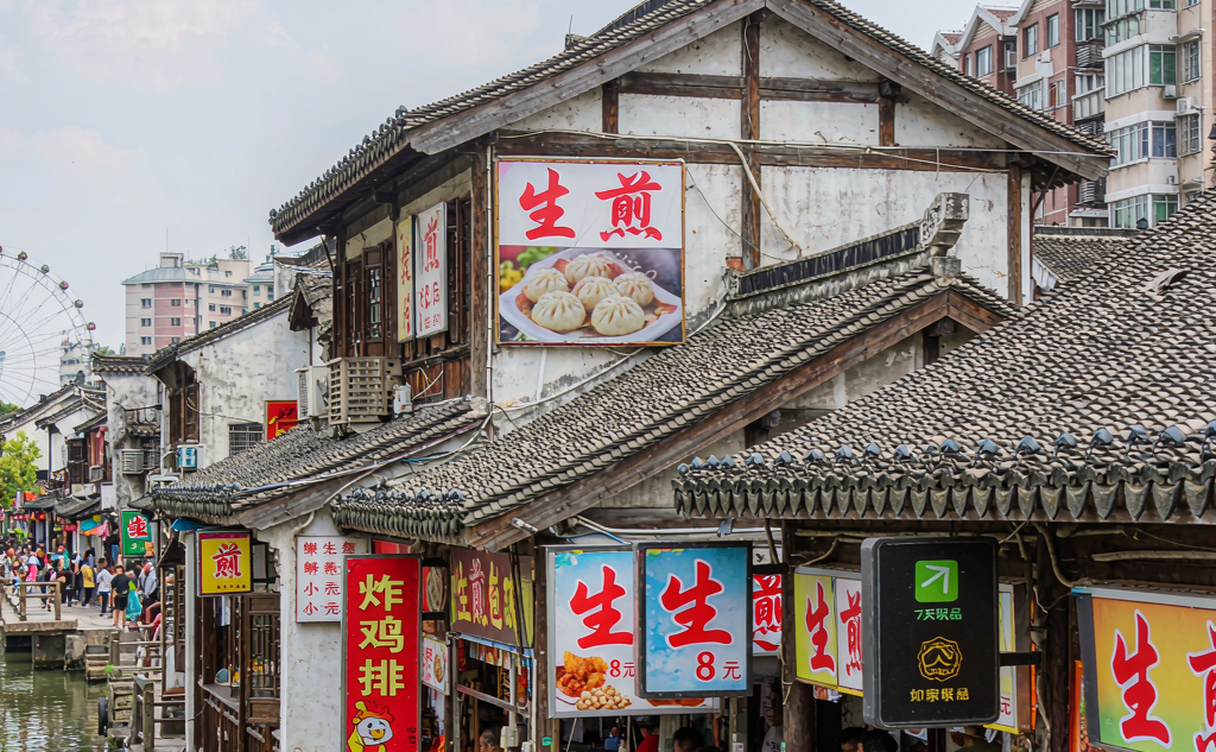
A Bit of History
Qibao’s roots reach back to the Northern Song dynasty, more than a thousand years ago, when it grew around a Buddhist temple and a busy market on the Puhui River. The “seven treasures” refer to a set of valued objects associated with that temple — accounts differ on exactly what they were, ranging from a bronze bell to a carved screen. The town prospered as a trading stop, and its layout of two parallel streets along a central canal is typical of the region’s commercial water towns.
Much of what stands today has been rebuilt or restored, so manage your expectations: this is a lively heritage-themed district rather than a museum piece. The charm is in the texture — the narrow lanes, the water gates, the old trees — and in how easily it folds into a Shanghai day.
Things to Do in Qibao
Despite its small size, Qibao keeps you busy for two or three unhurried hours:
- Walk the north and south streets: The canal is flanked by two pedestrian lanes packed with shops, teahouses, and food stalls. North Street is the busier, more photogenic one.
- Cross the bridges: Several stone spans give classic views down the water, especially when the lanterns come on at dusk.
- Qibao Craft Fabrics Workshop: A small museum showing traditional cotton-printing techniques, a nice break from the snacking.
- The old cinema and pawn shop exhibits: Restored storefronts that recreate early-20th-century town life.
- Boat ride: Short paddle boats run on the canal for a different angle on the old houses.
- Temple of the Seven Treasures (Qibao Temple): A working Buddhist temple at the north end, peaceful compared with the busy streets.
For a more elaborate water-town experience, our Zhujiajiao water town guide covers a larger, prettier town also reachable from Shanghai.
Qibao Street Food
Food is the real draw here, and Qibao street food is the town’s loudest selling point. Come hungry. Highlights include:
- Qibao glutinous rice balls (tangyuan): Filled with sesame or red bean, served hot — a quintessential canal-town sweet.
- Stinky tofu: Fried and pungent; an acquired but classic Chinese snack.
- Grilled squid and skewers: Standard night-market fare done well in the busy lanes.
- Local fermented rice wine: Sipped warm from small cups at riverside stalls.
- Handmade noodles and wontons: Simple, cheap, and satisfying.
The whole place is essentially an open-air food court wrapped around a canal, which is exactly why families and students love it. If you want more Shanghai eating ideas, our things to do in Shanghai guide points you to markets and neighborhoods beyond the old town.
Best Time to Visit Qibao
Because Qibao is inside Shanghai, the climate follows the city’s — hot, humid summers and cold, damp winters:
- Spring (March–May) and autumn (September–November): The most comfortable times to wander the open streets.
- Evenings year-round: Qibao is at its best after dark, when the lanterns glow and the crowds thin slightly.
- Avoid major holidays: National Day and Spring Festival turn the lanes shoulder-to-shoulder.
- Weekday afternoons are calmer than weekend evenings.
Qibao is also an easy add-on to a city trip; pair it with the Yu Garden guide for a day of old Shanghai, or catch the skyline at night via our Bund night-view guide.
How to Get to Qibao
This is the easiest water town in China to reach:
- Metro: Take Shanghai Metro Line 9 to Qibao Station (exit near the north gate). From People’s Square it is roughly 40 minutes.
- From the airport or train stations: Metro transfers make it reachable from both Pudong and Hongqiao; our Shanghai first-time travel guide lays out the metro basics.
- Taxi or ride-hail: Cheap and direct from most central districts, though traffic near the gates can clog up.
- On foot from the station: It is a short walk from the metro to the old streets — no tours or drivers required.
For travelers choosing between nearby towns, our best water towns near Shanghai comparison helps you decide how far out you want to go.
Background on Shanghai’s layered history, from canal market to global metropolis, is available from Britannica, which traces the city’s development across dynasties and the modern era.
The Temple and the Seven Treasures
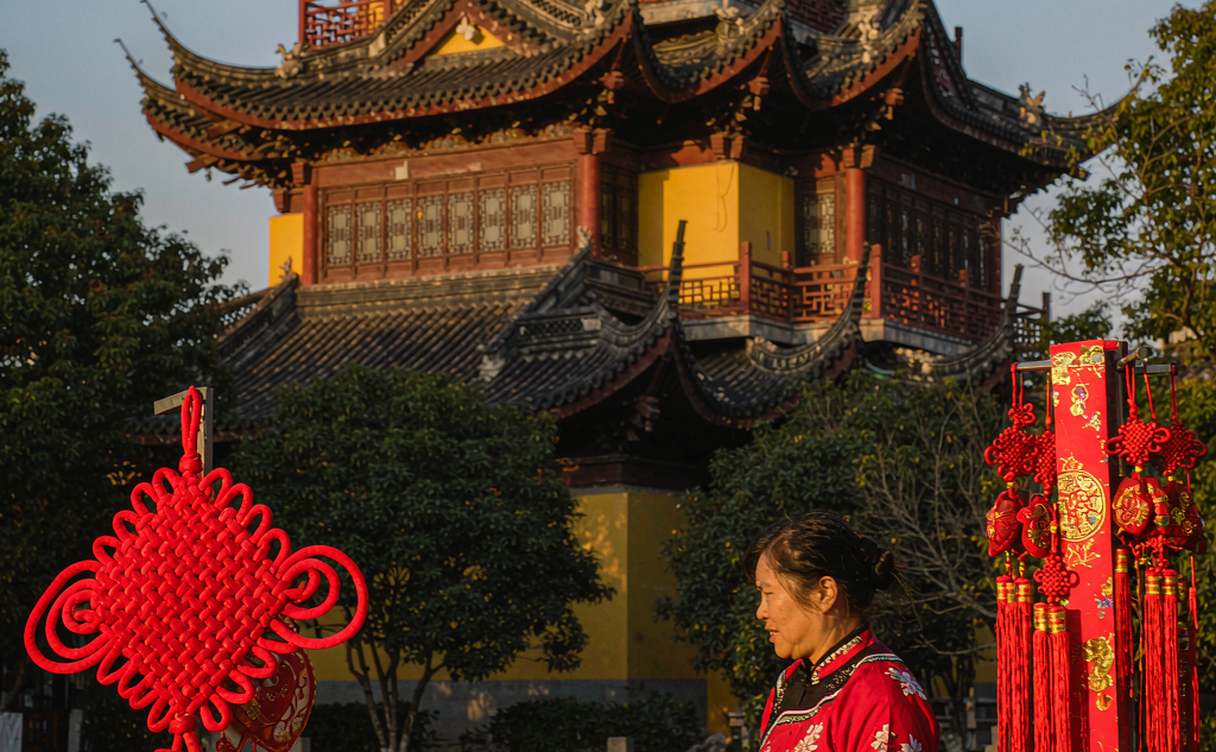
The Temple of the Seven Treasures at the north end of the canal is the town’s quiet heart and the source of its name. Accounts of the original “seven treasures” vary: some lists name a bronze bell, a carved screen, a golden statue, and old books, while others lean toward relics associated with the Song-dynasty monastery that once stood here. The present buildings are a faithful modern reconstruction, but the hall still rings with evening chanting and the smell of sandalwood, a world away from the fried-snack bustle fifty meters outside the gate. Step in, bow if you like, and let the canal noise fall away for ten minutes.
What to Buy
Beyond snacks, Qibao sells the kind of small keepsakes that travel well. Traditional cotton prints from the on-site workshop make good framing pieces or gift wrap; straw and bamboo woven animals, paper lanterns, and miniature stone bridges echo the town’s look. For something edible to take home, packs of the local fermented rice wine or boxes of dried tangyuan filling are light and shelf-stable, though check your home rules on alcohol before you pack a bottle. Bargain gently at the craft stalls, where prices often have room, but expect the food prices to be fixed.
Pairing Qibao with the City
Because Qibao is inside the metro network, it slots around almost any Shanghai day. Combine it with the Yu Garden and the old city wall to the east for a full dose of old Shanghai, or use it as a calm counterpoint after a morning on the Bund. Travelers with a second half-day might add Zhujiajiao, a larger water town further out, for the wider canals and the quieter lanes that Qibao’s popularity no longer allows. Either way, ride Line 9 back toward the center as the lanterns fade for a clean transition from canal to skyline.
Practical Tips
- Go late: Arrive around 4–5 p.m. to catch daylight shopping and stay for the lit-up evening.
- Carry cash and a payment app: Small stalls may take only one or the other.
- Bargain gently: Snacks are fixed-price, but crafts and trinkets may have wiggle room.
- Combine smartly: Qibao pairs well with the nearby Minhang area or a metro hop to central sights.
- Mind the crowds: Hold belongings close in the narrow lanes on busy nights.
- Festivals: Small seasonal events sometimes close lanes or add performances; check local listings before you go.
A Simple Qibao Itinerary
Because Qibao is so close to central Shanghai, you can treat it as a relaxed half-day rather than a full expedition. A workable plan: arrive around 4 p.m., enter through the north gate, and walk south along the busy street while the light is still good for photos. Sample two or three snacks as you go, then cross to the quieter parallel lane to watch the boatmen. Stay for dusk, when the lanterns switch on and the canal turns gold. Finish with a warm rice wine or a sweet tangyuan before heading back on Line 9.
If you are traveling with children, the boat ride and the small museums are the easy winners; if with older travelers, the teahouses and temple offer a calm counterpoint to the crowds. Either way, keep the visit loose — Qibao is best absorbed in bites, not marched through.
Final Thoughts
Qibao will not give you the hushed, preserved beauty of a remote village. What it gives is accessibility and fun — a fast, flavorful hit of old China that fits between skyscraper appointments. Treat it as a snack-sized side trip rather than a destination, and you will leave full, photographed, and glad you came.