

The great cave-temples of China — Yungang, Longmen, Dunhuang — draw the crowds and the guidebook praise. But there is a smaller, quieter cluster in southern Hebei that art historians rank among the most refined carving of its age: the Xiangtangshan Grottoes (响堂山石窟), near the city of Handan. Carved in the short-lived Northern Qi dynasty (550–577 AD), these caves hold Buddhas with a soft, almost classical elegance that predates the more famous Tang figures by a century. This Xiangtangshan Grottoes guide explains what makes them special, how to get there from Handan, and how to visit well.
Xiangtangshan means “Mountain of Echoing Halls,” a name that comes from the way sound carries in the rock chambers. The site is split into two groups: the Northern Xiangtangshan caves, about 30 km west of Handan, and the Southern group near the town of Fengfeng, closer to 50 km. Both were royal projects of the Northern Qi, who made Ye (near modern Linzhang, south of Handan) their capital and poured resources into Buddhist art.
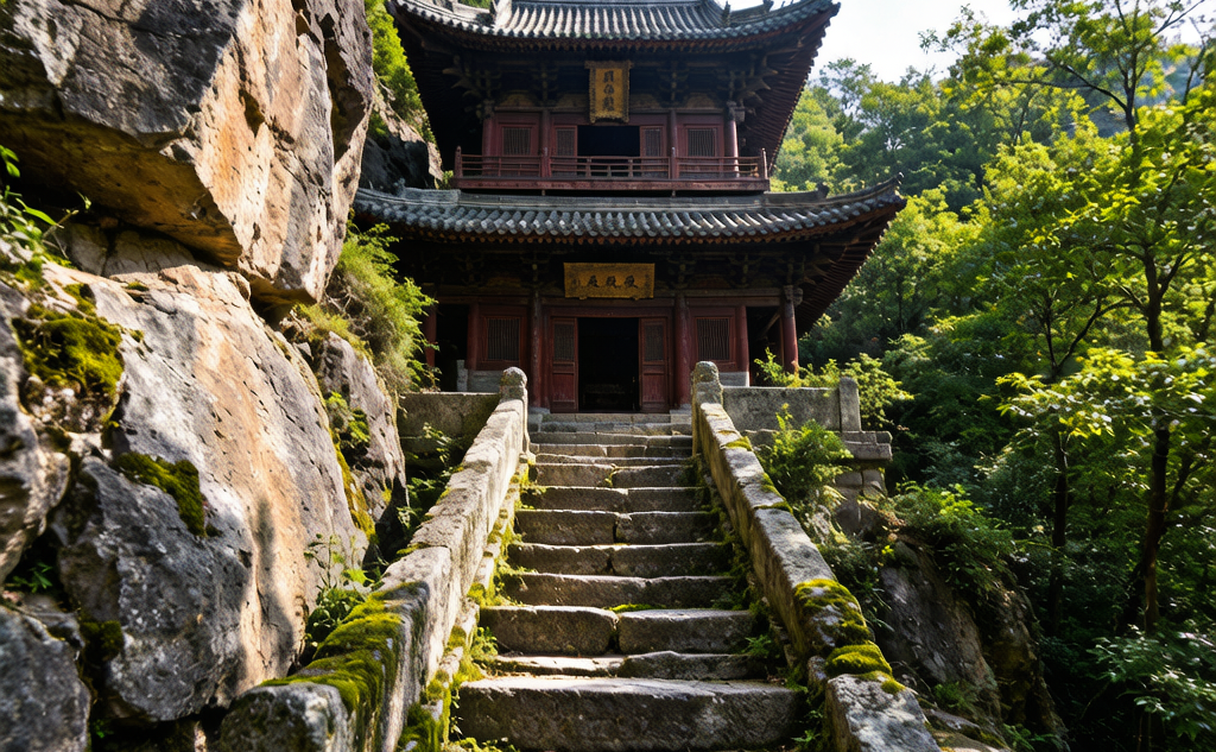
Why the Northern Qi carvings matter
The Northern Qi lasted barely twenty-seven years, yet its sculptors produced some of the most graceful Buddhist images in China. The Xiangtangshan statues have rounded faces, gentle smiles, and flowing robes that owe something to earlier Indian and Central Asian models, filtered through a Chinese hand. Compared with the severe, monumental Yungang figures of the preceding Northern Wei, these feel human and calm.
A second reason to care: many of the best Xiangtangshan pieces were looted in the early twentieth century and now sit in museums in the United States and Japan. The on-site museum has done commendable work with 3D scanning and replicas, letting you see carvings in context while the originals are abroad. That story — of loss and reconstruction — adds a layer most visitors do not expect.
The Northern Qi itself is worth a sentence of context. It was one of the short northern dynasties that ruled parts of China during the long split between the Han-era unity and the Sui–Tang reunification. Court art of this period, produced under rulers who were themselves of mixed steppe and Chinese heritage, has a cosmopolitan flavor: influences from the Buddhist heartlands of Central Asia and the Gupta style of India arrive here filtered through local stone. Xiangtangshan is among the clearest surviving evidence of that exchange, which is why specialists travel from abroad to study it despite the missing masterpieces.
How to get to Xiangtangshan
The practical base is Handan, a city on the Beijing–Zhengzhou high-speed line with its own station. From Handan, the Northern caves are a 40 to 60 minute drive west into the hills; the Southern caves near Fengfeng are farther, closer to an hour and a half. There is no convenient public transit to either group, so most visitors hire a car or use DiDi for the day. If you are coming from Beijing, the train to Handan takes roughly two to three hours, making this a feasible long day trip or, better, an overnight stop on a route south.
Note the split clearly when planning: the two groups are not next to each other, and trying to do both in a rushed half day means seeing neither properly. Pick the Northern group for the setting and the main museum, or the Southern group if you are already heading toward the Fengfeng mining district. Our Handan travel guide covers the city’s other sights and logistics, and if you are arriving by rail, the China high-speed train guide for foreigners explains ticketing and station navigation.
Best time to visit
The best time to visit Xiangtangshan is spring and autumn, when the hills around Handan are pleasant for the short outdoor walks between caves. Summer is hot and the sites are exposed; winter is cold but quiet, with few visitors. Because this is a half-day attraction rather than a mountain park, weather matters less than at places like Guan’e or Tiantai, but clear light makes the carving details readable.
Crowds are light year-round — this is firmly off the foreign-tourist map — which is part of the pleasure. Weekends see some domestic visitors from Handan, but you will rarely wait or jostle. An early start from Handan lets you combine the caves with the city’s other sites the same day.
The Xiangtangshan Buddhist statues and what to look for
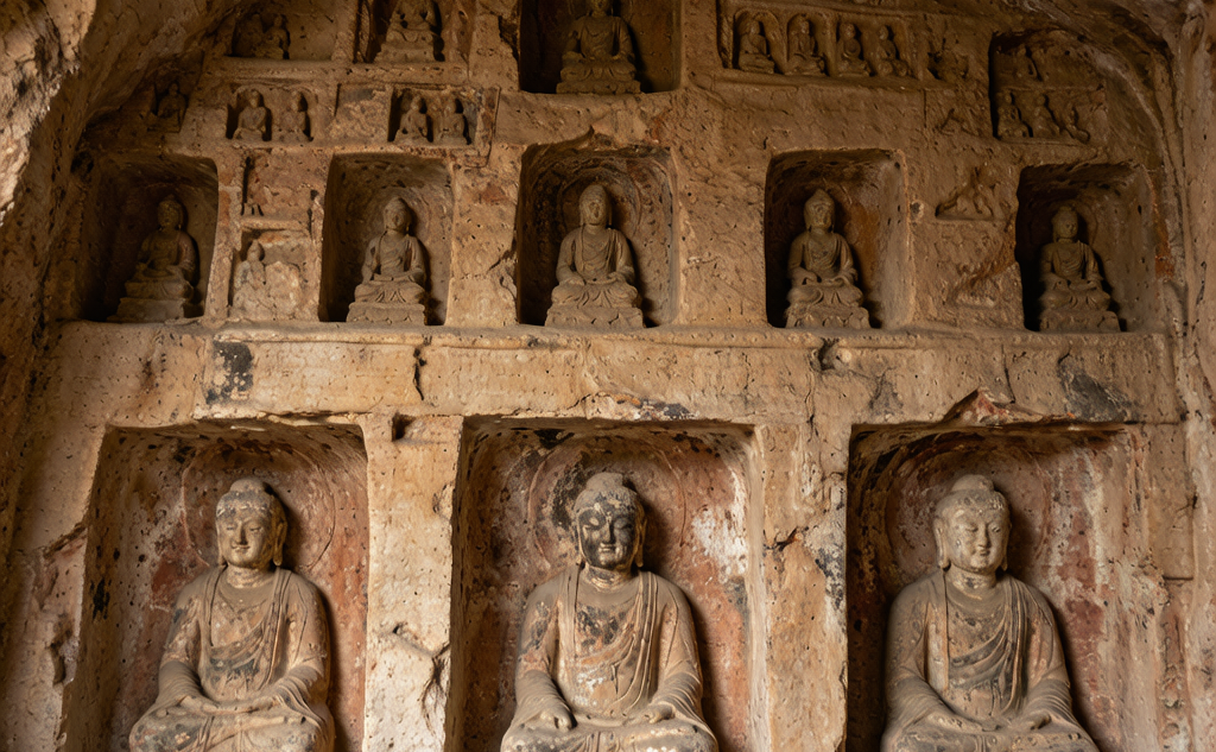
The Xiangtangshan Buddhist statues reward slow looking. In the Northern caves, the main chamber holds a large seated Buddha flanked by bodhisattvas, with ceiling carvings of lotus flowers and flying apsaras. The stone is a fine gray limestone that takes detail well. Look up: the cave ceilings are among the site’s highlights, with carved ribbing and floral bosses that show the Northern Qi taste for ornament without clutter.
The on-site museum deserves real time. It explains the dynasty, shows the 3D reconstructions of looted pieces, and displays what remains locally. Reading this before or after the caves turns a pleasant walk into an understanding of why these carvings matter. The “Xiangtangshan carving” style — soft modeling, linear drapery — is a thread you can later trace at Longmen, where Tang sculptors built on this foundation.
Pairing with a wider trip
Xiangtangshan fits neatly into a northern China cultural loop. Many travelers see it as a half-day detour while passing between Beijing and the south, or as part of a Hebei–Henan Buddhist art trail alongside more famous caves farther west. Our Beijing first-time travel guide helps if the capital is your start point, and our China bucket list attractions collects the marquee sites worth building a trip around.
Practical tips
- Hire a car from Handan; public transport to the caves is unreliable for foreigners.
- Bring a flashlight or use your phone light to read the darker cave detail.
- Allow half a day for one cave group plus the museum; a full day if doing both.
- The site museum’s English labeling is improving but uneven — a guide app helps.
- Wear sturdy shoes; the paths between caves are uneven rock and can be slick after rain.
- Combine with Handan’s ancient city walls and the Yecheng archaeological site for a fuller Northern Qi picture.
A note on preservation and provenance
Xiangtangshan is a useful case study in how Chinese Buddhist art traveled the world in the early 1900s. The University of Chicago’s Center for the Art of East Asia has documented the dispersed pieces, and the on-site museum references this work. For neutral, scholarly background on the caves and their scattering, the Handan Municipal Government provides official visitor information, while academic resources give the fuller provenance picture.
Final thought
Xiangtangshan will not compete with Yungang or Longmen for scale, but for the quality of the carving and the near-total absence of crowds, it is one of Hebei’s quiet triumphs. The Northern Qi taste for elegance is visible in every soft-faced Buddha, and the museum’s honesty about looted originals makes the visit more thoughtful than a simple photo stop. If you are passing through Handan, give it half a day — you will likely have the caves almost to yourself.