

Most visitors to Chengdu know the pandas and the spicy food. Far fewer know that, less than twenty years ago, construction workers digging foundations here uncovered a Bronze Age city that rewrote the early history of the Sichuan basin. The Jinsha Site Museum sits on the spot where that city was found, and it holds some of the finest gold work in China — including the Sun Bird, a thin disc of hammered gold that has become a national symbol of cultural heritage. This Jinsha Site Museum guide explains what you are looking at, how it connects to Sanxingdui, and how to visit without missing the good stuff.
Jinsha was the center of the Shu kingdom around 1200 to 600 BC, flourishing after the earlier Sanxingdui culture declined. The site was discovered in 2001, and the museum opened a few years later over the actual excavation area. Unlike many archaeology museums that display finds far from where they were found, here you walk above and around the trenches where ivory, jade, bronze, and gold were pulled from the earth.
What makes Jinsha special
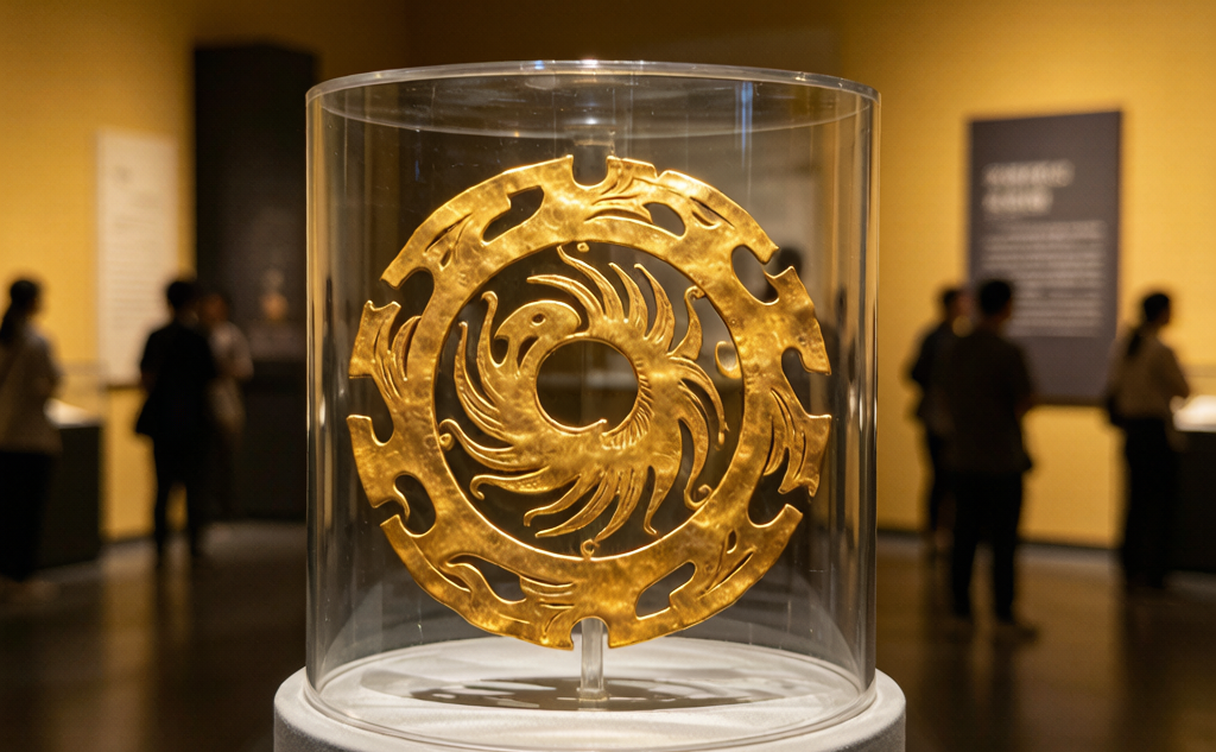
The headline object is the Sun Bird (太阳神鸟), a circular piece of gold barely a tenth of a millimeter thick, cut with a central sun and twelve outward flames surrounded by four flying birds. It is small — about the size of a coaster — but the craftsmanship is extraordinary, and it now appears on official heritage logos and coins. You will see reproductions around Chengdu; the original is in a dedicated, dimly lit case designed to protect it from light.
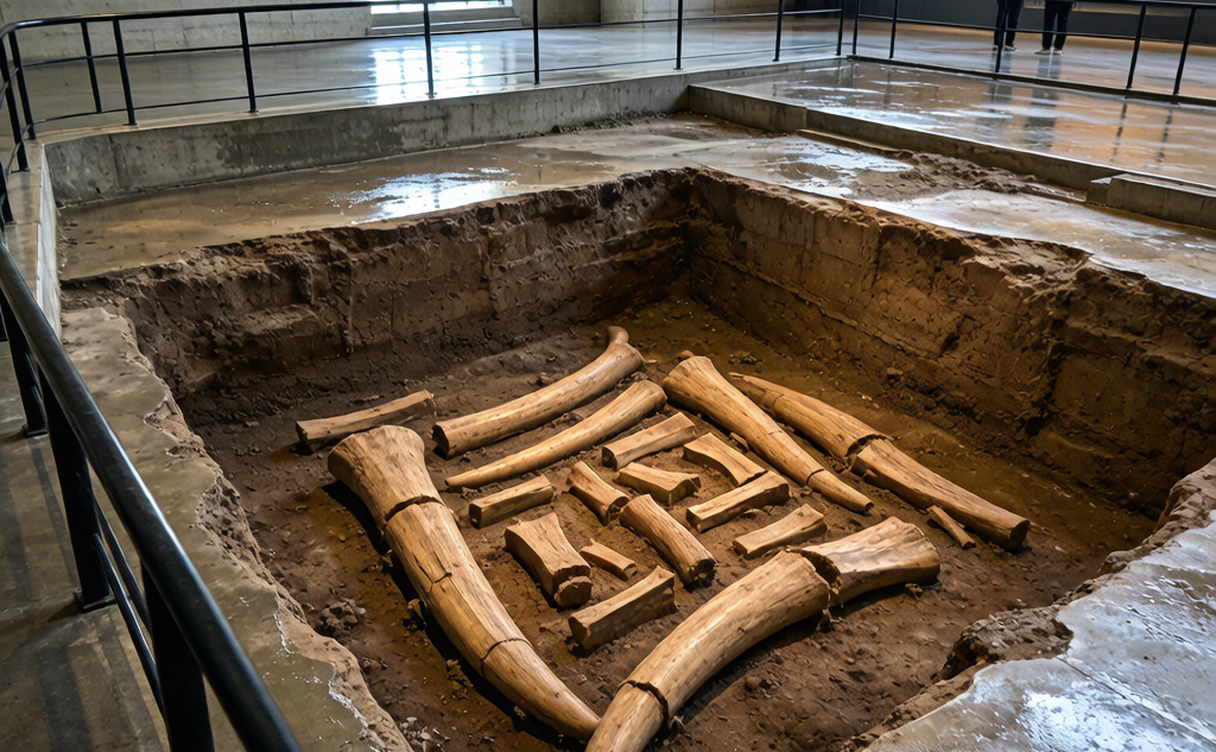
Beyond the gold, the museum’s strength is context. The Exhibition Hall of Relics shows carved jade, bronze figures, and stone tools, while the nearby Mock Excavation Area lets you see how the site was layered — a riverside settlement where ritual deposits of elephant tusks and sacrificed objects were buried in the sacred zone. For a traveler interested in how ordinary people lived three thousand years ago, this is more satisfying than a cabinet of trophy objects.
How to get to Jinsha Site
The museum is in the western part of Chengdu, in Qingyang District, and it is easy to reach by metro. Take Line 7 to Jinsha Site Museum Station (金沙遗址博物馆站) — yes, the station is named for it — and you are at the entrance within minutes. From the city center or the panda base, allow 40 to 60 minutes depending on transfers. A DiDi ride from Tianfu Square takes roughly 25 to 40 minutes in light traffic.
This is one of the easier specialist museums to slot into a Chengdu trip because it is close to the city and well signed in English. If you are arriving in Chengdu by rail from another province, our China high-speed train guide for foreigners covers how to navigate the big stations and buy tickets without headaches. And the main Chengdu travel guide lays out the city’s neighborhoods and how to chain sights together efficiently.
Jinsha vs Sanxingdui
A Jinsha vs Sanxingdui comparison comes up constantly, and rightly so, because the two are the twin pillars of ancient Shu civilization. Sanxingdui, about 40 km north of Chengdu, is the older and more spectacular in its strangeness — those outsized bronze masks with protruding eyes. Jinsha came later and shows a continuity of style: similar bronze, similar jade, similar reverence for gold and birds. Most archaeologists now read Jinsha as the successor center after Sanxingdui’s decline.
The practical question for visitors is which to prioritize. Sanxingdui’s new museum is larger and more dramatic, but it requires a half-day trip out of the city. Jinsha is compact, central, and lets you stand on the actual site. Many travelers do both: Sanxingdui for the wow factor, Jinsha for the close-up and the gold. Our Sanxingdui museum guide near Chengdu explains how to reach it and what to expect.
Best time to visit and crowd strategy
There is no real “best time to visit Jinsha Site” in a weather sense, since it is indoors, but timing still matters for enjoyment. Weekday mornings right at opening are the calmest. Avoid the first week of May (Labor Day) and the first week of October (National Day), when Chengdu’s museums swell with domestic tourists. Summer afternoons are fine because the halls are air-conditioned, which makes Jinsha a good rainy-day or heat-escape option in August.
The site is manageable in two to three hours. If you join a guided tour, aim for one in English or use the audio guide; the layered history makes more sense with narration. Budget extra time in the garden outside, where reconstructed timber buildings and a quiet pond make a pleasant break.
What you will actually see
Plan your route in this order: start at the Relics Hall, which sits directly over part of the excavated area, then move to the Exhibition Hall of Relics for the gold and jade, and finish in the garden and the small theater that shows the discovery story. The Sun Bird is in the relics hall, usually the last major stop, so do not rush the earlier rooms — the bronze and jade pieces build the context that makes the gold land.
One detail worth pausing on: the piles of elephant tusks found here. Thousands of tusks were deposited in the sacred zone, a sign of the region’s warm climate and dense forests three millennia ago, and of the ritual importance of ivory. It is a small window into an ecosystem long since changed.
Pairing Jinsha with the rest of China
Jinsha fits naturally into a broader archaeology-themed trip. Travelers building a “deep China” itinerary often link it with Sanxingdui and then move on to other landmark sites. Our China bucket list attractions collects the standout places worth crossing the country for, and our best things to do in China helps you balance museum days with landscapes and food.
A note on the wider context
The Shu civilization represented by Jinsha was, for a long time, absent from standard Chinese history books, which focused on the Yellow River heartland. Discoveries here and at Sanxingdui showed that a sophisticated, independent bronze-age culture thrived in the Yangtze basin. The museum does a decent job of presenting this without overclaiming, and the on-site labels have improved English translations in recent years.
For authoritative background, the museum’s own information and UNESCO-related heritage listings are worth a look; the Chengdu Municipal Culture and Tourism Bureau carries official visitor details for Jinsha and other city sites.
Final thought
Jinsha will not take a whole day, but it will change how you see Chengdu. The city is older and stranger than its panda-and-hotpot image suggests, and standing above the trenches where a ritual city lay buried for three thousand years is a genuine thrill. Go early, get the audio guide, and give the Sun Bird the few quiet minutes it deserves.