

Changde, in northwest Hunan Province, is a green, river-crossed city that most foreign visitors pass without knowing it exists. That is a pity, because Changde holds two genuinely unusual attractions. The first is Taohuayuan, the “Peach Blossom Spring,” a scenic area built around a famous fourth-century prose poem about a fisherman who stumbled into a hidden utopia. The second is the Poetry Wall, a kilometres-long riverside embankment carved and inscribed with classical Chinese verse, recognized as an ambitious public art project. For travelers combining Zhangjiajie’s peaks with Hunan’s culture, Changde makes a calm, leafy stop. This Changde travel guide is written for independent tourists who like literature, gardens, and slow river cities.
Changde sits neatly on a Hunan loop. It is an easy rail hop from Zhangjiajie travel guide, the avatar-mountain destination, and connects north to Changsha travel guide, the provincial capital. Nearby you can also reach Fenghuang Ancient Town guide and the Dongting Lake guide for more of the region’s water and old-town scenery.
How to Get to Changde from Zhangjiajie
The most convenient route is the high-speed train between Zhangjiajie and Changde, which takes roughly one hour to ninety minutes depending on the service. Changde Railway Station sits a short taxi ride from the city center and the Yuan River waterfront. If you are coming from Changsha, frequent high-speed trains cover the distance in about one and a half hours.
For visitors already touring the province, Changde slots neatly between Zhangjiajie to the west and Changsha to the east, so you can drop your bags, see the Poetry Wall that evening, and head to Taohuayuan the next morning. Buses and arranged drivers handle the trip out to the Peach Blossom Spring scenic area, which lies some distance from the urban core.
Changde’s airport has a growing set of domestic connections, but most foreign travelers arrive by train from Zhangjiajie or Changsha, which is faster and more predictable. Within the city, buses and taxis cover the center, and the Yuan River ferry is both transport and a small sight in itself. Because the Peach Blossom Spring park is large, give yourself a full morning there rather than trying to combine it with the Poetry Wall on the same tight schedule; the two experiences reward different moods, one pastoral and one urban.
Best Time to Visit Changde
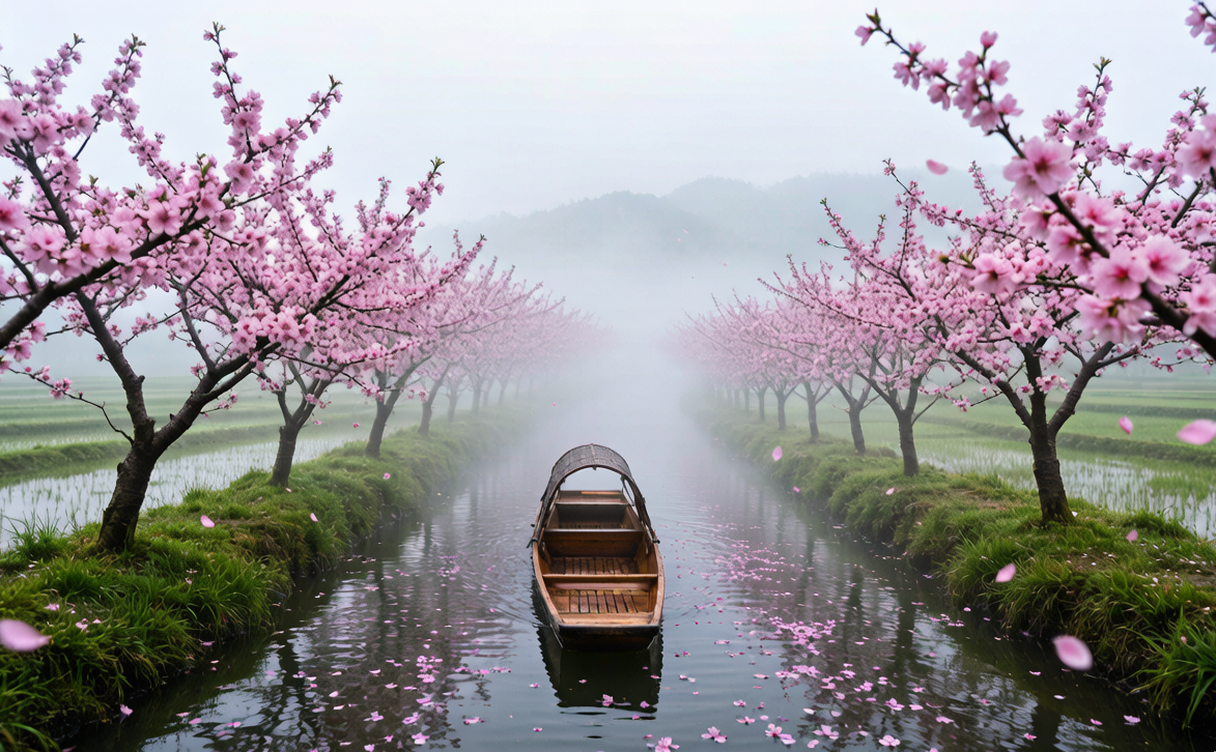
Spring and autumn are the best seasons. In spring, Taohuayuan lives up to its name as peach trees bloom across the hillsides, and the riverside is lush and green. Autumn brings clear, cool days ideal for walking the Poetry Wall and boating on the Yuan River. Summers are hot and humid, though the riverside breezes help, and winters are chilly but quiet.
Because the city is not on the mass-tourism map, you will rarely face crowds, even in peak season, which is part of its appeal.
Top Things to Do in Changde
The headline sight is the Peach Blossom Spring Taohuayuan, a large landscaped park that recreates the hidden village from Tao Yuanming’s poem. You follow a stream, pass through a narrow cave, and emerge into terraced fields, a reconstructed farming hamlet, and temples among the hills. It is part theme park, part literary pilgrimage, and at its best early in the day before tour groups arrive.
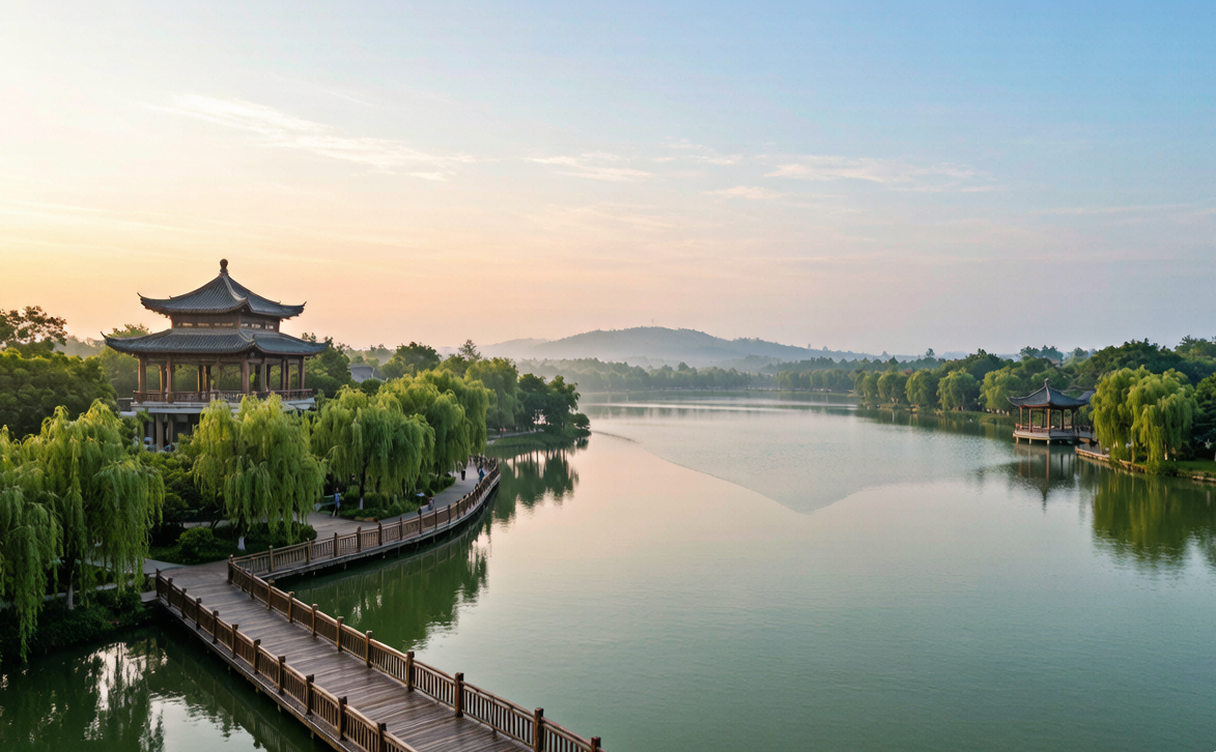
Back in the city, the Changde Poetry Wall runs for several kilometres along the Yuan River embankment, inscribed with thousands of characters of classical poetry in carved stone, alongside calligraphy by modern masters. It is free, open, and quietly moving. The nearby Old City moat and small temples make for a pleasant walk, and the Yuan River itself can be crossed by ferry for a local flavor.
Things to do in Changde are gentle: a morning at the spring, an evening on the wall, and a slow day along the water. That is exactly the rhythm that suits a stop between bigger Hunan drawcards.
The Poetry Wall deserves more than a quick photo. Stretching for kilometres, it carries not only classical verse but also contemporary calligraphy and carved reliefs illustrating historical scenes, and walking its length is a free open-air lesson in Chinese literature. Early evening is best, when locals promenade, fly kites, and practice tai chi on the embankment, and the river catches the last light. If you enjoy gardens, the small Jinghu Park near the center adds lotus ponds and pavilions for a calm hour between the two main sights.
Where to Stay in Changde
Stay near the Yuan River or the commercial center so you can walk to the Poetry Wall in the evening. Mid-range hotels and a few international brands serve the city at reasonable prices. River-view rooms are worth the small premium for the sunrise over the water.
If your main goal is Taohuayuan, note that the scenic area has its own lodging, but staying in the city and going out for the day is simpler and gives you the Poetry Wall after dark.
A Changde Itinerary
A relaxed Changde itinerary needs two days.
Day 1: Arrive from Zhangjiajie by high-speed train. Settle in, then walk the Poetry Wall at golden hour and cross the Yuan River by ferry for dinner by the water.
Day 2: Spend the full morning and early afternoon at the Peach Blossom Spring Taohuayuan, following the stream route and lingering in the hamlet. Return to the city for a final riverside evening, or continue by train to Changsha.
Travelers with more time can add Yueyang travel guide and the Dongting Lake guide to the north, or detour to Fenghuang Ancient Town guide for one of Hunan’s most photogenic old towns.
Food and Local Specialties
Changde sits in the spicy heart of Hunan, so expect bold, chili-forward cooking. The city is known for Changde bottled fish, a preserved and stewed river fish dish with a deep savory flavor, and for “rice tofu,” a soft steamed cake served with chili sauce. Skewers and hot pots are everywhere in the evening, and the night markets along the river are lively and cheap.
For context on the broader regional table, our Hunan cuisine guide explains the province’s chili culture and how to order by spice level. If you cannot handle heat, say “bu la” (not spicy) when ordering, and expect milder but still flavorful results.
To cool the palate, try Changde’s sweet rice wines and steamed glutinous cakes, sold by elderly vendors near the river in the evening. A pot of local green tea at a riverside teahouse is the traditional way to end a spicy meal, and it pairs well with the slow walk back along the Poetry Wall. Portions are generous, so ordering two or three shared dishes for two people is usually plenty.
Side Trips from Changde
Changde is a convenient hinge between nature and culture in northwest Hunan. West takes you to Zhangjiajie travel guide for the sandstone peaks, while east returns you to Changsha travel guide for city life and Hunan cuisine. North reaches the Dongting Lake guide and Yueyang travel guide, and southwest leads to Fenghuang Ancient Town guide.
Using Changde as a quiet base lets you recharge between the region’s more intense destinations, with lower prices and a slower pace than the headline towns.
Conclusion
Changde rewards travelers who enjoy literature and river-city calm, offering a real Peach Blossom Spring and one of China’s most unusual public art works in the Poetry Wall. For official tourism, transport, and event information about the city and Taohuayuan, consult the Changde Municipal Government portal at Changde government.