

Anyang, in the far north of Henan Province on the border with Hebei, is one of the cradles of Chinese civilization. It was the last capital of the Shang dynasty, and it is here that the earliest known Chinese writing, the oracle bones, was discovered in the late nineteenth century. For foreign travelers interested in history rather than scenery, Anyang is a quiet treasure: the Yin Ruins, a royal cemetery and palace complex, sit just outside the modern city, while the nearby Red Flag Canal shows a very different kind of Chinese ingenuity from the 1960s. This Anyang travel guide is written for visitors who want to stand where written Chinese history begins.
Anyang is usually reached as part of a Henan history route. It connects easily with Zhengzhou travel guide, the provincial capital, and with Luoyang travel guide, home of the Longmen Grottoes. Travelers interested in martial arts can add Shaolin Temple, Henan to the same loop.
How to Get to Anyang from Zhengzhou
The simplest way to arrive is by high-speed train. The run from Zhengzhou to Anyang takes around one and a half to two hours, depending on the service, and trains are frequent throughout the day. Anyang East Railway Station is modern and connects to the city by bus and taxi in about twenty to thirty minutes.
If you are coming from further west or north, you can also approach via Luoyang or via Handan just across the provincial line in Hebei, then use a short local train or bus. Our China high-speed train guide for foreigners walks through ticketing and station navigation so the transfer to Anyang stays simple. Because the historic sites are spread around the outskirts, plan on using taxis or arranged drivers for the day trips described below.
Anyang’s own airport handles a few domestic routes but is not reliable for international arrivals, so most visitors fly into Zhengzhou Xinzheng International Airport and take the high-speed train north. Within Anyang, ride-hailing apps work in the center but thin out toward the ruins, so agree on a half-day charter with a taxi driver at the station if you plan to combine the Yin Ruins and the Red Flag Canal in one day. The drive to the canal winds into the Taihang foothills and takes about an hour, so budget your time generously.
Best Time to Visit Anyang
Spring (April to May) and autumn (September to October) are the most comfortable seasons, with cool, dry weather that suits walking the open-air ruins. Summers can be hot, and the sites have little shade, so an early start is wise. Winters are cold but clear, and the museums are heated and quiet.
Avoid the heavy holiday periods if you can, as domestic school groups visit the Yin Ruins in numbers. A weekday in shoulder season gives you the oracle bone displays almost to yourself.
Top Things to Do in Anyang
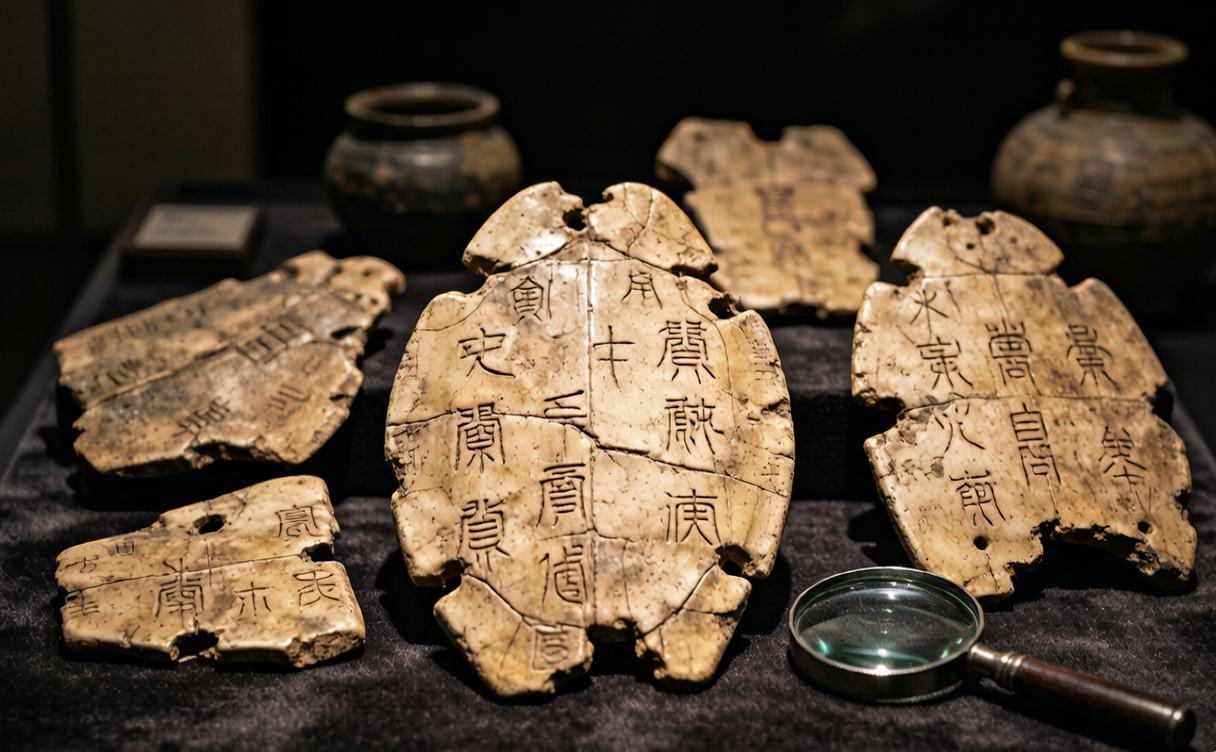
The essential stop is the Yin Ruins Anyang oracle bones site, known in Chinese as Yinxu. The museum here displays inscribed tortoise shells and ox bones used for royal divination more than three thousand years ago, alongside bronze vessels, jade, and the famous Simuwu rectangular ding, one of the heaviest bronzes of the ancient world. A separate compound holds the royal tomb of Fu Hao, a female general and consort whose burial yielded an extraordinary hoard of artifacts.
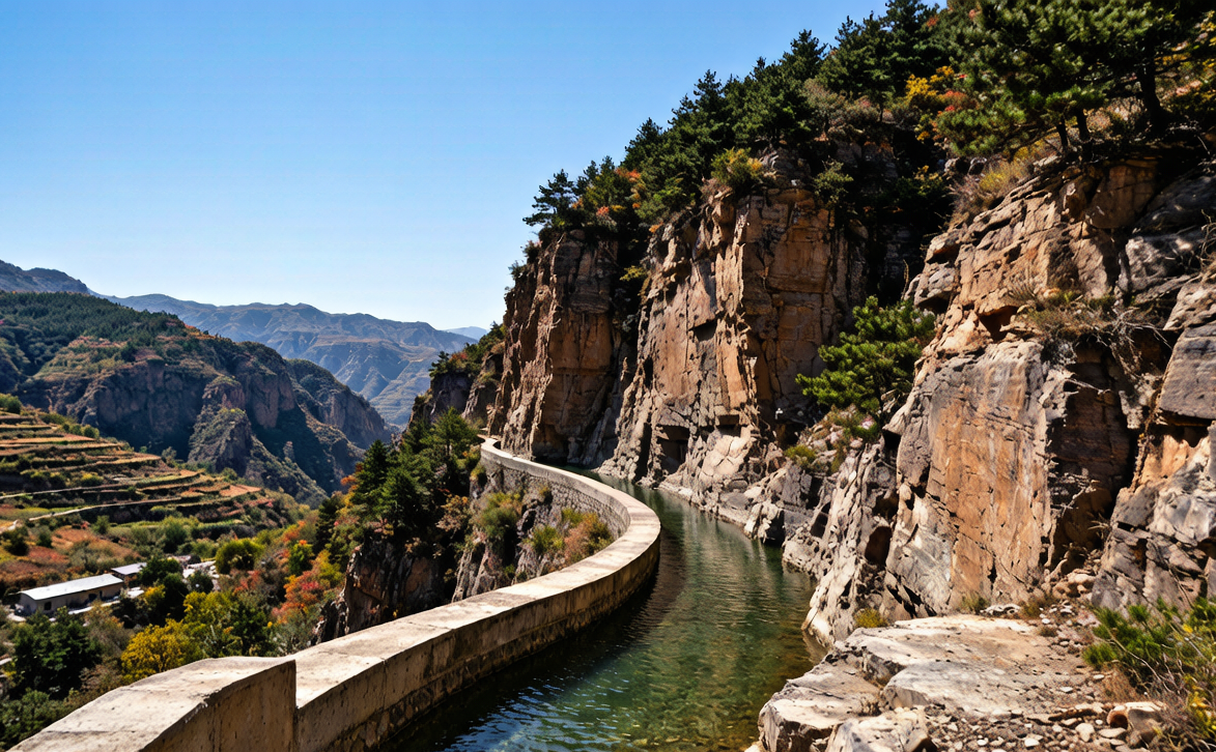
Back in the city, the Anyang Museum gives useful context before you visit the ruins, and the Wenfeng Pagoda offers a climb and a view over the old town. For a different perspective on Chinese history, the Red Flag Canal visit takes you into the rugged Taihang foothills to see the irrigation channel carved by hand through cliffs in the 1960s, an engineering and propaganda landmark that is genuinely impressive in scale.
Things to do in Anyang therefore split into two themes: the deep ancient past at the Shang capital, and the dramatic modern past at the canal. Both repay a slow, curious visit.
For visitors new to Chinese archaeology, the oracle bones are the real revelation. Each shell or bone carries incised characters asking the ancestors about harvests, weather, warfare, and childbirth, with some showing the diviner’s verdict and later the recorded outcome. Standing in front of these three-thousand-year-old questions, you are reading the thoughts of a Bronze Age court almost directly. The museum does a good job of explaining the script’s evolution into modern Chinese, which helps even non-readers appreciate why the site matters so much to the story of writing.
Where to Stay in Anyang
Most travelers stay in the compact city center, near the train-adjacent bus routes and the restaurants along the main shopping street. International and domestic chain hotels provide reliable, air-conditioned comfort at low prices by international standards. If you plan an early start for the ruins, choose a hotel that can arrange a taxi, as ride-hailing coverage is thinner than in China’s biggest cities.
Budget and mid-range options dominate; there are few luxury properties, and you will not need them for a comfortable stay.
An Anyang Itinerary
A focused Anyang itinerary uses two days.
Day 1: Arrive from Zhengzhou by high-speed train. Visit the Anyang Museum in the afternoon to build context, then walk the old town and climb Wenfeng Pagoda before dinner.
Day 2: Spend the morning at the Yin Ruins, allowing at least three hours for both the main museum and the Fu Hao tomb. In the afternoon, head to the Red Flag Canal for the cliffs and the channel, returning to the city for the evening train onward.
If you have a third day, add a trip to the nearby Tangyin or the Yaoling Tomb, or simply use Anyang as a stepping stone. Many travelers continue to Kaifeng travel guide, the old Song-dynasty capital, or back to Luoyang travel guide to see the Longmen Grottoes south of the city.
Food and Local Specialties
Anyang’s food is hearty northern Henan cooking. Look for Anyang braised noodles, a thick wheat noodle dish, and Hu la tang, a peppery spicy soup eaten at breakfast with fried dough sticks. The region’s sesame seed cakes and stuffed buns make easy snacks between sites.
Because Anyang is less touristy than Luoyang or Xi’an, English menus are rare, but pointing and translating apps work well, and street stalls are cheap and friendly. Vegetarians should ask specifically, as broths and stir-fries often contain small amounts of meat or lard.
Side Trips from Anyang
Anyang’s position at the top of Henan makes it a natural northern anchor for a history tour. South lies Zhengzhou, with its own Shang-era ruins and the provincial museum, while Luoyang and the Longmen Grottoes represent the peak of Buddhist cave art. The Shaolin Temple, Henan near Dengfeng fits between Anyang and Luoyang for travelers who want kung fu and monastery life.
Using high-speed rail, you can build a logical north-to-south sweep: Anyang for oracle bones, Luoyang for grottoes, and Zhengzhou or Kaifeng to round out the imperial story, all without backtracking.
Conclusion
Anyang is where the written record of China begins, and the Yin Ruins remain one of the most important archaeological sites in East Asia. The site is inscribed by UNESCO as a World Heritage property, and you can read the official record of its outstanding universal value at UNESCO Yin Xu.