

Falling ill abroad is worrying, but pharmacies and medical care in China are more accessible than many visitors expect. The country runs a vast network of pharmacies, clinics, and hospitals, with international facilities in major cities and competent public care almost everywhere. This guide explains how to buy medicine, see a doctor as a foreigner, and reach emergency help, so a stomach bug or sprain does not derail your trip.
Pharmacies in China for Tourists
The starting point is the green cross sign. Pharmacies in China for tourists are everywhere, marked by a green cross and the characters 药店 (yao dian) or 大药房 (da yao fang). Chains such as Watsons, Baicaotang, and Harmony link the high streets of every city. Most stock basic remedies, and a trained pharmacist is usually on site to advise, though English varies. Bring your phone translator and, ideally, the generic Latin name of any medicine you need.
Our China Mandarin phrases for travelers includes key health terms that help you explain symptoms at the counter.
Buying Medicine in China Without Prescription
A key fact about buying medicine in China without prescription is that many drugs sold only by prescription at home are available over the counter here, including some antibiotics and stronger painkillers. That convenience carries risk: self-medicating with antibiotics is unwise without a diagnosis. For common needs, cold tablets, rehydration salts, antacids, and motion-sickness pills are easy to buy. Always check the dosage and expiry, and keep the box for reference.
Note that certain controlled substances and some Western brands are unavailable; popular substitutes exist, so ask the pharmacist for the local equivalent. Our things to know before visiting China flags a few items worth packing from home.
Chinese Pharmacy Common Medicine Names
Learning Chinese pharmacy common medicine names speeds things up. Useful characters: 感冒 (gan mao, cold), 发烧 (fa shao, fever), 腹泻 (fu xie, diarrhoea), 止痛 (zhi tong, pain relief), 过敏 (guo min, allergy), and 创可贴 (chuang ke tie, band-aid). Showing a photo of the symptom or the medicine box from home bridges any language gap.
Pharmacists can often prepare a small branded combination pack for a stated complaint, but confirm each component. If you take regular prescription medicine, carry a doctor’s letter and enough supply, since matching the exact brand can be hard.
How to See a Doctor in China as a Foreigner
For anything beyond minor, understand how to see a doctor in China as a foreigner. Public hospitals use a triage system: register at a kiosk or window (挂号, gua hao), pay a small fee, then wait for your department. Bring your passport and cash or a payment app. English signage is limited outside big cities, so a translation app or local helper is valuable.
International clinics in Beijing, Shanghai, Guangzhou, and Chengdu cater to foreigners with English staff and familiar standards, at higher cost. Many cities also run 24-hour pharmacy windows and urgent-care clinics that sit between a pharmacy and a hospital, useful for late-night fevers or sprains when a full emergency room feels like overkill. Ask your hotel concierge to point you to the nearest one on arrival day, so you are not searching while unwell. Our China travel guide for first-timers explains hospital navigation basics before you need them.
International Hospitals in China for Travelers
Regarding international hospitals in China for travelers, the main hubs have well-regarded facilities: United Family Hospitals across several cities, Beijing International SOS, Shanghai East International Medical Center, and similar. They accept travel insurance and many international plans, provide English consultation, and coordinate evacuation if needed. Costs are higher than public care but far below US rates, and the familiarity is worth it for serious concerns.
Always confirm your insurer’s direct-billing list in advance. Our China travel insurance recommended page explains what cover to carry and how claims work on the ground.
Emergency Medical Help in China Travel
Knowing emergency medical help in China travel contacts is essential. Dial 120 for ambulance, 110 for police, and 119 for fire. In tourist cities, some operators speak English; otherwise use a translation app. For poisoning or specific emergencies, major hospitals have 24-hour emergency departments (急诊, ji zhen). Move to a public or international hospital rather than waiting at a pharmacy for anything severe.
Our China travel safety tips lists these numbers and what to say when you call, which reduces panic in the moment.
Costs, Insurance, and What to Expect
A public hospital consultation may cost only 20 to 50 yuan plus tests, while international clinics bill hundreds. Either way, paying is straightforward with Alipay, WeChat, or cash. Keep every receipt for insurance reimbursement. Pharmacies are cheap; a course of common medicine rarely exceeds 50 yuan.
The single most important preparation is cover. Our China travel insurance recommended guide details plans that include medical evacuation, which matters if you fall ill far from a major city.
Pharmacies, Clinics, and Carrying Your Own Kit
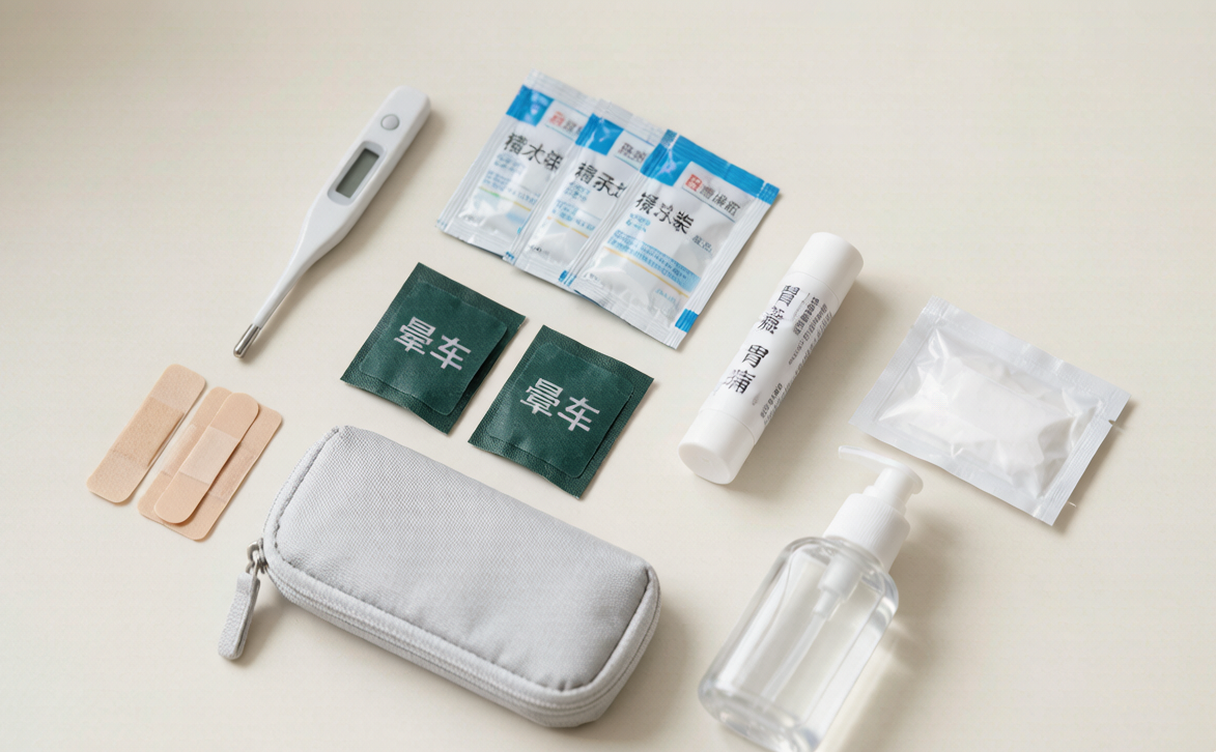
A small personal medical kit bridges the gap between minor ailments and a clinic visit. Pack rehydration salts, a broad-spectrum antiseptic, plasters, and any personal prescription medicine with a doctor’s letter; matching exact Western brands locally can be difficult, so arriving with your own supply is the safe choice. For common bugs, local pharmacies stock effective local equivalents once you show the symptom or the home box.
Beyond walk-in pharmacies, community health clinics (社区卫生服务站) sit inside neighbourhoods and handle mild infections, dressings, and basic prescriptions at low cost, often with shorter waits than big hospitals. They are a good first stop for something between a pharmacy and an emergency. For dental pain, dedicated dental hospitals in every city provide same-day appointments and modern care at a fraction of Western prices.
Language is the main friction. The phrases in our China Mandarin phrases for travelers help you name symptoms, while a translation app handles the rest. Keep a note on your phone with blood type, allergies, and current medicines in both English and Chinese characters, so any clinician can treat you safely even if you cannot speak. Prescription rules differ by city: some antibiotics need a doctor’s note, while in others the pharmacist dispenses them freely. Either way, avoid a full course of antibiotics for a simple cold, which is viral and unaffected by them.
For travelers heading to remote western regions, stock extra supplies before leaving the last major city, because small-town pharmacies may lack specific imports. A compact thermometer, oral rehydration solution, and a few doses of anti-diarrheal are worth the luggage weight when the next clinic is a day’s drive away. Travel insurance that includes consultation cover turns these small visits into minor expenses rather than worries.
Conclusion
Pharmacies and medical care in China are within easy reach once you know the system: green-cross pharmacies for minor needs, public hospitals for diagnosis, and international clinics for English-speaking care. Carry your insurance details, learn a few medicine names, and save the emergency numbers. For authoritative health guidance when visiting the country, the World Health Organization China office provides official travel-health information.