

At around ten o’clock on a July evening, on a low hill in a high basin ringed by snow peaks, a few hundred people stand in silence and watch the sun come apart. Below them the Kaidu River loops back on itself again and again across flat grassland, and each meander catches a separate reflection of the setting sun, so that five or six small suns burn in the grass at once. This is the reason most people make the long drive to Bayanbulak, in Xinjiang, China — and this Bayanbulak Grassland travel guide explains how to get there, when to go, and what else is worth your time once you have.
Why Visit Bayanbulak Grassland
Bayanbulak (巴音布鲁克) is a vast alpine basin sitting at roughly 2,500 metres inside the Tianshan range, cupped on all sides by mountains that hold snow into July. It is usually described as China’s second-largest grassland, and the scale is hard to convey: you drive for an hour and the horizon does not change.
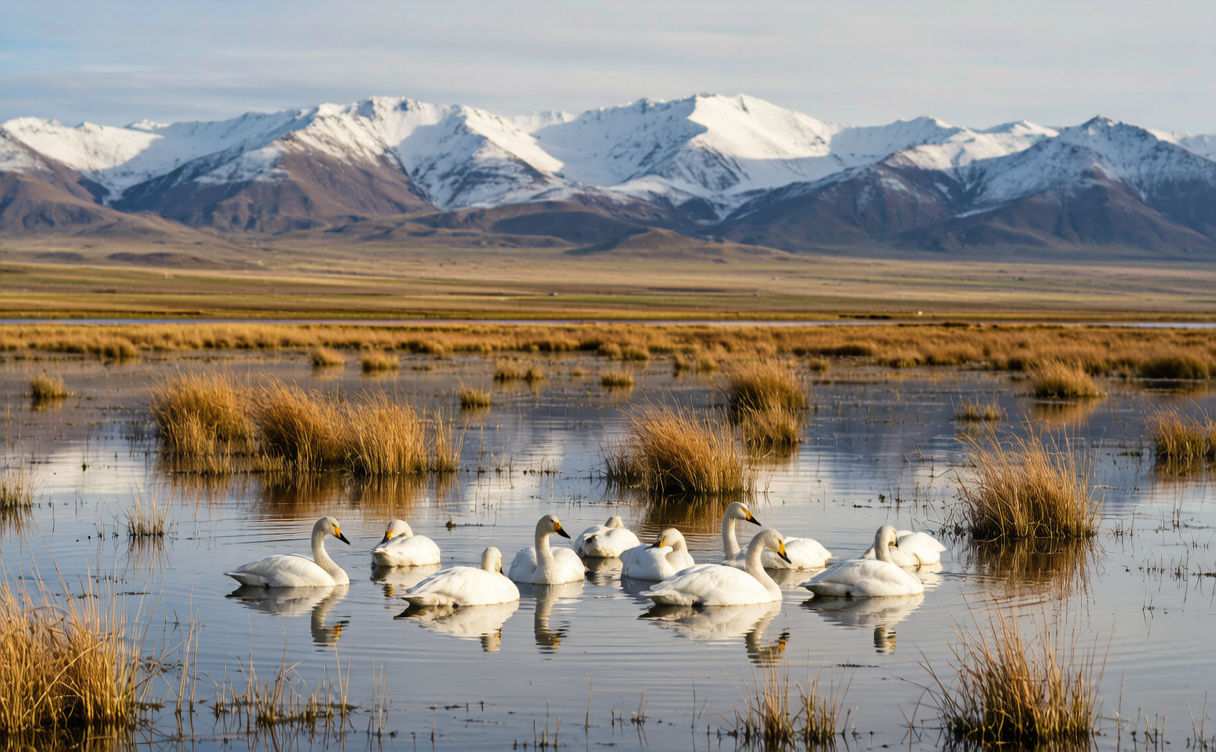
Two things distinguish it from other grasslands. The first is Swan Lake, a shallow wetland system that is China’s most important breeding ground for whooper swans, protected as a national nature reserve since the 1980s. The second is the Nine Bends and Eighteen Turns of the Kaidu River, the sunset spectacle above. Between them they make Bayanbulak the most photographed landscape in central Xinjiang.
The basin is also part of the UNESCO World Heritage site Xinjiang Tianshan, inscribed for its exceptional range of mountain landscapes and habitats. If you are working out where a grassland fits in a wider route, our Xinjiang travel guide sets out the main loops; Bayanbulak sits neatly between the forested slopes of Nalati and the canyon country around Kuqa.
Best Time to Visit Bayanbulak Grassland
Late June to mid-August — the window. The grass is at full height, wildflowers cover the slopes, daytime temperatures sit at a pleasant 15–25°C, and the swans are on the water with cygnets. Sunset falls around 22:00, so plan a very late dinner.
Late August and September. Quieter, the grass turning gold, crisp air and the clearest photography light of the year. Nights already drop below freezing. Many local guesthouses start closing from late September.
May and early June. Green returning, swans arriving, few visitors — but unstable weather, and passes can still hold snow.
October to April. Bitterly cold, lows reaching −30°C, most facilities closed and the access roads unreliable. Plan elsewhere; our guide to the best time to visit Xinjiang covers the seasonal trade-offs region by region.
One practical note: the country runs on Beijing time, but daily life here follows the sun by about two hours. Shops open at 10:00 and dinner at 21:00 is normal.
How to Get to Bayanbulak Grassland
There is no railway station and no scheduled commercial airport at the grassland itself, so every route ends in a long drive. The scenic area entrance is near Bayanbulak town, in Hejing County.
| From | Mode | Typical duration | Approx. cost |
|—|—|—|—|
| Urumqi → Bayanbulak | Chartered car with driver | 7–8 hr | ¥1,200–1,800 per car per day (US$170–250) |
| Urumqi → Bayanbulak | Long-distance bus (summer only) | 8–9 hr | ¥140–180 (US$20–25) |
| Korla → Bayanbulak | Car via G218 | 5–6 hr | ¥800–1,200 (US$112–170) |
| Nalati → Bayanbulak | Car over the mountain pass | 3–4 hr | ¥600–900 (US$84–126) |
| Kuqa → Bayanbulak | Duku Highway (G217), June–early October only | 5–6 hr | ¥900–1,300 (US$126–182) |
| Scenic area gate → viewpoints | Compulsory internal shuttle | 40–70 min | ¥90–110 (US$13–15) |
Almost everyone visits with a hired car and driver, booked through a hotel or agency in Urumqi, Korla or Nalati and usually shared between two to four people. A Bayanbulak Grassland day trip from Urumqi is not realistic — it is a fourteen-hour round trip before you have seen anything. Give it two days minimum, three if you are also driving the Duku Highway, the spectacular seasonal road over the Tianshan that runs from Dushanzi in the north down to Kuqa in the south and passes the grassland en route.
What to See at Bayanbulak
Everything inside the scenic area is reached by the compulsory shuttle bus, which runs a fixed circuit with stops. Get an early bus and work outwards.
Swan Lake (天鹅湖)
A shallow, reed-fringed wetland spread over a large protected area, and the summer home of whooper swans along with bar-headed geese, ruddy shelducks and black storks. Viewing is from raised platforms and a boardwalk at a respectful distance — the birds are genuinely wild and the reserve is strict about approach. Bring binoculars or a 300mm lens or you will see white dots. Early morning is best for both light and activity.
Nine Bends and Eighteen Turns (九曲十八弯)
The main event. A short climb up a boardwalked hill opens onto the Kaidu River wandering in extravagant loops across a completely flat plain. In the two hours before sunset the water turns silver, then copper, then orange, and the multiple reflected suns appear. Arrive at the viewpoint by 20:00 in midsummer to get a place at the rail; the shuttle back runs late on clear evenings, but confirm the last departure with the driver.
The Open Grassland and Herding Camps
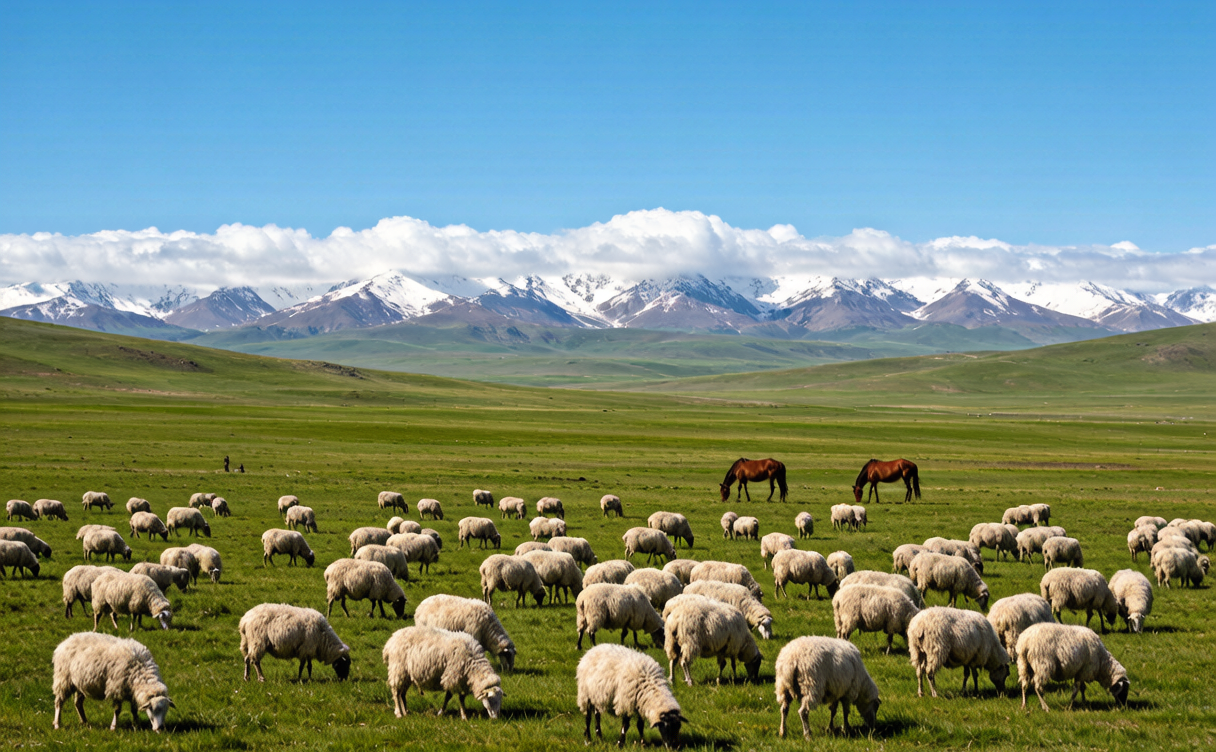
Between the two headline sights is simply grass, rivers and livestock — flocks of sheep, horse herds, and the summer camps of local herders. Short horse rides are offered near the shuttle stops from around ¥100; agree the route and price before you mount. Photography of people is fine if you ask first.
Bayanbulak Town
Small and functional, the only place in the basin with shops, a bank and a fuel station. Not a sight, but the hub for food and a bed.
Bayanbulak Grassland Hiking Trails and Routes
This is not a trekking destination in the alpine sense — the terrain is open, wet underfoot and largely without marked paths, and most walking happens on boardwalks. A good two-day plan:
Day 1. Arrive by mid-afternoon, buy tickets, take the shuttle to the Nine Bends viewpoint, walk the ridge boardwalk (about 1.5 km with steps), and stay for the sunset. Late dinner in town.
Day 2. First shuttle out to Swan Lake at opening for the morning bird activity, then the grassland stops and a short horse ride, back to town by lunch and on to Nalati or Kuqa in the afternoon.
On-foot distance is modest, but altitude and wind make it feel longer. Waterproof boots matter more than hiking poles here.
Where to Stay Nearby
Bayanbulak town — ¥150–400 (US$21–56). Simple guesthouses and small hotels, most family-run, with hot water that comes and goes. Basic but perfectly adequate, and staying in the basin is the only way to catch both sunset and early morning.
Yurt and tent camps — ¥200–600 (US$28–84). Seasonal camps on the grassland edge, some with proper beds and shared bathrooms, others genuinely rustic. Cold at night — ask whether bedding is heated or bring a liner.
Nalati — ¥300–800 (US$42–112). Three hours away over the pass, with the nearest reliable mid-range hotels — but you miss the light at both ends of the day.
Book ahead in July and August, and confirm the property registers foreign passports; several small guesthouses in the basin cannot.
Bayanbulak Grassland Tickets and Opening Hours
Entry is around ¥65 (US$9), and the internal shuttle bus is compulsory at roughly ¥90–110 (US$13–15) for the full circuit, so budget about ¥175 per person all in. Tickets are sold at the visitor centre gate and through the official WeChat mini-program; your passport is required.
The scenic area opens around 09:00 and closes around 20:00–21:00 in summer, with extended shuttle service on clear evenings so visitors can see the sunset — in July that can mean returning after 23:00. Hours contract sharply from October, and the area effectively shuts through winter. Check locally the day before; weather closes the access roads more often than you would expect.
Practical Tips
- Dress for October in July. At 2,500 metres, a 22°C afternoon becomes 3°C at sunset with wind. Down jacket, hat and gloves, even in midsummer.
- Altitude and sun. Mild altitude effects are common on the first day. Take it slowly, drink more than feels necessary, and use high-factor sunscreen.
- Fuel and cash. Fill the tank in Nalati, Korla or Kuqa. Mobile payment works in town but carry ¥500 in notes for camps and horse handlers.
- Signal. Coverage is patchy on the grassland. Download offline maps and translation before you leave the nearest city.
- Bird etiquette. Do not walk into the wetland or fly drones near Swan Lake; both are restricted and enforced.
- Roads. The Duku Highway is seasonal, typically open June to early October and closed after rain or snow. Never plan a tight schedule around it.
FAQ
Is Bayanbulak Grassland worth the long drive?
If you have three days and enjoy landscape over sights, yes — the sunset at Nine Bends is one of the finest natural spectacles in western China. With only a week in the region, Nalati is closer and easier.
How many days do I need?
Two nights is the sweet spot: arrive for one sunset, take one morning at Swan Lake, and drive on.
Can I visit without hiring a car?
Seasonal buses run from Urumqi and Korla to Bayanbulak town and the shuttle covers the scenic area, so it is possible. Departures are infrequent and rarely match the sunset, so most independent travellers hire a car locally anyway.
Will I definitely see swans?
Between May and September, yes, though usually at a distance, with numbers peaking in midsummer. Bring optics and treat close views as a bonus.
Is it suitable for families or older travellers?
Yes, with care. The walking is short and the shuttle covers the distances, but altitude, cold evenings and long drives are tiring.
Written by Karl, China Travel Places — updated August 2026.