

There is a spot on the edge of Zhongwei where you can stand with one foot in loose sand and look down on a green belt of poplars and, beyond it, the wide brown curve of the Yellow River. Behind you the Tengger Desert runs north for 40,000 square kilometres. In front of you, farmers are irrigating rice. Few landscapes in China change this abruptly, and none does it so photogenically. This Shapotou travel guide covers the desert side, the river side, and the strange engineering story that holds the two apart.
Why Visit Shapotou
Shapotou (沙坡头) is the eastern tip of the Tengger, where a dune roughly a hundred metres high drops straight to the riverbank. It has been a national 5A scenic area for years, which in practice means good infrastructure, clear signage and a lot of paid activities bolted onto a genuinely remarkable piece of geography.
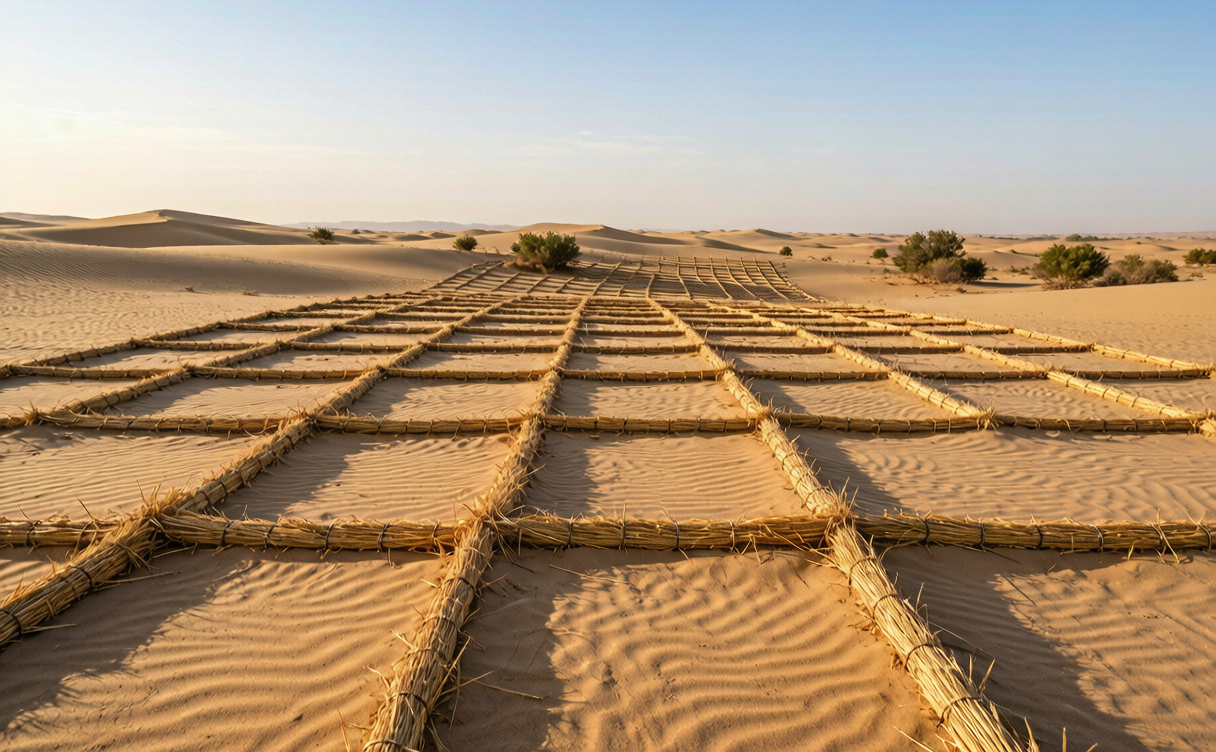
The site also has a serious backstory. When the Baotou–Lanzhou railway was pushed through here in the 1950s, moving sand buried the tracks faster than crews could clear them. The answer was the straw checkerboard: a grid of wheat straw pressed half-buried into the dunes, breaking the wind at ground level until vegetation takes hold. It worked, the railway has run ever since, and the technique is now exported worldwide — work recognised internationally, including by the United Nations Environment Programme. You can walk out among the grids and see it for yourself.
For most travellers, though, Shapotou is simply the most enjoyable day in Ningxia: sand sliding, camels, a zipline over the river and a sheepskin raft ride that has not changed much in centuries. Pair it with the Western Xia Tombs and you have the province’s two headline sights in three days.
Best Time to Visit Shapotou
May and June. The best window. Warm days of 20–30°C, cool nights, the poplar belt fully green and the desert not yet at its summer worst. Wind is common in May — expect sand in your teeth.
July and August. Peak season and peak heat. Surface sand can exceed 50°C by mid-afternoon, though the dry air makes 33°C bearable, and this is when the water activities make most sense. Book everything ahead; domestic families arrive in numbers.
September to mid-October — the other strong choice. Dry, 15–26°C, the poplars turning gold against the dunes, and the clearest skies of the year for that classic desert-and-river photograph. Skip the 1–7 October holiday.
November to March. Cold, −10 to 8°C, with a hard wind off the desert. Several activities close and the rafts stop when the river ices. Cheap, stark and beautiful if you dress for it.
How to Get to Shapotou
The gateway city is Zhongwei (中卫), about 20 km east. Zhongwei South Station (中卫南站) handles high-speed services, while the old Zhongwei Station sits downtown on the conventional Baotou–Lanzhou line. Most international visitors arrive from Yinchuan, which has Ningxia’s main airport.
| From | Mode | Typical duration | Approx. cost |
|—|—|—|—|
| Yinchuan → Zhongwei | High-speed / EMU train | 1 hr 20 min – 1 hr 40 min | ¥60–90 (US$8–13) |
| Lanzhou → Zhongwei South | High-speed rail | around 2 hr | ¥120–150 (US$17–21) |
| Xi’an → Zhongwei | Conventional overnight train | 10–12 hr | ¥130–260 (US$18–36) |
| Zhongwei station → Shapotou gate | Taxi or ride-hail | 30–35 min | ¥50–70 (US$7–10) |
| Zhongwei → Shapotou | Tourist bus (peak season) | 45 min | ¥10 (US$1.40) |
| Full day chartered car with driver | Car | — | ¥400–500 (US$56–70) |
A Shapotou day trip from Yinchuan works comfortably: an early train, a taxi from Zhongwei, five or six hours on site, back by evening. If you would rather not watch the clock, chartering a car from Zhongwei for the day costs about ¥400 and lets you add the Yellow River viewpoints west of the scenic area. Every rail ticket is issued against your passport number, and you collect at the window if the platform gates reject your document.
What to See and Do at Shapotou
The scenic area splits into a desert side north of the road and a river side south of it, joined by a cable car and a shuttle. Buy the through ticket and do both.
Sand Sliding Down the Great Dune
The signature activity: a wooden sled down the hundred-metre face towards the river, on a slope that hums under certain conditions — the “singing sands” that gave the place its old reputation. It costs extra, takes ninety seconds, and is worth it for the view from the top alone. A chairlift carries you back up.
Sheepskin Rafts on the Yellow River
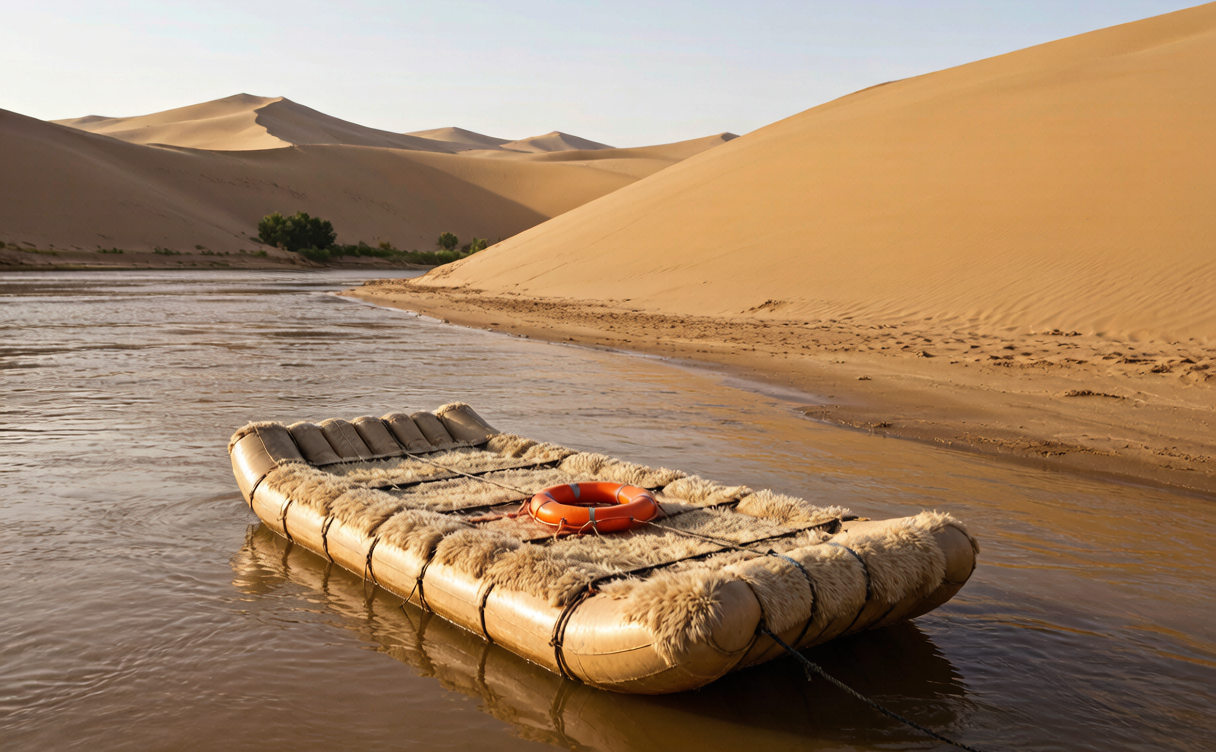
Inflated sheep hides lashed to a wooden frame, poled by a boatman standing at the back. Yangpi fazi (羊皮筏子) carried freight along this river for centuries and now carry four passengers at a time on a short downstream drift. Slow, silent and the single most memorable thing here. Around ¥80–120 for the stretch.
The Zipline and the River Crossing
A steel cable runs from the dune side clear across the Yellow River — fast, safe, and the only way to see the junction of desert, oasis and water at once. A rope bridge and speedboats cover the same crossing at ground level.
The Straw Checkerboards and Desert Walks
Marked paths lead north into the Tengger past the sand-control grids and the railway line they protect. Twenty minutes out is enough to lose the noise of the activity zone completely. Camel trains run longer routes into the dunes, from thirty minutes to a half-day with a night in a desert camp.
The Yellow River Viewpoint and Wang Wei Terrace
On the eastern ridge, a terrace overlooks the bend the Tang poet Wang Wei is said to have described as “a lone plume of smoke in the great desert, the round sun setting on the long river”. Come at 18:00 in September and the line makes complete sense.
Shapotou Hiking Trails and Routes
Half a day is the minimum, a full day is better. A sensible order: enter on the desert side in the morning while the sand is cool, walk the checkerboard trail, ride a camel, then sand-slide down to the river before lunch. Cross by zipline or shuttle to the river side in the afternoon for the sheepskin raft, the riverside walk through the poplar belt, and the viewpoint terrace for sunset. Internal shuttles and lifts cover most transfers; expect around 5 km of walking, all of it soft underfoot.
Where to Stay Nearby
Inside the scenic area — ¥400–900 (US$56–126). Desert camps and yurt-style tents on the dunes, plus a hotel by the entrance. Basic facilities, unbeatable stargazing, and you get the dunes to yourself at dawn.
Zhongwei city — ¥120–350 (US$17–49). Chain and business hotels around the drum tower and Zhongwei South Station. The practical, cheap choice and only half an hour away.
Yellow River lodges — ¥800–2,500 (US$112–350). Design-led courtyard retreats on the riverbank downstream of the scenic area, converted from village houses. Ningxia’s most comfortable rooms by a wide margin; book weeks ahead.
Check that your hotel registers foreign passports before you commit — larger chains always do, village guesthouses often cannot.
Shapotou Tickets and Opening Hours
Gate entry is around ¥100 (US$14) in high season, with a cheaper winter rate. Almost every activity is charged separately: sand sliding roughly ¥60, sheepskin raft ¥80–120, zipline ¥100, camel rides from ¥100, internal shuttle and cable car ¥20–60 each. Combination passes bundling four or five activities run ¥200–330 and are better value if you plan to do more than two.
Opening hours are roughly 08:00–18:00 from April to October and 08:30–17:30 from November to March, with last entry an hour before closing. Buy through the official WeChat mini-program or at the gate; a passport is required either way, and river activities pause in high wind or flood conditions.
Practical Tips
- Cover up. Long sleeves, a wide hat, sunglasses and a scarf for blowing sand. The desert reflects UV back at you and people burn under their chins here.
- Shoes off. Most visitors carry sandals and walk the dunes barefoot; boots simply fill with sand. Bring a dry bag for cameras.
- Water and timing. Two litres per person minimum in summer. Arrive at opening, take the midday heat on the shaded river side.
- Payment. Alipay and WeChat Pay cover tickets, activities and taxis; keep ¥200 cash for camel handlers and village stalls.
- Language. Signage is bilingual at the main gates and Chinese-only beyond. Save your hotel address in characters for the taxi back.
- Onward. Zhongwei is a natural stop on a longer Silk Road itinerary through northwest China, and pairs well with the quieter inland sites in our off-the-beaten-path guide.
FAQ
Is Shapotou worth visiting?
Yes, if you accept it as a well-run activity park built on a spectacular natural site rather than wilderness. The desert-meets-river geography is genuinely rare, and the sheepskin raft and dune views justify the ticket on their own.
How long should I spend there?
Half a day covers the highlights; a full day lets you do both sides properly without rushing between shuttles. Add a night if you want a desert camp.
Can I visit Shapotou as a day trip from Yinchuan?
Comfortably. Trains take under two hours each way, taxis from Zhongwei are quick and cheap, and you still get six hours on site. Leave on the 07:00–08:00 train.
Is Shapotou suitable for children?
Very. Sand sliding, camels and rafts are all family favourites, and the paths are short. Watch the heat in July and August, and note that the zipline usually has a minimum age and weight.
Do I need to book activities in advance?
Not usually, except in the 1–7 October holiday and summer weekends, when combination tickets sell out online by mid-morning. Everything else is bought as you go.
Written by Karl, China Travel Places — updated August 2026.