

Here is the fact that catches out most visitors: your International Driving Permit is worthless in mainland China. To drive here legally you need a Chinese document, and the good news is that you can usually get one in a couple of hours at a major airport on the day you land. Renting a car in China is worth the trouble in places the railway does not reach — Yunnan’s mountain roads, the Qinghai Lake circuit, the back valleys of Guizhou — and pointless almost everywhere else. This guide covers the permit, the paperwork, the real costs, and the rules that will otherwise cost you money.
Content Preview
- Why your International Driving Permit does not work
- How to get a China temporary driving permit, step by step
- Rental companies, deposits and insurance
- What it actually costs per day
- Driving rules, cameras and city plate restrictions
- Fuel, tolls and parking
- The chauffeur alternative, and the best road trips
- Practical tips and FAQ
Can I Use an International Driving Permit in China?
No. Mainland China recognises neither the International Driving Permit nor a foreign driving licence on its own. Rental desks will refuse you, and if traffic police stop you while driving on an IDP you are treated as unlicensed — a fine of ¥200–2,000, possible short detention, and impoundment of the car.
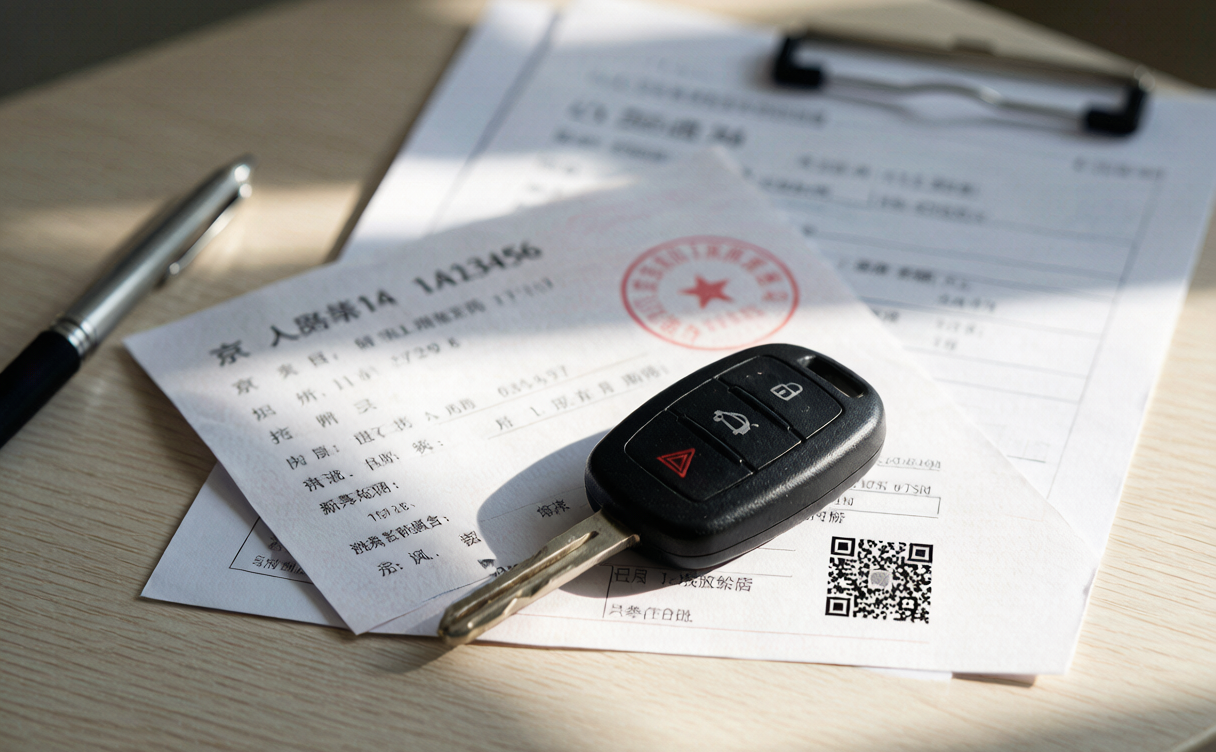
What you need instead is a temporary driving permit for tourists (临时机动车驾驶许可, línshí jīdòngchē jiàshǐ xǔkě), issued by the local vehicle administration office. It converts your home licence into something police and rental companies accept, for the length of your stay.
Hong Kong, China and Macau, China run separate licensing systems; a mainland permit does not cover you there, and vice versa.
How to Get a China Temporary Driving Permit
Most travellers do this at an airport service window on arrival. Beijing Capital, Shanghai Pudong and Hongqiao, Guangzhou Baiyun, Chengdu Tianfu and several other major airports run vehicle administration counters in the arrivals area, typically open 09:00–17:00 on weekdays. Elsewhere you go to the city’s chē guǎn suǒ (车管所), the vehicle administration office, which is usually in an outer district.
| What you need | Detail |
|—|—|
| Passport | With a valid visa or entry stamp |
| Home driving licence | Original, still valid |
| Certified Chinese translation | Of the licence; translation agencies operate at the airport counters |
| Temporary residence registration | The slip your hotel gives you, or a police station form |
| Passport photos | Two or three, white background; booths are on site |
| Medical check | Eyesight, colour vision, hearing, limb function; done on the spot |
| Fee | Usually free to about ¥50, plus ¥100–300 for translation and photos |
The process itself:
1. Queue at the counter and hand over passport, licence and residence registration.
2. Have the licence translated at the on-site agency, or bring a translation done in advance.
3. Take the medical check in the adjoining room — it takes about ten minutes and nobody fails it who can see and walk.
4. Submit the application form, photos and fee.
5. Collect the permit the same day, usually within one to three hours.
Validity is tied to your permitted stay. A 30-day tourist visa gets you a 30-day permit; a six-month multi-entry visa can get you longer, up to a year in some cities. The permit covers ordinary cars only — motorcycles and larger vehicles are almost never granted. If you are staying long term on a residence permit, the better route is converting to a full Chinese licence, which requires a 100-question written exam available in English.
Renting a Car in China as a Foreigner: Companies and Deposits
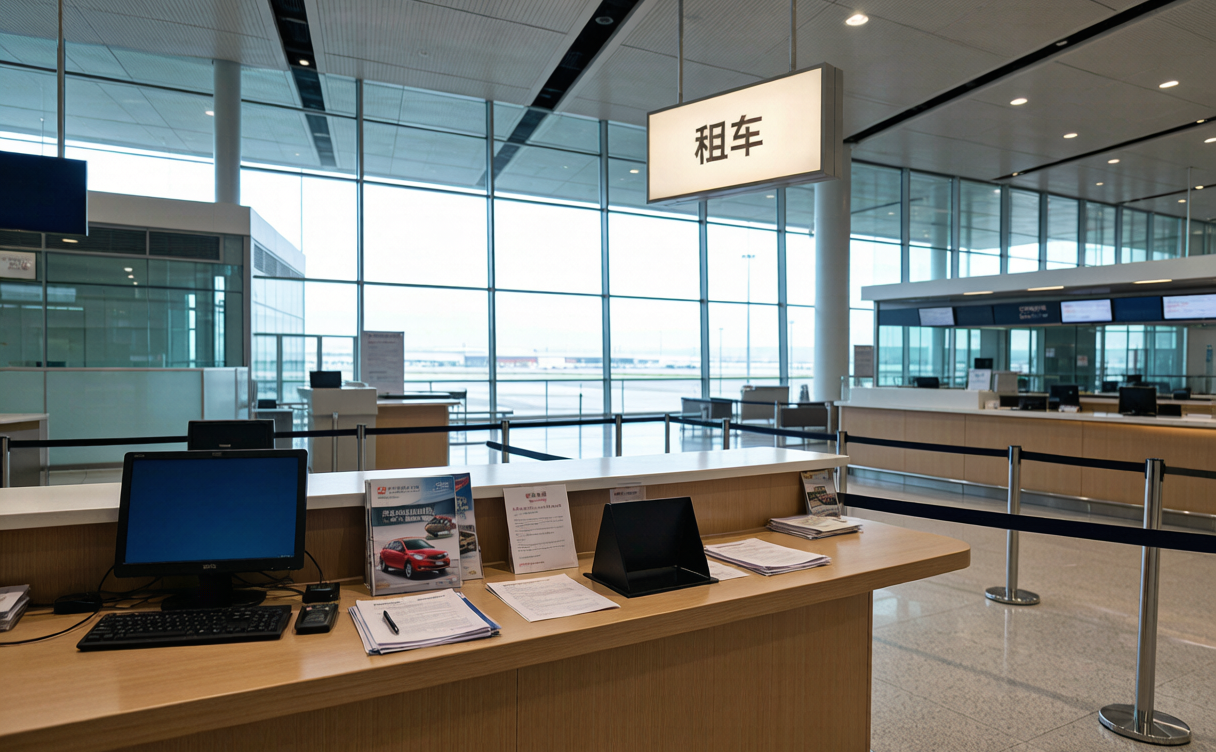
The two national chains are CAR Inc / Shenzhou Zuche (神州租车) and eHi (一嗨租车). Both have airport and city branches in every provincial capital, English-capable staff at bigger locations, and fleets of Volkswagens, Toyotas and increasingly electric cars. International brands here operate mainly through partnerships with these two.
Deposit. Expect a hold of ¥2,000–5,000 (US$280–700) on a credit card, plus a traffic-violation deposit of ¥1,500–3,000 released two to four weeks after you return the car, once cameras have caught up. Some branches struggle with foreign-issued cards, so confirm with the specific branch before booking and carry a backup.
Insurance. Compulsory third-party liability is included by law but the cover is thin. Add the collision damage waiver (不计免赔) at ¥30–70 per day. Without it you are liable for the first ¥1,000–2,000 of any damage.
Booking. Use the company’s own app rather than an aggregator, since the branch needs your permit details on file. Bring permit, home licence and passport to collection; the permit alone is not enough.
Car Rental Cost in China Per Day
| Item | Typical cost |
|—|—|
| Economy sedan (VW Lavida, Toyota Corolla) | ¥150–280/day (US$21–39) |
| Mid-size SUV | ¥300–550/day (US$42–77) |
| Electric car | ¥120–250/day, plus cheap charging |
| Collision damage waiver | ¥30–70/day |
| Airport pick-up surcharge | ¥50–100 |
| One-way drop-off in another city | ¥200–800 |
| Petrol (92#) | ¥7.5–8.5 per litre |
| Expressway tolls | ¥0.45–0.65 per km |
| Chauffeur-driven car with driver | ¥600–1,200/day including fuel |
A week in Yunnan with a mid-range SUV, insurance, fuel and tolls lands around ¥4,500–6,000 (US$630–840). Split between three or four people that beats flights and taxis; alone, it does not.
Driving Rules in China for Foreigners
Traffic drives on the right. Beyond that, the rules that matter to visitors:
- Speed limits: 30–60 km/h urban, 80–100 km/h on national highways, 120 km/h maximum on expressways. Section-average cameras (区间测速) time you between two points, so slowing for each camera achieves nothing.
- Alcohol: effectively zero tolerance. Over 0.02% blood alcohol is an offence; over 0.08% is a criminal matter with detention. Do not have one beer with lunch.
- Cameras everywhere: intersections, lane markings, bus lanes, seatbelts and phone use are all camera-enforced. Fines reach the rental company weeks later and come out of your deposit.
- Right turn on red is generally allowed unless a red arrow or sign forbids it — but yield to everything.
- Scooters and e-bikes ignore lane discipline and travel against traffic constantly. They are the main hazard in every city. Our China travel safety tips cover the wider picture.
- Accidents: do not move the vehicles. Photograph everything, call the rental company, then 122 for traffic police.
Fuel, Tolls, Parking and Plate Restrictions
Fuel. Attendants pump for you at almost every station; tell them 92 or 95 and how much. Payment is Alipay, WeChat Pay or cash — foreign cards frequently fail at the pump terminal, so set up a Chinese mobile wallet before you travel.
Tolls. Expressways are tolled by distance. Rental cars usually carry an ETC transponder that debits automatically; confirm at pickup, because without it you need the staffed lane and cash.
Parking. Most car parks read your plate on entry and charge on exit through a WeChat mini-programme or Alipay, ¥5–15 per hour in city centres.
Plate restrictions are the trap. Beijing requires a separate entry permit for non-Beijing plates and applies weekday tail-number bans inside the fifth ring road. Shanghai bars non-local plates from the elevated expressways during peak hours. Chengdu, Hangzhou and Xi’an all run tail-number rules. Renting a car with a local plate in the city you are driving in avoids most of this — and honestly, in those four cities you should be using the metro and Didi instead of driving.
The Chauffeur Alternative and the Best Road Trips
If the permit sounds like too much work, hire a car with a driver. Hotels, travel agencies and Didi’s premium tier arrange it at ¥600–1,200 per day including fuel and the driver’s expenses. The driver handles plate restrictions, parking and directions, and for a group of four the maths is close to neutral.
The best road trips to drive in China are the ones the railway cannot serve:
- Northwest Yunnan — Dali to Lijiang to Shangri-La, three days of switchbacks and high meadows.
- Qinghai Lake circuit — 360 km of grassland and rapeseed fields, best in July.
- Hainan island loop — an easy coastal ring on excellent expressways, warm all winter.
- Guizhou karst — waterfalls, terraces and villages spread across mountain roads.
- The Duku Highway in Xinjiang, China — spectacular, seasonal, with routine checkpoints.
Tibet, China is not a self-drive destination for foreign visitors: entry requires permits arranged in advance through a licensed agency, and travel is organised with a guide and driver.
Practical Tips
Download offline maps. Google Maps is unusable here. Amap (高德) and Baidu Maps both have partial English; download the province before you leave wifi.
Photograph the car from eight angles at pickup, wheels and windscreen included.
Avoid national holidays. Tolls are waived during Spring Festival, Qingming, Labour Day and the October week, which is exactly why the expressways are solid.
Keep the permit on you. Police checks are common on intercity roads, and you need permit, licence and passport together.
FAQ
Can I rent a car in China with only my home licence?
No. Rental companies require the Chinese temporary driving permit alongside your home licence and passport. Some will quietly refuse foreign customers entirely; the two national chains will not.
How long does the temporary permit take to get?
One to three hours at an airport vehicle administration counter, same day. City offices can take longer if the medical check is done at a separate hospital, so allow half a day and go on a weekday morning.
Is driving in China dangerous?
Expressways are modern and well surfaced, and the risk is concentrated in cities, where scooters, sudden lane changes and pedestrians crossing mid-block are constant. Rural mountain roads at night are the other thing to avoid.
Is it cheaper to rent or to hire a driver?
Renting is cheaper for long, simple routes. A driver costs roughly double per day but removes tolls, parking, plate restrictions and navigation, which for two or three days in unfamiliar mountains is usually money well spent.
Written by Karl · Updated August 6, 2026