

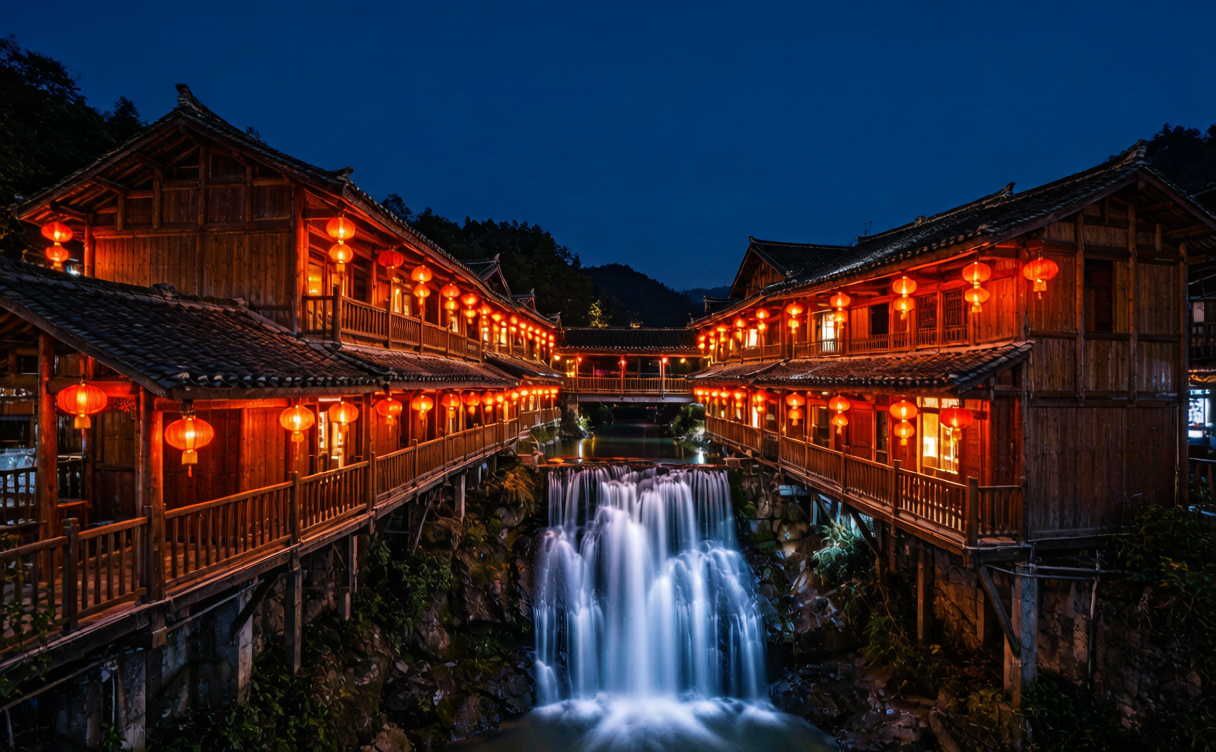
There are prettier old towns in China, but there is nothing quite like this one: a two-thousand-year-old Tujia settlement built directly on top of a sixty-metre waterfall, its wooden stilt houses hanging over the drop on timber legs, with a stone stairway street running down the cliff to a river wharf. This Furong ancient town guide covers the practical side of visiting Furong Zhen — “Hibiscus Town” — in Yongshun County, deep in the Xiangxi region of western Hunan. It is an easy add-on between Zhangjiajie and Fenghuang, most people give it half a day, and most people are wrong to. Below: the best time to visit Furong ancient town, transport, tickets, food, and a plan that includes the night view.
Why This Town Looks the Way It Does
Furong was called Wangcun for most of its history, a river port on the You River that served as a Tujia administrative centre and trading post. It took its current name after the 1986 film Hibiscus Town was shot in its streets — a piece of cinema history that turned the place into a domestic pilgrimage site and, incidentally, made a local rice-tofu snack famous nationwide.
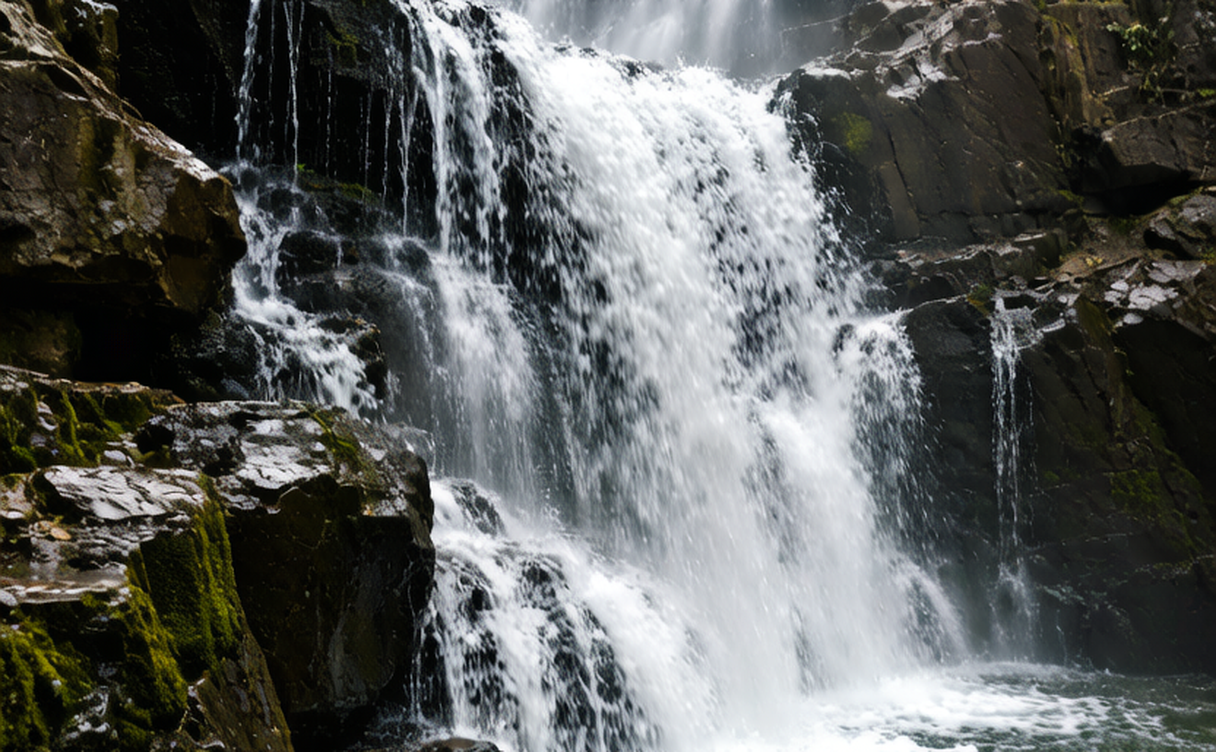
The geography is the real star. The Youshui River cut a gorge here, and a tributary drops through the middle of the settlement in a broad multi-tier fall roughly 60 metres high and 40 metres wide. Houses were built right at the lip and along the flanks, in the Tujia diaojiaolou style — stilt houses with rear posts planted on the slope below and living floors projecting into the air. A walkway now runs behind the curtain of water, so you can stand inside the cliff and look out through the falls at the wooden town above.
Also here, in a small pavilion, stands the Xizhou Bronze Pillar, cast in 940 CE to record a treaty between the Chu kingdom and the local Xizhou chieftains — one of the oldest inscribed bronze monuments in southern China.
Best Time to Visit Furong Ancient Town
The best time to visit Furong ancient town is April to June, or September to early November. The critical variable is water volume, because a weak waterfall changes the whole experience.
- April–June: 18–28°C, the rainy season building, and the falls running full and loud. Hillsides are green, and terraced fields around the town are flooded and reflective. This is the strongest combination of weather and water.
- July–August: 26–36°C and humid, with the heaviest flow of the year and the biggest domestic crowds. Afternoon storms are common; the gorge holds the heat.
- September–early November: 15–27°C, dry, comfortable, and clear. Flow is moderate but still good, and the light on the wooden houses is at its best.
- December–March: 3–12°C, damp and often misty. The waterfall thins considerably and can look disappointing, though a mist-wrapped town has its own atmosphere and prices are at their lowest.
For a broader seasonal picture across the country, see our best time to visit China guide.
How to Get There
The single best thing to happen to Furong ancient town travel was the Zhangjiajie–Jishou–Huaihua high-speed railway, opened at the end of 2021. The town has its own station, Furong Zhen, about 15 minutes by shuttle or taxi from the entrance gate. What used to be a three-hour minibus grind is now a 25-minute train ride.
| From | Option | Time | Approx. Cost |
|—|—|—|—|
| Zhangjiajie West | High-speed train to Furong Zhen | 25–35 min | RMB 30–45 (US$4–6) |
| Jishou East | High-speed train to Furong Zhen | 20–30 min | RMB 25–40 (US$4–6) |
| Changsha South | High-speed train via Zhangjiajie or Huaihua | 3–4 hr | RMB 220–290 (US$31–41) |
| Fenghuang Ancient Town | Coach or car via Jishou | 1.5–2 hr | RMB 60–200 (US$8–28) |
| Zhangjiajie city | Direct coach / private car | 2–2.5 hr | RMB 70–350 (US$10–49) |
| Zhangjiajie Hehua Airport | Private transfer | 2–2.5 hr | RMB 400–500 (US$56–70) |
| Furong Zhen station | Shuttle bus or taxi to the town gate | 15 min | RMB 5–30 (US$1–4) |
Most visitors arrive from Zhangjiajie, whose national forest park is the other reason to be in this part of Hunan — our Zhangjiajie travel guide covers those days in detail.
Where to Stay
Inside the town, waterfall-view rooms. Guesthouses built into the stilt houses with balconies over the falls. You pay for the view and the sound: RMB 260–600 (US$37–85), higher on summer weekends. Book the specific room, not just the property — many rooms face inward.
Inside the town, upper street inns. Simple family-run places on the flatter upper lanes, RMB 120–260 (US$17–37). Two minutes from everything, no view, much better value.
Zhangjiajie or Jishou as a base. Full-service hotels from RMB 200–500 (US$28–70) if you prefer modern rooms and are treating Furong as a day trip. You will miss the night lighting, which is the town’s best hour.
Things to Do in Furong
The Waterfall and the Walkway Behind It
Follow the path down the side of the gorge and duck into the passage cut behind the falling water. Spray soaks the ledge, the noise is enormous in high season, and you get the town’s signature perspective: timber houses silhouetted above a curtain of white water. Allow an hour, and protect your phone.
The Five-Li Slab Street
A 2,500-metre stone stairway street runs from the upper town down to the old wharf on the You River, lined with wooden shopfronts, tea houses, blacksmiths, and rice-tofu stalls. It is steep in places and slick after rain. The lower end, where the boats once tied up, is quiet and rarely reached by tour groups.
Night Lighting
After dark the whole cliff face is lit, and the town appears to float above the illuminated falls. The best vantage points are the viewing terrace on the opposite bank and the bridge below the gorge. This is the single reason to stay overnight.
Tujia Culture
Xiangxi is Tujia and Miao country. Evening performances of the baishou hand-waving dance run in the town square in season, and craft workshops sell Tujia brocade woven on traditional looms. Ask your guesthouse about performance times, which shift with the seasons.
Furong Ancient Town Hiking and Nearby Trips
Furong ancient town hiking is modest — the town’s own stairways add up to a solid climb, and riverside paths run along the You River from the old wharf. For something bigger, the Red Stone Forest of Guzhang, a field of ochre Ordovician limestone pinnacles, is around 30–40 minutes away by road, and Mengdong River drifting trips run in summer.
What to Eat
Xiangxi cooking is sour, smoky, and chilli-forward, and Furong has one dish above all others.
- Mi doufu — soft rice tofu in a chilli-and-vinegar broth, the snack the film’s heroine sold. Stalls along the slab street compete for the title of the original; RMB 8–15 (US$1–2) a bowl.
- Xuebaya — duck cooked with glutinous rice blood cake, the classic Xiangxi banquet dish.
- Larou — Tujia smoked pork, hung over the kitchen fire for months, then stir-fried with garlic shoots or dried chillies.
- Sour fish and pickled radish — jars of fermented vegetables sit outside every kitchen door.
- Shefan — spring “social rice” steamed with wild herbs and cured meat, eaten around the third lunar month.
A full meal for two runs RMB 80–150 (US$11–21).
Sample Itinerary: One Night in Furong
Day 1. 14:00 Arrive by train from Zhangjiajie West and check into a guesthouse inside the town. 15:00 Walk the upper streets and the Xizhou Bronze Pillar pavilion. 16:00 Descend to the waterfall and the walkway behind it. 17:30 Continue down the slab street to the old wharf on the You River. 19:00 Dinner of smoked pork and rice tofu. 20:30 Night lighting from the opposite-bank terrace.
Day 2. 07:00 Early walk through empty lanes — the town belongs to residents before the first buses arrive. 09:00 Tujia brocade workshop and the viewing platforms. 11:00 Optional half-day at the Red Stone Forest. 15:00 Train onward to Jishou for Fenghuang, or back to Zhangjiajie.
Practical Tips
- Furong ancient town tickets: Entry is around RMB 100–120 (US$14–17), covering the waterfall walkway and the ticketed sights inside. Overnight guests generally get multi-day validity on the ticket — confirm at check-in, and keep it with you.
- Hours: The gate is usually staffed 08:00–18:00. Staying inside the town means you can wander freely at night.
- Footwear: Stone stairs plus constant spray equals slippery. Trainers with grip, not flip-flops.
- Payment: WeChat Pay and Alipay are accepted almost everywhere, including ticket windows. Carry RMB 200–300 cash for small stalls.
- Language: Limited English. Save your guesthouse name in Chinese characters and photograph the route in from the gate — luggage over stone stairs is no fun in the dark.
- Wider region: Zhangjiajie’s headline scenery falls within the Wulingyuan area inscribed on the UNESCO World Heritage List, which is why most people are in this corner of Hunan in the first place.
FAQ
Is Furong ancient town worth an overnight stay?
Yes. Day-trippers see the waterfall and leave by late afternoon, missing both the night lighting and the early morning, which are the two best hours of the day here.
How does Furong compare with Fenghuang?
Fenghuang is bigger, livelier, and far more commercialised, with a long riverfront bar strip. Furong is smaller, more dramatic in setting, and quieter after dark. Many travellers do both — they are under two hours apart.
Will the waterfall be running when I visit?
From April to October, almost certainly, and strongly from May to August. In midwinter the flow drops noticeably. If the falls are your main reason for coming, avoid January and February.
Is the town accessible for people with limited mobility?
Not really. The core experience involves long flights of stone stairs on a steep slope, with no lifts or vehicle access inside the town.
What else can I combine with it?
Zhangjiajie National Forest Park, Fenghuang, the Red Stone Forest, and the Aizhai suspension bridge are all within a couple of hours. For more ideas in this vein, browse our off-the-beaten-path China guide.
Written by Karl, last updated August 4, 2026.