

A common myth among first-time visitors is that China is either dirt-cheap or surprisingly expensive, with nothing in between. The truth is that mainland China spans a huge price range, and a smart traveler can see world-class sights for less than a night in a European hotel — or blow a fortune in a single Shanghai dinner. This China budget travel guide puts hard numbers on a daily trip, tier by tier, and then stacks on the practical savings tricks that actually move the needle. Start with our China travel guide for first-timers if you haven’t yet sorted visas and payments, because how you pay affects every line below.
How much does a day in China cost?
The single most useful frame is three tiers. The numbers below are per person, per day, in 2026 prices, and assume you’re moving between cities rather than parked in one apartment. Big cities (Beijing, Shanghai, Shenzhen) sit at the top of each range; smaller cities (Xi’an, Chengdu, Guilin) at the bottom.
| Tier | Lodging | Food/day | Local transport | Attractions | Daily total (RMB) | Daily total (US$) |
|—|—|—|—|—|—|—|
| Backpacker | RMB 60–120 (hostel dorm) | RMB 60–90 | RMB 20–40 | RMB 30–50 | ~170–300 | US$24–42 |
| Mid-range | RMB 250–450 (3-star) | RMB 120–200 | RMB 40–80 | RMB 80–150 | ~490–880 | US$69–124 |
| Comfort | RMB 600–1,200 (4–5 star) | RMB 250–400 | RMB 100–200 | RMB 150–250 | ~1,100–2,050 | US$155–289 |
A two-week trip for a mid-range couple therefore runs roughly RMB 14,000–25,000 (US$2,000–3,500) all-in including intercity trains — far less than most assume for a country with this many highlights.
Where the money actually goes
Lodging and intercity transport are your two biggest fixed costs; food and attractions are where China stays genuinely cheap. A bowl of decent noodles is RMB 15–25 (US$2–3.50), a sit-down local meal for two with beer is RMB 80–150 (US$11–21), and many of the best experiences — wandering the Bund, hiking a city wall, a temple courtyard, a night market — cost nothing or under RMB 50. The things to know before visiting China covers payment apps that unlock these local prices; without them you’ll overpay at tourist counters.
Lodging: spend here, not there
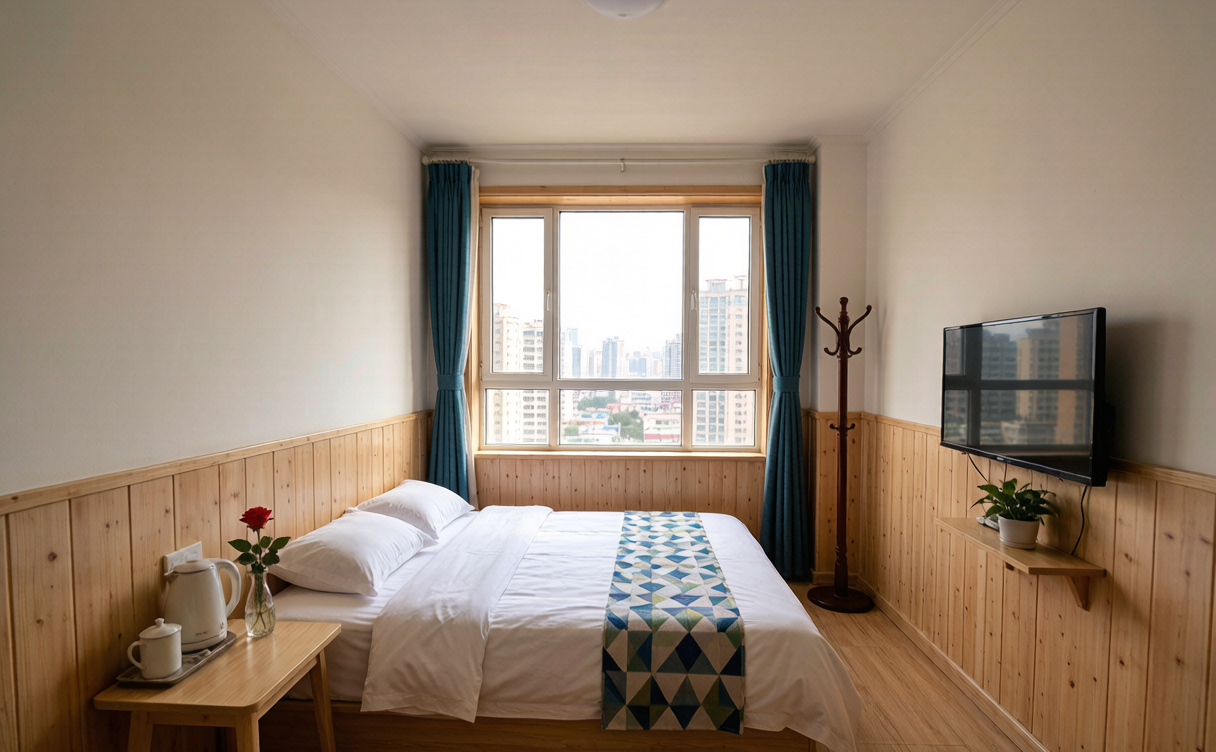
Hostels with private rooms (not dorms) run RMB 120–200 (US$17–28) in most cities and are clean and central. Three-star hotels through domestic apps like Trip.com or Meituan often beat international chains by 30–50% for the same standard. Save the splurge for one scenic property — a courtyard hotel in a historic quarter — rather than paying city-center premiums every night. Book 3–4 weeks ahead in peak season and you’ll hold the mid-range row; book during National Day week and even dorms double.
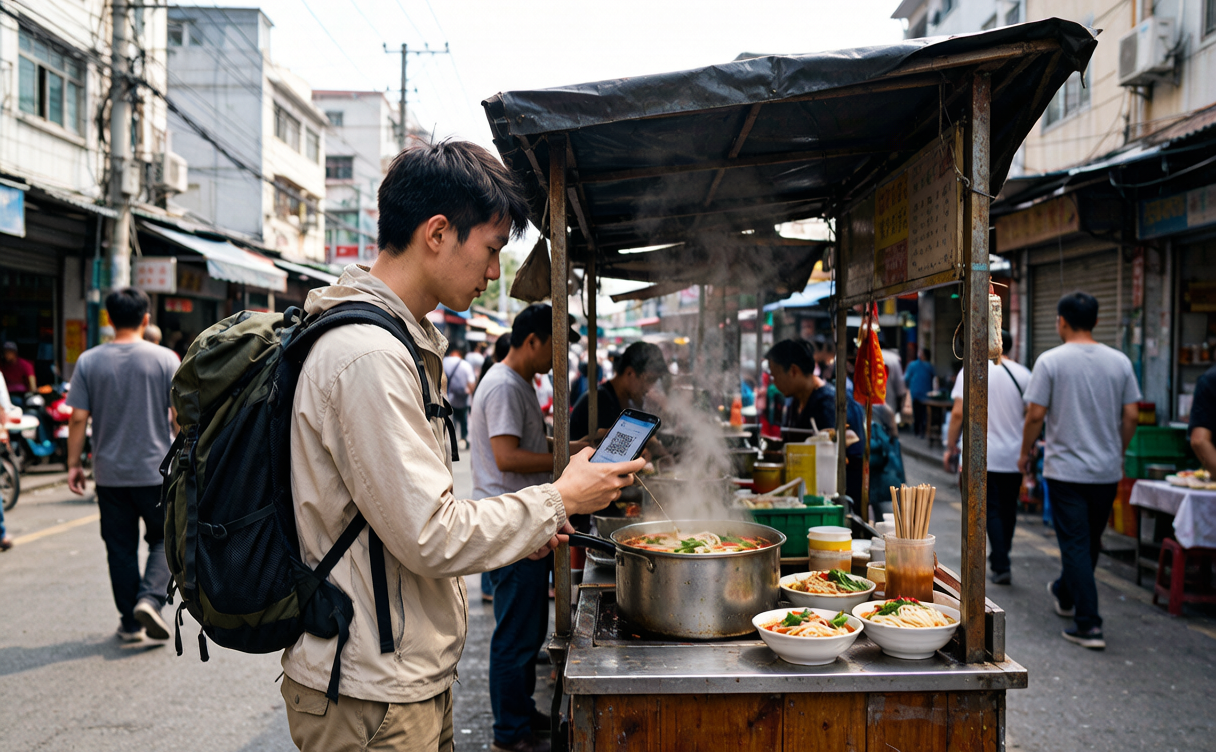
Food: eat like a local, pay local prices
The fastest savings lever is simply avoiding “English menu” restaurants near sights. Walk two blocks, find the place full of locals, and point at dishes — your meal drops from RMB 120 to RMB 40 per person. Street breakfast (jianbing, baozi, soy milk) is RMB 5–12. Use Alipay or WeChat Pay, which many small vendors discount implicitly by accepting (they often can’t process foreign cards at all). Our China travel safety tips note that roadside food in China is generally safe to eat — the bigger risk is spice levels, not hygiene.
Transport: the rail-and-metro rule
Within cities, the metro is RMB 2–7 and gets you everywhere; taxis start around RMB 14 and DiDi (the local Uber) is marginally cheaper and metered. Between cities, high-speed rail is both the comfortable and the cheap choice under ~1,500 km — see how it compares in our wider China travel guide. Book trains 10–15 days out for the cheapest fixed fares and skip domestic flights unless the rail leg exceeds 8 hours.
Attractions: free first, paid second
China has an unusually deep bench of free sights: public parks, most temples’ outer courtyards, historic streets, and city walls you can walk for RMB 0–54 (US$0–8). Paid headliners — the Forbidden City (RMB 60, US$8.50, free under-18s), the Terracotta Army (RMB 120, US$17), Zhangjiajie (RMB 225, US$32) — are fairly priced but add up across a trip. Buy combo or multi-day park passes where offered, and travel with a student or senior ID for half-price domestic discounts even as a foreigner at many state sites.
Money-saving tips that actually work
- Travel shoulder season. March–April and November dodge both the heat and the holiday price spikes; our best time to visit China maps the windows.
- Avoid the two golden weeks. Spring Festival and National Day (Oct 1–7) roughly double lodging and rail — the single biggest budget killer.
- Use a travel eSIM or local SIM instead of roaming; RMB 30–50 (US$4–7) gets a week of data versus RMB 30/day roaming.
- Carry a small cash buffer (RMB 200–300) for tiny vendors, though UnionPay and Alipay now cover almost everything.
- Book hotels and trains on Chinese platforms where prices are often lower than Western OTAs.
For card and currency logistics, the authoritative reference is UnionPay’s international site at unionpay.com, which lists acceptance and ATM withdrawal tips for visitors.
Sample daily budget: a mid-range day in Xi’an
- Hostel private room: RMB 160
- Breakfast jianbing + soy milk: RMB 12
- Metro all day: RMB 15
- Lunch noodles + dumplings: RMB 45
- Terracotta Army entry + shuttle: RMB 120
- Dinner local hotpot for two (split): RMB 70
- Evening bike on the city wall: RMB 45
- Total: ~RMB 467 (US$66) — comfortable, central, and memorable.
Practical Tips
- Download Alipay Tour Pass or link a foreign card before you fly; it’s the key to local prices.
- Set a daily cash ceiling and track in the app so small spends don’t blindside you.
- Eat your big meal at lunch, when set menus (RMB 30–50) beat dinner à la carte.
- Walk or metro between nearby sights; DiDi only for longer cross-town hops.
- Free museums (many excellent) are closed Mondays — plan paid sites around them.
- Traveling with kids? Our China family travel guide has child-specific budget lines like extra beds and attraction family tickets.
FAQ
Is China cheap to travel now?
Yes for food, transit and sights; lodging and intercity rail are moderate. A mid-range day runs US$69–124, a backpacker day US$24–42.
Can I use my foreign card everywhere?
Not at small vendors. Alipay/WeChat with a linked international card, plus UnionPay ATMs, cover nearly everything; carry a little cash.
What’s the biggest budget mistake visitors make?
Traveling during the two golden weeks and eating only at English-menu restaurants near sights — both roughly double costs.
Are hostels in China safe and clean?
Yes; international-brand and well-reviewed local hostels are clean, central and cheap (dorms RMB 60–120). Our China travel safety tips cover what to check.
Do attractions offer foreigner discounts?
Many state sites give half-price to students and seniors with ID; children under ~1.2 m often enter free. Ask at the box office.
How much should I budget for two weeks?
A mid-range solo trip runs about RMB 7,000–12,000 (US$1,000–1,700) plus international flights; a couple roughly double lodging and food.
Going deeper on a shoestring
When the major cities are done, the real China budget travel payoff comes from the interior, where the same RMB 40 noodle and RMB 120 room buy you far more scenery. Our off-the-beaten-path China guide lists towns where your dollar stretches furthest and things to do in China stay just as rich once you’ve sorted how to get to China.
Written by Karl Huang, updated August 2026.