

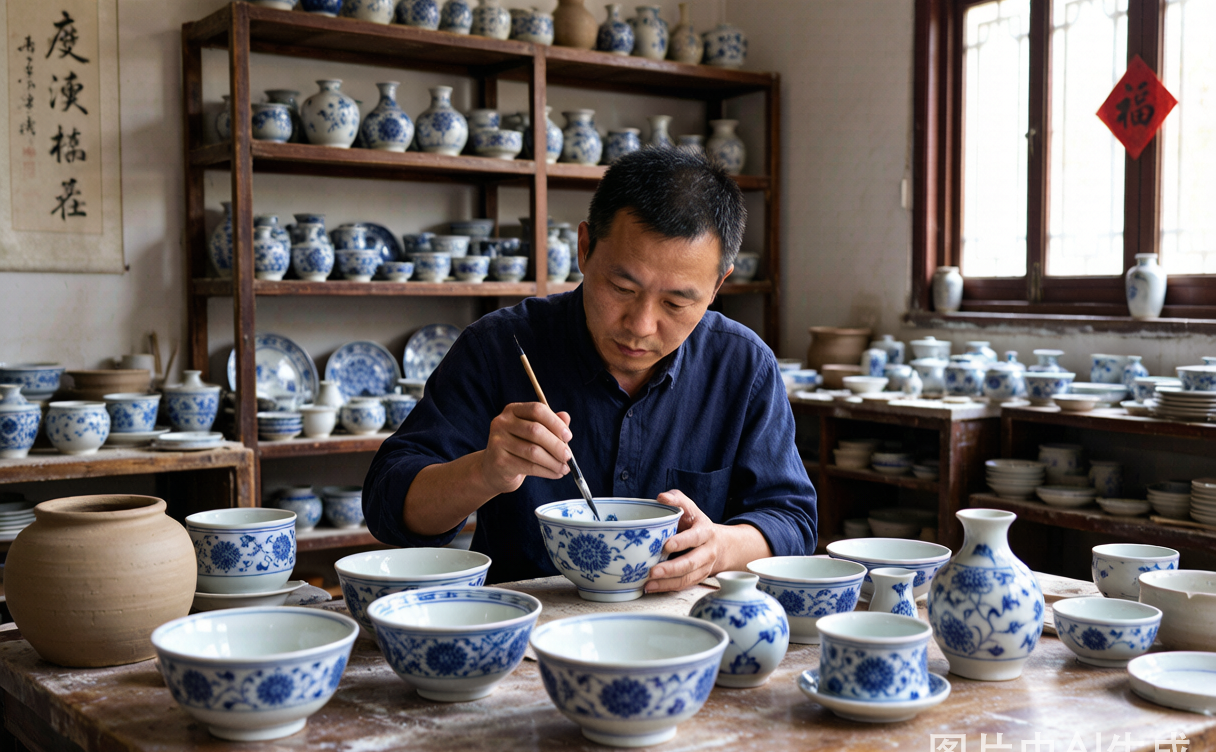
This Jingdezhen travel guide is for travelers who want to trade busy city itineraries for something hands-on and quietly beautiful. Tucked into the hills of northeastern Jiangxi province, Jingdezhen has been the heart of Chinese porcelain-making for more than 1,700 years. Known as the “Porcelain Capital,” it supplied the imperial courts and traded ceramics along the Silk Road and beyond. Today it is a relaxed, artsy town where you can watch masters at the wheel, try the craft yourself, and wander lanes lined with kilns, studios and teahouses.
Best Time to Visit
The best time to visit Jingdezhen is spring (March to May) and autumn (September to November), when temperatures are mild and the surrounding countryside is green. Spring also brings the rape-flower fields of nearby Wuyuan into bloom, making it a popular combination trip. Summers are hot and humid, with occasional heavy rain, while winters are cold and damp but rarely snowy. Because Jingdezhen is a small, indoor-friendly destination — most of its appeal is in studios and museums — it can be enjoyed year-round, but the shoulders seasons are most comfortable. For a broader picture, see our guide to the best time to visit China.
How to Get There
Jingdezhen is compact and easy to reach by rail or air.
By high-speed train: Jingdezhen North Station connects to the network. Trains from Nanchang take about 2–2.5 hours, from Hangzhou around 2.5–3.5 hours, and from Shanghai roughly 4–5 hours with a transfer. For ticketing and class tips, consult our China high-speed train guide for foreigners.
By air: Jingdezhen Luojia Airport (JDZ) has domestic flights from major cities including Beijing, Shanghai, Guangzhou and Shenzhen. From the airport, a taxi to the center takes about 30 minutes.
By bus and road: Buses link Jingdezhen with Wuyuan, Huangshan and other Jiangxi and Anhui towns, making it a natural stop on a scenic eastern-China loop.
Top Things to Do
The city rewards slow exploration, so leave time to simply wander and watch artisans work.
Ancient Kiln and Folk Customs Museum
This open-air museum is the best single introduction to Jingdezhen’s craft. You’ll see working dragon kilns, demonstrations of throwing and glazing, and exhibitions of classic wares. It brings the whole 1,700-year story to life. As Wikipedia notes, the city’s name itself comes from the Song emperor Zhenzong, who stamped imperial porcelain with its mark — a rare case of a place named for its product.
China Ceramic Museum
The city’s main museum holds a vast collection spanning dynasties, from Tang sancai to Ming blue-and-white and Qing court porcelains. Even if you know little about ceramics, the shapes, colors and craftsmanship are mesmerizing, and the labeling helps you trace how styles evolved.
Sanbao International Pottery Art Village
A few kilometers south of the center, Sanbao is where contemporary ceramic artists live and work. Cobbled lanes, a clear stream, and converted farmhouses turned studios give it a bohemian feel. Many workshops welcome visitors for a Jingdezhen pottery experience — you can sit at a wheel and make your own small bowl or cup, usually for around ¥80–150 including firing.
Yaoli Ancient Town
About an hour from the city, Yaoli is a well-preserved Ming-era water town set in wooded hills, said to be where the local porcelain clay was first discovered. It is calmer and less commercial than famous water towns, ideal for a half-day walk and a riverside lunch.
Studio Hopping in the Sculpture Factory Area
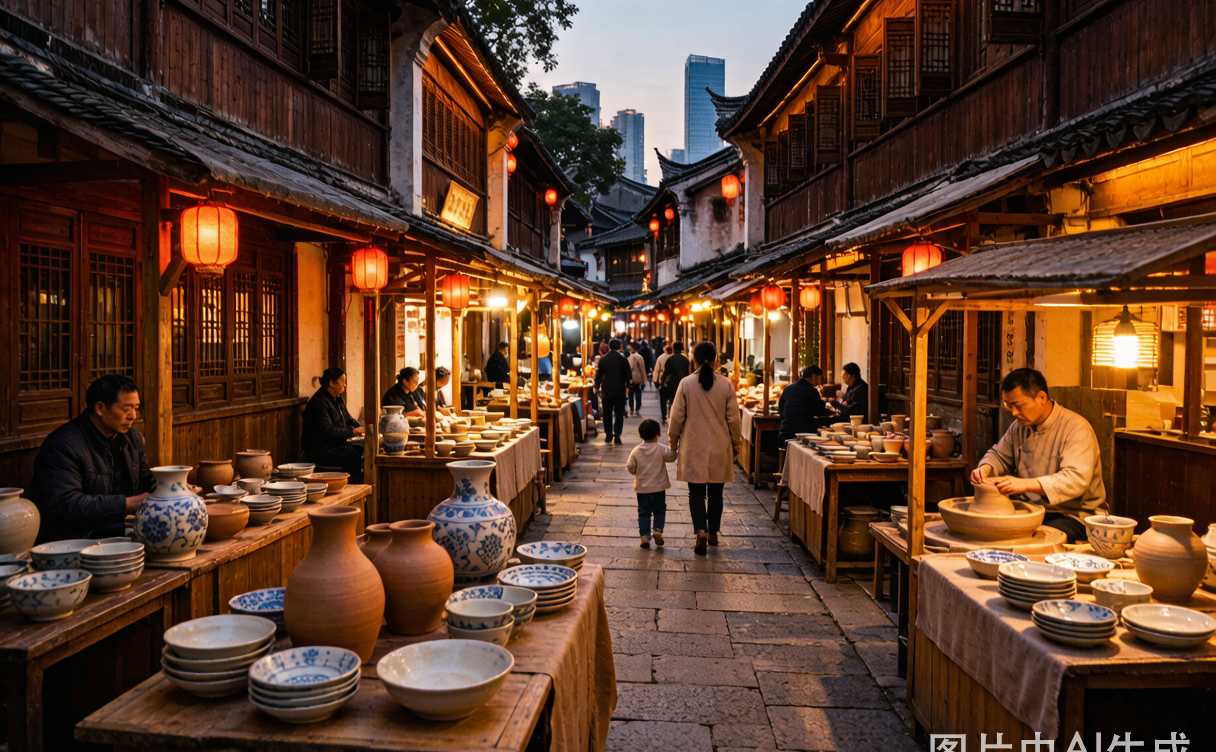
The old Sculpture Factory (Diaosu Ci) district has been reborn as a creative quarter of small galleries, cafes and studios. It is the best place in the evening to buy directly from young makers and watch the next generation of porcelain design take shape. For more national inspiration, browse our best things to do in China.
Where to Stay
Stay in or near the city center (Zhusan Road area) for easy access to the museums and the Sculpture Factory quarter. Boutique guesthouses and design hotels have multiplied in recent years, often run by ceramic artists themselves, with rooms from around ¥250–500 per night. If you want a quieter, more rustic feel, the Sanbao village has a handful of studio guesthouses where you sleep among the kilns.
Getting around Jingdezhen is easy because the sights cluster along a short north–south axis. Taxis and ride-hailing apps cover trips between the city center, the Ceramic Museum and Sanbao village for around ¥15–30, while local buses reach Yaoli for a few yuan. The Sculpture Factory quarter is best explored on foot in the evening once you have your hotel’s name written in Chinese characters. If you want to extend the trip, the West Lake Hangzhou guide region is a natural next stop to the north, and our China travel guide for first-timers has more on regional rail passes.
Food and Local Specialties
Jiangxi cuisine is among the spiciest in China, and Jingdezhen is no exception. Local specialties include clay-oven chicken, fried small river fish, and a pungent fermented tofu. A fun local habit is “cold noodles” (liang mian) eaten for breakfast, tossed with chili and peanut. Vegetarians will find plenty of mushroom and bamboo dishes from the surrounding hills. A filling meal at a local restaurant rarely costs more than ¥40–60 per person. These are exactly the kind of Jingdezhen travel tips that make the town memorable: come for porcelain, stay for the food.
Jingdezhen Travel Guide: Sample Itinerary
2-Day Jingdezhen Itinerary
- Day 1: Ancient Kiln Museum in the morning, Sculpture Factory quarter in the afternoon, studio dinner in the evening.
- Day 2: China Ceramic Museum, then a pottery class in Sanbao before departing.
3-Day Jingdezhen Itinerary
- Day 1: Kilns and museums in the city.
- Day 2: Full-day pottery experience and Sanbao village.
- Day 3: Day trip to Yaoli ancient town, or extend to the West Lake Hangzhou guide region if you are heading north.
Jingdezhen Travel Guide: FAQ
Is Jingdezhen worth visiting for foreign tourists?
Yes, especially if you enjoy crafts, history or slower travel. It is compact, friendly and genuinely unique — nowhere else lets you make imperial-quality porcelain by hand.
Can I try pottery in Jingdezhen?
Absolutely. Many studios offer short classes for beginners, and Sanbao village is the hub for a proper Jingdezhen pottery experience.
How many days do I need in Jingdezhen?
Two days covers the essentials; three lets you add a countryside or ancient-town trip.
How do I get to Jingdezhen from Hangzhou or Shanghai?
High-speed trains run from both, with a transfer sometimes needed; flights from Shanghai are also an option.
Closing
A good Jingdezhen travel guide leaves you with clay under your fingernails and a new appreciation for one of China’s oldest continuous crafts. Whether you come to watch the masters, shop for a teaset, or throw your own pot, the Porcelain Capital rewards curiosity over checklist sightseeing. If this is your first trip to the country, start with our China travel guide for first-timers and weave Jingdezhen into a relaxed eastern-China route.