

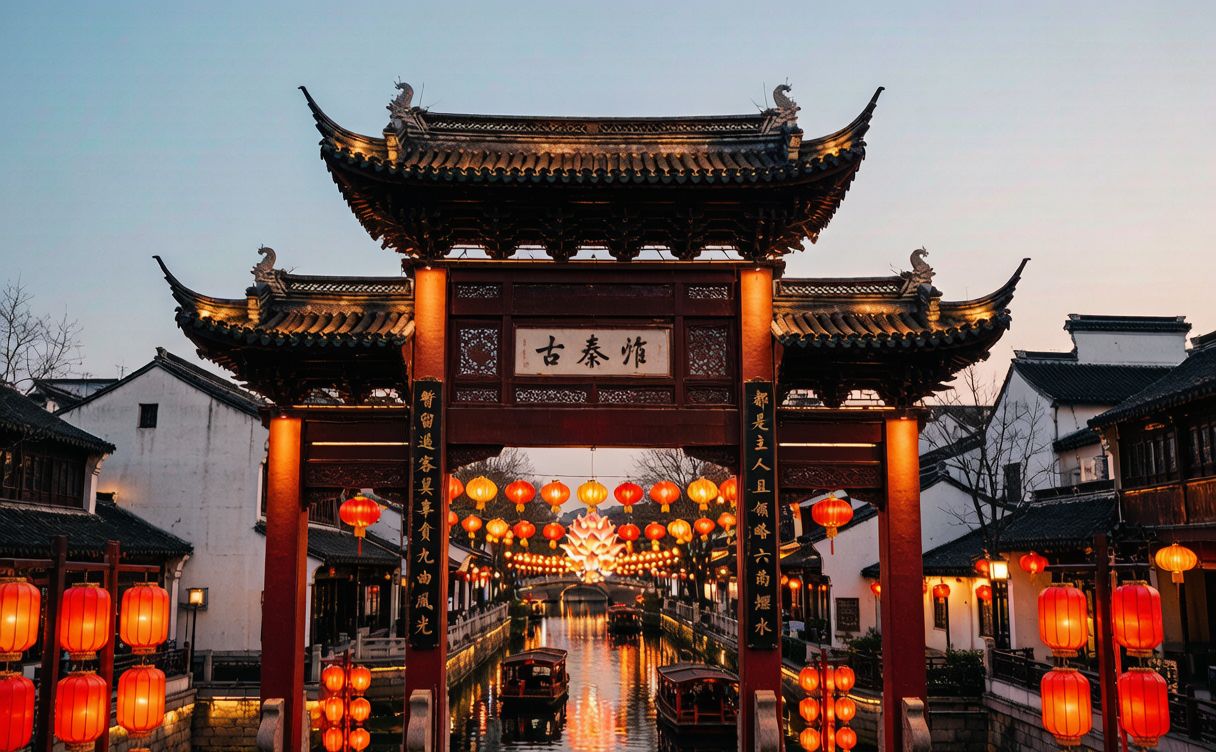
The first time I visited Nanjing, I made the mistake of treating the Confucius Temple as just another old building on my list. I walked in around noon, took a few photos of the yellow-tiled roofs, and left. It was fine. What I missed was the entire reason people actually love this place: the Nanjing Confucius Temple (Fuzimiao) is not really a temple you “do” — it’s a riverside district that wakes up after dark, when the lanterns along the Qinhuai River switch on and the whole strip turns into the busiest, happiest street food scene in the city.
I went back two nights later, this time at sunset, and the difference was night and day. If you only take one thing from this guide, let it be this: Fuzimiao Nanjing is an evening attraction. Plan your visit for late afternoon and stay until the lanterns are glowing.
Getting There
The easiest way in is the metro, and it drops you almost at the gate. Take Nanjing Metro Line 3 to Confucius Temple Station (Fuzimiao Station / 夫子庙站) — use Exit 2 or 3 and you’ll be on the pedestrian streets within a three-minute walk. I’ve done this route with a rolling suitcase and a tired eight-year-old, and it’s genuinely stress-free.
If you’re coming from the high-speed rail station (Nanjing South), Line 3 runs directly there with no transfer, which is a relief after a long train ride. From the airport, take the metro to Nanjing South first and change to Line 3. Taxis and Didi are easy too, but the old-city streets around the temple are pedestrianized, so your car will drop you a block away regardless.
Pro tip: Save the Chinese name 夫子庙 and the address in your maps app before you leave the hotel. “Nanjing Temple” is a vague search term — locals will know Fuzimiao instantly, but the English pin can be unreliable.
What to See
The temple itself, formally the Fuzimiao, was first built in 1034 during the Song dynasty and has been rebuilt several times after fires and war. The part you pay to enter centers on Dacheng Hall (大成殿), the main hall, which holds a large seated statue of Confucius and a wall carving of the sage’s life. It’s a quiet, slightly solemn space compared to the chaos outside, and I found it a nice reset between food stops.
Around the temple are the Xuegong (Confucian Academy) buildings and a small museum area. Honestly, the indoor exhibits are modest. The real draw is the layout: a walled compound right on the water, with the Qinhuai River rushing past just beyond the back wall. Walk the outer lanes and you’ll see the Pan Pond with its half-moon bridge — that’s the classic postcard shot, and it’s free to photograph from the path.
If you want the best overview of the whole complex without the crowds, climb the nearby Zhonghua Gate (Zhonghuamen), the massive Ming-dynasty castle gate about a 15-minute walk south. I did this on my second trip and it gave me a real sense of how the old city was walled off from the river.
For a deeper Nanjing itinerary that strings this together with the city wall, the mausoleum, and the massacre memorial, see our Nanjing travel guide.
Qinhuai River Cruise
This is the single thing I tell every first-time visitor not to skip. The Qinhuai River cruise is a short, circular boat ride that leaves from a dock right by the temple and loops through the lit-up canal district for about 20 to 30 minutes. You sit low in a small boat, glide under stone bridges, and look up at the painted buildings and red lanterns leaning over the water.
Tickets are sold at the dock and cost roughly 80 RMB for the evening ride — prices go up a little on holidays. Boats run until around 10 pm in summer. I’d budget for the night cruise specifically; the daytime version is fine but loses most of its magic without the lights.
What I learned the hard way: the queue gets long after 7:30 pm, especially on weekends. Buy your ticket when you arrive, even if you plan to eat first, then come back at your boarding time. The boats are open-sided, so bring a light layer in spring and autumn — the river breeze is real.
Food Street
The Fuzimiao food street is the heart of the experience, and it’s where the Qinhuai River walk earns its reputation. The pedestrian lanes behind the temple are lined with stalls and small restaurants selling Nanjing specialties. The ones I kept going back for:
- Tangbao (soup dumplings) — bigger and brothier than Shanghai xiaolongbao, with a thick stem on top. Bite, sip, then eat.
- Saltwater duck (salty duck / 盐水鸭) — Nanjing’s signature dish; mild, tender, and sold by the quarter at deli counters.
- Stinky tofu and grilled skewers — for the brave; the smell is half the fun.
- Eight-treasure porridge and sweet osmanthus rice balls — easy wins if you’ve got kids or a sweet tooth.
Prices on the main strip are a little higher than a normal Nanjing block, but not outrageous. I usually grab one item per stall and share, which keeps the cost down and the variety up. Most vendors take Alipay or WeChat Pay; a few still take cash, so it’s worth carrying a little pocket money for the smallest stalls. If mobile pay is new to you, set it up before you leave home — it saves a lot of friction when a skewer seller has no change.
Want a calmer, greener side of Jiangsu after the Fuzimiao crowds? The Suzhou Humble Administrator’s Garden is under an hour west by high-speed train and pairs naturally with a Nanjing stop on the same trip.
If you love this kind of riverside eating scene, it’s a different flavor from the Muslim-quarter grills of the northwest — compare notes with our Xi’an Muslim Quarter food guide.
Tips
A few practical things that made my visits smoother:
- Go on a weekday evening if you can. Friday and Saturday nights are packed shoulder-to-shoulder. Tuesday or Wednesday was noticeably calmer on my last trip.
- Time your arrival for 4:30–5:00 pm. You’ll catch the temple in daylight, watch the lanterns switch on around 6, and still beat the dinner cruise rush.
- Wear comfortable shoes. The lanes are flat stone and easy to walk, but you’ll cover more ground than you expect.
- Combine it with a walk north along the river toward the Taoye Ferry area if you want quieter photo spots away from the main crowd.
- Avoid the “teahouse show” hard sells near the docks unless you’ve looked up the price. The boat cruise is the better-valued experience.
- Pair it with a museum day. If you want a world-class collection while you’re in the region, the Shanghai Museum guide covers one of China’s finest, about 1.5 hours east by train — a good contrast to Fuzimiao’s open-air atmosphere.
- Don’t over-plan the temple interior. I spent maybe 25 minutes inside Dacheng Hall and the academy on my best visit. The memory you’ll keep is the river at night, not the exhibits, so leave your schedule loose.
For wider planning, the Fuzimiao pairs well with other classic water towns and garden cities — our roundup of the best ancient towns in China has good add-ons nearby.
Good to Know
The Fuzimiao district is open all day, but individual halls (Dacheng Hall, the academy) keep roughly 9:00 am – 9:00 pm hours, with last entry around 8:30 pm. Entry to the temple compound is ticketed (around 30 RMB), while the surrounding streets and riverfront are free to wander. The area is safe, well-policed, and stroller-friendly, though the evening crowds can be a lot for very small children.
For official opening times, event schedules, and any seasonal lantern-festival closures, check the Nanjing municipal tourism information before you go.
Author’s note: I’ve now visited Fuzimiao three times across different seasons, and the evening river walk is the one constant I’d repeat every single trip. Come for the temple, stay for the lanterns, leave full of soup dumplings.