

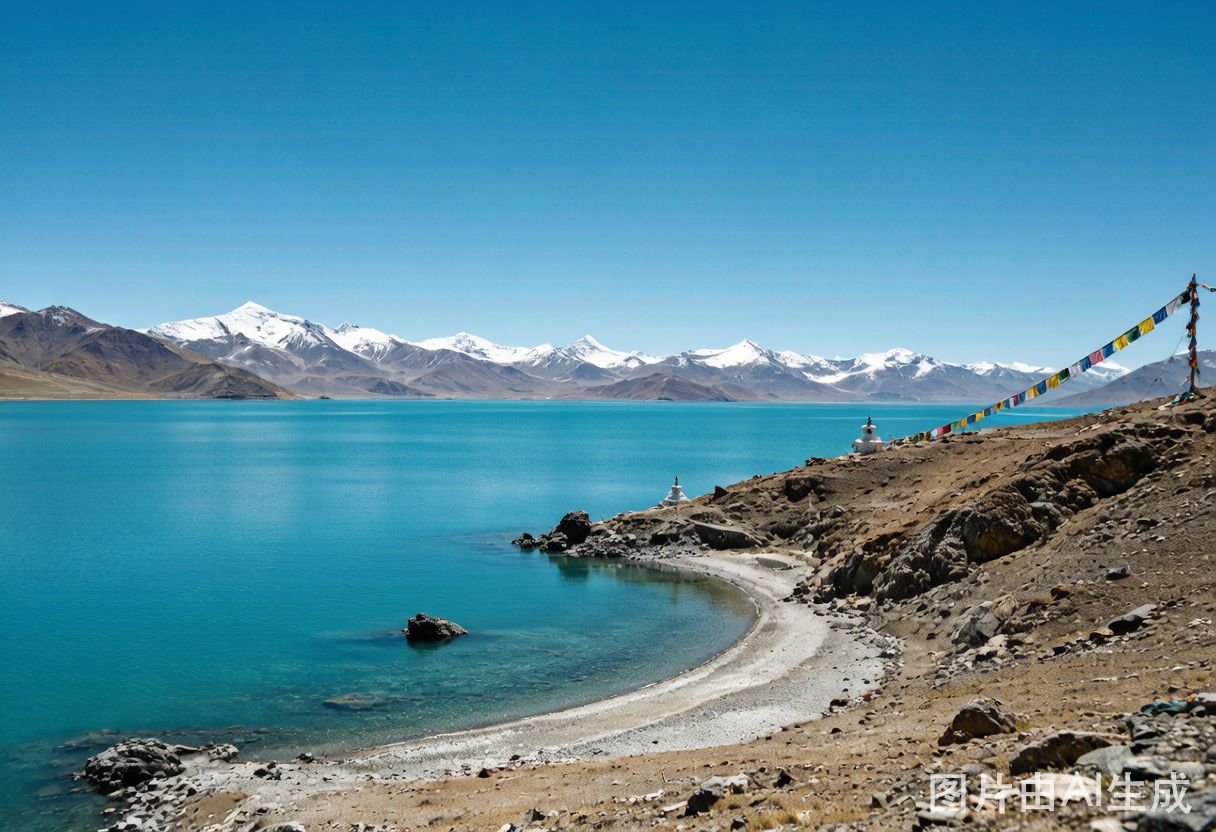
The first time I saw Namtso Lake, Tibet, China, I stopped talking. We had driven for hours through a windswept valley, the road climbing past prayer-flag-draped passes, and then the land simply opened — a sheet of water so blue it looked painted, ringed by snow peaks that seemed close enough to touch. At 4,718 metres above sea level, this is one of the highest saltwater lakes on the planet, and the thin air does nothing to soften the scale of it. Locals call it “Heavenly Lake.” This guide is everything I wish I’d known before my own first trip: how to get there from Lhasa, Tibet, China, when to go, how to survive the altitude, and where to rest your head.
Getting There: The Road from Lhasa, Tibet, China
Most travellers begin in Lhasa, Tibet, China, the natural gateway to the central Tibetan plateau. From the capital it’s roughly 240 kilometres to the lakeshore, but distance here is misleading — the journey takes four to five hours each way because the final stretch climbs over the 5,190-metre Lakenla Pass before dropping toward the water.
I always recommend hiring a private car or joining a small-group tour rather than attempting public transport. The road is paved and in decent shape, but it threads through high passes where weather turns on a dime, and a local driver knows exactly when the mountain light is worth pulling over for. The route passes through Damxung County, the last real town of any size before the lake, and then follows the northern road toward the Tashi Dor peninsula, the most visited corner of the lake.
A practical note: foreign visitors need a Tibet Travel Permit on top of a Chinese visa, and that permit can only be arranged through a registered Tibetan travel agency as part of a guided trip. You cannot simply rent a car and drive yourself. I’ve written a full Lhasa, Tibet, China planning guide that walks through permits and timing, and our Potala Palace guide has ticket and acclimatisation tips before you head north.
Best Time to Visit
Namtso is a place of extremes, and timing decides whether you get a postcard or a whiteout. The lake freezes solid from late November through early April, and the access road over Lakenla Pass is often snowbound and closed in deep winter. I’ve stood at the pass in May and watched impatient travellers turned back by a wall of sleet.
The reliable season runs mid-May to mid-October. Within that window:
- June to August is the warmest and greenest, with wildflowers carpeting the high meadows and the lake fully thawed. This is also peak season — expect more visitors and higher prices.
- September to early October is my personal favourite. The summer crowds thin, the skies turn a relentless deep blue, and the air is crisp without being brutal. The reflections of the Nyenchen Tanglha range on a still morning are unforgettable.
- May and late October are shoulder months: cheaper and quieter, but colder nights and a higher chance of a closed pass.
For a lower-altitude plateau lake first, the Qinghai Lake guide covers another spectacular saltwater lake a day’s flight northeast.
Altitude: Respecting 4,718 Metres
Let me be blunt, because this is the part first-timers underestimate. At 4,718 metres, Namtso is higher than almost any other tourist destination in China. The air holds barely half the oxygen you’re used to. On my first visit I felt fine in Lhasa (3,650 m) and assumed the extra 1,000 metres would be trivial. It was not. By the time we reached Tashi Dor I had a pounding head, zero appetite, and the kind of breathlessness that made a short walk to the lakeshore feel like a marathon.
Here’s what actually works:
- Spend at least two full days in Lhasa, Tibet, China before driving up. Acclimatise properly. Climb stairs slowly, skip the alcohol, and drink more water than feels reasonable.
- Ascend gradually. If you can, overnight in Damxung (around 4,200 m) on the way up rather than pushing straight to the lakeshore.
- Move slowly at the lake. The urge to run to the water’s edge for a photo is real and unwise. Walk like you’re underwater.
- Know the warning signs. A mild headache is normal; persistent vomiting, confusion, or breathlessness at rest is not. Descend immediately if symptoms worsen.
- Consider medication. Many travellers use acetazolamide (Diamox) starting a day before ascent; talk to your doctor before the trip. I also carried a small oxygen canister, which helped on the pass.
I don’t say this to scare you off — Namtso rewards the cautious. Our China travel insurance guide explains why altitude coverage and emergency evacuation should be non-negotiable on a Tibet itinerary.
What to Pack for the Holy Lake
The plateau weather is a performance artist — sun, wind, hail, and silence can all appear in an hour. Pack for four seasons in a day:
- A genuinely warm jacket. Even in July, the lakeshore dips near freezing after dark. A down or heavy fleece layer is essential.
- Wind and rain shell. The wind off the lake is relentless and carries fine spray. A proper waterproof outer layer beats a cute umbrella every time.
- Strong sunglasses and high-SPF sunscreen. At this altitude UV burns fast; the glare off the water doubles it. I learned this the hard way.
- Lip balm and moisturiser. The dry air cracks skin within a day.
- Sturdy, closed shoes. The shoreline is rocky and uneven; the famous meditation caves near Tashi Dor involve some scrambling.
- Reusable water bottle and snacks. There are basic stalls but no reliable restaurants at the lake itself.
- Cash in small notes. Mobile payment works in Damxung, but lakeside vendors and toilet attendants often prefer cash.
- A scarf or buff. Useful for dust, cold, and respectfully covering up at religious sites.
If you’re building a broader China kit, adapters and a local SIM card are the other essentials beyond the plateau-specific gear above.
Where to Stay: Damxung and the Lakeshore
Accommodation near Namtso splits into two realistic options, and I’ve tried both.
Damxung (Dangxiong) County is the practical base. It sits at around 4,200 metres, has the most reliable hotels, hot meals, and a Tibetan-town feel that’s worth an evening wander. Rooms are simple — clean but thin-walled, with intermittent heating — but after a day at the lake a real bed at a lower altitude is a gift to your body. I stayed here on my second trip and slept far better than lakeside.
Lakeshore guesthouses at Tashi Dor put you steps from the water for sunrise, which is magical. They are basic to the point of rustic: shared squat toilets, sporadic hot water, and sometimes no heating beyond a blanket pile. The trade-off is worth it only if you’re well acclimatised and prioritise photography over comfort. On my first visit I slept lakeside and regretted the thin walls at 2 a.m. when the wind picked up; on the other hand, stepping out at 5:30 a.m. to a mirror-still lake was the single best moment of the whole trip.
Book Damxung ahead in July and August — rooms fill fast. Expect warmth of a different kind from Tibetan hosts who’ve seen every kind of traveller come through.
What to Do at Namtso, Tibet, China
Tashi Dor peninsula is the heart of most visits. A short walk climbs to a cluster of meditation caves where pilgrims have prayed for centuries, and the rocky spur jutting into the lake is the classic viewpoint. I spent a long, uselessly happy hour just watching the colour shift from steel blue to violet as clouds moved.
Beyond the peninsula:
- Walk the shoreline. The lakeshore stretches for over 70 kilometres of trekking if you’re fit and acclimatised. Most visitors content themselves with the first few hundred metres, which is plenty.
- Photograph the prayer flags. Tibetan pilgrims string thousands of flags along the ridges; the contrast of colour against white peaks is the image everyone takes home.
- Respect the pilgrimage. Namtso is one of Tibet’s great sacred sites, and you’ll likely see devotees circling the peninsula. Keep your distance and ask before photographing people.
- Stargaze. With near-zero light pollution and thin air, the night sky here is among the best I’ve seen anywhere.
A Note on Permits and Responsible Travel
I mentioned the Tibet Travel Permit above, but it bears repeating: foreign tourists cannot visit Namtso independently. You’ll need a Chinese visa, the Tibet Travel Permit arranged by a licensed agency, and usually a military border area permit for this region. Build this into your plans at least three weeks ahead. The same agency that handles Lhasa can usually bundle the Namtso day or overnight trip.
On the ground, travel lightly and leave nothing behind. The lake is both a protected nature reserve and a living place of worship. I’ve picked up more plastic than I care to admit left by careless travellers; don’t be that person. Support local guesthouses and food stalls rather than imported chains, and you’ll get a warmer, more honest version of the plateau.
For context on the wider region and how Tibet fits into a multi-province China route, our Xi’an travel guide is a natural next stop if you’re flying the classic Beijing–Xi’an–Lhasa arc, and the Kunming guide helps if you’re looping down through Yunnan afterward.
For authoritative background on the lake’s geography and ecology, the Encyclopaedia Britannica entry on Namtso is a solid, neutral reference: https://www.britannica.com/place/Namtso.
Final Thoughts
Namtso Lake, Tibet, China is not an easy destination, and that’s precisely why it stays with you. The altitude is a genuine adversary and the facilities are modest. But few places deliver a horizon like this — water meeting snow at the roof of the world, quiet enough that you can hear your own pulse. Give the mountain its due, pack for every season, and let Lhasa, Tibet, China prepare your lungs before you go. Do that, and the Heavenly Lake will hand you one of the great travel days of your life.