

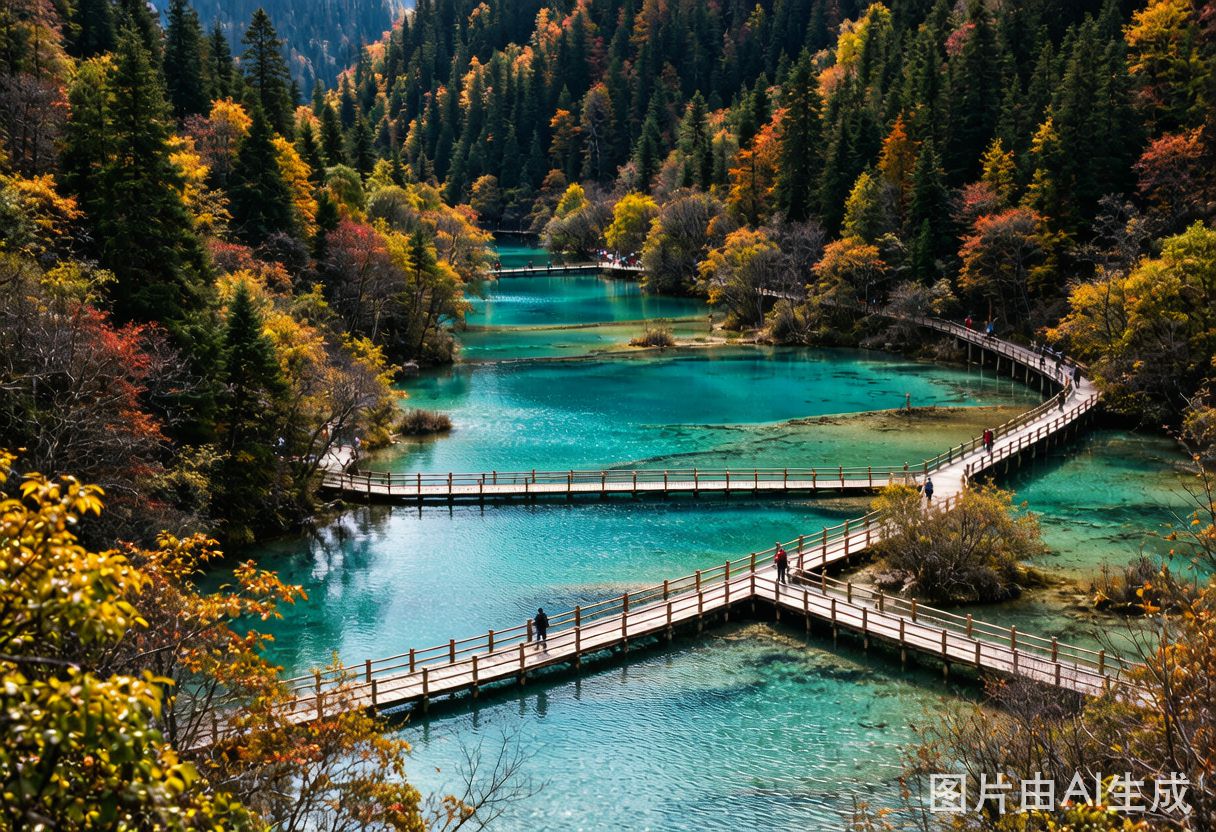
I still remember the first time I stepped off the shuttle bus at the Five Flower Lake (Wuhua Hai) in Jiuzhaigou. The water was so clear and so unnaturally turquoise that my first instinct was to check whether someone had tinted it for a film set. They hadn’t. This is just what happens when calcium carbonate, alpine moss, and a depth of around five meters combine in a protected valley at 2,500 meters above sea level. As a travel writer who has dragged his backpack across most of China, I can tell you honestly: Jiuzhaigou and the neighboring Huanglong reserve are two of the most photogenic places on the entire Sichuan plateau, and they deserve a spot on any serious China itinerary.
This guide is written from my own boots-on-the-ground experience, plus the practical lessons I wish someone had handed me before my first trip. I’ll cover what makes the two parks different, the best season to visit, how to get there from Chengdu, altitude and permits, and a realistic itinerary you can actually follow.
What Makes Jiuzhaigou Special
Jiuzhaigou Valley (“Nine Village Valley”) is a UNESCO World Heritage Site in northern Sichuan, China. It stretches about 50 kilometers along a Y-shaped valley and is dotted with more than 100 alpine lakes, dozens of multi-tier waterfalls, and forests of virgin fir and spruce. The local name comes from the nine Tibetan villages that once sat inside the valley. Today most residents have been relocated outside the park, but their heritage remains everywhere you look — prayer flags flutter above the lakes, and the wooden homes near the gates are still tended by families of the Tibetan areas of Sichuan, China.
The signature of Jiuzhaigou is its water. Because the lakes sit on porous limestone and are fed by snowmelt, the water is filtered to a near-absurd clarity. Sunlight hits submerged calcium deposits and mineral-tinged logs, scattering into blues, greens, and ambers that shift with the hour. The most famous stops — Five Flower Lake, Long Lake (Chang Hai), and the Pearl Shoal Waterfall — are crowd magnets for good reason, but my personal favorite is the Mirror Lake at dawn, when the surrounding peaks lie perfectly still on the surface.
Huanglong: The Golden Travertine Terraces
About two hours’ drive from Jiuzhaigou sits Huanglong (“Yellow Dragon”), and if you only have time for one of the two, go to Jiuzhaigou — but if you can manage both, Huanglong is the quieter, stranger sibling. Its claim to fame is a vast system of travertine terraces: natural limestone pools that step down the mountainside like a giant’s staircase, each one filled with water that glows banana-yellow, jade, and sky-blue. The effect is caused by mineral-rich hot springs depositing calcium carbonate over thousands of years.
The main walk is a steady climb from around 3,200 meters to the top terrace at roughly 3,550 meters, then you can either walk back down or, wisely, take the cable car. I learned the hard way that the thin air at Huanglong is no joke — even fit travelers get winded. Pace yourself, and don’t be shy about the cable car on the way up if your lungs complain.
Best Season: Autumn Is Peak
Let me be direct: late September through late October is the best window, full stop. That’s when the surrounding forests turn gold, crimson, and orange, and the contrast against the blue lakes is the postcard everyone came for. I’ve been in both autumn and summer, and autumn wins by a mile.
That said, each season has a personality:
– Spring (April–May): Fewer crowds, budding green, but some high lakes still partly frozen.
– Summer (June–August): Lush and rainy; waterfalls are at full roar, but it’s the busiest domestic-tourist period after autumn.
– Autumn (late Sept–late Oct): Peak color, peak crowds, peak beauty. Book everything early.
– Winter (Nov–March): Quiet, cheap, and magical when snow lines the lakes, though some sections close and it’s bitterly cold.
If you’re building a broader seasonal plan for the country, our best time to visit China guide breaks down regional weather month by month and helps you dodge the biggest domestic-holiday crowds.
Getting There From Chengdu
Chengdu is the natural gateway. I’ve done this route both ways, and here’s the honest comparison.
By air (fastest): Chengdu Tianfu or Shuangliu airport has daily flights to Jiuzhaigou Huanglong Airport (JZH), near the town of Chuanzhusi. Flight time is about 45–60 minutes. From the airport it’s roughly a 90-minute drive to Huanglong and two hours to Jiuzhaigou’s gate. Book early in autumn — seats sell out.
By bus (scenic but long): Overnight or daytime long-distance buses run from Chengdu’s Xinnanmen or Chadianzi stations to Jiuzhaigou town. Expect 8–10 hours on winding mountain roads. I did this once and loved the roadside Tibetan areas of Sichuan, China scenery, but my back disagreed the next day. Fine for budget travelers; not fine if you’re prone to motion sickness.
My recommendation: Fly one way, bus the other if you want the experience, or join a small-group tour that handles the transfers. Most first-timers base themselves in Jiuzhaigou town (Zhangzha) right outside the gate, which has the hotels, the nightly Tibetan-Qiang song-and-dance shows, and the restaurants.
Before you fly, sort your base city logistics with our Chengdu travel guide, and if you want pandas and city food in the same trip, the Chengdu pandas and city guide is a natural pairing.
Permits, Tickets, and Altitude
Good news first: foreign tourists do not need a special permit to enter Jiuzhaigou or Huanglong. You need a valid China visa or visa-free entry, and you buy park tickets like anyone else. Tickets are sold online and at the gate, but in peak season I strongly advise buying in advance through the official park platform or a reputable agent, because daily caps can shut the gate when it’s full.
Now the part people underestimate: altitude. Jiuzhaigou’s valley floor is around 2,000–2,500 meters and most visitors are fine. Huanglong starts higher, around 3,200 meters, and the top terrace pushes past 3,500. Symptoms of mild altitude sickness — headache, breathlessness, poor sleep — are common. My rules: arrive a day early and sleep low, hydrate aggressively, skip the alcohol the first night, and consider a can of oxygen from any town pharmacy if you’re nervous. If you have heart or respiratory conditions, talk to your doctor before booking.
I never travel the plateau without proper coverage. Our China travel insurance recommendation explains what to look for, including altitude-related evacuation.
Tibetan and Qiang Minority Culture
The valley’s soul is its people. The Tibetan and Qiang (pronounced “Chiang”) communities have lived in these mountains for centuries, and while the park itself is now a protected zone, the towns and villages around it are living cultures. In Jiuzhaigou town you’ll find evening performances of Tibetan throat-singing and Qiang polyphonic folk songs, yak-butter tea in family guesthouses, and stone towers built in the distinct Qiang style. I spent an unforgettable evening in a wooden courtyard watching a family roast barley and explain how their ancestors traded salt along the old routes through the Tibetan areas of Sichuan, China.
Be a respectful visitor: ask before photographing people, don’t walk on the prayer-flag shrines, and buy handicrafts directly from makers rather than the generic souvenir stalls. A little courtesy goes a long way in these close-knit mountain communities.
A Practical 3-Day Itinerary
Here’s the rhythm I’d suggest if you have three full days:
Day 1 — Arrive and acclimate. Fly into JZH, transfer to Jiuzhaigou town, check in, and take it easy. A short wander through the local market and an early night beats any ambitious plan. Let your body adjust to the altitude.
Day 2 — Jiuzhaigou Valley (full day). Enter at opening (the gate crowds build fast). Take the shuttle to the top of the Rize Valley, walk downhill past Five Flower Lake and Pearl Shoal, then loop the Shuzheng and Zechawa branches. Total walking is moderate but long; wear good shoes. Exit for a Tibetan cultural show in the evening.
Day 3 — Huanglong, then depart. Morning drive to Huanglong, take the cable car up, walk the terraces slowly, and descend. Afternoon transfer back to the airport or begin the bus journey to Chengdu. If your flight is the next day, overnight in Chuanzhusi.
If you want to extend westward into the wider plateau, our Jiuzhaigou travel guide has deeper logistics, and the Chengdu Jinli and Kuanzhai guide is perfect for a relaxed final day in the city before you fly home.
Karl’s Bottom Line
Jiuzhaigou and Huanglong are not “just lakes and waterfalls” — they’re a masterclass in how clear water, mineral geology, and mountain light can conspire to stop you in your tracks. Go in autumn if you possibly can, give yourself a day to adjust to the altitude, and don’t rush the villages. The valley rewards slow feet and an open camera.
For official, up-to-date park information, opening hours, and conservation rules, the UNESCO World Heritage Centre maintains the designation record here: Jiuzhaigou Valley Scenic and Historic Interest Area — UNESCO.