

The qing dynasty (1644-1912) was the final imperial dynasty to rule China, a span of nearly 270 years that closed the country’s two-millennia-long era of emperors. Founded by the Manchu people from Manchuria in the northeast, the qing chinese dynasty expanded China’s borders further than any earlier regime, presiding over a golden age of population growth, trade, and art before it met the pressures of the modern world. For travelers today, the legacy of the qing empire is everywhere you look in Beijing: behind the vermilion walls of the Forbidden City, along the stone ramparts of the Great Wall, and inside quiet palace museums where imperial dragon robes still glow with gold thread. This guide explains who the Manchu were, when the dynasty ruled, and how to see its monuments on your own China trip.
Who Were the Manchu?
The manchu ethnic group was a nomadic and semi-settled people from Manchuria, the forested northeast region that borders modern Russia and Korea. They descended from earlier Jurchen groups and spoke a Tungusic language distinct from Chinese. In the early 1600s, a Manchu leader named Nurhaci united the scattered tribes and built a state that his successors would turn into a conquest of China proper.
What made the manchu unusual as rulers was their ability to govern a vast Han-majority population while preserving their own identity. Qing emperors required top officials to learn Manchu, maintained separate banner armies, and enforced a queue hairstyle as a symbol of loyalty. Yet they also adopted Confucian rituals, sponsored the civil service exams, and presented themselves as legitimate Chinese emperors. This blend of steppe and Chinese traditions is a big reason the qing empire lasted so long.
Today you can trace Manchu history in Shenyang, the old Manchu capital, and in Beijing’s imperial compounds. The Summer Palace and the Forbidden City both reached their fullest form under Qing patronage, and both are easy to reach on a standard Beijing itinerary.
When Did the Qing Dynasty Rule?
The qing dynasty ruled from 1644 to 1912. The Manchu captured Beijing in 1644 after the collapse of the Ming, and the last emperor, the child Puyi, abdicated in 1912 as the Republic of China was founded. That makes the Qing the longest-lived of the conquest dynasties and the last of all Chinese imperial houses.
The timeline breaks into a few clear chapters:
- Early Qing (1644-1722): Consolidation of power, massive maps, and the defeat of rival regimes in the south and west.
- High Qing (1722-1796): The reigns of the Kangxi, Yongzheng, and Qianlong emperors, a time of territorial peak, population boom, and court splendor.
- Late Qing (1796-1912): Opium Wars, foreign treaties, internal rebellions, and reform movements that could not save the throne.
If you want the full sweep of Chinese imperial history in one place, the Xi’an Shaanxi History Museum holds artifacts that bridge the dynasties, including pieces from the Manchu era.
The Qing Empire and the Forbidden City
The Forbidden City in Beijing was the political heart of the qing empire for more than 250 years. Built originally by the Ming, it was where Qing emperors held court, married, and performed the rituals that linked heaven and earth. The complex of nearly 1,000 buildings is the largest wooden palace complex on earth, and its layout reflects Qing ideals of order and hierarchy.
Walking through the Outer Court and the Inner Court, you pass the Hall of Supreme Harmony, where emperors received envoys, and the Palace of Heavenly Purity, where they slept. The ch’ing dynasty added its own touches: Manchu inscriptions set beside Chinese ones, plus a network of gardens and libraries. Because the palace is so central to the story, we recommend planning ahead with our Forbidden City tickets & guide.
[CTA]Walk the halls of the Qing emperors, then get your Forbidden City tickets & guide.[/CTA]
Just outside the city, the Qing also built the Summer Palace, Beijing, a lakeside retreat of pavilions and long painted corridors that shows the softer, leisure side of imperial life.
Qing Dynasty Architecture and the Great Wall
The Qing did not build the Great Wall, but they controlled it and the passes that defined China’s northern frontier. The wall you see today was largely repaired and garrisoned during the Ming and then kept by Qing troops. Standing on a restored stretch such as Mutianyu or Badaling, it is easy to imagine the banner armies patrolling the line between the steppe and the farmlands.
For travelers, the Great Wall of China guide is essential reading before you go, covering which sections are easiest to reach from Beijing and how to avoid the biggest crowds.
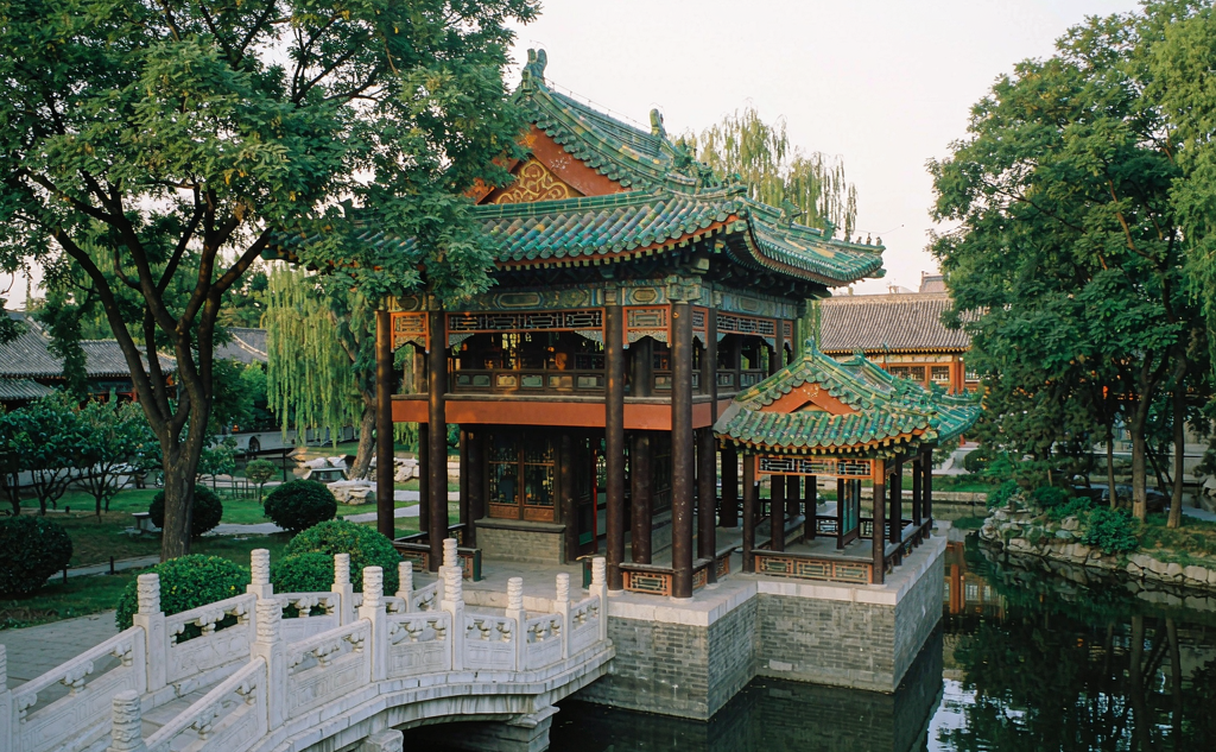
Beyond walls and palaces, Qing architecture favored symmetry, sweeping tiled roofs, and enclosed courtyards known as siheyuan. Many survive in Beijing’s hutongs, the narrow alley neighborhoods that once housed officials and commoners alike.
[CTA]Stand where the Qing banner armies kept watch, and plan your route with the Great Wall of China guide.[/CTA]
Manchu Culture and Daily Life
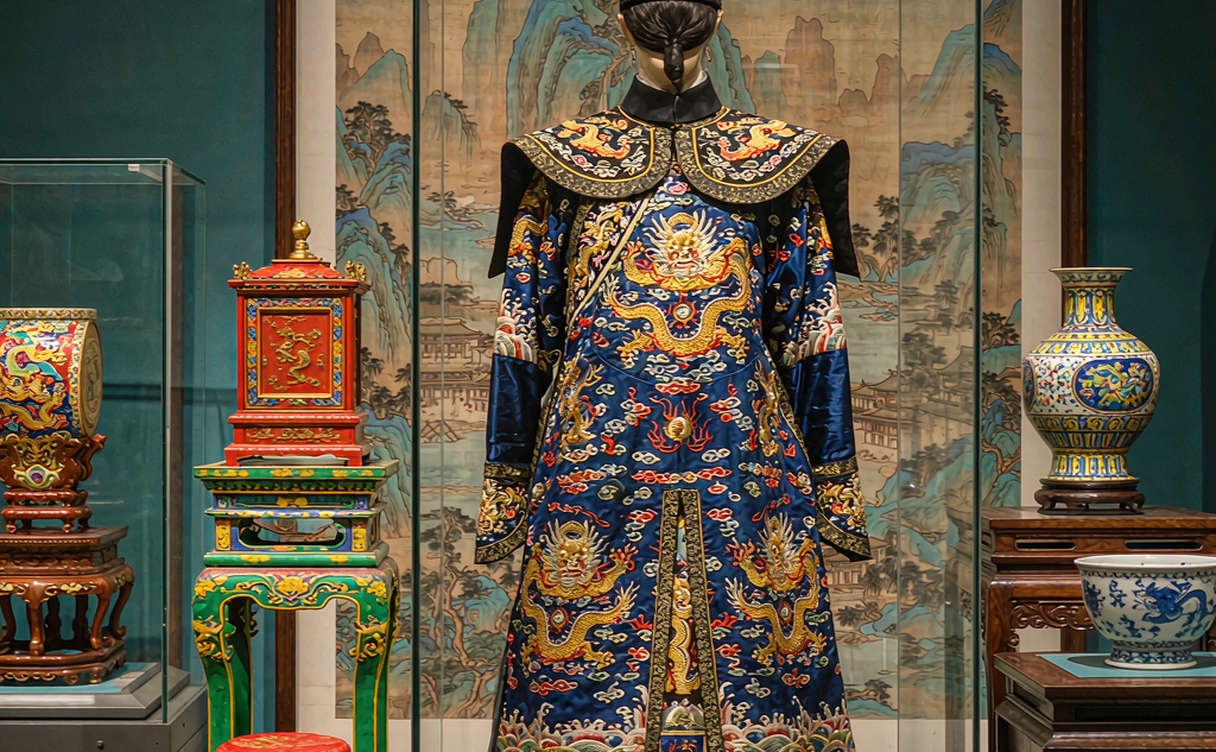
Court life under the qing chinese dynasty was a spectacle of color and protocol. Emperors wore robes embroidered with a frontal dragon, twelve symbols of imperial authority, and seasonal designs. The famous yellow robes were reserved for the monarch. Women of the court wore elaborate headdresses, and Manchu women kept their hair in distinctive styles rather than binding their feet, unlike Han custom.
Food, too, carried status. The imperial kitchen blended Manchu, Mongolian, and Han techniques, producing the elaborate banquets that inspired later Beijing cuisine. The Manchu hot pot tradition, for example, survives in the courtyard restaurants of the old city. If you enjoy exploring how dynasties shaped what Chinese people eat, our best things to do in China includes food streets and museums where Qing heritage lives on.
The qing chinese dynasty also left a rich visual record. Court painters worked in both Chinese ink styles and Western-influenced perspective, while imperial workshops produced cloisonne enamel, jade carvings, and porcelain with reign marks that collectors still study today. Many of these objects are displayed in the same palace museums you can visit in Beijing, so a single ticket often opens a window onto both the buildings and the objects inside them.
Visiting Qing Sites as a First-Time Traveler
Most Qing monuments sit in and around Beijing, which makes them easy to combine on a single trip. A typical plan starts at the Forbidden City, moves to the Temple of Heaven where emperors prayed for harvests, and ends at the Summer Palace. Add a day on the Great Wall and you have the core of any China itinerary.
If this is your first visit to the country, our China travel guide for first-timers walks you through visas, trains, and the practical basics so you can focus on the history. Most Qing sights are clustered in Beijing, which means you can see the highlights in three or four busy days before heading to other regions. A high-speed train then connects the capital to Xi’an, where the Shaanxi History Museum adds the broader dynasty context, or to Chengde, the Qing summer retreat with its own palace and temple complex.
[CTA]New to the country? Start with our China travel guide for first-timers and build a Qing-focused Beijing plan.[/CTA]
FAQ
Who were the Manchu people?
The Manchu were the ethnic group from Manchuria who founded the qing dynasty. They ruled China from 1644 to 1912 while keeping distinct language, military, and cultural traditions.
When did the qing dynasty rule China?
The qing dynasty ruled from 1644 to 1912, a span of 268 years, making it the last imperial dynasty in Chinese history.
What is the qing dynasty forbidden city connection?
The Forbidden City served as the Qing emperors’ principal palace in Beijing. Qing rulers expanded and decorated it, and today it is the best place to experience Qing imperial life firsthand.
What ended the qing empire?
A combination of foreign pressure, internal rebellion, and failed reforms led to the 1911 revolution and the abdication of the last emperor in 1912.
For deeper historical context, see Britannica: Qing dynasty.