

What Is Chagee, and Why the Cup Feels Like a Tiny Tea House
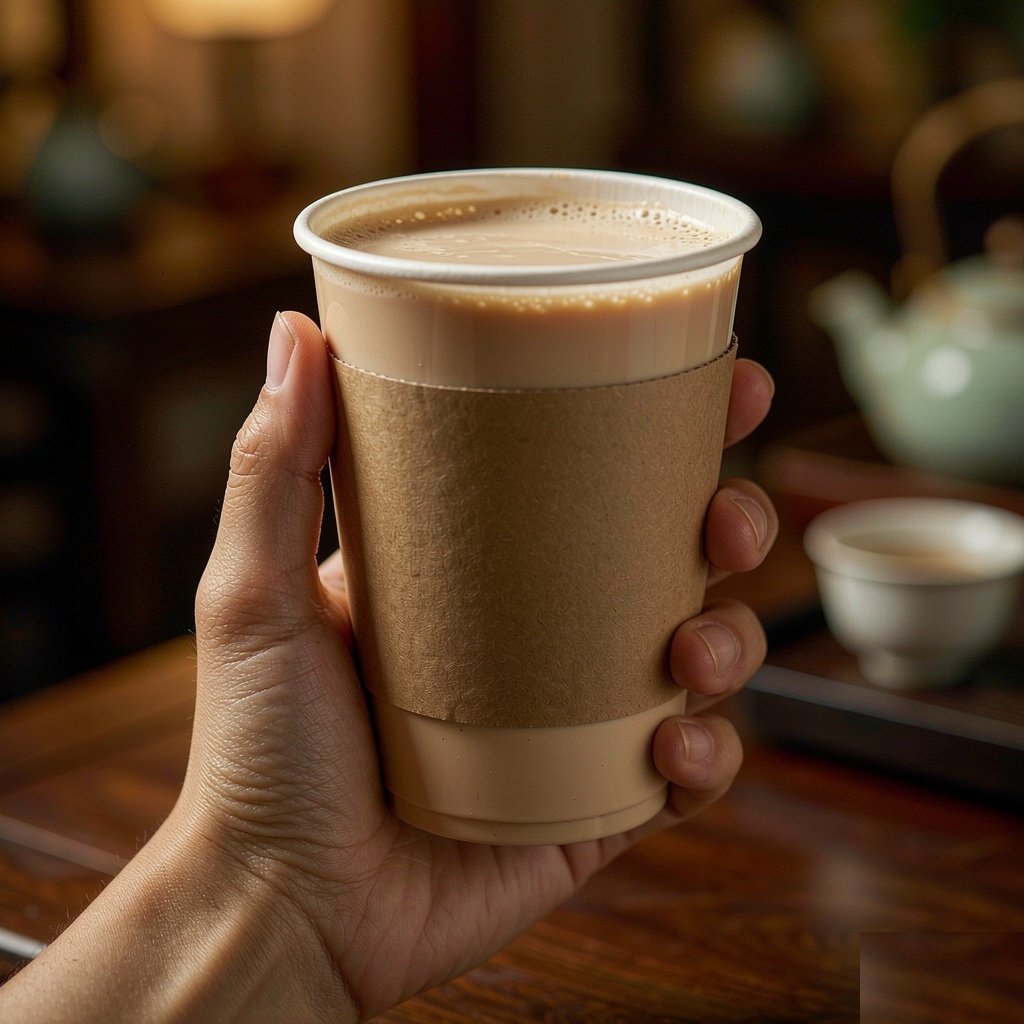
The first time I stood in line for a Chagee (Ba Wang Cha Ji) drink, it wasn’t the wait that caught me — it was the cup. Thick, matte, with a lid you have to peel back to find a sealed film underneath, and a three-pronged straw designed so the tea hits your tongue slowly. On the side, a stylized opera-face mascot in ink-brush strokes stared back. Nothing about it said “fast bubble tea.” It said “sit down, this is tea.”
That is the whole point. Chagee is a Chinese milk-tea chain built on a simple, audacious pitch: take whole-leaf Chinese tea, brew it properly, add fresh milk, and sell it in a space that feels like a modern tea house rather than a takeaway kiosk. The brand calls it “原叶鲜奶茶” — fresh-leaf milk tea — and its slogan, “东方茶,会世界友” (Eastern tea, befriending the world), tells you exactly where it thinks it’s going. For travelers, that matters: a Chagee store is one of the cheapest, easiest windows into contemporary Chinese consumer culture you’ll find, and because the brand has gone global faster than almost any rival, you can stand in one in Kuala Lumpur or Bangkok and order the same cup you’d get in Chengdu.
If you’re planning a Yunnan stop, our Kunming food guide explains where the local tea-and-snack scene actually lives, which makes a useful companion to a Chagee origin visit.
The Name Comes From a Famous Chinese Opera
The Chinese name, 霸王茶姬, is a playful twist on 霸王别姬 (Farewell My Concubine), one of the most famous Peking opera stories in China. The “茶姬” (tea princess) swaps the tragic concubine for tea itself, and the logo — a huadan, the flamboyant female role in opera — signals that this is a brand selling culture as much as caffeine. English-speaking customers mostly know it as Chagee, the romanization the company uses everywhere from its app to its Nasdaq ticker (CHA).
This opera framing isn’t decoration. It’s the brand’s moat. Where most Chinese milk-tea chains compete on fruit flavors and chewy toppings, Chagee leans hard into “东方茶” — Eastern tea — positioning itself as the grown-up, tea-first alternative. Think less candy, more camellia and oolong.
Founded in Kunming in 2017 — and Now on Nasdaq
Chagee was founded in 2017 by Zhang Junjie, and the first store opened on November 17, 2017, beside the old Tea Horse Road (茶马古道) in Kunming, Yunnan — a region that has grown tea for over a thousand years. The founder’s backstory reads almost like a movie: orphaned young, he started as a milk-tea shop apprentice at 17, worked his way up, and launched Chagee after watching a competitor’s store pull a crowd. The headquarters later moved from Kunming to Chengdu, Sichuan, in 2021, and today the company runs a dual setup with its main base in Chengdu and an overseas-business office in Shanghai.
The scale is what makes Chagee worth a dedicated guide. As of mid-2026 the brand operates more than 7,600 stores worldwide, with over 370 of them outside mainland China. In April 2025 it listed on the Nasdaq, becoming the first Chinese “new-style tea” brand to go public in the United States. That funding and discipline show up in the stores: consistent build quality, a tight menu, and a supply chain that keeps the tea actually tasting like tea.
The Signature Drink: Boya Juexian, and What to Order First
If you order nothing else, order Boya Juexian (伯牙绝弦). It’s a jasmine green milk tea and it is, by a wide margin, the Chagee signature drink the brand is known for — the company has reported cumulative sales in the billions of cups. The name comes from a classical Chinese story about a musician and his friend who understood each other without words, which is exactly the kind of poetic branding Chagee loves. On the palate it’s smooth, lightly floral, and balanced: real jasmine tea brightness cut by creamy dairy, with neither overwhelming the other.
Beyond the signature, the Chagee menu is organized into a few clear families, and knowing them saves you from menu paralysis:
- Fresh Milk Tea Series — the core line. Besides Boya Juexian, look at Huatian Oolong (white peach oolong milk tea, fruity and soft) and Baiwu Hongchen (a Da Hong Pao roasted oolong milk tea with a deeper, almost cocoa-like finish).
- Brewed Pure Tea — no milk, just high-grade leaf, hot or cold. Good for anyone who wants the tea without the dairy.
- Fruit Tea Series — jasmine and oolong bases with lemon, grapefruit or watermelon. Lighter and more seasonal.
- Tea Latte / Teaspresso — espresso-style concentrated tea with milk, for people who want a stronger hit.
My practical advice: if it’s your first cup, get Boya Juexian at 50% sugar and less ice. The default is already mild, but dialing the sweetness back lets the jasmine lead.
What Does a Chagee Milk Tea Actually Taste Like?
People expect bubble tea and get something closer to a really good London fog with better ingredients. The tea is the star — you can taste the difference between the jasmine, the oolong and the roasted Da Hong Pao, which is rare in a category where everything tastes vaguely of brown sugar. The milk rounds the edges but doesn’t bury the leaf. There are no tapioca pearls in the standard milk-tea line, so the texture is smooth rather than chewy. It’s less of a dessert and more of a drink you could have every afternoon, which is clearly the intent.
Chagee Price Range: What You’ll Actually Pay
For what you’re getting, Chagee sits in the middle-to-premium band of Chinese milk tea — above the rock-bottom chains, below a specialty coffee. In China a large drink typically runs around RMB 16–22 (roughly US$2.20–3.00), with smaller sizes a couple of yuan less. In Malaysia, where the brand is well established, prices land around RM 12.50–19.90 depending on the series, with the signature Boya Juexian often near the lower end at about RM 13.50–14.90. Singapore and Thailand are similar. For a “premium tea house” positioning, that’s still cheap enough to be an everyday habit, which is the whole game.
How to Order: App, Customization and Toppings
Ordering is straightforward, but the app is where regulars live. In China and most Southeast Asian markets the Chagee app (or the local delivery platforms) lets you pick your drink, set sugar level (usually 0/30/50/70/100%), ice level, and cup size, then pay ahead and skip the line. Locals will tell you the app is often a touch cheaper than walking up to the counter, and during peak hours it’s the only sane way to avoid a 15-minute wait. Customization is deliberately limited compared with topping-heavy rivals: you’re adjusting sweetness and ice, not building a sundae. That restraint is part of the brand’s “tea first” identity.
Where You’ll Find Chagee (and a Travel Tie-In)
Chagee’s overseas push started early — Malaysia and Singapore in 2019 — and it has since reached Thailand, the United States and South Korea, with a splashy pop-up in Paris during the 2024 Summer Olympics. Malaysia is the standout: well over 100 stores, and crucially, Halal-certified by JAKIM, which makes it one of the safest bets for Muslim travelers who want a milk tea without scanning the fine print. Singapore relaunched with company-owned stores in 2024 (Orchard, Plaza Singapura, Raffles Place), and you’ll spot the familiar opera-face cup across Bangkok and Seoul.
For a traveler, the move is simple: treat a Chagee stop as a five-minute cultural pit stop. In Kunming, where it all began, a store beside the old Tea Horse Road ties the modern cup to a thousand years of trade. In Kuala Lumpur or Singapore, it’s a clean, air-conditioned break that doubles as a lesson in how fast Chinese brands are reshaping Asian street life. Pair it with a wider China tea tour guide if you want to go deeper than the cup.
Chagee vs the Other Chinese Milk-Tea Chains
No brand guide is complete without the comparison, because “Chinese milk tea” is not one thing. For the bigger picture on the category, see our China bubble tea and milk tea guide. Here’s the short version of how Chagee stacks up against the names you’ll actually see next to it:
| Brand | Positioning | China price (large) | Signature | Vibe |
|---|---|---|---|---|
| Chagee | Whole-leaf tea + fresh milk, “tea house” | ~RMB 16–22 | Boya Juexian (jasmine milk tea) | Calm, cultural, sit-down-ish |
| HeyTea | Cheese-foam fruit & milk tea, trend-led | ~RMB 18–30 | Cheese grape / cheese mango | Hip, mall-centric, queue-worthy |
| Mixue | Ultra-cheap ice cream & sweet tea | ~RMB 4–10 | Iced lemonade, soft serve | Fun, everywhere, rock-bottom prices |
| Chayan Yuese | Changsha-origin tea, strong local cult | ~RMB 16–20 | Shengsheng Youxian | Regional, hard to find outside Hunan |
The clean takeaway: if you want tea that tastes like tea, Chagee wins. If you want cheese foam and fruit fireworks, HeyTea. If you want something cold and sweet for the price of a snack, Mixue. Chagee’s claim as the best milk tea brand in China is debatable, but its consistency and tea-forward approach are genuinely unusual.
Who Chagee Is For — and Who Might Skip It
Chagee is for travelers who like tea more than candy, who appreciate a calm space, and who want a reliable, English-friendly order in a foreign city. It’s also a smart pick for Halal-conscious visitors in Malaysia and for anyone curious about how a Chinese brand sells “tradition” to a global audience. Skip it if you came for chewy pearls, over-the-top desserts, or the cheapest possible drink — that’s not what this cup is trying to be. And if you’re sensitive to dairy, the Brewed Pure Tea line is your friend.
Frequently Asked Questions
What Is Chagee’s Signature Drink?
Boya Juexian (伯牙绝弦), a jasmine green milk tea, is the signature and the bestseller by a wide margin. If you only try one thing, make it this — order it at around 50% sugar so the jasmine leads.
Is Chagee Halal-Certified?
In Malaysia, yes — Chagee Malaysia is certified Halal by JAKIM, which covers its milk-tea and tea lines. In other markets certification varies, so check the store’s signage if it matters to you.
Chagee vs HeyTea: Which Should You Pick?
Choose Chagee when you want a tea-forward cup that tastes like real leaf and milk, and HeyTea when you want cheese-foam fruit creations and trend-driven flavors. Chagee is calmer and usually a little cheaper; HeyTea is more of an event.
How Do You Order Chagee Through the App?
Download the Chagee app (or use the local delivery platform), select your drink, set sugar and ice, choose cup size, pay ahead, and either pick up or get it delivered. Regulars use the app because it’s often slightly cheaper and skips the queue.
How Many Chagee Stores Are There, and Is One Near Me?
As of mid-2026 Chagee runs more than 7,600 stores worldwide, with 370-plus outside mainland China across Malaysia, Singapore, Thailand, the US and South Korea. In major Asian cities you’re rarely far from one — search the app’s map to find the nearest.
Does Chagee Have Pearl or Boba Toppings?
Mostly no. The standard fresh-milk-tea line is smooth, without tapioca pearls, and customization focuses on sugar and ice rather than piles of toppings. If you need chewy texture, look to the fruit-tea line or a different chain.
Chagee is the rare chain that treats a milk tea like a cup of tea worth slowing down for, and for a traveler that’s a small, reliable pleasure — a familiar ritual that also happens to be a crash course in how China sells its culture to the world.