

Cascading down the green shoulders of Guangxi’s mountains like ribbons spun by giants, the Longji Rice Terraces are one of the most breathtaking sights in all of southern China. Literally meaning “Dragon’s Backbone,” this vast network of hand-carved rice fields climbs more than 1,100 meters from valley floor to misty summit. For travelers who want to trade the limestone peaks of the city center for the quiet rhythm of the Guilin countryside, Longji offers a peaceful, photogenic escape that feels worlds away from the tourist crowds.
This Longji Rice Terraces guide will walk you through everything you need to plan your visit, from getting there to capturing the perfect shot.
Why Visit the Dragon’s Backbone Terraces
The terraces were first carved out of the hills more than 650 years ago by the Zhuang and Yao ethnic minorities, who still farm them today using techniques passed down through dozens of generations. What makes Longji special is not just its scale but its living heritage. You are not looking at a museum piece; you are watching an active agricultural landscape where water buffalo still plod along the bunds and villagers still transplant seedlings by hand.
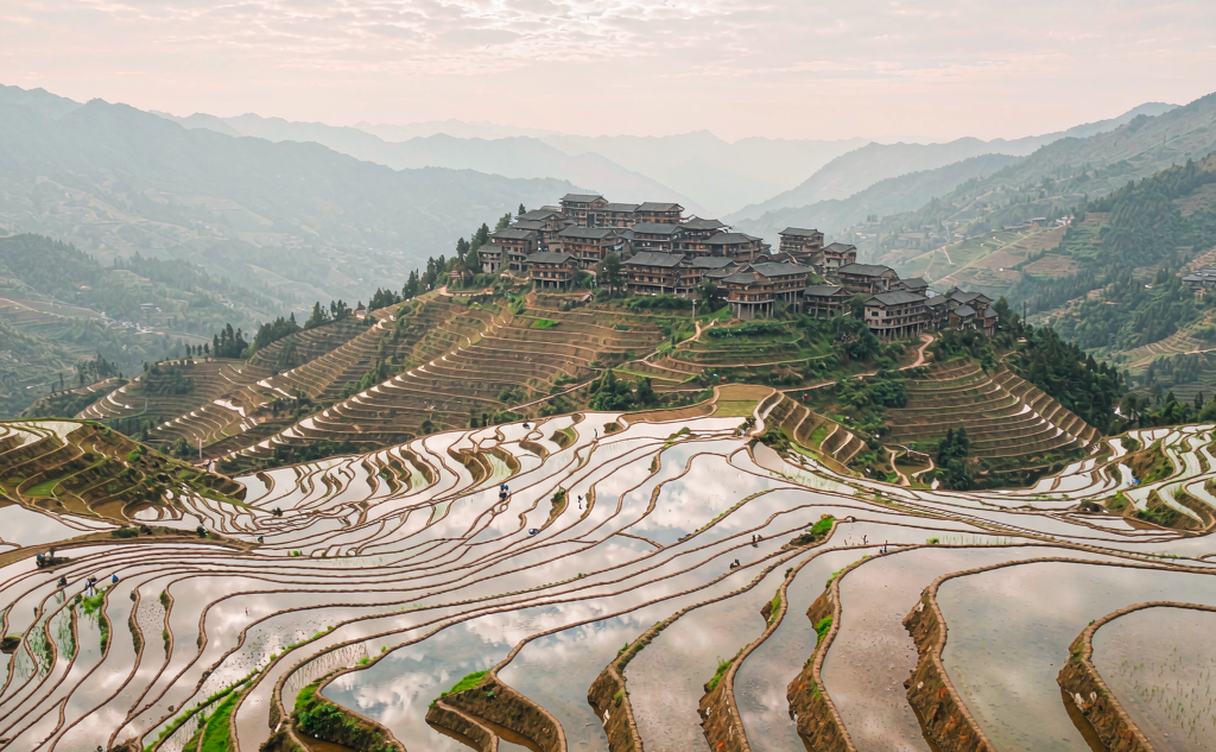
The scenery changes dramatically with the seasons. In spring, the flooded terraces mirror the sky like shattered glass. In early summer, they turn emerald as the rice sprouts. By autumn, the fields glow gold and amber just before the harvest. No matter when you arrive, the geometry of the terraces against the rolling hills is unforgettable.
The Main Terrace Areas
Longji is not a single field but a cluster of several named scenic zones, each with its own character and viewpoint.
Jinkeng Red Yao Terraces (Dazhai)
The largest and most dramatic section, Jinkeng is famous for its sweeping curves and the villages of the Red Yao people, named for their distinctive red traditional clothing. The cable car here makes the upper viewpoints accessible even for travelers who do not want a long hike. Sunset at the “Music from Nature” and “Thousand Layers to the Sky” viewing platforms is the highlight for most visitors.
Ping’an Zhuang Terraces
Smaller and closer to the main entrance, Ping’an is the classic postcard view of Longji. The “Nine Dragons and Five Tigers” and “Seven Stars with the Moon” viewpoints are short walks from the village and offer perfectly composed frames. Ping’an also has the widest choice of guesthouses and restaurants.
Ancient Zhuang Village (Jin Zhu Zhuang)
Further along the ridge, this quieter area preserves some of the oldest wooden stilt houses in the region. It is a good choice if you want to avoid the busiest viewpoints and experience village life more directly.
How to Get to Longji from Guilin
One of the most common questions travelers ask is how to get to Longji from Guilin, and the answer depends on your budget, schedule, and appetite for adventure.
The distance is roughly 100 kilometers, and the journey takes about two and a half to three hours by road. The most convenient option is a private car or a seat on a shared shuttle booked through your hotel, which delivers you directly to the scenic area entrance. Public buses also run from Guilin’s long-distance bus station to the town of Heping, where you transfer to a local minibus for the final climb into the mountains.
If you are basing yourself in Yangshuo, factor in the extra time to reach Guilin first, or consider a direct charter. Many travelers combine the terraces with a longer loop, and our Guangxi 7-day itinerary shows one efficient way to string together Guilin, Yangshuo, and Longji without backtracking.
Whatever you choose, start early. The mountain roads are winding, and you will want as much daylight as possible once you arrive.
Best Time to Visit Longji Terraces
Timing is everything, and knowing the best time to visit Longji terraces will make or break your trip.
- April to May (spring): The terraces are flooded for planting and reflect the sky beautifully. This is the most dreamy, mirror-like season and a favorite for photographers.
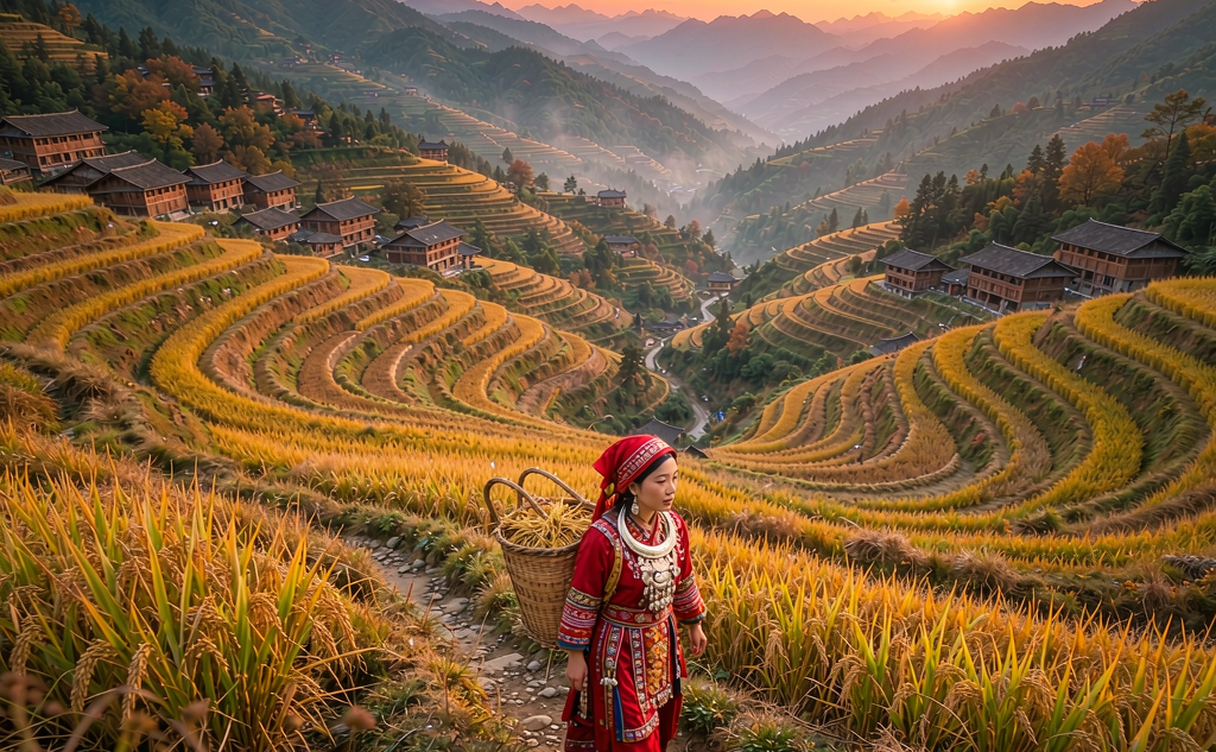
- Late September to mid-October (autumn): The rice ripens into a sea of gold. This is harvest time, the most colorful and iconic look, and also the busiest period.
- June to August (summer): Lush green terraces and cooler mountain air, though afternoons can bring rain showers.
- December to February (winter): Quiet, with occasional frost and fewer tourists, but some guesthouses close.
For most visitors, the golden window of late September to early October delivers the postcard views, while May offers the reflective water without the largest crowds.
Ready to turn this into a full trip? Browse our picks for the best hotels in Guilin to find a comfortable base before your mountain adventure. Booking a room with an early breakfast option will help you catch the first shuttle to the terraces.
Longji vs Yuanyang Terraces
A frequent comparison for travelers planning a Yunnan and Guangxi combo is Longji vs Yuanyang terraces. Both are stunning, but they are quite different.
Yuanyang, in southern Yunnan, is larger in scale and famous for its vast, surreal reflections during the winter watering season (November to April). It is more remote and requires more travel time. Longji, by contrast, sits close to Guilin and Yangshuo, making it far easier to reach and pair with a classic Guangxi trip. Longji also offers more developed village stays and easier infrastructure, while Yuanyang feels wilder and less touristy.
If your trip already covers Guangxi, Longji is the obvious choice. If you are heading to Yunnan anyway, Yuanyang may fit better. Few travelers have time for both in one journey, so choose based on your broader route.
Where to Stay
You can visit Longji as a long day trip from Guilin, but staying overnight unlocks the magic: sunrise mist over the fields and the soft evening light that day-trippers miss. Ping’an and Dazhai both have guesthouses ranging from basic family homes to comfortable boutique stays with terrace-view balconies.
If you prefer to keep your nights in the city, our guide to the best hotels in Yangshuo covers charming riverside options that pair well with a day excursion north. Either way, book ahead during the October golden season, when rooms fill quickly.
Longji Photography Tips
For many visitors, Longji photography is the main event. The terraces are endlessly photogenic, but a few tips will lift your images above the ordinary.
- Shoot at golden hour: The first hour after sunrise and the last before sunset paint the water and rice with warm light and long shadows.
- Use a polarizing filter: It cuts glare on the flooded fields and deepens the sky.
- Include a human element: A farmer, a water buffalo, or a smoking chimney adds scale and story to the sweeping geometry.
- Scout the classic viewpoints: “Seven Stars with the Moon” in Ping’an and “Thousand Layers to the Sky” in Jinkeng are classics for good reason.
- Pack a light tripod: Morning mist and low light reward steady shots.
Bring spare batteries and memory cards; you will take far more photos than you expect.
Food and Local Culture
A trip to Longji is also a chance to taste the Guangxi cuisine guide in its most rustic form. Village restaurants serve bamboo rice cooked inside fresh stalks, free-range chicken, river fish, and sticky purple rice. The local liquor, made from glutinous rice, is potent and offered as a sign of welcome.
The Zhuang and Yao communities are warm and proud of their heritage. You may see women with famously long hair (the Yao believe long hair brings long life) and hear the multiphonic singing that UNESCO has recognized. Respectful photography of people is appreciated when you ask first and, where appropriate, buy a small craft or share a meal.
Hungry for more than the view? Our Guangxi cuisine guide maps out the dishes and dining spots that will make your whole region trip delicious. Pair the terraces with a night market crawl in Guilin for the full flavor of the province.
Planning Your Visit: Practical Notes
- Entry fee: A single ticket covers the scenic area and is valid across the main villages.
- Getting around: Within the area, travel is on foot, by shuttle bus between zones, or by cable car in Jinkeng.
- What to pack: Good walking shoes, layered clothing for cool mornings, rain gear, and sun protection.
- Connectivity: Mobile signal can be weak in the valleys, so download maps and book transport in advance.
The terraces sit within Longsheng County, a mountainous region home to several ethnic minorities and well worth a slower, deeper look if your schedule allows.
FAQ
How far are the Longji Rice Terraces from Guilin?
They are about 100 kilometers northwest of Guilin, roughly a two-and-a-half to three hour drive through winding mountain roads.
Is one day enough to see Longji?
A day trip is possible but rushed. Staying one night lets you catch sunrise and sunset, which are the best light conditions for photography and the most memorable moments.
Which is better, Ping’an or Jinkeng?
Ping’an is closer, smaller, and easier to navigate, ideal for a first visit. Jinkeng is larger, more dramatic, and has a cable car, better for serious hikers and wide panoramas.
When are the terraces most colorful?
Late September to early October brings golden ripe rice, while April to May offers mirror-like flooded fields. Both are excellent; choose based on the look you prefer.
Can I visit Longji in winter?
Yes, though some guesthouses close and it can be cold. The quiet, frosty terraces appeal to travelers seeking solitude and off-season calm.
Still deciding how Longji fits your route? Our Guangxi 7-day itinerary lays out a balanced plan that blends city sights, river towns, and these mountain terraces. Save it, tweak it to your pace, and you will arrive with a clear plan.