

If you are sketching a Jiangxi 7 day travel plan that balances painted villages, cool mountain air, and one of Asia’s great wetlands, this route is built for you. Jiangxi sits in southeast China and is easy to reach by high-speed rail from Shanghai, Hangzhou, Wuhan, and Guangzhou. The best route through Jiangxi province for a first visit links three very different worlds: the Huizhou villages of Wuyuan, the summer retreat of Lushan, and the vast shoreline of Poyang Lake. This practical week keeps train hops short and leaves room for slow mornings.
Day 1 — Arrive in Wuyuan
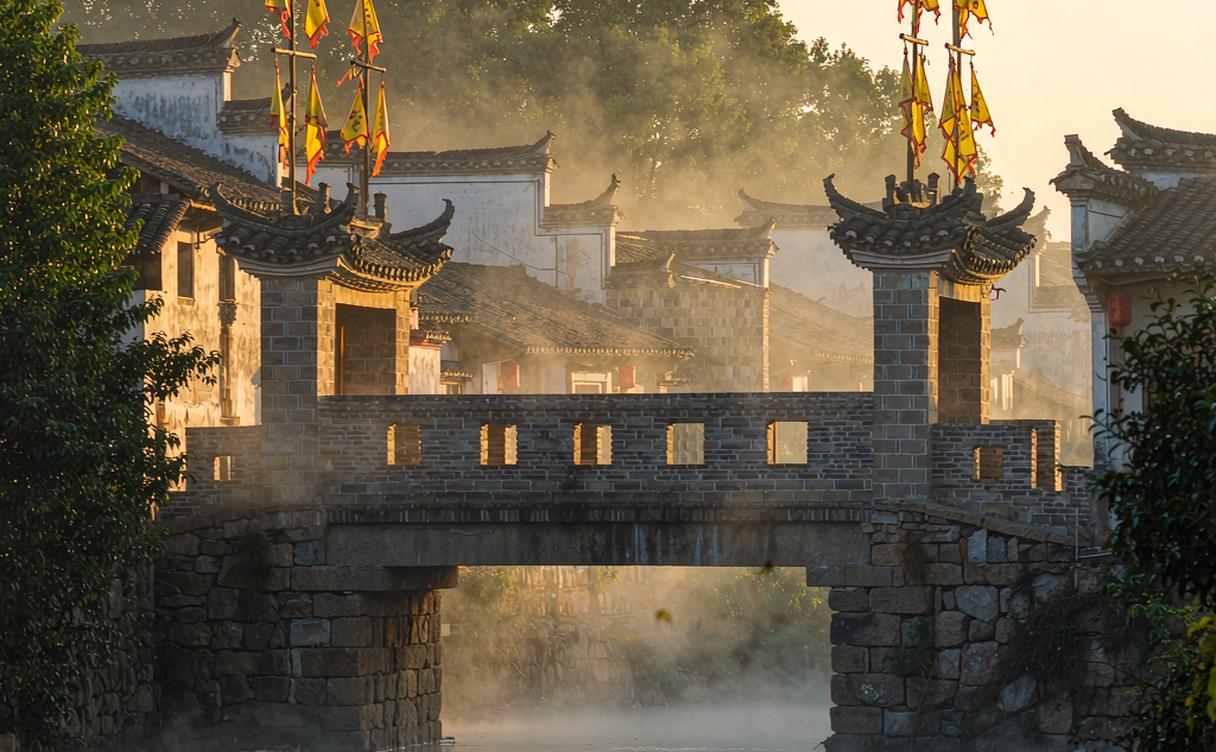
Most travelers begin in Wuyuan because the villages are the headline act of any Wuyuan Lushan Poyang 7 days loop. Take a high-speed train to Wuyuan railway station; direct services run from Hangzhou and Huangshan in about one hour, and from Shanghai in roughly three. Settle into a guesthouse inside one of the old villages rather than the county town. Spend the afternoon walking lanes of white walls and horse-head gables, and watch light shift across the paddies. Dinner is the perfect moment to start tasting Gan cuisine, the bold, salty, and often spicy cooking of Jiangxi.
Day 2 — Wuyuan Villages by Bicycle
Rent a bike and link the famous clusters. Jiangwan, Xiaoqi, and Likeng show off ancestral halls and carved doorways, while Yancun and Huangling are the postcard terraces where chillies and crops are laid out to dry. A Jiangxi itinerary by train works well here because local buses and hired drivers connect the dispersed hamlets cheaply once you are off the main line. Eat a farm breakfast of rice congee and pickles, then try steamed river fish at lunch. For deeper planning, our Wuyuan Travel Guide lists the quietest photo spots and the best times of day to shoot them.
Day 3 — Wuyuan to Lushan
Catch a morning train to Jiujiang, then a shuttle or taxi up the mountain to Lushan. This leg is the backbone of how to spend a week in Jiangxi without wasting daylight in transit. Lushan is a former summer capital where foreign missionaries and Chinese scholars built stone villas among pines and waterfalls. Check in near Guling town, the walkable hub at the top. In the late afternoon, stroll the forest paths and let the cooler air announce the change of scenery from village to peak.
Day 4 — Lushan Peaks and Sea of Clouds
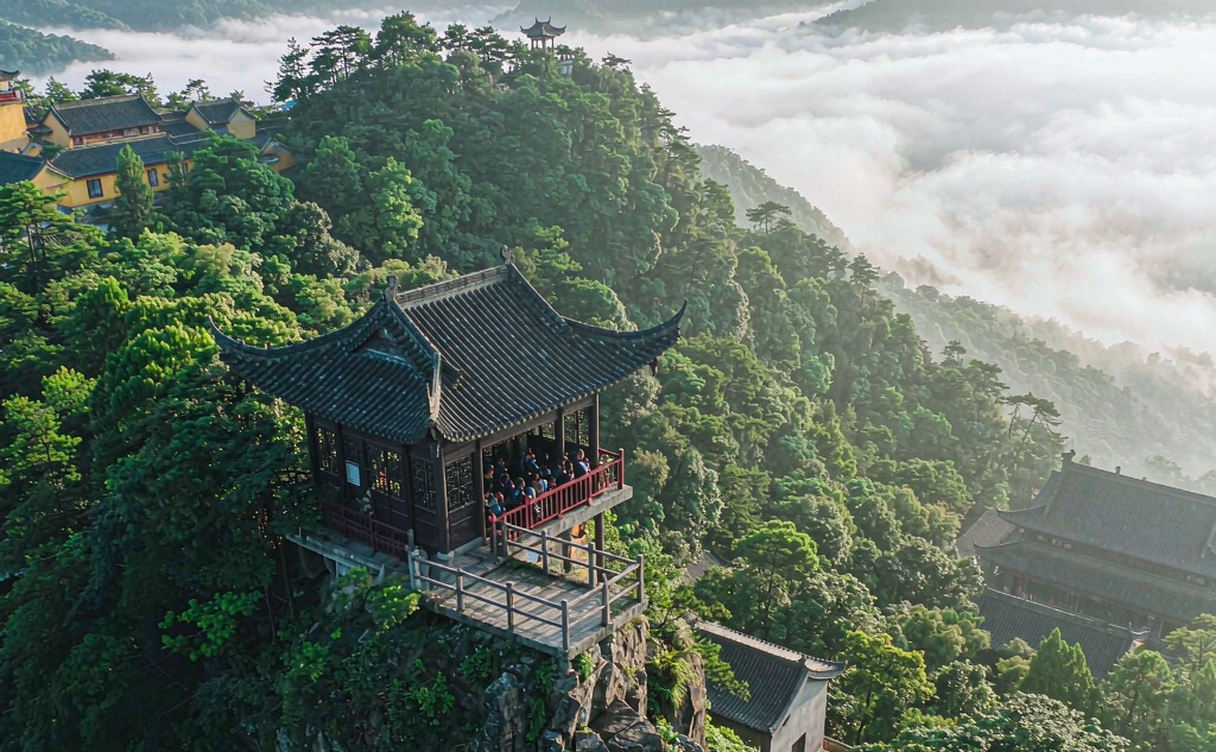
Wake early for the East Gate sunrise if weather allows, then visit Ruqin Lake, Flower Path, and the Precipice Pavilion that juts over a sheer drop. On clear mornings the mountain floats above a rolling sea of clouds, a sight that justifies the climb on its own. Lushan’s former villas, including the preserved homes of famous residents, tell the story of a Jiangxi offbeat China trip that trades crowds for mist and stone steps. Ride the sightseeing bus between far-flung viewpoints to save your legs.
Day 5 — Lushan to Poyang Lake
Descend to Jiujiang and transfer to a lakeside base such as Duchang or a town on the north shore. Poyang Lake is the largest freshwater lake in China and a critical stop on the East Asian–Australasian Flyway. Late autumn is prime time: tens of thousands of migratory cranes and geese gather as the water recedes and vast mudflats appear. A Jiangxi 7 day travel plan should reserve a full day here for birdwatching at dawn, when the light is soft and the flocks are most active. Bring binoculars and a long lens if you have them.
Day 6 — Lakeside Culture and Slow Travel
Spend the morning on the shore, then add a cultural stop. Nearby Shizhong Mountain, Jiangxi is a small rocky hill where the Yangtze and Poyang Lake meet, celebrated in classical essays for its night bells and river views. It is an easy half-day and pairs naturally with the wetland theme. In the evening, return to Gan cooking with a hot clay-pot dish and a plate of smoked pork with dried vegetables. For a wider menu map, our Jiangxi Gan Cuisine Guide explains the regions and signature plates.
Day 7 — Wrap Up and Depart
Use the final morning for a last lakeside walk or a relaxed market visit, then head to Jiujiang or Nanchang for your outbound high-speed train. If your week has leftover energy, Mingyue Mountain, Jiangxi and Wugong Mountain, Jiangxi are both strong add-on hiking targets reachable by rail, while Guifeng, Jiangxi offers striking red-rock formations south of the lake. This best route through Jiangxi province ends where many trips begin: at a station, already planning the return.
Train Logistics
The skeleton of any Jiangxi itinerary by train is the Nanchang–Jiujiang–Wuyuan high-speed corridor. Wuyuan sits on the Hangzhou–Huangshan–Nanchang line, so it is simple to enter from the east and exit toward central China. Jiujiang is the gateway to both Lushan (a short bus ride up) and Poyang Lake (a short ride east or south). Buy tickets on the official 12306 system a few days ahead in peak season. Keep bags light because you will change lodgings three times; a 20–24 liter pack is plenty for a week.
Best Season
Spring (March to May) paints Wuyuan in rapeseed gold and keeps Lushan green and cool. Autumn (September to November) is best for Poyang Lake birdlife and clear mountain days. Summer is busy but offers an escape from lowland heat on Lushan. Winter is quiet and cold, with the chance of snow on the peaks. For a single week that does everything, aim for mid-April or late October.
Food: Gan Cuisine
Jiangxi cooking, called Gan cuisine, leans salty, sour, and spicy, using lots of chilli, fermented vegetables, and smoked meats. Try rice flour meat, clay-pot stews, freshwater fish from the lake and rivers, and the famous Nanchang rice noodles. Village meals in Wuyuan are seasonal and simple; lakeside towns add reed shoots and crab in season. Embrace the heat — it pairs perfectly with mountain walks and cool lake mornings.
Why This Route Works
A Jiangxi offbeat China trip succeeds because the three stops are close yet distinct. You move from hand-built villages to a misted mountain resort to a living wetland, all on one rail line. The pacing is gentle: two nights each in Wuyuan and around the lake, with Lushan in between. Few foreign visitors make it here, so the experience stays authentic and unhurried. If you want a template you can adapt, this Wuyuan Lushan Poyang 7 days outline is a reliable start.
Practical Tips
Book village guesthouses early for spring and autumn weekends. Wear good shoes; Lushan involves real climbing. Carry cash for small village stalls. Download offline maps because signal fades in the hills. Respect birdwatching silence at Poyang Lake, and never stray onto unstable mudflats. With those basics covered, how to spend a week in Jiangxi becomes the easy part — the province does the rest.
Poyang Lake’s role as a globally important wetland is documented by the Ramsar Convention on Wetlands, which lists it as a Wetland of International Importance for its migratory waterbird populations.