

The Smell That Sends People Running — and the Bowl That Wins Them Back
Hand someone a steaming bowl of luosifen for the first time and the reaction is rarely subtle. A thick, funky, almost barnyard odor rolls off the surface — the kind of smell that makes train-carriage neighbors pack their bags. Then they take a spoonful of broth, and something strange happens: the face softens, the chopsticks go back in, and within five minutes the bowl is scraped clean. Few dishes divide a room as violently as luosifen, the snail rice noodles of Liuzhou in Guangxi, and fewer still convert skeptics as reliably.
I first met it in a basement canteen off a Guangxi university campus, where a single stainless pot had been simmering since dawn. The smell hit the stairwell two floors up. By the third slurp I had stopped noticing it entirely and was chasing the last peanut around the bowl with my spoon. That is the luosifen paradox in a nutshell: the aroma is the gatekeeper, and the taste is the reward on the other side.
Where Luosifen Comes From: A River City’s Happy Accident
Liuzhou sits in north-central Guangxi, where the Liu River knots the city into islands and the humidity keeps everything vaguely damp. The dish is a product of that river. Vendors selling boiled river snails (田螺, tiánluó) by the water would simmer the leftovers with pork bones into a broth, then pour it over rice noodles to stretch a late-night meal. The “luo” in luosifen means snail; the “sifen” means the thin round rice noodles. Nobody planned a national obsession — it grew out of frugality and one very good broth.
What turned a local snack into a cultural phenomenon was packaging. In the 2010s, vacuum-sealed instant kits let the dish travel, and a generation of students carried the smell (and the craving) to every corner of China. Today you can order it in Guangxi cuisine restaurants from Nanning to Beijing, and the instant version exports the funk worldwide.
What Does Luosifen Taste Like (and Why Does It Smell That Way?)
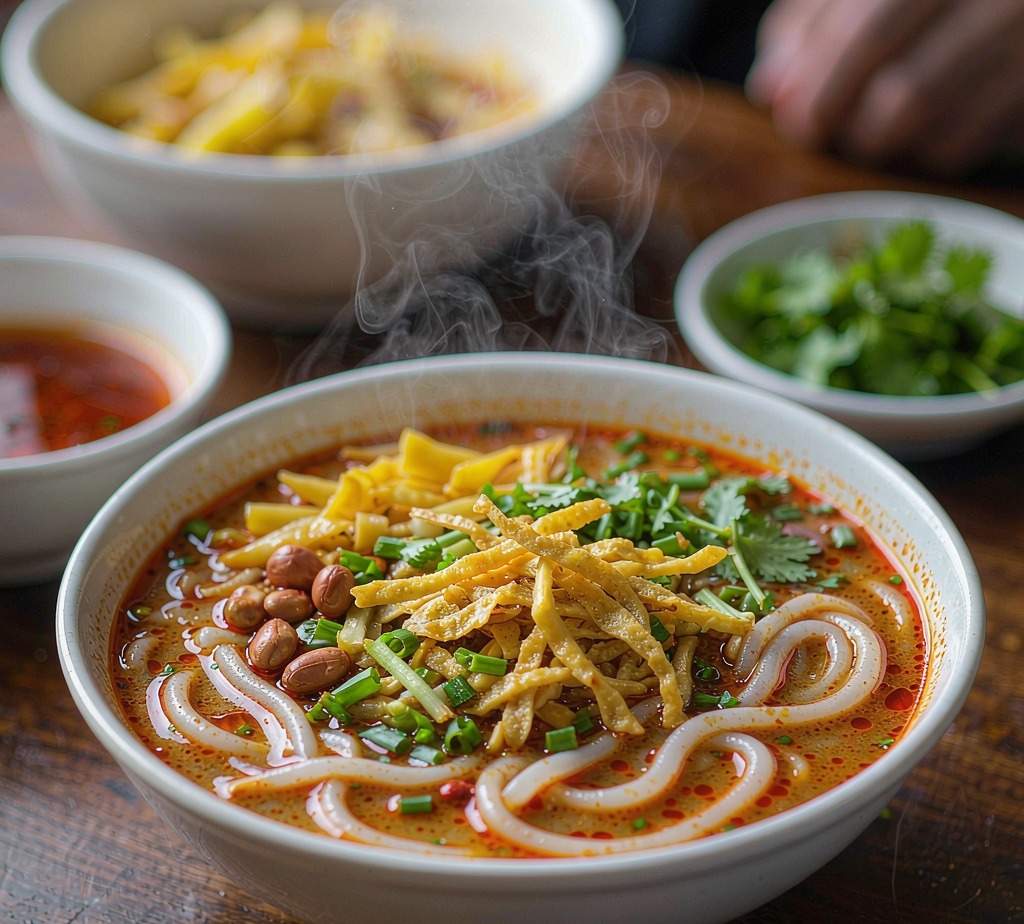
Strip away the reputation and the flavor is actually friendly: a sour, spicy, deeply savory broth with a clean rice-noodle chew and a fireworks of textures from the toppings. The sourness comes from fermented bamboo shoots, the heat from chili oil, and the umami from the long-simmered snail-and-pork broth. It is loud, but it is not aggressive once you are eating it.
The infamous smell, importantly, is not the snails. It comes almost entirely from suancai — pickled bamboo shoots that have been fermented until they develop a pungent, almost barnyard funk. Remove the bamboo and the bowl smells like any other noodle soup. The snails mostly lend their mineral richness to the broth and are usually strained out before serving, so you are drinking the snail rather than chewing it.
If you already enjoy the sour funk of Guilin rice noodles or other fermented-noodle soups, luosifen will feel like a louder cousin. It is the sort of dish that defines Guilin food and its neighbors more than tourists ever expect.
The Luosifen Ingredient List: What Actually Goes in the Bowl
A proper bowl is a small pantry of components. Here is a working recipe for two generous servings, built so a home cook can assemble it without a restaurant’s pantry — most of the specialty items now ship internationally.
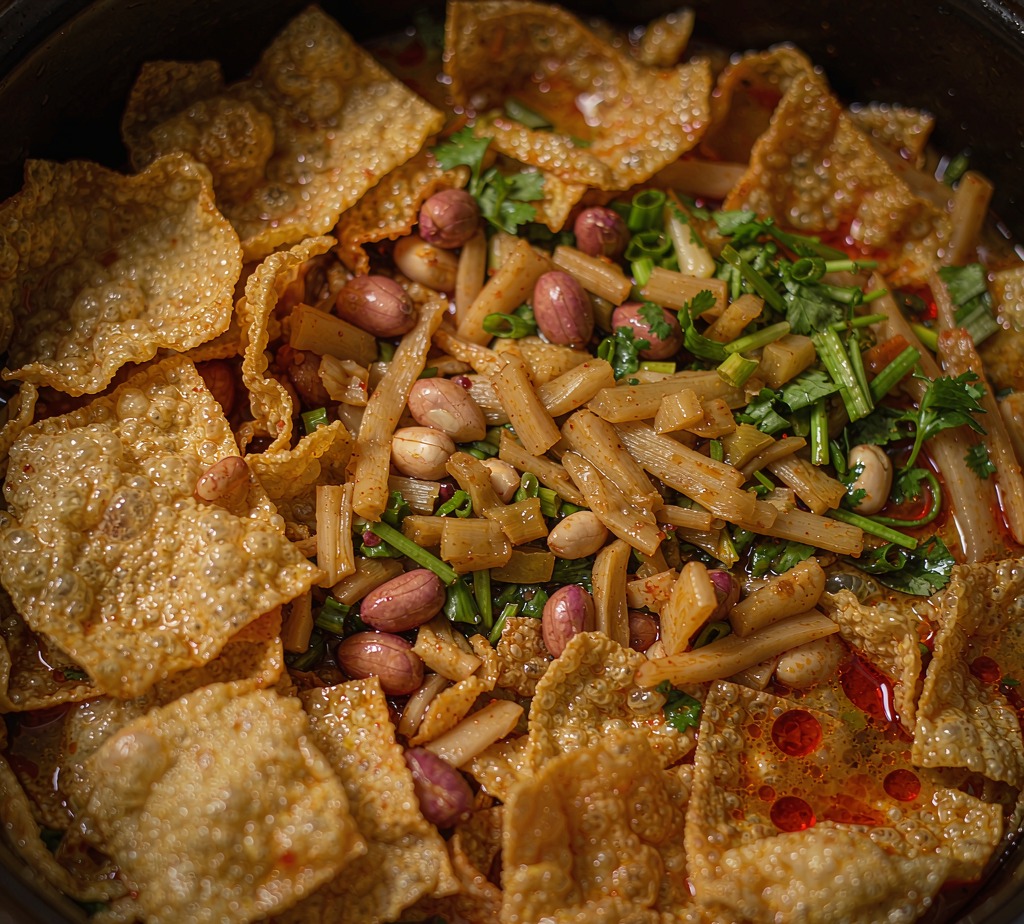
- Rice noodles (米粉): 200 g dried or 400 g fresh round rice noodles, the thin “sifen” style, not flat ho fun.
- River-snail broth: 1.2 L — either homemade (below) or a concentrated luosifen broth cube or packet. This is the soul of the dish.
- Pickled bamboo shoots (酸笋): 80 g, drained and roughly shredded. Non-negotiable for the authentic smell.
- Fried tofu skin (腐竹, fuzhu): 40 g dried, soaked until soft, then torn into ribbons.
- Roasted peanuts: 30 g, left whole for crunch.
- Black fungus (木耳): 20 g dried, soaked and shredded.
- Pickled long beans (酸豆角): 40 g, chopped — adds a second sour note.
- Aromatics and herbs: 2 scallions and a small handful of cilantro, both chopped.
- Chili oil: 2–3 tbsp, adjustable to taste.
- Optional proteins: braised duck feet, pig trotters, or a soft-boiled egg.
On the nutrition side, a standard restaurant bowl lands around 450–600 calories, weighted toward carbohydrates and fat from the noodles, peanuts and chili oil. It is filling rather than light — which is exactly why it works as one of the great budget meals in China, a full meal for the price of a snack.
How to Make Luosifen at Home: Step by Step
You have two routes: a from-scratch broth (a half-day project) or a kit shortcut that gets dinner on the table in twenty minutes. Both are below; pick by how much you love the process.
Route A — the real broth (a weekend project)
- Step 1 — clean the snails. Soak 500 g fresh river snails in salted water with a drop of oil for 3–4 hours so they purge grit, then scrub and blanch them.
- Step 2 — build the broth. Simmer the snails with 300 g pork bones, a strip of dried tangerine peel, star anise, cassia, cloves and fennel for 2–3 hours. Strain; you want a clear, savory, faintly sweet broth.
- Step 3 — prep the toppings. Soak the tofu skin and fungus until soft, roast the peanuts, and shred the bamboo and long beans.
- Step 4 — cook the noodles. In a separate pot of boiling water, cook fresh noodles 60–90 seconds or dried 4–5 minutes until just tender. Drain immediately — overcooked rice noodles turn to paste.
- Step 5 — assemble. Put the noodles in the bowl, ladle over 500–600 ml of screaming-hot broth, then arrange the bamboo, tofu skin, fungus, peanuts and long beans on top.
- Step 6 — finish and serve. Crown with scallions, cilantro and a generous swirl of chili oil. Serve the moment it hits the table.
Route B — the kit shortcut (about 20 minutes)
- Boil the dried noodles from the kit and drain them.
- Heat the included broth packet with an equal volume of water.
- Add the dehydrated toppings (bamboo, tofu skin, peanuts) and simmer for 3 minutes.
- Pour over the noodles and hit it with the chili oil sachet. Done.
Who Should Try Luosifen — and Who Might Want to Skip It
This is a dish with a strong personality, so be honest with yourself before ordering:
- Try it if you like sour, funky ferments — kimchi, natto, fish sauce, sauerkraut — and you enjoy a broth with attitude. Spice-tolerant eaters will be in heaven.
- Try it if you want a genuinely regional Chinese experience that most travelers never reach; it is far more distinctive than generic “Sichuan spicy” fare.
- Maybe skip it if you are sensitive to strong odors or fermented smells; the bamboo funk is unavoidable and fills a room.
- Skip or modify if you have a peanut allergy (ask for it without peanuts) or need a low-sodium diet — the broth is salty by design.
- Pregnant eaters should stick to fully hot, freshly cooked bowls rather than lukewarm street versions.
Tips, Variations and the Instant Luosifen Shortcut
A few habits separate a good bowl from a great one:
- Control the funk. The bamboo shoots are the smell. Add half the packet the first time; you can always stir in more. This is the single biggest lever for converting a hesitant friend.
- Broth temperature matters. Luosifen dies in a tepid bowl. The broth should be at a rolling boil when it meets the noodles.
- Layer your textures. The contrast of soft tofu skin, crunchy peanuts and chewy noodles is the point — do not skip toppings to save time.
- Regional twists. In Liuzhou itself you will find extra-sour versions loaded with duck feet and pig trotters; outside Guangxi the chili is often dialed down for milder palates.
- Instant luosifen has gotten genuinely good. Several brands ship internationally; treat the chili oil as a condiment you add to taste, not all at once.
Frequently Asked Questions
Why does luosifen smell bad or stinky?
The odor comes from fermented bamboo shoots (suancai), not the snails. The fermentation produces sulfurous compounds that smell barnyard-funky but taste sour and clean. Most of the smell cooks off in the broth, and the bowl itself is far milder than the room it sits in.
Is luosifen healthy, and how many calories are in a bowl?
A typical bowl runs 450–600 calories, mostly from noodles, peanuts and chili oil, with a decent hit of plant protein from tofu skin and fungus. It is satisfying rather than light. Go easy on the chili oil and skip the trotters if you want to keep the fat down.
Luosifen vs pho — what is the difference?
Both are rice-noodle soups, but that is where it ends. Pho is a gentle, aromatic beef-or-chicken broth from Vietnam with star anise and clove; luosifen is a sour, spicy, snail-pork broth defined by fermented bamboo. Pho is soothing; luosifen is a fist. The noodles are similar, the personalities are not.
How do you eat luosifen properly?
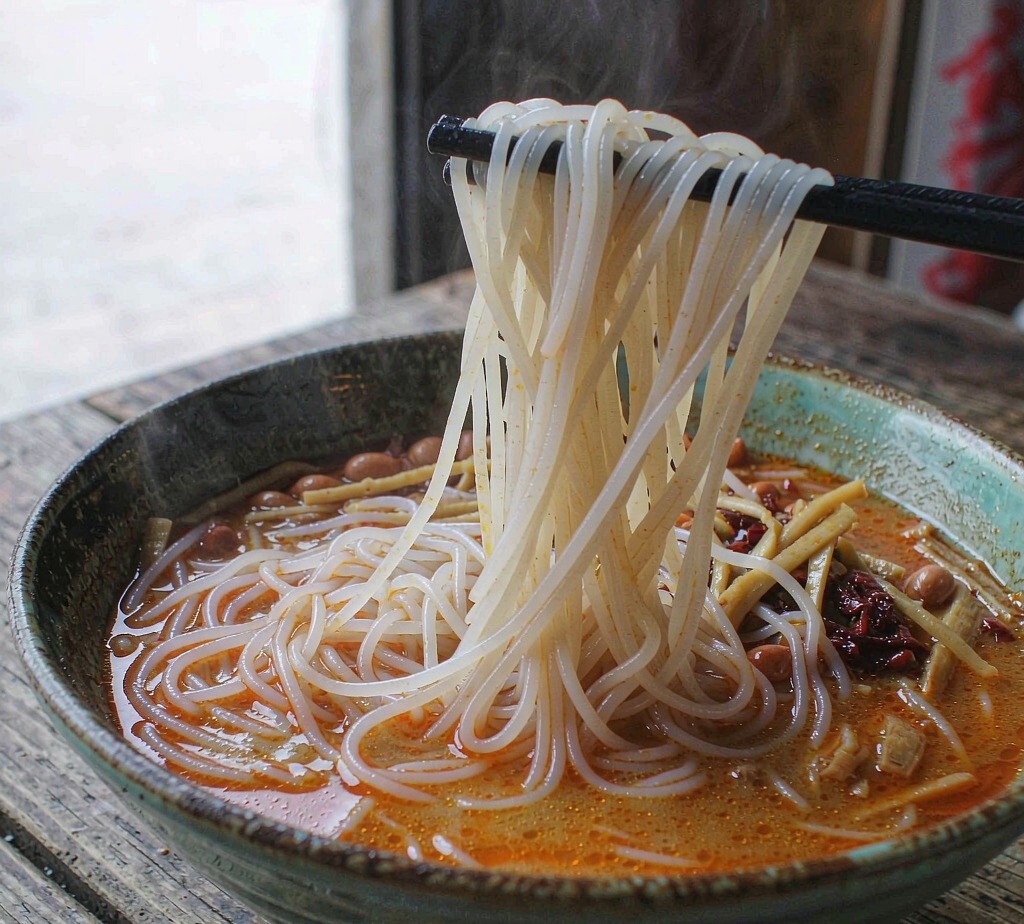
Eat it hot and fast. Lift a bundle of noodles with chopsticks, slurp to cool them, and chase each mouthful with a bit of broth and a peanut. Stir in extra chili oil as you go. Do not let it sit — the noodles keep absorbing broth and go soft.
Where can you find the best luosifen in Liuzhou?
In Liuzhou the whole city is essentially a luosifen museum. The train-station area and the night markets near the Liu River have the most revered stalls, many open past midnight. For a sit-down intro, the branded “Luosifen Big World” complex gathers dozens of vendors under one roof.
Can you make authentic luosifen without the stinky bamboo shoots?
Technically yes, but purists will say you have made a different dish. The bamboo is what makes it luosifen. If the funk is too much, use a small amount or swap in extra pickled long beans for sourness — you lose some authenticity but keep the soul of the broth.
The Bowl Worth the Reputation
Luosifen asks for a small leap of faith at the nose, then pays it back tenfold on the tongue. It is messy, fragrant, opinion-splitting and utterly addictive — the kind of dish that turns a curious first-timer into a lifelong defender. Whether you simmer a broth from scratch on a Sunday or tear open an instant packet on a Tuesday, give the bamboo shoots a fair chance. The smell is just the door; the bowl on the other side is the reason a whole river city built its identity around a noodle.