

Tucked into the bend of the Haihe River in northern China sits one of the most unexpected cityscapes you will find in Asia. Tianjin Italian Street, known locally as the Italian Style Town, is a remarkably preserved quarter of Mediterranean villas, cobbled plazas, and outdoor cafes that feels like a slice of Lombardy dropped onto the Chinese coast. For travelers who think China means only Forbidden Cities and futuristic skylines, this neighborhood is a gentle, photogenic surprise — and an easy, rewarding add-on to any Beijing-based trip.
The story begins in the late 19th century, when Tianjin became one of several Chinese port cities carved into foreign concessions. While Britain, France, and Japan each took their own slices, Italy established the only Italian concession in the entire world outside of Italy itself. After the area was returned and restored in the early 2000s, the grid of streets around Marco Polo Square was reborn as a walkable dining and leisure district. Today roughly 200 historic buildings — many with arched windows, wrought-iron balconies, and terracotta facades — make this the largest preserved Italian-style architecture cluster anywhere outside Europe.
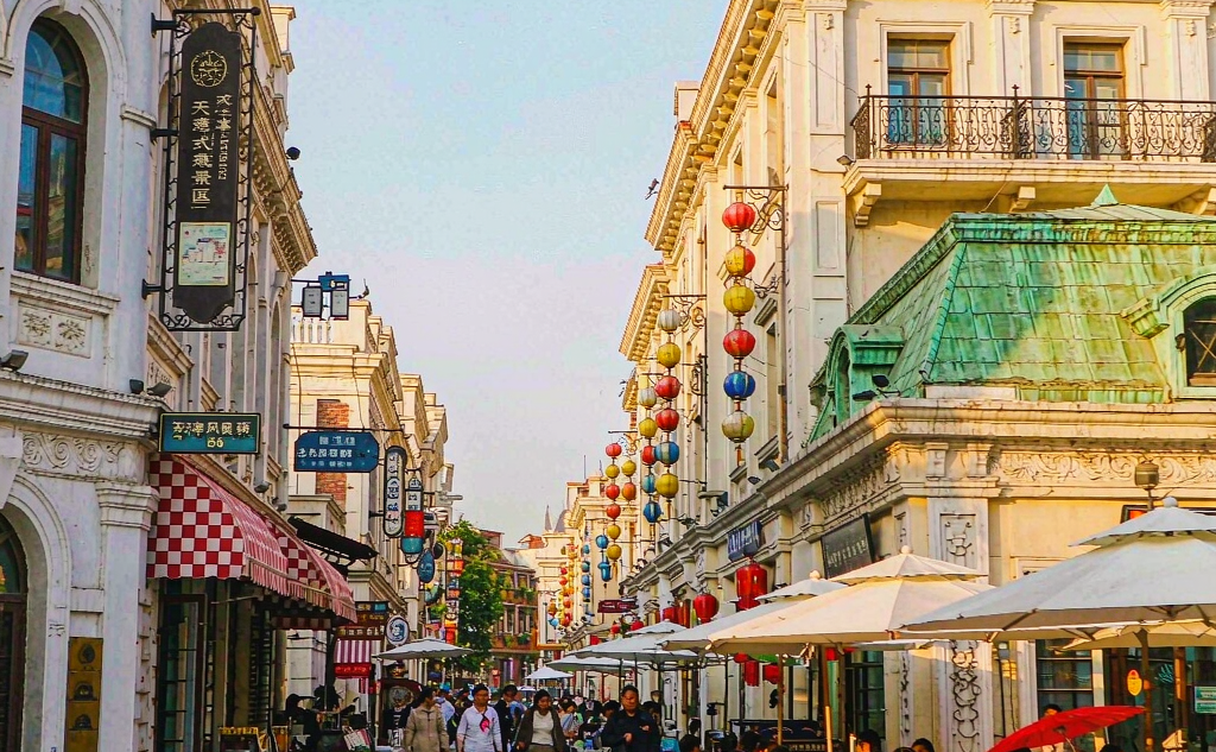
What makes the place special is not just the architecture but the atmosphere. Street musicians play in the evenings, gelato stands compete with espresso bars, and the whole district is pedestrian-friendly after dark. It is the kind of neighborhood where you can spend a slow afternoon with no agenda and leave feeling you have traveled somewhere quietly remarkable. If you are mapping out a longer China route, this corner of Tianjin pairs beautifully with our Beijing to Xi’an to Chengdu itinerary, giving your trip a relaxed European-flavored interlude between imperial capitals.
Tianjin Italian Street Things to Do
The heart of the quarter is Marco Polo Square (Piazza Marco Polo), anchored by a central fountain and ringed by the grandest of the preserved buildings. From there, the side streets fan out into a maze worth getting lost in. Start with the former Italian consulate and the cluster of exhibition halls that now host small museums on the concession era. Art lovers should peek into the galleries and ateliers that have colonized the ground floors of several villas.
For a sense of place, climb to one of the second-floor terraces that look down on the red-tiled rooftops — the sightline toward the Haihe is genuinely pretty at sunset. History buffs will appreciate the memorial hall dedicated to the early 20th-century figures who once lived here, including the restored residence of a famous Chinese statesman. Beyond sightseeing, the simple pleasure of strolling is the main event: the streets are clean, the crowds are manageable on weekdays, and the photo opportunities are endless.
Families will find the open squares forgiving, and couples often cite the district as one of the most romantic evening walks in northern China. Street performers, pop-up markets on weekends, and the occasional classic-car display keep the experience fresh even for repeat visitors. If your appetite leans toward the iconic local dish, you can also read up on where to eat Beijing duck before you go, then contrast it with Tianjin’s own seafood-forward cooking once you arrive.
Best Cafes on Tianjin Italian Street
Coffee culture has blossomed along these streets, and the best cafes on Tianjin Italian Street lean into the setting with sidewalk seating and Italian-style roasts. Several occupy converted mansions where you can sip a flat white beneath original ceiling moldings. The most popular spots face the main plaza and do brisk business on weekends, so arrive mid-morning for a seat in the sun. Independent roasters have also opened smaller storefronts deeper in the grid, offering pour-overs and Tiramisu that would not be out of place in Bologna.
For something sweeter, the gelaterias here are a cut above typical Chinese mall fare, using real fruit and nut pastes. A late-afternoon espresso followed by a stroll is, frankly, the ideal way to experience the quarter. Many cafes double as wine bars after dark, so the same table can carry you from caffeine to aperitivo without moving your chair.
How to Get to Tianjin from Beijing
The logistics are refreshingly simple, which is why so many visitors treat this as a half-day escape. How to get to Tianjin from Beijing is a question with an easy answer: take the high-speed train. Frequent bullet trains run from Beijing South Railway Station to Tianjin Station in roughly 30 to 40 minutes, with tickets that are inexpensive and depart throughout the day. From Tianjin Station it is a short taxi or walk along the river to reach the Italian quarter.
If you prefer to drive, the expressway connection is smooth and well signed, though parking near the pedestrian zone is limited. For most travelers the train is the obvious choice, and it allows you to keep your hands free for camera and gelato alike. A day trip to Tianjin from Beijing is entirely realistic: catch an early train, spend four or five hours exploring the street, the nearby Haihe promenade, and a local lunch, then return to the capital by early evening.
Those building a broader northern-China plan might also enjoy our guide to Tiananmen Square in Beijing as a counterpoint — the solemn grandeur of the capital’s center against the playful European charm of Tianjin makes for a satisfying contrast within a single trip.
Tianjin Haihe River Night Walk
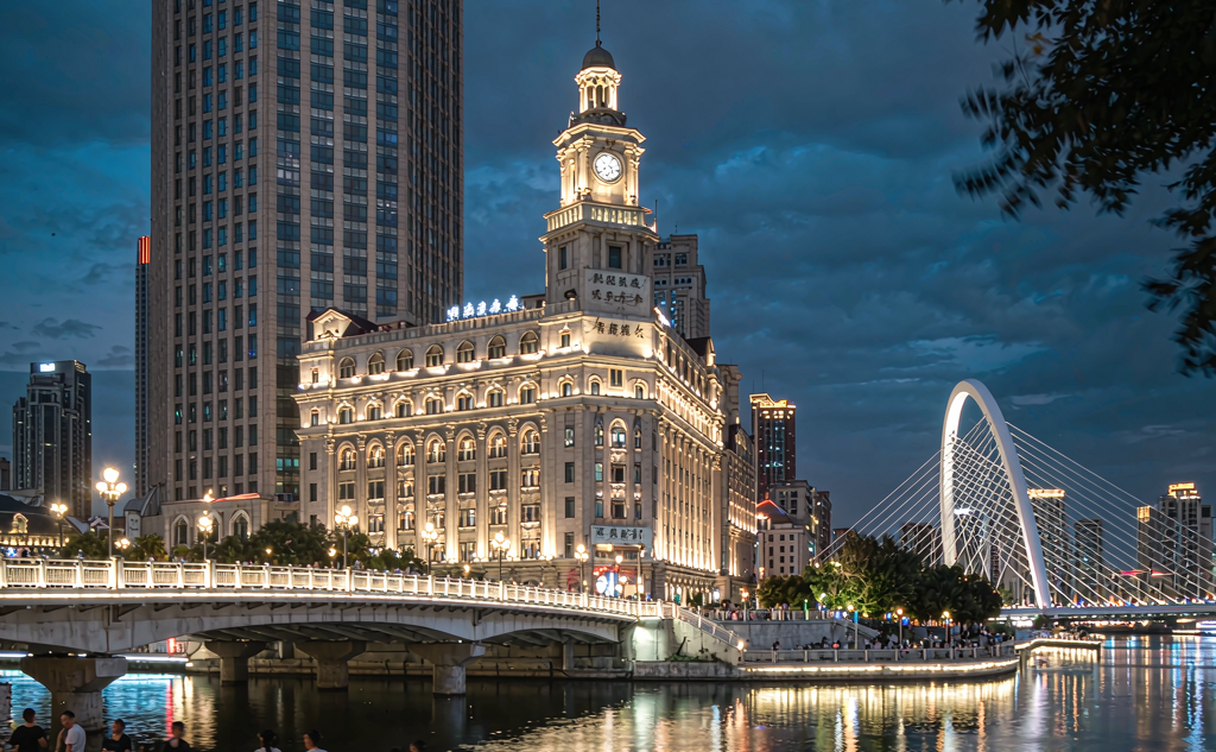
When the sun goes down, the neighborhood transforms. The Tianjin Haihe river night walk begins right at the edge of the Italian district, where a riverside promenade lights up with bridges in shifting colors and reflections shimmering on the water. The iconic Tianjin Eye — a giant Ferris wheel mounted on a bridge — glows in the distance, and pleasure boats drift past with their own strands of lights.
This is the moment the Italian Street earns its romance. The plazas fill with diners, the fountains are lit, and the architecture takes on a warm, golden cast. Walk slowly eastward along the embankment and you will pass sculpture gardens and riverside bars before reaching the bustle of the older port area. It is safe, lively, and ideal for photography without a tripod.
Tianjin vs Shanghai Concession Architecture
Travelers often ask how this compares with Shanghai’s famous Bund. The Tianjin vs Shanghai concession architecture debate is worth a thought. Shanghai’s concessions produced grand Anglo-French stone facades along the Huangpu, monumental and vertical, built for commerce and spectacle. Tianjin’s Italian quarter is instead low-rise, residential, and intimate — a neighborhood rather than a financial district. Where Shanghai impresses with scale, Tianjin charms with coziness.
You will not find the soaring skyscraper backdrop here, and that is precisely the point. The experience is human-scaled: you walk among homes and courtyards, not office towers. For visitors who found Shanghai’s Bund overwhelming, Tianjin offers the same cross-cultural intrigue at a gentler volume. Both are worth seeing, but they satisfy different moods.
Planning Your Visit and Where to Stay
Timing matters. Spring and autumn bring the most comfortable weather and the clearest light for photos, while summer evenings are lively but humid. Weekdays are calmer than weekends, when domestic tourists flock in. Entry to the district is free; you pay only for what you eat, drink, or buy.
Accommodation is easy to arrange, with options ranging from international chains to boutique conversions of old buildings. Our roundup of the best hotels in Tianjin covers stays within walking distance of the Italian quarter, so you can step out of your lobby straight into the cobbled streets. Staying overnight also lets you catch both the daytime cafes and the nighttime riverside glow without rushing a train.
For those who want the full northern-China sweep, you can pair this stop with other capital highlights — perhaps a morning at the Beijing Olympic Park before heading south to Tianjin, or a fiery evening of Beijing hotpot to contrast with Tianjin’s Italian-inspired menus.
A Note on History and Preservation
The restoration of the Italian concession is considered a model of adaptive reuse in China. Rather than demolishing the old quarter for new development, the city carefully stabilized the structures and reintroduced commercial life at a human pace. According to background on the concession era from Britannica’s overview of Tianjin, the city’s layered foreign presence left a uniquely international urban fabric, of which the Italian district is the most distinctive surviving piece.
That care shows. The buildings are not museum pieces behind velvet ropes; they are lived-in, open, and welcoming. It is a rare example of heritage tourism that feels authentic rather than staged, and it rewards the curious traveler who wanders one street farther than the crowd.
Final Thoughts
Tianjin Italian Style Street is the kind of place that surprises people who thought they knew what China looks like. It is easy to reach, free to enter, and generous with atmosphere — a European quarter that happens to sit beside a Chinese river. Whether you come for the cafes, the architecture, the night walk, or simply a slow afternoon, it delivers a worry-free, thoroughly enjoyable few hours.
Ready to add a European-flavored detour to your China trip? Plan a **day trip to Tianjin from Beijing** by high-speed rail and let us help you map the perfect relaxed itinerary — explore our northern-China routes today.
Make the most of your evening along the water — book a riverside hotel through our best hotels in Tianjin guide so you can enjoy both the daytime cafes and the magical Tianjin Haihe river night walk without watching the clock.
Fall in love with China’s unexpected corners. Combine the Italian Street with Beijing’s icons and build your dream route now — start planning your unforgettable Tianjin and Beijing adventure with chinatravelplaces.com.