

Stretching across the western edge of Chengdu’s historic core, Kuanzhai Alley is one of the most evocative places to feel the slow, sociable pulse of Sichuan’s capital. The name literally translates to the “Wide and Narrow Alley” district, but the reality is a trio of restored lanes — Kuan Alley (Wide Lane), Zhai Alley (Narrow Lane), and Jing Alley (Well Alley) — that together preserve the courtyard architecture of the Qing dynasty. For travelers wondering what to do on a first afternoon in Chengdu, this is where the city’s past and present shake hands over a cup of tea.
The story begins in the early 1700s, when the Qing government relocated Manchu bannermen to garrison the new provincial capital. They built a walled military city inside Chengdu, and the residences laid out in that grid survive today as the lanes you can wander. Over centuries the area faded, but a major restoration at the start of the 21st century rebuilt the courtyards in the old style, mixing preserved originals with careful pastiche. The result is a walkable museum of everyday Qing life that also happens to be one of the best places in town for food, drink, and people-watching.
Kuanzhai Alley Chengdu rewards a slow pace. Kuan Alley, the widest, is the most commercial and the most photogenic, with its long stretch of rebuilt siheyuan courtyards now housing boutiques, cafes, and short-term cultural exhibits. Zhai Alley is narrower and leans toward bars, craft shops, and intimate teahouses. Jing Alley, the quietest of the three, threads behind the others and is favored by locals who want the atmosphere without the crowds. A sensible plan is to enter from the Kuan side, drift through Zhai, and loop back along Jing as the light softens.
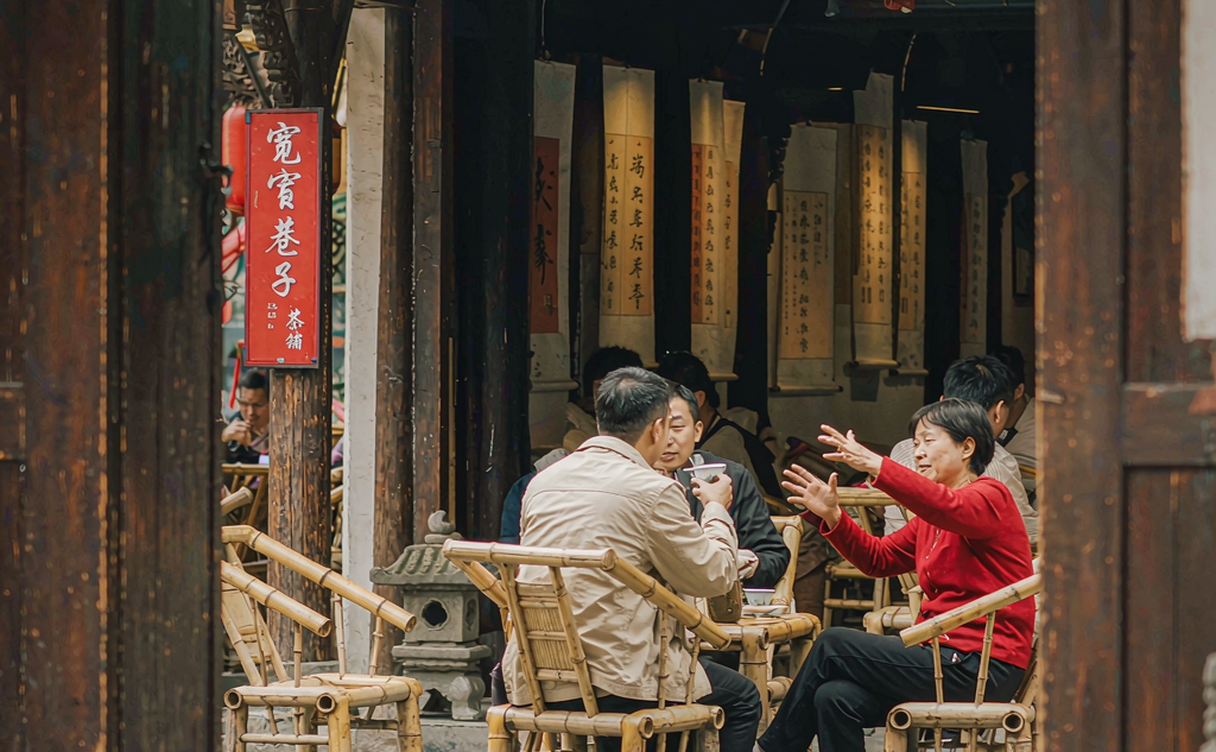
Among the most popular Kuanzhai Alley things to do Chengdu visitors enjoy is simply sitting still. The courtyard teahouse is the soul of the place. Order a pot of jasmine or Sichuan green tea, and no one will rush you; it is perfectly normal to spend an hour watching sparrows and listening to the clink of mahjong tiles drifting from a neighboring table. Some courtyards stage Sichuan opera face-changing performances in the evening, and a few offer ear-cleaning (cai er) by a practiced local — a surprisingly soothing Chengdu ritual you will not find in many other cities.
If you came for the food, you are in luck. The lanes are dense with snack stalls selling(mapo tofu, dan dan noodles, and sweet brown-sugar cakes), though the most memorable meals often sit just outside the tourist frontage. For a deeper dive into the region’s signature cuisine, our guide to Sichuan hotpot where to eat points you toward the bubbling, numbing pots that define local dining. Pair that with our dedicated Chengdu hotpot guide if you want to know exactly which neighborhoods to target after your alley stroll.
When it comes to the best teahouses in Kuanzhai Alley, the trick is to step off the main drag. The busiest storefronts on Kuan Alley are enjoyable but pricey; the quieter courtyards on Zhai and Jing Alley tend to serve better tea at fairer prices and with more authentic surroundings. Look for a wooden lattice door, a shaded courtyard tree, and a host who leaves the pot within reach. A morning visit means you may catch elderly residents practicing tai chi in the lane, while a late-afternoon session catches the best photographic light on the grey-tile roofs.
The question of Kuanzhai vs Jinli Chengdu comes up constantly, and the honest answer is that both are worth seeing but for different reasons. Jinli, near the Wuhou Shrine, is flashier, more uniformly rebuilt, and heavily themed around the Three Kingdoms era. Kuanzhai feels more residential in its bones, with genuine Qing-era layout and a calmer rhythm once you leave the main lane. If your time is short, choose Kuanzhai for atmosphere and a sense of historic streetscape, and choose Jinli for polished snack-hunting and evening energy. Many travelers do both on separate evenings since they sit on opposite sides of the center.
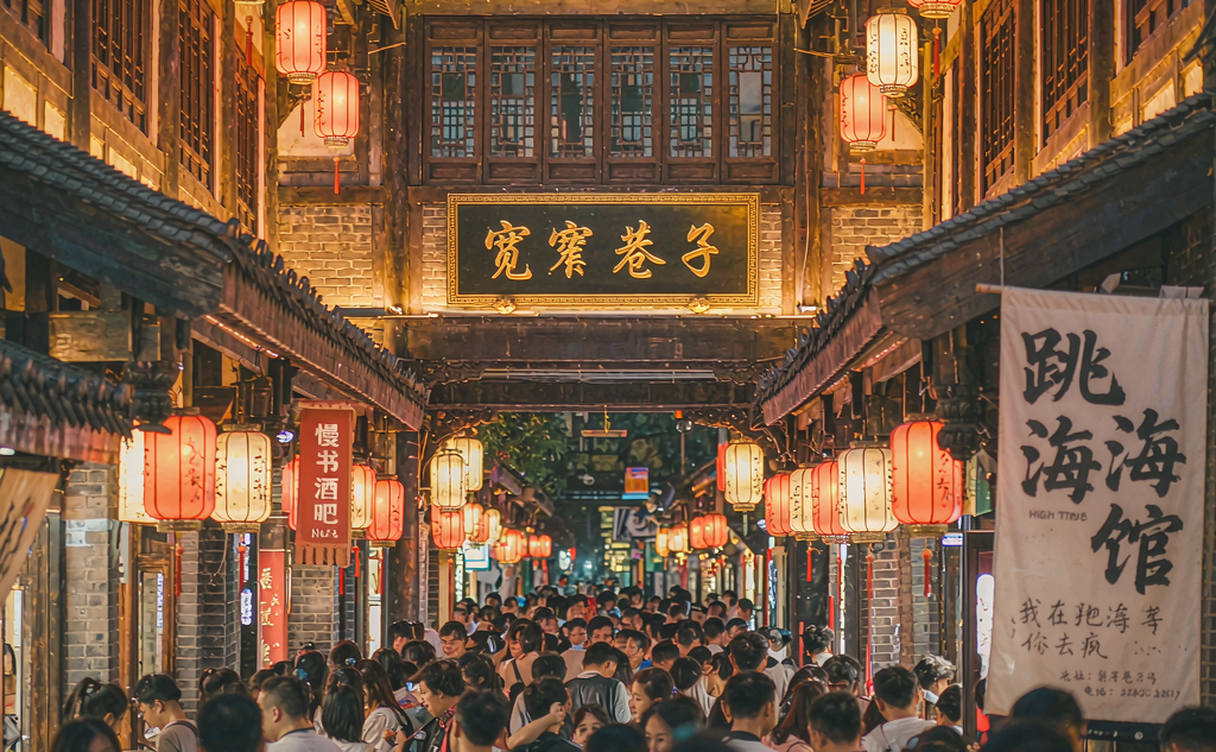
Nightlife at Kuanzhai Alley deserves its own mention. After dark the lane strings up warm lanterns and the mood shifts from heritage walk to social promenade. Zhai Alley in particular fills with small bars where you can order a craft beer or a baijiu cocktail and listen to live acoustic sets. The courtyards that were quiet at noon become lively with private-kitchen dinners and laughter. It is a safe, walkable area late into the evening, and the pedestrian layout means you can wander without worrying about traffic.
Building a Chengdu old town walking route around Kuanzhai is easy and pairs well with nearby sights. Start at the alleys, then walk east toward the People’s Park, where the famous Heming Teahouse lets you watch the legendary matchmaking corner and try the same ear-cleaning tradition. Continue to Tianfu Square and the Sichuan Provincial Library, or detour to the Jinsha Site Chengdu guide for a look at the mysterious Shu kingdom gold artifacts that predate the Qin by a millennium. The alleys make a natural anchor because they sit within a pleasant stroll of so much else.
Wondering where to eat near Kuanzhai Alley beyond the lane snacks? The surrounding blocks of Qingyang District hide excellent options. A five-minute walk north puts you among hotpot restaurants beloved by locals rather than tour groups. Side streets off Jinhe Road serve noodles, poached chicken, and Chongqing-style dried-fried dishes at lunch-counter prices. If you want a sit-down meal with courtyard charm but without the alley markup, look one block out and follow where Chengdu families are queuing — that instinct rarely fails.
For travelers using Chengdu as a gateway to wider Sichuan, the alleys are also a cultural primer. The courtyard layout you see here echoes the timber-and-tile traditions found across the province, and understanding it enriches trips farther afield. Our China Sichuan Tibet highway guide helps you plan the epic overland route west, while the high plateau landscapes of Ruoergai Wetland Sichuan and the travertine pools of Munigou Sichuan show the wild counterpoint to the city’s calm lanes. Chengdu is the soft landing before those adventures, and Kuanzhai is its gentlest introduction.
A few practical notes make the visit smoother. The alleys are free to enter and open around the clock, though most shops run roughly 10:00 to 22:00. Arrive mid-morning for photos without crowds, or after 17:00 for the lantern atmosphere. Wear comfortable shoes; the lanes are paved with flagstones that can be uneven when wet. Public transport is easiest — the metro stops a short walk away — since parking nearby is limited. Keep small cash or a mobile pay app ready, as some of the tiniest teahouses still prefer quick scans over cards.
The cultural weight of the site is recognized well beyond travel blogs. According to Encyclopaedia Britannica’s overview of Chengdu, the city has served as a provincial capital and cultural hub for more than two thousand years, which helps explain why layers of history sit so close together here (Chengdu, China — Encyclopaedia Britannica). Kuanzhai Alley is one of the clearest places to read that continuity, where a Qing garrison quarter became a people’s promenade without ever losing its sense of place.
Ready to build your perfect Chengdu itinerary? Plan a relaxed afternoon at Kuanzhai Alley and let our Chengdu hotpot guide lead you to the best meal afterward — start mapping your trip today.
What makes Kuanzhai linger in memory is not any single monument but the texture of an ordinary day: tea cooling in a ceramic pot, a bicycle bell in the lane, the smell of chili oil from a side kitchen. It is a reminder that the best travel often comes from slowing down inside a place rather than racing between landmarks. Give the alleys a full evening and they will reward you with the unhurried tempo that Chengdu is famous for.
Love the idea of a courtyard teahouse evening? Explore our Sichuan hotpot where to eat guide and turn your Kuanzhai stroll into a full Sichuan food adventure you will never forget.
Whether you are comparing Kuanzhai vs Jinli Chengdu, hunting the best teahouses in Kuanzhai Alley, or simply looking for where to eat near Kuanzhai Alley after a long day of walking, this trio of lanes delivers. It is history you can sit inside, taste, and toast with a glass of local beer under the lanterns. Chengdu has no shortage of attractions, but few let you touch the Qing-era everyday so directly — and fewer still invite you to stay as long as you like.
Make Kuanzhai Alley the heart of your Chengdu journey and discover the wider region with our China Sichuan Tibet highway guide — book your adventure and explore Sichuan from its calm old lanes to its wild western plateau.