

Few street foods divide opinion as sharply as Chinese stinky tofu. To the uninitiated, the aroma hits you three stalls before you see the source. To regulars lining up at a back-alley griddle in the middle of the night, that same smell is the scent of comfort, nostalgia, and a perfect late snack. This stinky tofu guide is for travelers who want to understand what they are actually eating, where to find the best versions, and how to order with confidence instead of pointing and hoping.
Chinese stinky tofu is fermented bean curd, but that flat description hides an extraordinary range of textures, broths, and regional personalities. The block starts life as ordinary fresh tofu. It is then soaked or brined in a fermented liquid, often built on bamboo shoots, amaranth greens, vegetables, and sometimes shrimp or meat by-products, left to culture for days or weeks. The result is a block that smells intense on the outside and stays creamy, custard-soft, or springy inside, depending on how it is cooked.
If you are planning a food-focused trip, it helps to pair this read with our China night markets guide so you know what to expect when the stalls fire up after dark.
Which Province Is Stinky Tofu From
The honest answer to “which province is stinky tofu from” is that there is no single birthplace everyone agrees on, but a few regions own the dish most loudly. Taiwan is famous for its soft, braised version served in a tangy pickled-cabbage broth. Nanjing in Jiangsu prizes a more delicate, slightly sweet fermented block. Shaoxing in Zhejiang makes a refined, almost literary version tied to its famous yellow wine culture.
The province that has turned stinky tofu into a tourism brand, however, is Hunan, and specifically its capital, Changsha. There, the tofu is deep-fried until the crust turns brittle and golden, then cracked open and doused in chili, scallion, and soy. It is loud, greasy, spicy, and utterly addictive. If you want the full context of the regional cooking that produces it, our Hunan cuisine guide lays out the flavors behind the obsession.
The Changsha Standard
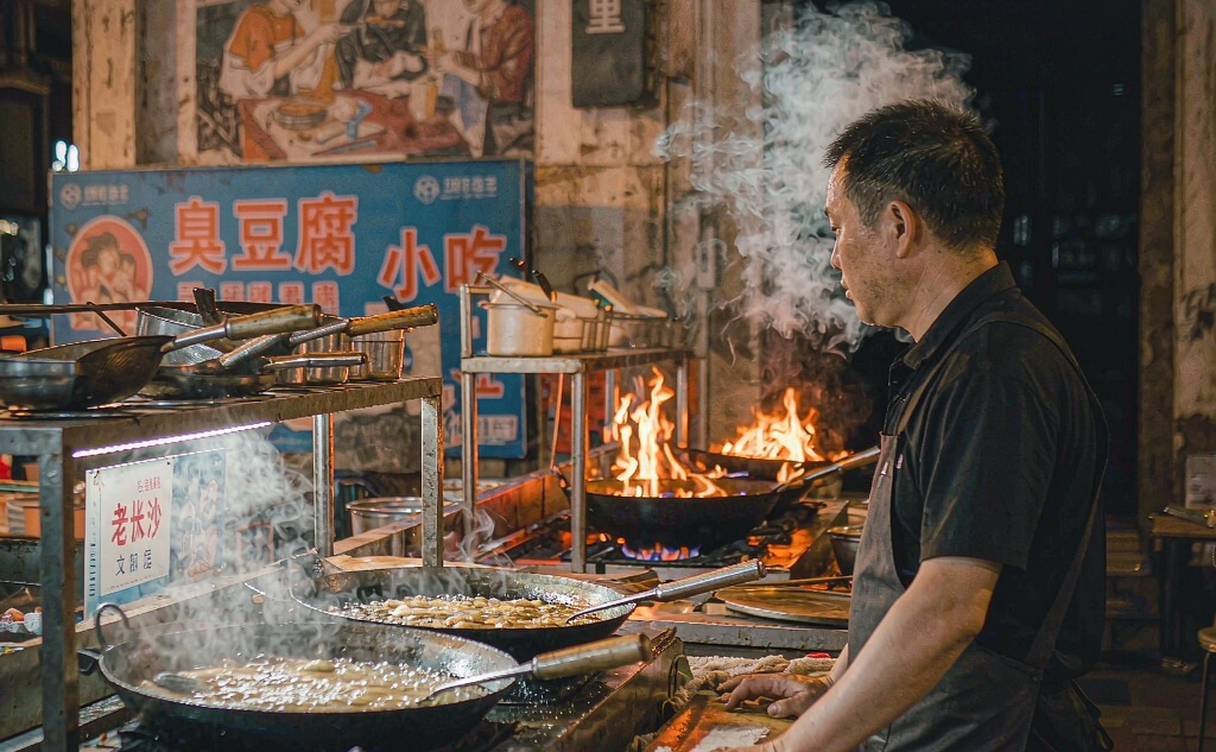
Ask any domestic traveler about the dish and the name that comes up is Changsha. The city has elevated the humble block into a spectacle. Vendors hammer out hundreds of pieces a night, the oil popping, the chili sauce glistening, the queue stretching into the lane. The local style is called “black tofu” because the brine stains the surface dark, but do not let the color put you off. The inside stays pale and silky.
For the best stinky tofu stall in Changsha, locals will point you toward the clusters around Pozi Street and the Fire Palace area, though the most devoted fans argue the smaller neighborhood shops beat the famous names. The trick is to watch which stall the other vendors eat at. A good spot fries to order, cracks the block while hot, and floods it with fresh scallion and a sharp, garlicky chili oil. Prices stay friendly, usually a few yuan per skewer or small bowl, making it one of the cheapest thrills in the city.
Pair your snack crawl with our Changsha food guide for a full evening itinerary, and for neighborhoods and logistics the Changsha travel guide covers where to sleep it off.
Stinky Tofu Versus Fried Tofu Puff
A common point of confusion for first-timers is stinky tofu versus fried tofu puff. They look vaguely similar when both are golden and puffed, but they are different foods. A fried tofu puff, sometimes called tofu bubble, is just plain tofu whipped into an airy shape and deep-fried. It smells like clean oil and soy. It is mild, neutral, and built to soak up soups and braises.
Chinese stinky tofu, by contrast, has been fermented first. The frying is only the final step. The smell is the giveaway, but so is the bite: a stinky block has a fermented tang and a denser, sometimes custard-like center, while a puff is mostly airy and bland. If you ordered a puff by mistake, you will notice immediately because your neighbors will not be holding their noses. Both are worth eating; they just live in different flavor universes.
How to Order Stinky Tofu in Chinese
You do not need fluent Mandarin to eat well, but learning how to order stinky tofu in Chinese removes a lot of friction at busy stalls where vendors have no time for translation apps. The romanized name is “chou doufu.” A safe, friendly phrase is simply “yi fen chou doufu,” meaning one portion. If you want it spicy, add “jia la,” and if you want it less so, “bu yao tai la.” Pointing at someone else’s bowl and saying “tong yang,” or “same as that,” is the oldest traveler hack in China and it works beautifully here.
Most stalls offer a choice between fried and braised. Fried is crunchy and street-friendly; braised is softer and often served in broth with pickled vegetables. If you are unsure, ask “na ge hao chi,” which means “which one tastes better,” and let the person behind the wok decide for you. They take quiet pride in steering you right.
Stinky Tofu Prices in China
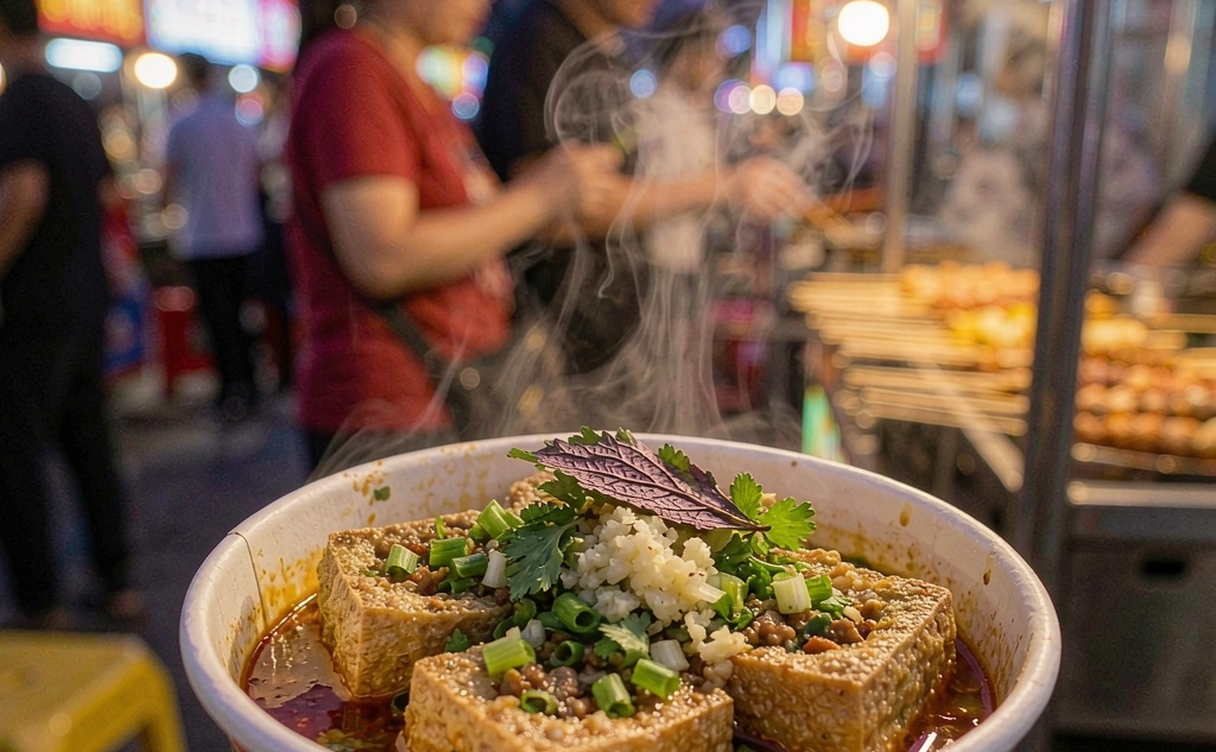
Budget travelers will be relieved by stinky tofu prices in China. In most cities a single portion runs from about 5 to 15 yuan, roughly 1 to 2 US dollars, with tourist-heavy spots charging a little more. Changsha and Nanjing keep prices low because the competition between stalls is fierce. High-end restaurants that plate the dish with extra garnish might push toward 30 or 40 yuan, but the authentic experience is the cheap one.
Watch for combo deals at night markets where a skewer of tofu comes with a drink, and do not be shy about paying cash at tiny stalls that have not joined the mobile-payment wave, though most now accept scan-to-pay. For broader safety and etiquette around street eating, including how to judge a clean stall, our street food safety guide is worth a read before you dig in.
A Word on the Smell and the Etiquette
The aroma is the barrier, not the taste. Almost everyone who tries it with an open mind ends up finishing the bowl. The polite move is to embrace it rather than wave it away dramatically, which locals find more amusing than offensive. Eat it standing at the stall while it is hot, because the texture collapses as it cools. And if a friend refuses, that is fine; buy your own and do not share, since the smell travels.
For travelers building a wider itinerary, stinky tofu pairs naturally with evening walks, temple visits, and market hunts. Our best things to do in China list can help you stitch snacks into a full day of sightseeing.
If you want the deeper history and the science of fermentation, the Wikipedia entry on stinky tofu is a solid starting point with regional breakdowns.
Final Tips Before You Go
Start with a small portion to test your tolerance. Go with a local or a confident friend on the first try. Pick stalls with a fast turnover, because high volume means fresh oil and a shorter wait. And remember that the dish is overwhelmingly a night food, so plan your hunt for after the sun goes down when the woks are hottest.
Chinese stinky tofu is not a novelty to be endured; it is a genuine regional craft with centuries of variation behind it. Give it a fair shot, and the smell that once repelled you may become the thing you crave on your next trip.
Plan your evenings around the woks and let the night markets lead the way. Browse the night markets guide to map your first snack crawl before you fly.
Heading to Hunan? Save the neighborhoods, stalls, and logistics ahead of time with our Changsha travel guide so you spend less time lost and more time eating.
Not sure which regional dishes to pair with your tofu? Open the Hunan cuisine guide and build a full, fearless food itinerary before you fly.