

Haikou is the city most travelers breeze through on their way to Sanya, and that is a real shame. Hainan’s capital moves at a slower, saltier rhythm than the resort strip to the south, and the neighborhood you choose to sleep in quietly shapes the whole feel of your trip. If you have started researching the best hotels in Haikou, the first thing worth knowing is that the city is not one single experience but several, strung along a north coast and scattered inland toward the hills. Picking a district is half the battle, and the rest is just matching a property to the kind of morning you want.
[CTA]Tell us your dates and travel style, and we will build a Haikou stay that fits the rest of your China trip.[/CTA]
Most first-time visitors land with a single practical question: where to stay in Haikou first trip? The honest answer is that it depends entirely on what you want your evenings to look like. Do you want to fall asleep to the sound of the Qiongzhou Strait and wake up to a flat horizon of water? Or would you rather step out of your lobby into a maze of arcade streets where the air smells of coffee, rain on brick, and fried snacks from a cart on the corner? Both are possible here, and both are genuinely good choices for different kinds of travelers. Haikou is small enough that you can sample more than one neighborhood across a three- or four-night stay, which is exactly what I recommend for a first visit.
The bayfront is the obvious first choice, and it earns that status. The strip along the north coast, especially around Holiday Beach and the newer eastern districts, is where you will find the big windows, the long pools, and the uninterrupted water. A Haikou bayfront hotel views experience is less about flashy five-star spectacle and more about generous space, sea air, and rooms that actually deliver on the ocean-facing promise printed in the booking description. Properties here lean toward larger resorts and polished business hotels, the kind of places that make a late international arrival feel like a soft landing. If you are flying in tired and want one calm, easy day before the rest of Hainan, this is the move. You can walk the promenade, eat coconut-flavored anything, and watch the light change over the strait without ever hailing a taxi.
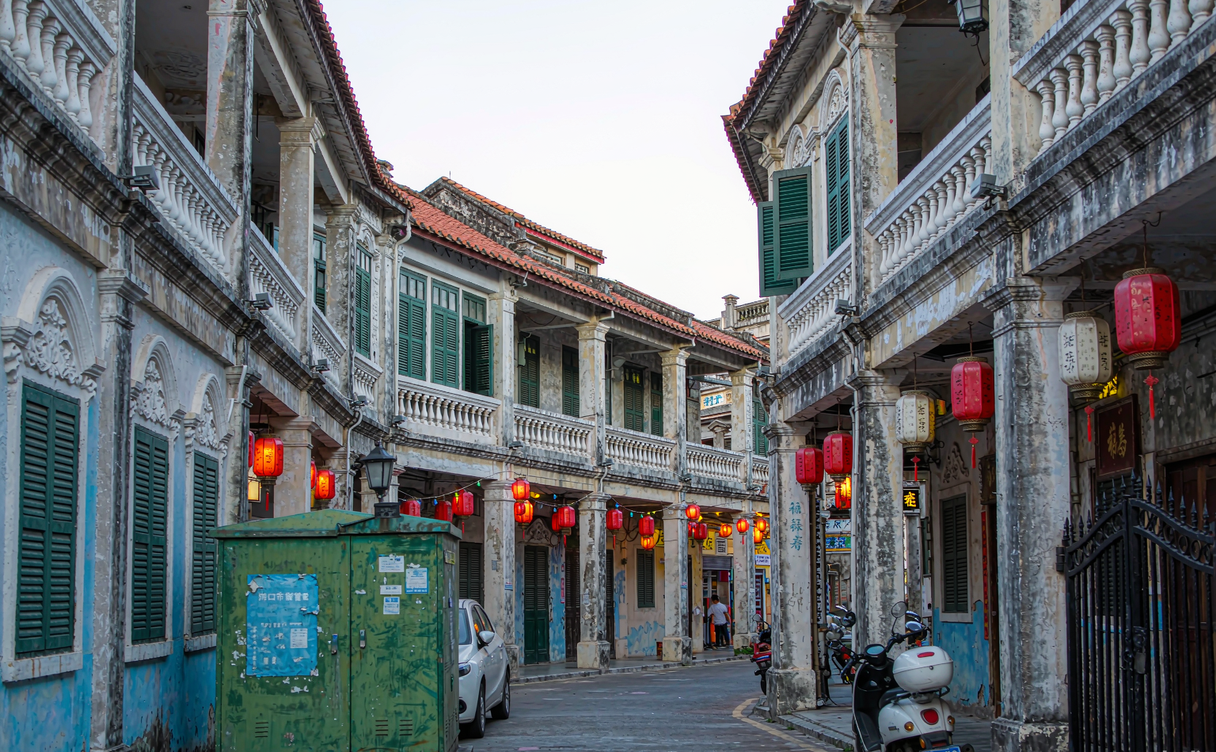
What the bayfront gives up is walkability to character. For that, you head inward to the old town, centered on Bo’ai Road and the arcade-lined streets near Zhongshan Road. This is the soul of the city, and it is exactly where Haikou old town boutique hotels have been quietly multiplying over the past few years. Entrepreneurs have been converting 1920s shophouses into small, design-forward properties with maybe fifteen or twenty rooms, a courtyard café, and a front desk that doubles as a coffee bar. Staying here means your evening walk passes vintage architecture, noodle stalls, and the occasional live-music spot tucked behind a carved wooden door. It is walkable, it is local, and it is the neighborhood I steer friends toward when they want to actually feel a place rather than just look at it through a resort window.
If you want the deeper context before you commit to a neighborhood, our Haikou travel guide walks through the districts, the transport hubs, and the seasonal weather that should influence when you book. It pairs well with the best things to do in China if you are still shaping the wider trip, and it helps answer the practical stuff like which area keeps you closest to the food you actually came to eat.
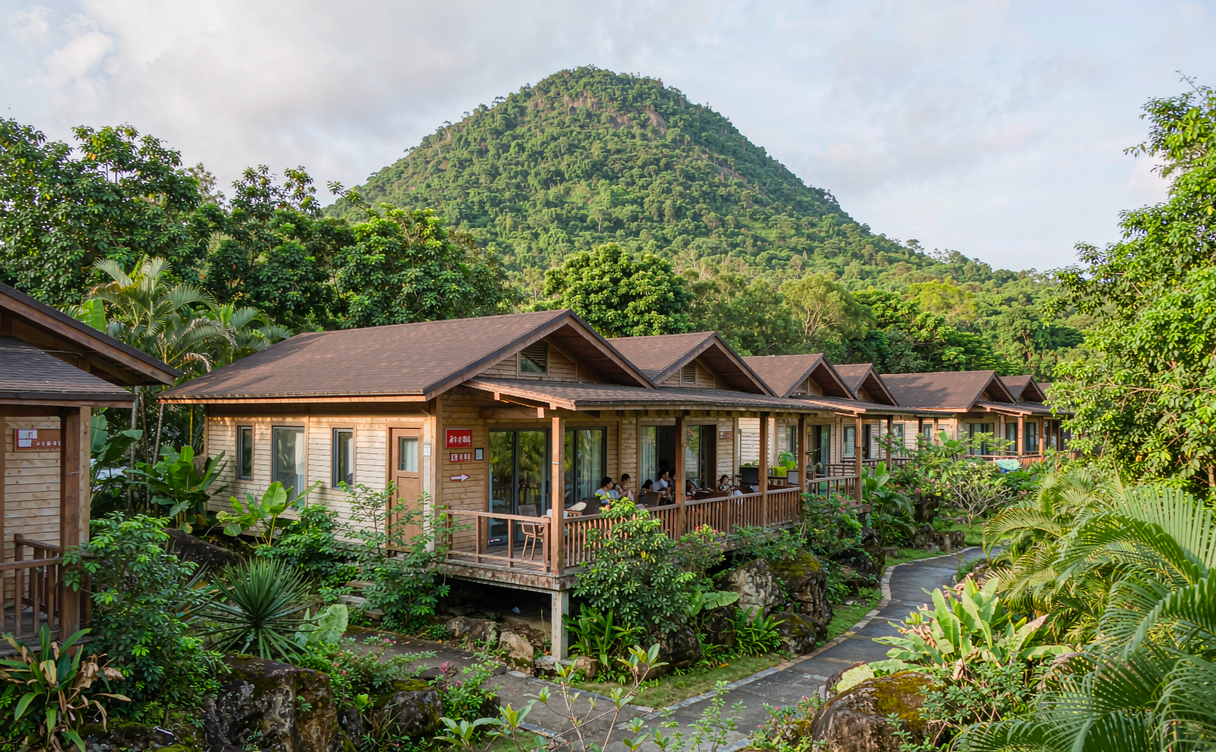
The third option sits well outside the center. The Haikou Volcano Geopark, part of the larger Leiqiong volcanic landscape southwest of the city, is where you will find cooler air, lava-tube caves, and crater trails that most beach-bound visitors never see. A Haikou volcano geopark eco lodge is for travelers who want green space and a slower pulse: smaller, nature-oriented stays, sometimes attached to working farm plots, where the main draw is birdsong and the near-total absence of traffic. These are not luxury resorts, and they do not pretend to be. They are the right pick for hikers, photographers, and anyone who has had enough of polished lobbies for a few nights. You trade room service for starlight and a short walk to a crater rim, and for a certain kind of trip that exchange is the whole point.
[CTA]Read our full Haikou guide before you book, and pair your stay with a custom China itinerary built around your own pace.[/CTA]
A practical note for the eco-lodge crowd: the distance from the center means you will want a car or a booked transfer, and you should not expect the dense late-night food scene of the old town. What you give up in convenience you get back in quiet. If volcanoes and crater hikes sound appealing, they connect neatly with the wider island’s green side, which our Hainan tropical rainforest park guide covers in detail, including how to combine a volcanic morning with an afternoon among the canopy further south.
Now, the question almost everyone eventually asks: what about the jump to Sanya? Haikou is the natural northern gateway to Hainan, and plenty of visitors use it as a one- or two-night stop before heading south. A Haikou hotels for Sanya onward travel strategy is refreshingly simple. The island’s high-speed rail runs straight down the east coast to Sanya in a few hours, so if your plan is to train south, stay near the west coast or close to Haikou’s main train station so the transfer is painless. You do not want to cross the whole city with luggage at rush hour. A bayfront property on the western side gives you both the sea view and a short ride to the platform, which is the combination I suggest to almost everyone making the connection.
For those mapping the whole island, our Hainan 7-day itinerary shows one clean way to chain Haikou, the interior, and the south coast together without backtracking. And when you are ready for the resort end of the trip, our best hotels in Sanya breaks down the beachfront towers and hideaway villas on the other side of the island. If Sanya is your final stop, the Sanya travel guide is worth a read before you book, since the southern beaches vary more than their brochures admit and the right base matters as much there as it does in Haikou.
A word on timing and booking. Haikou’s climate is warm most of the year, but the late summer and early autumn bring the heaviest rain and the occasional typhoon, which can scramble both flights and the view from your window. Winter is the sweet spot: dry, mild, and popular with domestic travelers escaping colder cities up north, so rooms near the bayfront fill first and prices creep up accordingly. Booking a few weeks ahead keeps your options open, especially for the small old-town boutique hotels that only carry a handful of rooms and sell out to repeat visitors who know exactly what they want.
Getting around between these neighborhoods is easier than newcomers expect. Ride-hailing apps cover the city well, the bayfront promenade is flat and walkable, and the old town is best on foot anyway. If you are staying at a volcano lodge, build the transfer into your plan rather than hoping to flag something down at the gate. None of this is complicated, but a little sequencing turns a scattered list of addresses into a trip that flows.
For background on the city’s layout, history, and transport links, the official overview of Haikou is a useful reference to skim before you start comparing neighborhoods, especially if you want a sense of scale before committing to a district.
[CTA]Planning to continue south? Combine your Haikou stay with our Sanya hotel picks and a full island itinerary planned around you.[/CTA]
To sum up the logic: bayfront for ease and sea, old town for character and walks, volcano lodges for quiet and green, and a west-coast room if Sanya is next. The best hotels in Haikou are not a single ranked list but a set of neighborhoods, each suited to a different kind of morning. Pick the morning you want, book a room that matches it, and let the rest of Hainan fall into place around your stay.